Thomas Edison publicly electrocuted dogs and horses with AC current to discredit Westinghouse, lost the War of Currents anyway, and the first man killed by an electric chair died on Westinghouse power
In the late 1880s, Thomas Edison hired an electrician to publicly kill animals with alternating current and lobbied for the first electric chair to use George Westinghouse's equipment. He called it the War of Currents. He lost it. The grid you plug into today is built on the system he tried to bury.
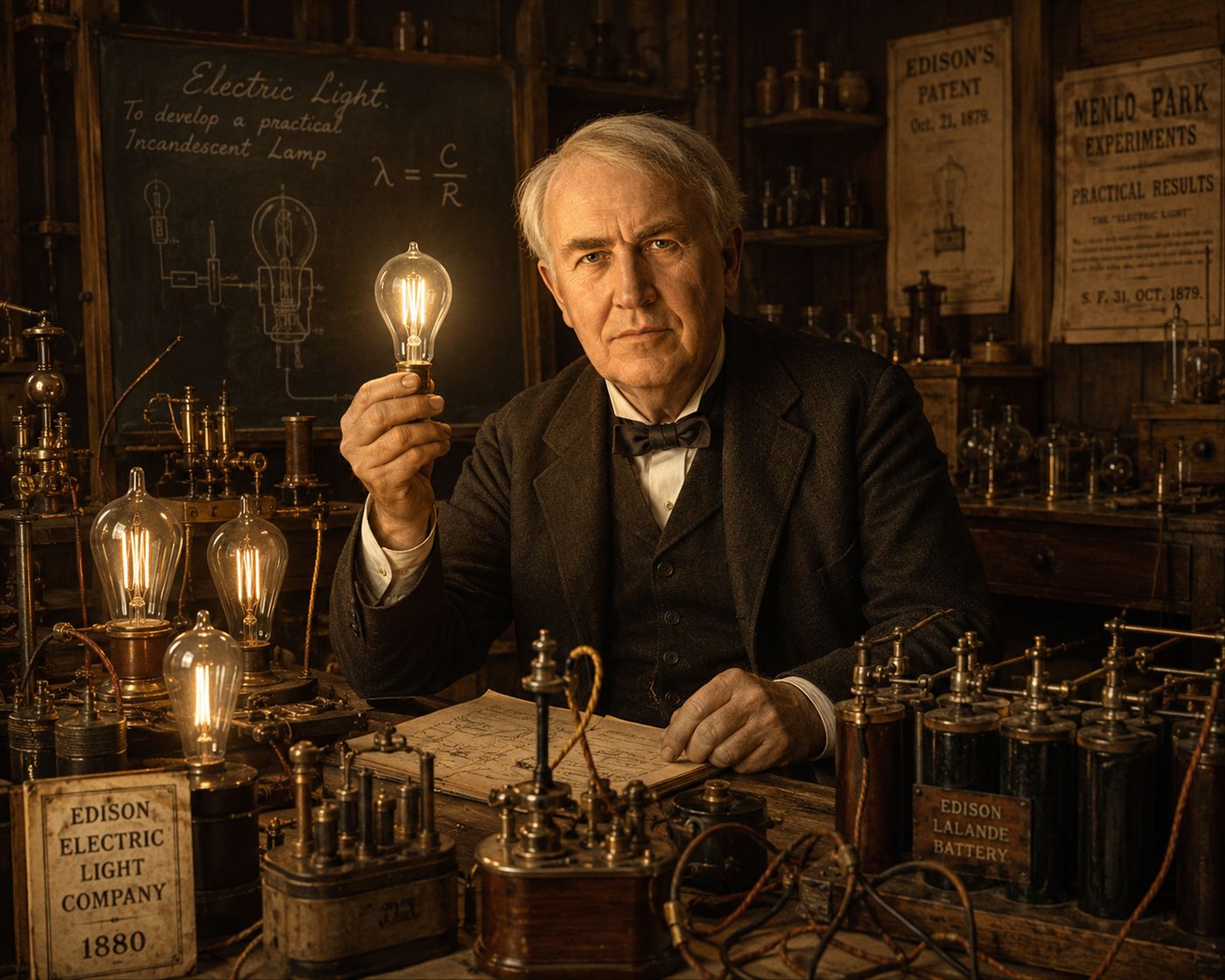
Thomas Edison's laboratory at Menlo Park became the base for his campaign against alternating current in the late 1880s, including the animal electrocution demonstrations run by Harold Brown. Illustration: Watts & Wild.
The War of Currents began as a business problem. Thomas Edison had spent the early 1880s wiring American cities with direct current, opening Pearl Street Station in New York in September 1882 with fifty-nine initial customers in a one-mile radius. His DC system needed a substation roughly every mile, but it worked, and by 1887 he had built 121 stations across the country. Then George Westinghouse started winning contracts.
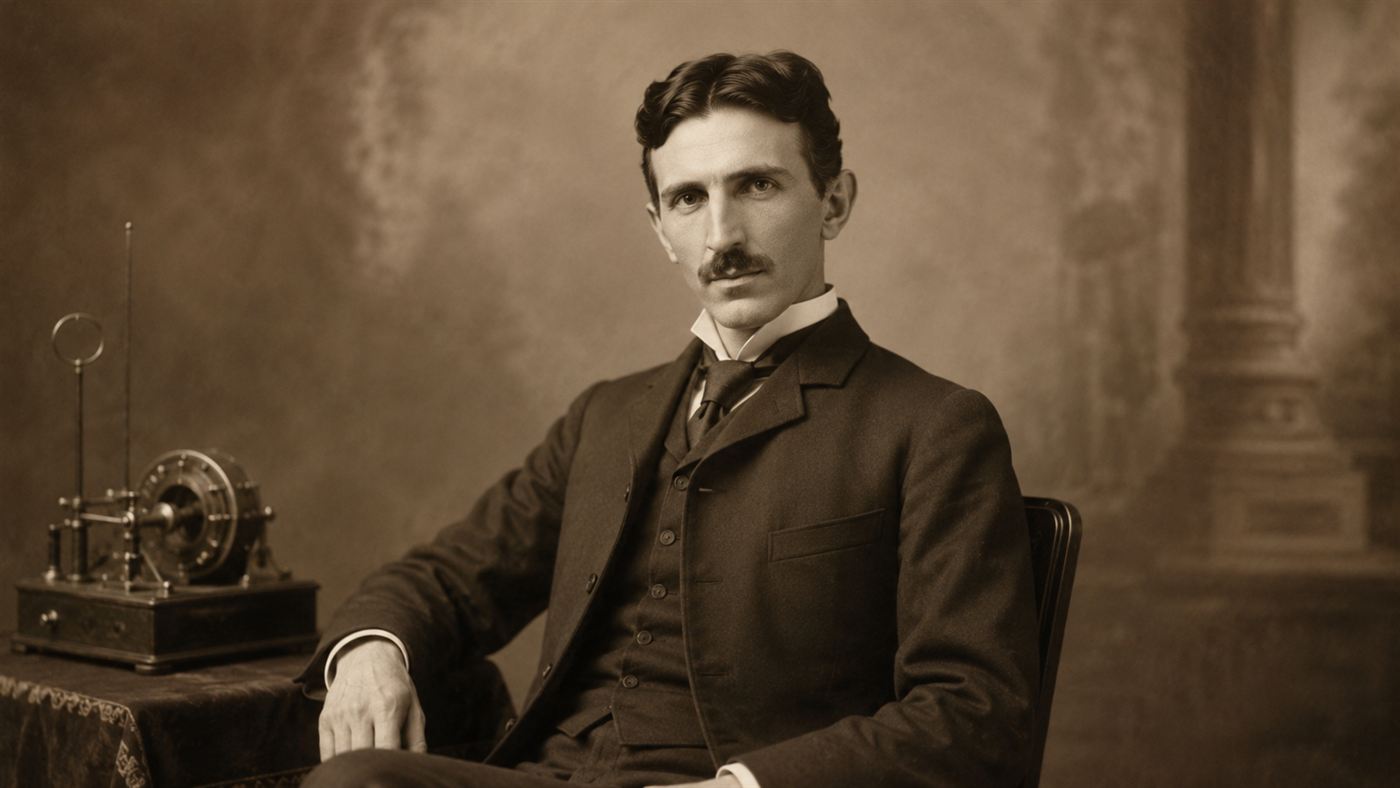
George Westinghouse had bought the American patents on alternating current from Nikola Tesla in 1888 for $60,000 plus royalties. Tesla's polyphase AC system could step voltage up for long-distance travel and step it back down at the destination, losing almost nothing along the way. Where Thomas Edison needed a new substation every mile, Westinghouse could light a city from a generating plant fifty miles away. The economics were not close, and Edison knew it.
The War of Currents was the 1880s battle between Thomas Edison's direct current and George Westinghouse's alternating current. Edison hired an electrician named Harold Brown to publicly electrocute animals with AC to prove it was deadly. The strategy failed. By 1896, alternating current powered the United States.
What was the War of Currents, and why did Edison believe DC could still win?
By 1888, Thomas Edison had sunk millions of dollars and his entire professional reputation into direct current infrastructure.
His DC system worked at low voltage, which meant it was genuinely safer to touch than the high-voltage lines Westinghouse was stringing across cities.
Edison's argument was not purely cynical: he believed that alternating current at transmission voltages was a legitimate danger to the public.
He had also, by this point, enormous financial exposure.
Losing the War of Currents meant losing the Edison Electric Light Company's dominance, the value of the entire installed DC network, and his public standing as the man who had electrified America.
His response was to frame the competition not as a technical debate but as a safety crisis.
If the public could be made to fear alternating current, the economic argument for Westinghouse's cheaper system would be neutralised.
A man named Harold Brown gave him the tool he needed.
How did Harold Brown run Edison's public campaign against alternating current?
Harold Brown was an electrical engineer who wrote a letter to a newspaper in June 1888 arguing that high-voltage alternating current was deadly and should be limited by law.
Thomas Edison read it and gave Brown laboratory space at Menlo Park in West Orange, New Jersey.
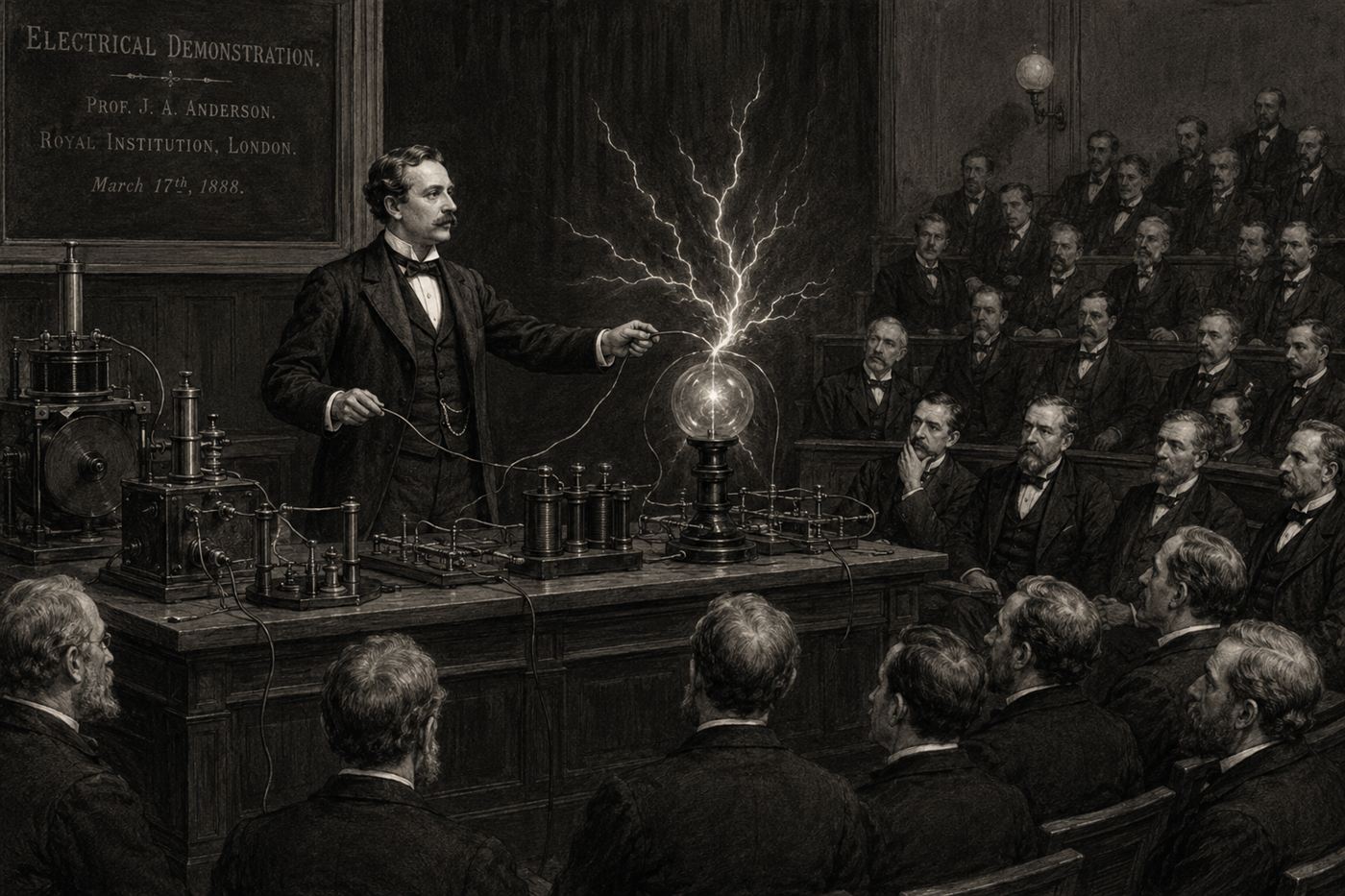
On July 30, 1888, Brown held a public demonstration at Columbia College in New York City in front of journalists, electrical engineers and invited observers.
He attached electrodes to a dog and first applied direct current, which left the animal frightened but alive.
Then he applied alternating current at a lower voltage.
The dog died.
Brown went on to electrocute roughly fifty dogs across multiple public demonstrations, along with calves and at least one horse, always using alternating current for the killing stroke.
The audiences were sometimes horrified, sometimes fascinated.
The press covered it as a genuine safety story.
Thomas Edison publicly supported Brown's campaign, framing alternating current as a technology too dangerous for public use.
In private, he acknowledged that no amount of animal electrocution would hold back a system that cost so much less to build.
So he moved to a different arena: the execution chamber of the state of New York.
How did the War of Currents produce the electric chair?
New York State had been searching since 1887 for a more humane alternative to hanging, which was inconsistent and sometimes grotesquely prolonged.
A commission that included a dentist named Alfred Southwick was examining electricity as a possible method of execution.
Thomas Edison, who had publicly opposed capital punishment, initially refused to engage with the commission.
But as the War of Currents deepened, he saw an opportunity.
He wrote to the commission recommending that, if electricity was to be used for execution, the method should employ alternating current, specifically the George Westinghouse type.
His reasoning was explicit: associating Westinghouse's technology with state execution would terrify the public into rejecting it.
Harold Brown designed the electric chair itself.
George Westinghouse, who understood exactly what was happening, refused to sell his generators for use in executions.
Brown responded by purchasing three Westinghouse generators through used-equipment dealers, hiding the transaction to disguise their origin.
Thomas Edison's colleagues began lobbying to have the act of being killed by electricity named after Westinghouse.
They tried to introduce the verb "to be Westinghoused" as the official term for electrocution.
The press declined to adopt it.
The word that stuck instead was electrocute, coined from "electricity" and "execute."
What happened when William Kemmler became the first person executed in an electric chair?
William Kemmler had murdered his common-law wife with a hatchet in Buffalo, New York, in March 1889.
He was sentenced to death, and New York selected him as the first person to be executed in an electric chair.
George Westinghouse hired lawyers to challenge the constitutionality of electrocution as cruel and unusual punishment.
The appeals failed, and on August 6, 1890, at Auburn Prison in New York, Kemmler was strapped into the electric chair built by Harold Brown using Westinghouse equipment.
The first application of current lasted seventeen seconds.
When it stopped, Kemmler was still alive.
The dynamo needed time to recharge.
A second, longer application of current followed, lasting roughly two minutes.
Witnesses reported the smell of burning flesh.
The execution was, by almost every account at the time, a botched and disturbing spectacle.
George Westinghouse's response was brief and direct: "They would have done better with an axe."
The electric chair spread to other states anyway.
The association of Westinghouse technology with death that Thomas Edison had engineered did not stop the spread of alternating current, but it did give the world a new method of execution that would remain in use for more than a century.
How did George Westinghouse and Nikola Tesla win the War of Currents?
In 1893, the organisers of the World's Columbian Exposition in Chicago invited bids to illuminate the fair.
Thomas Edison's company bid $1.8 million.
George Westinghouse, using Tesla's alternating current polyphase system, bid $554,000.
Westinghouse won, and that summer more than twenty-seven million visitors walked through a fairground lit entirely by alternating current.
It was the largest demonstration of electrical power the world had seen, and it was powered by the technology Thomas Edison had spent years trying to bury.
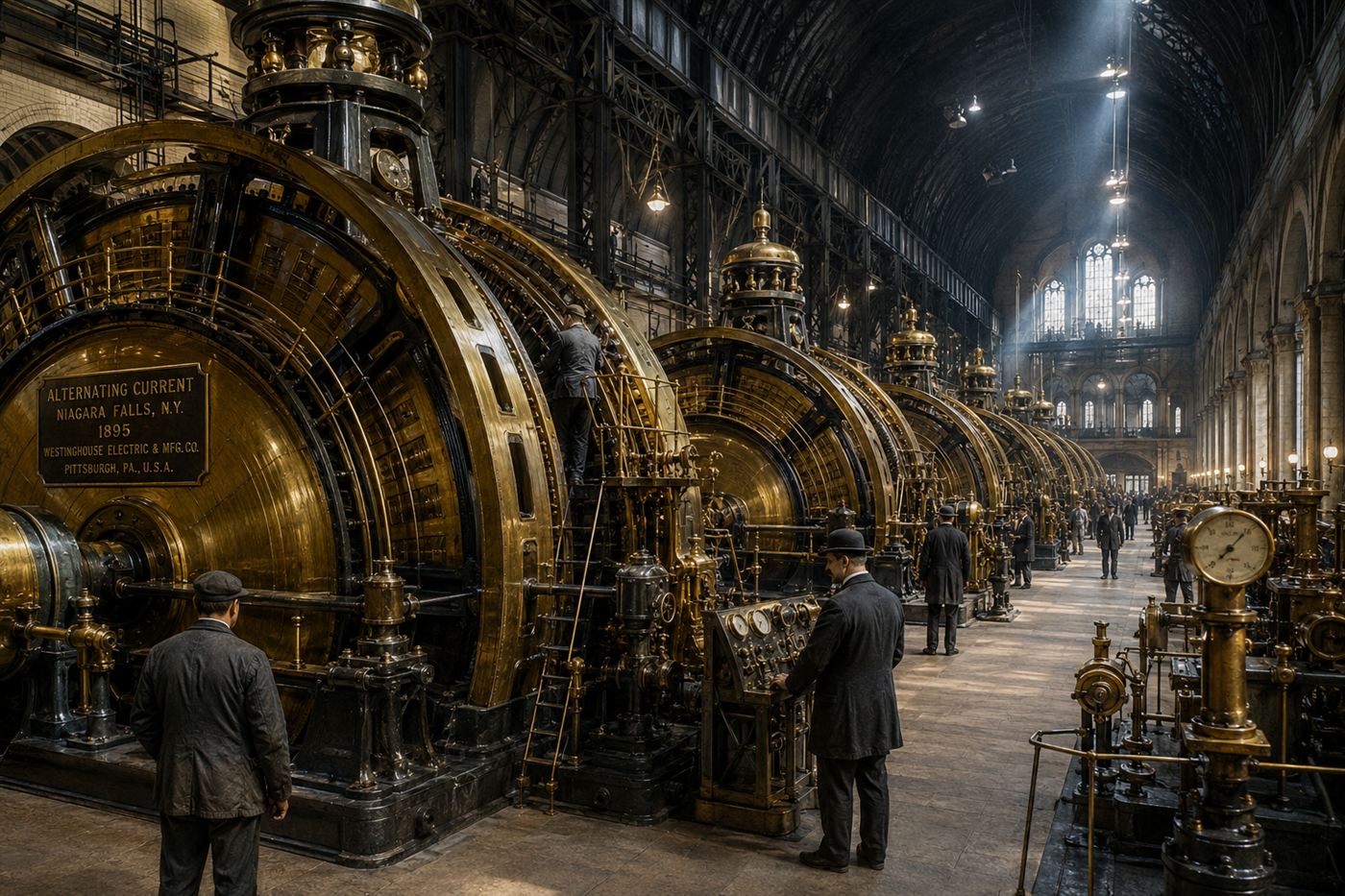
The final blow came from Niagara Falls.
The Niagara Falls Power Company had been deciding for years which system to use for the world's first large-scale hydroelectric plant.
In 1895, construction was completed using Westinghouse generators and Tesla's AC motors.
In November 1896, alternating current from Niagara Falls began flowing into Buffalo, New York, twenty-six miles away.
No DC system could have carried power that distance.
The War of Currents was over.
Thomas Edison's company merged with Thomson-Houston in 1892 to form General Electric, which quickly pivoted to alternating current systems.
Edison himself was pushed out of the company that bore his name.
He returned to his laboratory and spent the rest of his career on other inventions, rarely speaking in public about alternating current or the War of Currents again.
Nikola Tesla, who had done more than anyone to make alternating current practical, sold his royalty rights to Westinghouse for a lump sum in 1897 and poured his energy into a new ambition: transmitting electricity through the air without wires at all.
The honest catch
The story of the War of Currents has a postscript that complicates the clean narrative of AC's total victory.
Direct current never actually disappeared.
Every battery ever made stores and delivers DC.
Every solar panel produces DC.
Every laptop, phone, and electric vehicle runs on DC internally, converting the AC from the wall inside its power supply.
The alternating current grid that Westinghouse and Tesla built won the War of Currents in the 1890s, but the twenty-first century trend in electric vehicles, solar power, and grid-scale battery storage is pushing DC back into prominence.
Engineers are now building high-voltage DC transmission lines for long distances because, with modern power electronics, DC loses less energy than AC over very long runs.
Thomas Edison was right that DC was the natural language of batteries and stored energy.
He was simply a century early.
The electric chair, meanwhile, has been largely replaced by lethal injection across the United States, though a handful of states retain it as a backup method, and a few have used it in recent decades.
The first electric chair execution in 1890 was universally described as a failure, yet the technology spread to dozens of states over the following decades.
Harold Brown, who designed it, disappeared from public life after the War of Currents ended and left almost no personal record behind.
George Westinghouse never publicly gloated about his victory.
He said the whole campaign had been "a disgrace" and considered the electric chair the worst outcome of a battle that should have stayed in the engineering journals.
Edison did not always win his fights, either. Around the same years he tried and failed to take the railway telegraph patents of Granville Woods, the self-taught Black inventor who beat him in court twice. The same electric age produced Hertha Ayrton, who solved the riddle of the hissing arc lamp yet was denied a Royal Society fellowship for being a woman.
The War of Currents was settled by economics, not safety. If you had been alive in 1888, would you have trusted Thomas Edison's warnings about alternating current, or does a cheaper, longer-range system always win regardless of the fear campaign around it? Tell us what you think below.
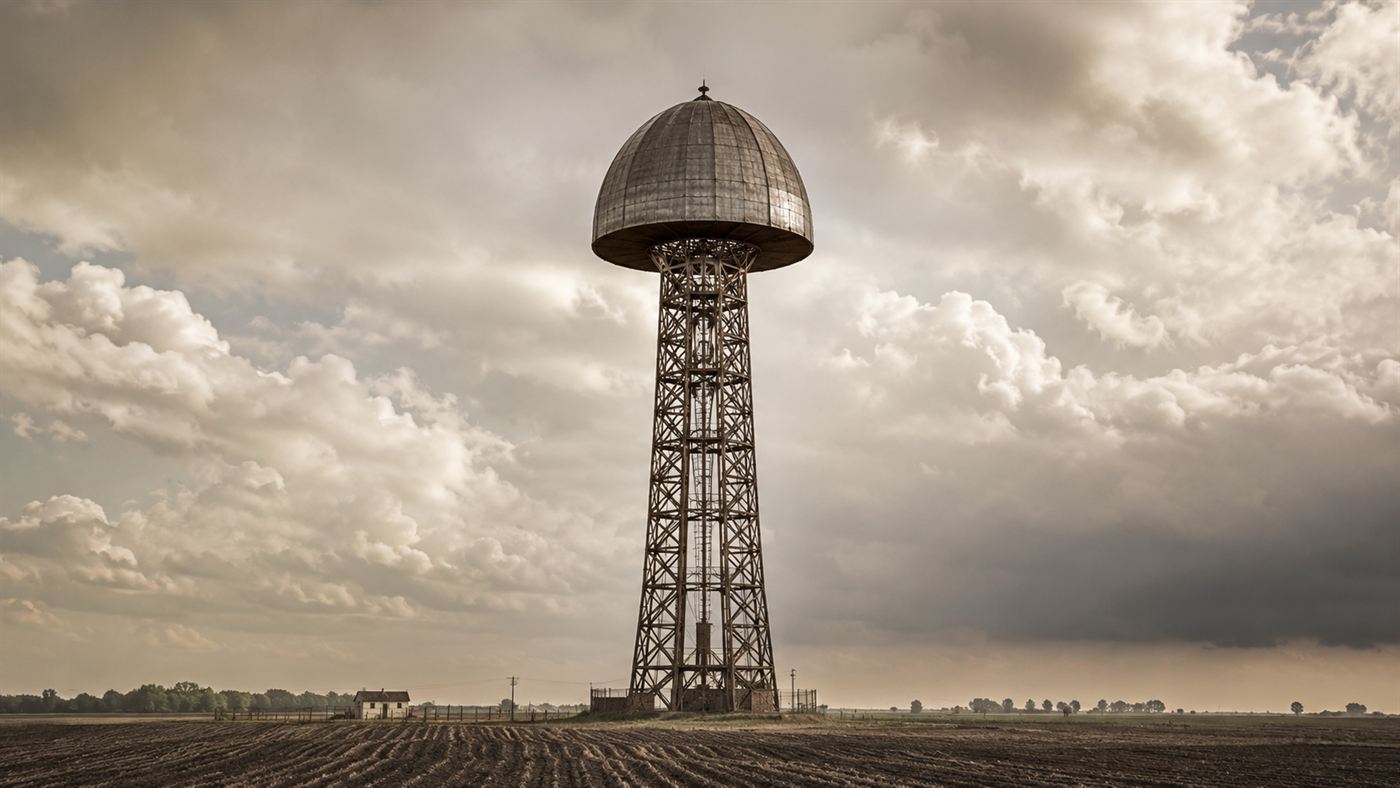
- Nikola Tesla's next ambition after the War of Currents: a tower to beam free electricity to the world
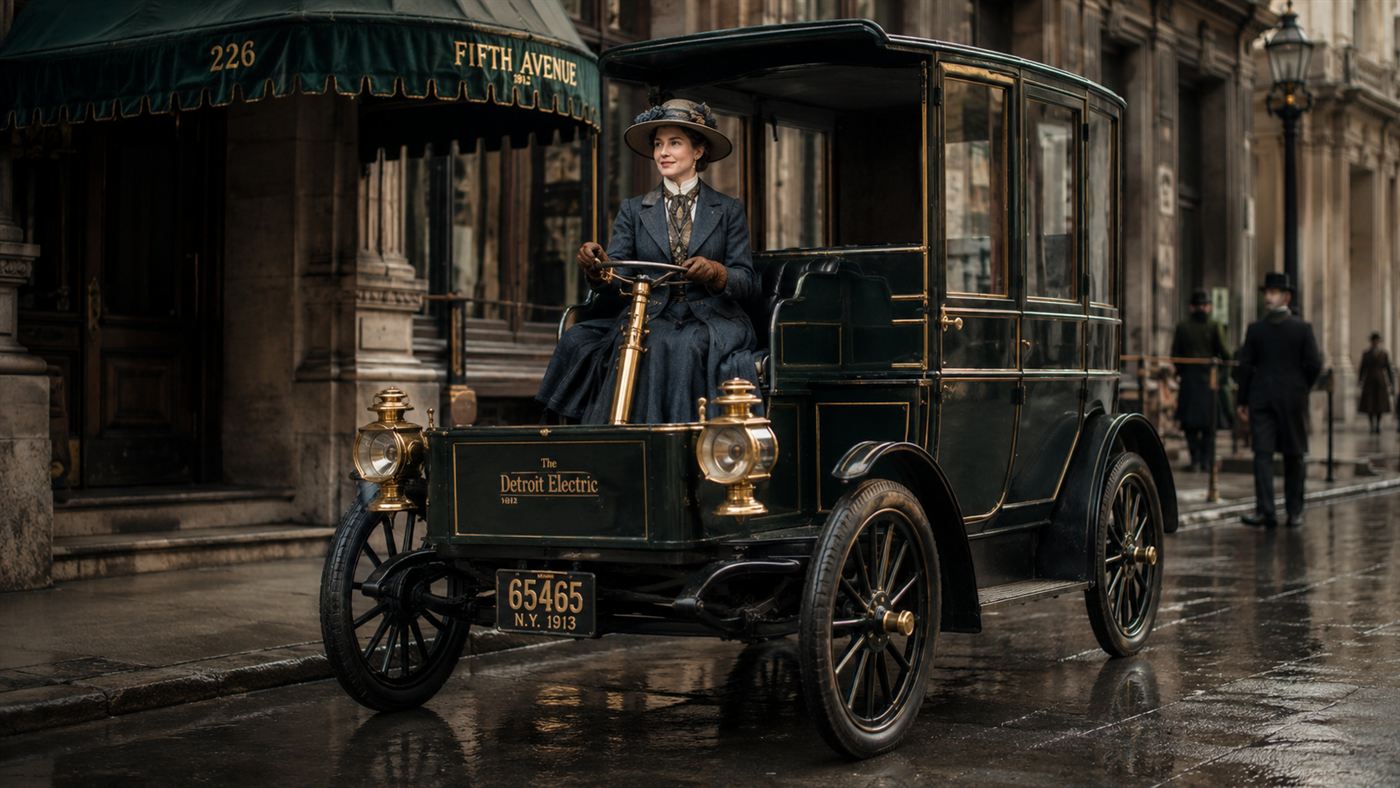
- In 1900, a third of American cars were electric, and even Henry Ford's wife preferred her Detroit Electric to his gasoline Model T
- Long before Tesla the car company, Britain quietly ran the world's largest electric vehicle fleet, and almost every one was a milkman's float
- Another story of electricity and public fear: the nuclear reactor Jimmy Carter crawled into in 1952
- The 4-foot immigrant who made the alternating current that won this war usable, and forged 120,000-volt lightning by hand
- The Niagara Falls power plant that proved AC could light a city 20 miles away, and ended this war for good
- The Italian who invented the AC induction motor the same year as Tesla, then refused to patent it
- More on electric vehicles and mobility
More from Watts & Wild
More in Electric →

Bruno writes about energy history, industrial disasters, and the people who shaped the technologies we take for granted. He is based in Brazil.