A feud over why a dead frog's legs twitched led Alessandro Volta to stack metal and brine into the first battery, and switch on the electric age
Every battery on Earth, from your phone to an electric car, traces back to a stack of metal discs built in 1800. Alessandro Volta made it to win an argument about twitching frog legs, and in doing so he handed the world its first reliable source of electric current.
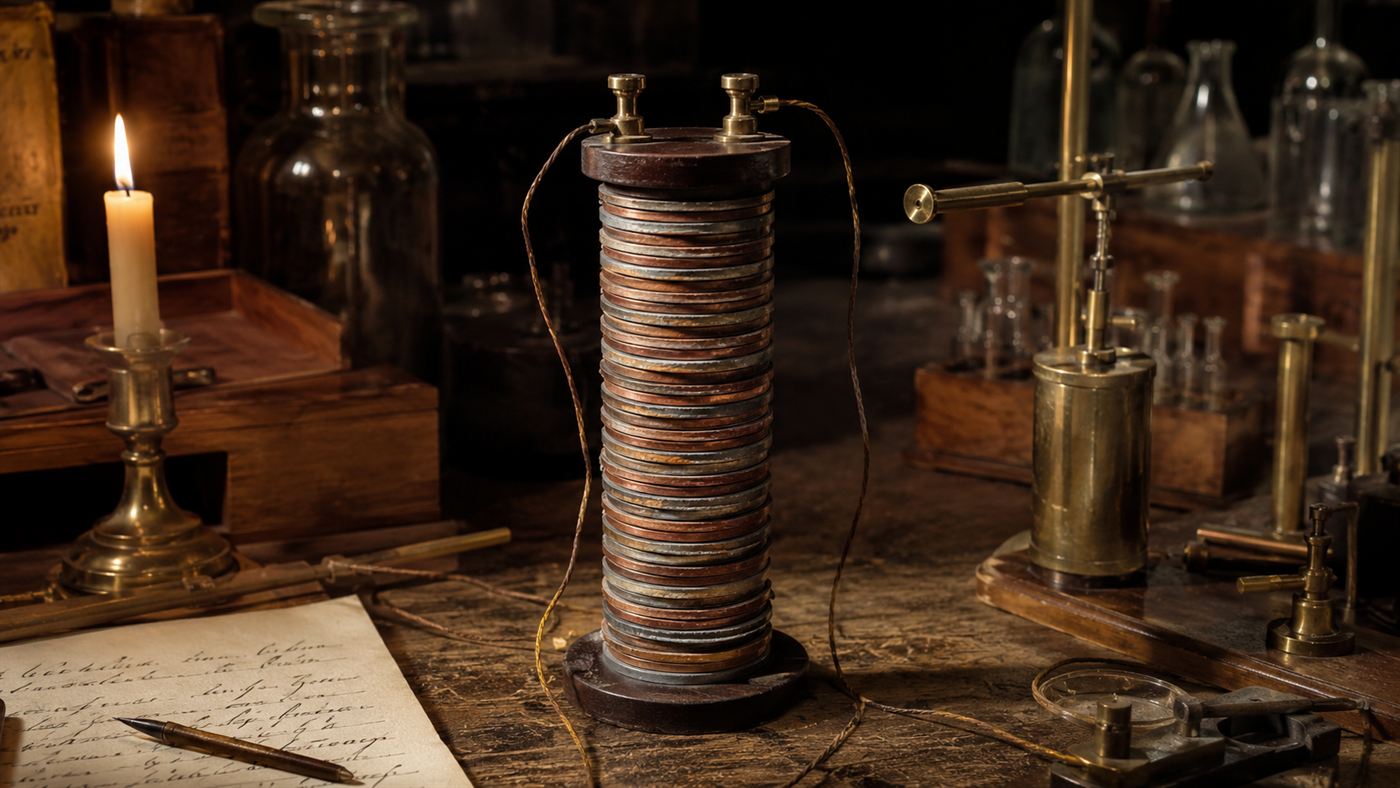
The voltaic pile, a stack of metal discs and brine, was the world's first true battery. Illustration: Watts & Wild.
The most important invention you have never thought about is the battery, and the story of the Alessandro Volta first battery was born out of a stubborn scientific quarrel.
Two Italian professors spent years arguing about why a dead frog's legs jerked, and the answer gave humanity its first steady supply of electricity.
Who invented the first battery? Alessandro Volta invented the first true battery, the voltaic pile, in 1800. It was a stack of alternating zinc and copper discs separated by brine-soaked cloth, and it produced the first steady electric current, settling a famous feud with Luigi Galvani over the source of so-called animal electricity.
The twitching frog legs
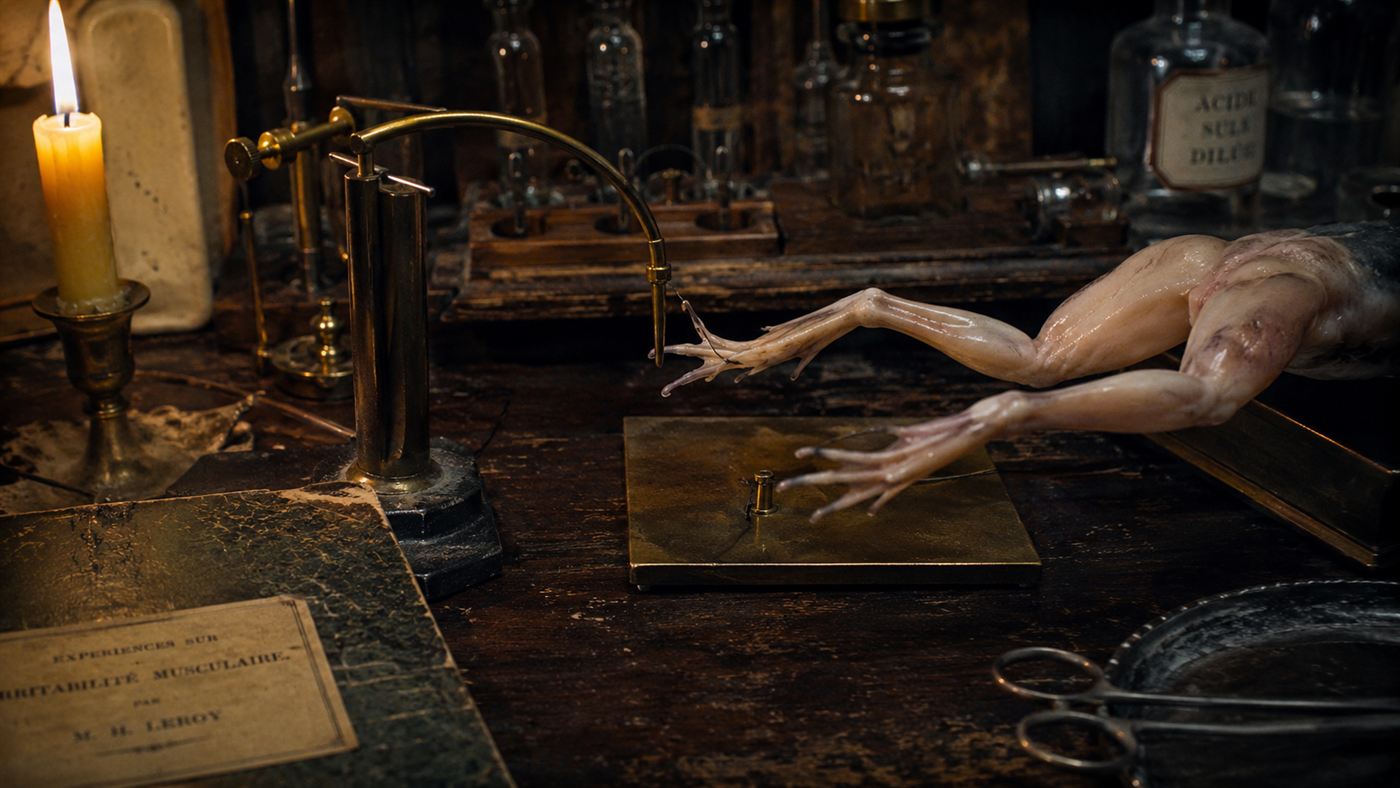
In the 1780s, the anatomist Luigi Galvani noticed that the legs of a dead frog twitched when touched with metal instruments.
To Galvani, this looked like proof of a vital force he called animal electricity, a kind of life energy stored in the muscles themselves.
It was a thrilling idea, suggesting that the spark of life might literally be electrical, and it captured the imagination of all Europe.
Galvani's frog experiments became famous, and for a while his explanation seemed to settle the matter.
Then a fellow professor decided the whole thing was wrong.
Volta's heretical hunch
Alessandro Volta, a physics professor, admired Galvani's work but doubted his conclusion.
Volta argued that the electricity was not coming from the animal at all, but from the two different metals touching the moist tissue.
In his view the frog's leg was just a sensitive detector, twitching in response to a current made by the metals themselves.
To prove it, Alessandro Volta needed to make that current with no animal anywhere in sight.
That challenge led him straight to the most important pile of metal in history.
How Alessandro Volta stacked the first battery
In 1800, Volta built what he called a pile, now known as the voltaic pile.
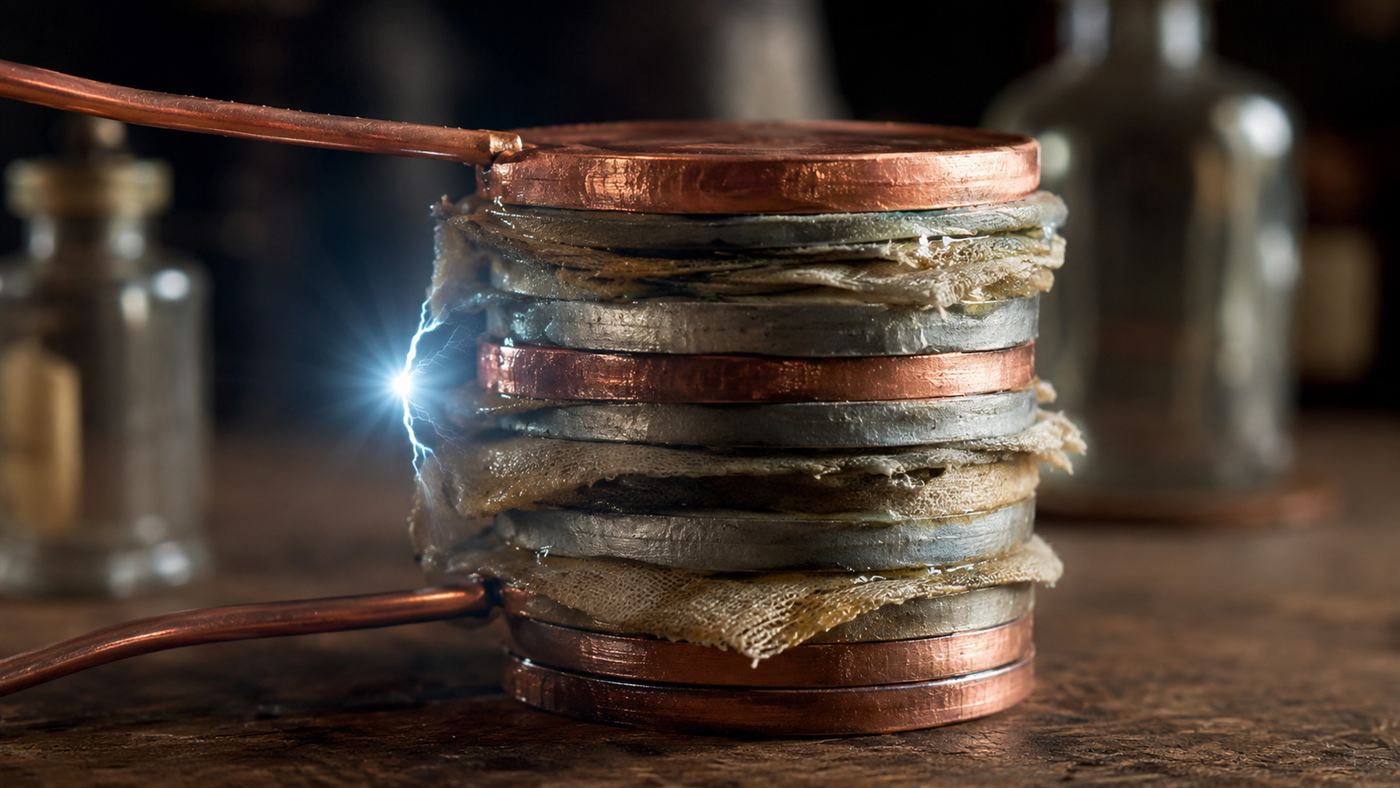
He stacked discs of zinc and copper in alternating layers, separating each pair with cloth or cardboard soaked in salty brine.
That simple column did something no one had managed before, producing a steady, continuous electric current rather than a single static spark.
The voltaic pile was, in every meaningful sense, the world's first battery, and it needed no frog at all.
Volta had not just won the argument, he had built a machine that could power experiments for hours.
Switching on the electric age
The voltaic pile arrived like a key turning in a lock.
For the first time scientists had electricity on tap, and within years they were using it to split water, isolate new elements and build the first electromagnets.
That steady current from a battery made the electric telegraph, electroplating and eventually the whole electrical industry possible.
Alessandro Volta became a celebrity, and the emperor Napoleon was so impressed that he showered him with honours.
Today his name is on every electricity bill in the world, because the unit of voltage, the volt, is named after him.
They were both right
The lovely twist is that the loser of the feud was not really wrong.
Volta was correct that his battery made electricity from metal and chemistry, with no life force required.
But Galvani had glimpsed something real too, because nerves and muscles genuinely do run on tiny electrical signals, a field we now call bioelectricity.
Every heartbeat traced on an ECG and every pacemaker is a tribute to Galvani's animal electricity, even as every battery is a tribute to Volta.
Two rivals, it turned out, had each caught a different half of the truth.
The honest catch
The first battery was a breakthrough, but it was also a bit of a mess.
Volta's pile corroded quickly, leaked its brine and faded fast, so it was feeble and short-lived next to anything we would call a battery today.
He also pushed his metal-only view too hard, wrongly dismissing the biological electricity that Galvani had stumbled onto.
Even so, that leaky stack of discs was the seed of every battery since, the distant ancestor of the cells behind the lithium-ion battery and the nickel-metal hydride cells that power the modern world.
Alessandro Volta set out only to win a debate about frog legs, and ended up building the device that would store and deliver the energy of the modern age.
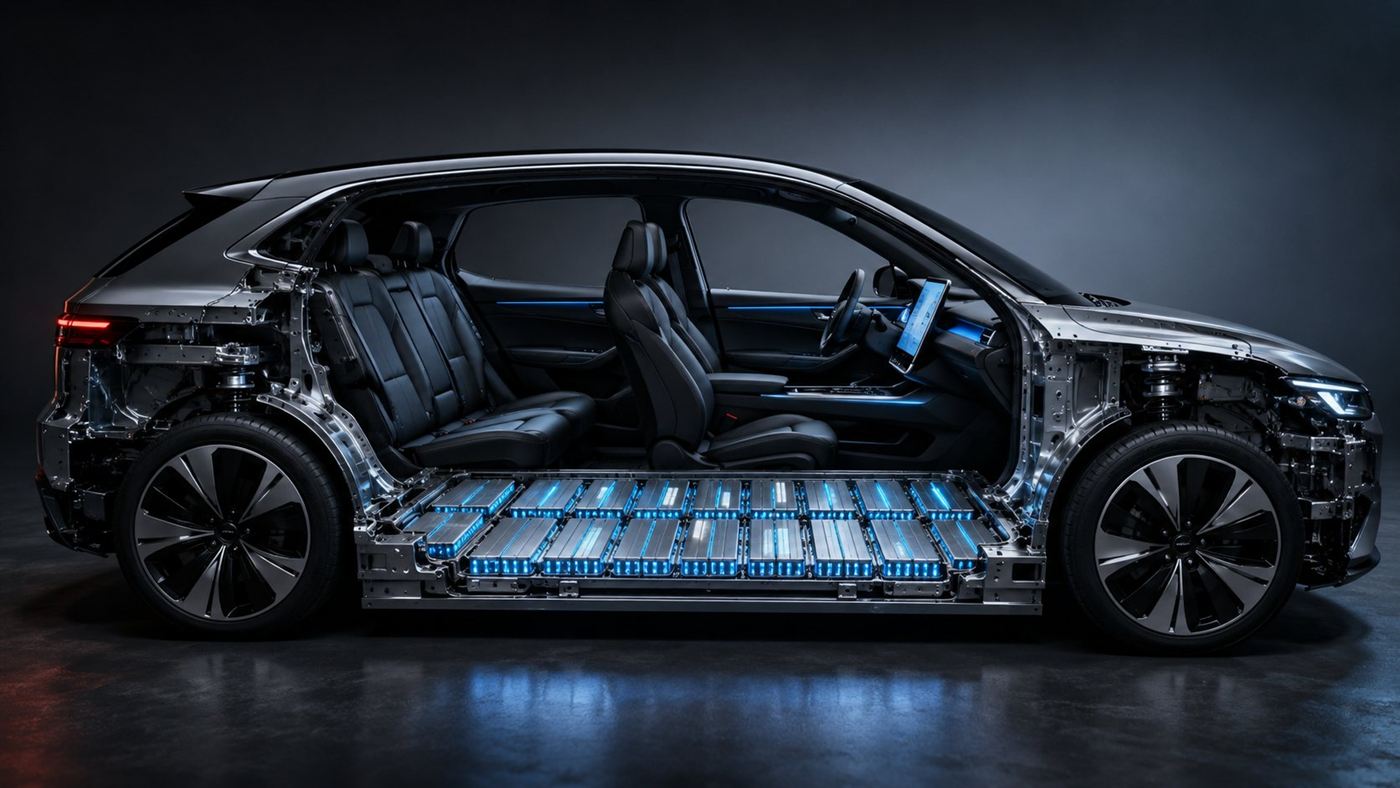
Every time you charge a phone or drive past an electric car, you are using a descendant of his pile, and relying on the same chemistry explained in our guide to how an EV battery really works.
Does it change how you see the battery in your pocket to know it was born from a quarrel over a dead frog, and who really deserves more credit, Volta or Galvani? Tell us in the comments.