In 1895 engineers chained the world's mightiest waterfall and used it to light a city 20 miles away
For thousands of years, Niagara Falls was just a magnificent, useless roar of water, beautiful and utterly wild. Then a group of engineers looked at all that thundering power and asked a daring question: what if we could capture it and send it somewhere useful? The Niagara Falls power plant they built in 1895 did exactly that, and quietly created the world we live in.
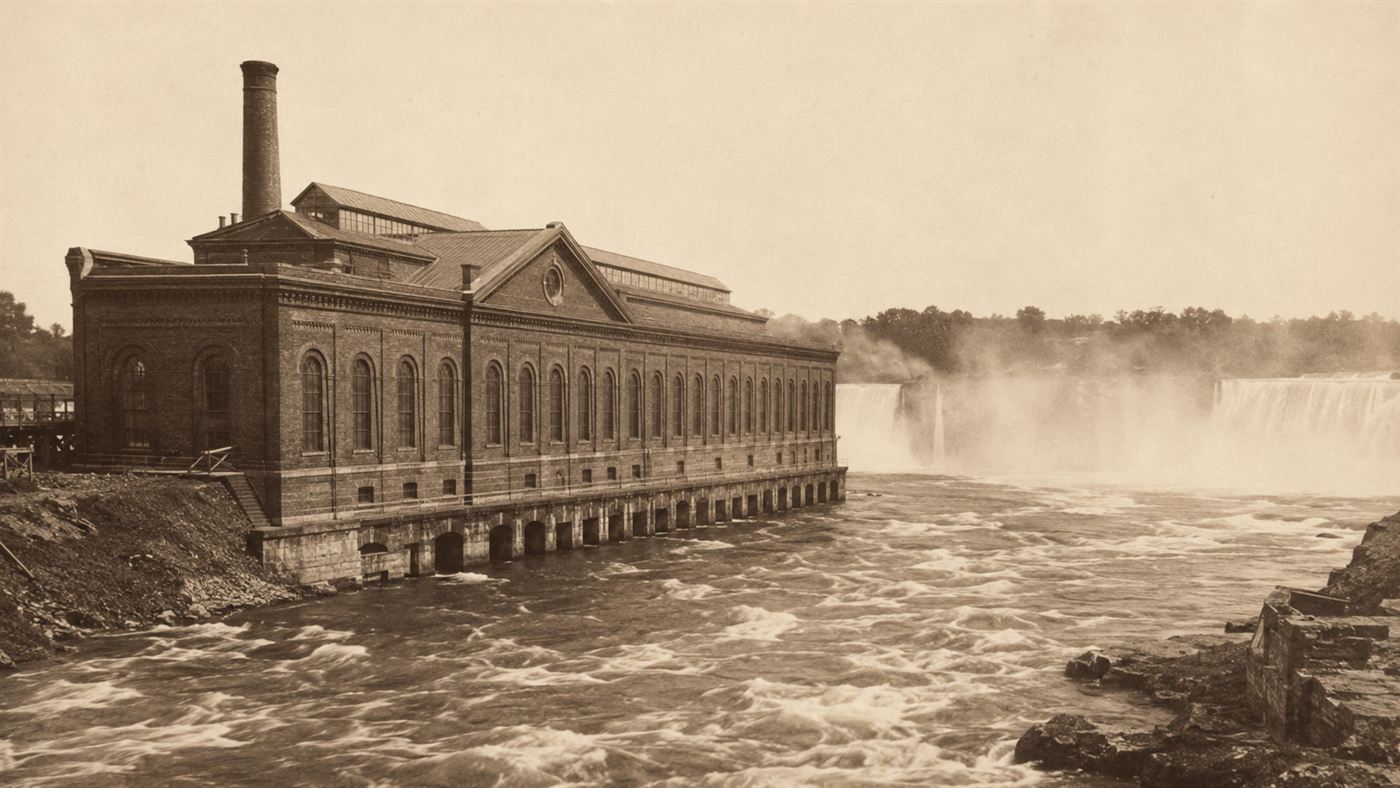
Beside the roar of Niagara, a brick powerhouse turned falling water into electricity for a city far away. Illustration: Watts & Wild.
It is easy to forget how strange the idea once seemed. In the 1890s, electricity could light a room or run a machine only if you were standing very close to where it was made. The notion that you could generate power at a waterfall and pipe it across twenty miles of countryside to a distant city struck many serious people as a fantasy. The Niagara Falls power plant turned that fantasy into a switch you could flip.
Behind it lay one of the most famous rivalries in the history of technology, and a dream that one engineer had carried since he was a boy.
A dream older than electricity
Among those who longed to harness Niagara was the inventor Nikola Tesla, who later said he had dreamed of capturing the falls since childhood. He was not alone; the sheer scale of the wasted energy had tempted engineers for decades. The problem was never the water, which offered more power than anyone could use, but what to do with the electricity once you made it.
If you could only use the power right next to the falls, the whole effort was nearly pointless, since hardly anyone lived there. To make Niagara worth taming, you had to be able to send its power to the cities and factories that actually needed it, and in the 1890s no one had ever done that on a grand scale.
How the Niagara Falls power plant worked
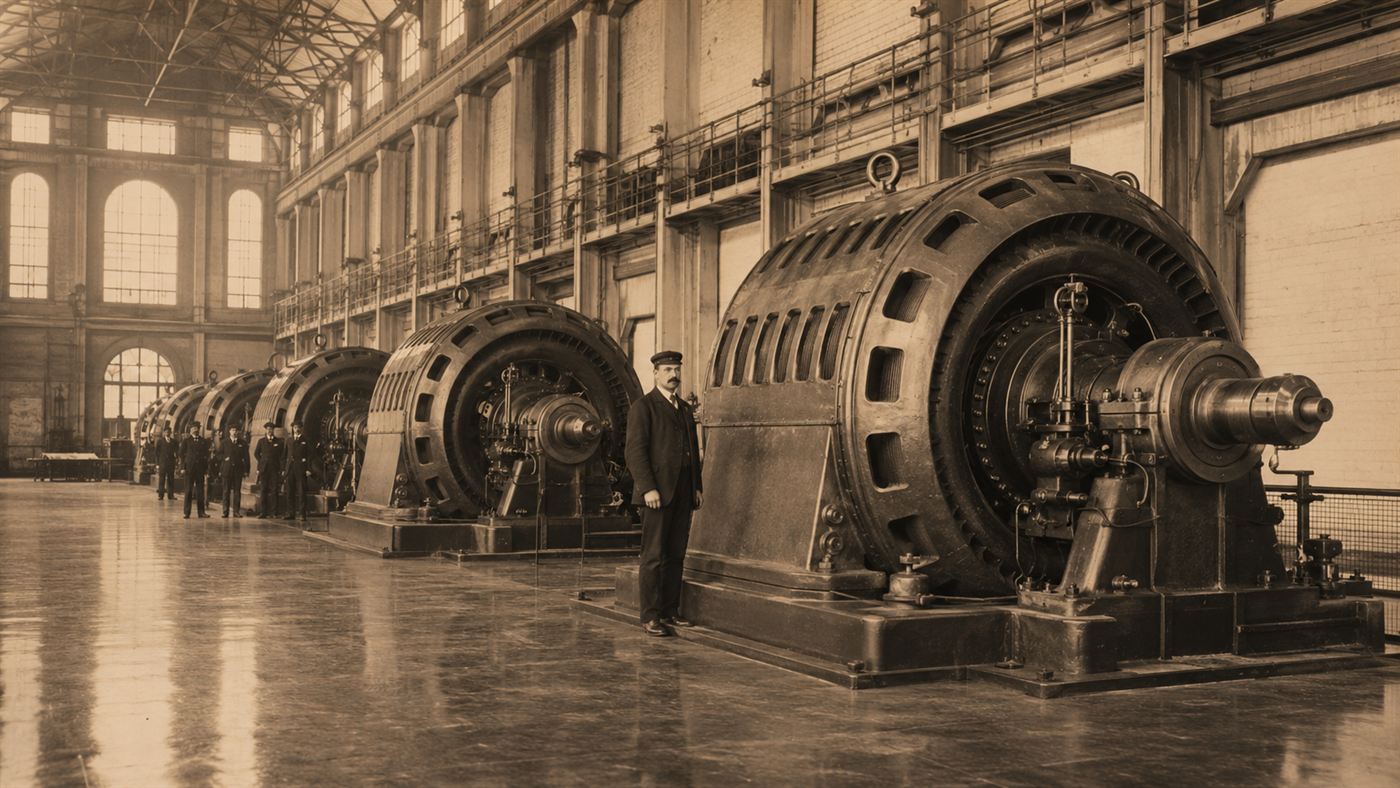
The solution was the Adams plant, built by the Niagara Falls Power Company. Water diverted from above the falls was sent rushing down through huge turbines, spinning them with tremendous force. Those turbines drove enormous generators built to produce alternating current, the type of electricity that can be stepped up to high voltage and pushed efficiently over long distances, and the station began operating in 1895.
Choosing alternating current was the crucial decision, and a contested one. An international commission studied the options for years before committing to the AC system based on Tesla's patents, built by the Westinghouse company. It was a colossal bet on a still-young technology, made at a scale no one had attempted, with the eyes of the whole electrical world watching to see whether it would work.
The current that reached Buffalo
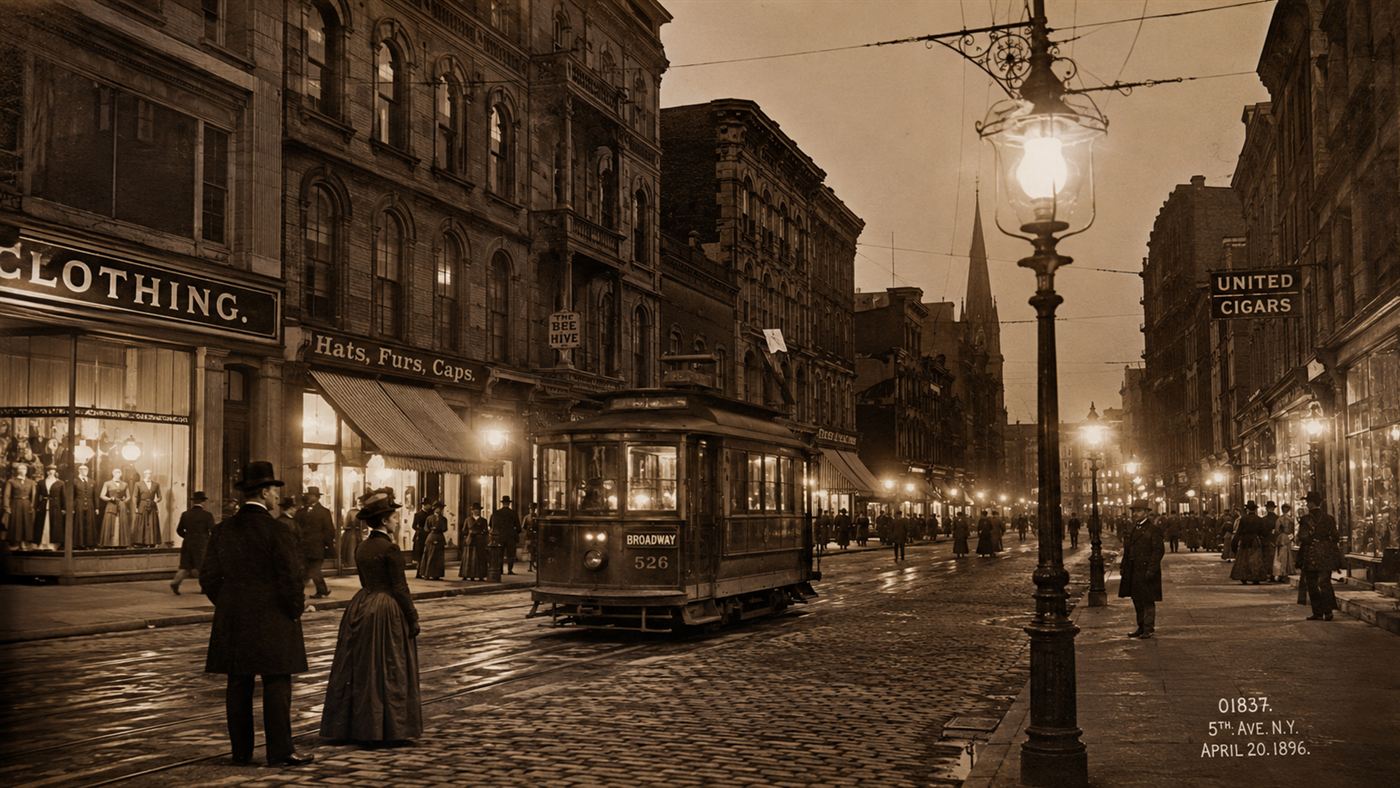
The real test came in 1896. The power first ran local factories around the falls, but the moment everyone was waiting for arrived when the current was sent down the lines toward Buffalo, around twenty miles away. On a November night, a switch was thrown and the power of Niagara surged into the city, lighting its streets and running its trams, the first time electricity had been carried so far on such a scale.
It worked, and the implications were staggering. If you could move power twenty miles, you could move it a hundred, and then a thousand. The link between where electricity is made and where it is used had been broken forever, and the entire layout of the modern world, with its distant power stations and long humming lines, was suddenly possible.
The end of the war of currents
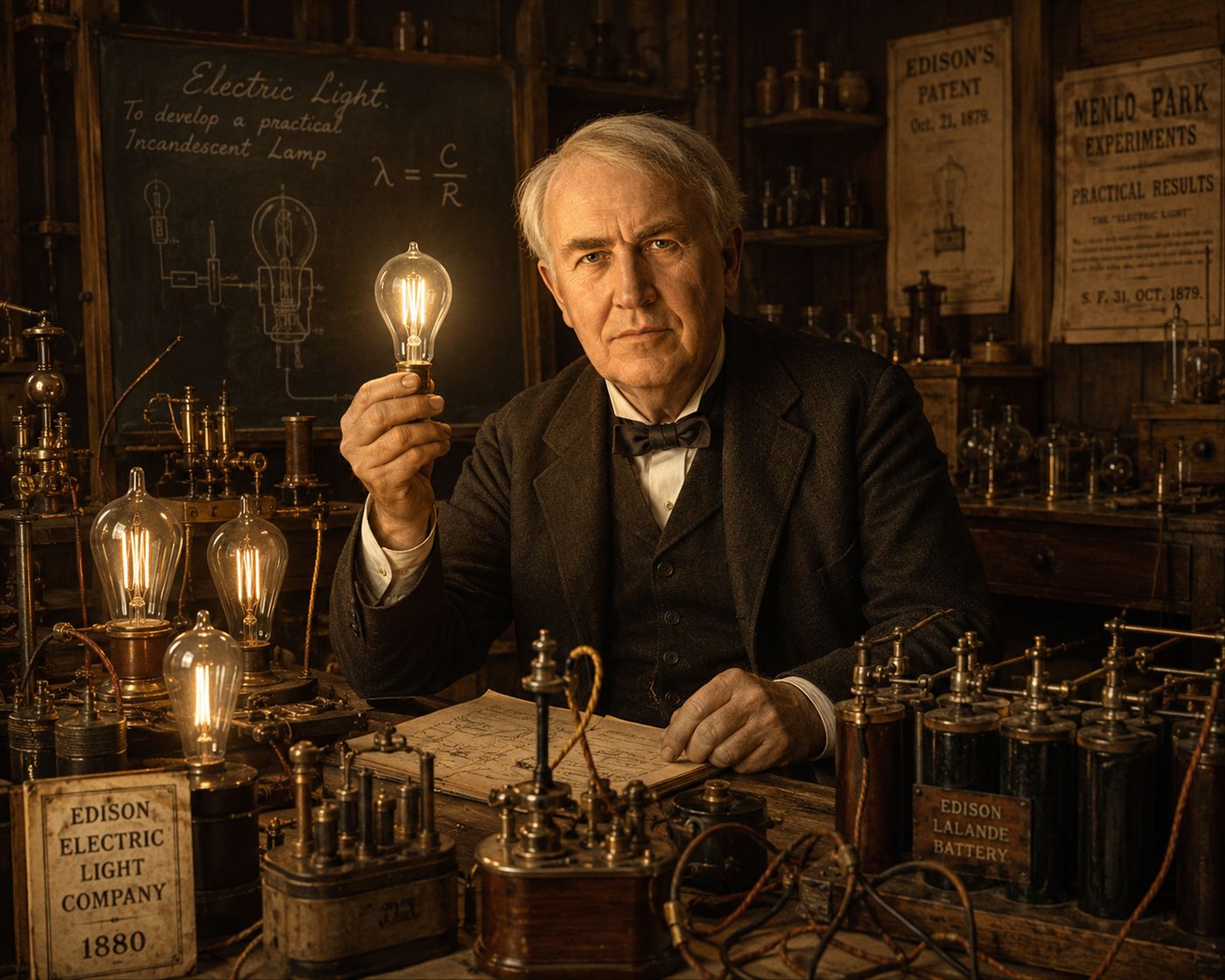
The triumph at Niagara also ended one of the bitterest fights in industrial history. For years, Thomas Edison had championed direct current, while Tesla and Westinghouse pushed alternating current, in a rivalry so fierce it became known as the war of currents. By proving that AC could be generated in bulk and shipped across distance as DC never could, the Niagara plant settled the argument decisively, and the world's grids were built on alternating current from then on.
Today a statue of Tesla stands on the Canadian side of the falls, gazing at the water he dreamed of taming. The original powerhouse is mostly gone, but its descendants are everywhere, in every distant dam, wind farm and power station that sends electricity down a wire to a city it will never see.
Who built the Niagara Falls power plant?
It is tempting to hand all the credit to Tesla, and his AC system truly was the key that unlocked the project. But honesty requires spreading the praise more widely. The plant was a vast team effort, from the financiers and the company that organised it, to the international commission that chose alternating current, to the Westinghouse engineers who actually built the giant machines.
Edison's direct-current camp had fought hard for the contract and lost, and many lesser-known engineers solved the countless practical problems of building something so far ahead of its time. Tesla provided the vision and the patents; a small army of others turned them into roaring, working metal beside the falls.
Why was the Niagara Falls power plant important?
Because it is, in a real sense, where the modern electricity grid was born. Before Niagara, power was a local affair; after it, power became something you could make in one place and use almost anywhere. Every time you flip a switch and draw on electricity generated tens or hundreds of miles away, you are living inside the idea that the Niagara Falls power plant proved possible.
It is a fine example of the kind of story we love, where a wild natural force, a brilliant idea and a furious rivalry collide to quietly remake everyday life. The falls still thunder exactly as they did before, but ever since 1895 they have also been doing the world's work.
A waterfall that roared uselessly for millennia was harnessed in a single decade and used to light a distant city, and the modern grid was born. Was taming Niagara a triumph of human ingenuity, or did we lose something by turning one of nature's great wonders into a machine? Tell us what you think in the comments.
Related reading: the war of currents, the bitter feud between Edison and Westinghouse that Niagara finally settled.