What looks like a forest of 47,000 trees in Utah is secretly a single living thing, one giant aspen clone weighing 6,000 tons that may be 80,000 years old and is quietly dying
Walk into a certain grove on the edge of Fish Lake in Utah and you will think you are surrounded by a forest, tens of thousands of slender white aspens with leaves that shiver in the slightest breeze. You are not. You are standing inside the largest living organism on the planet, a single aspen so old that almost nobody walking through it realises they are inside one enormous tree.
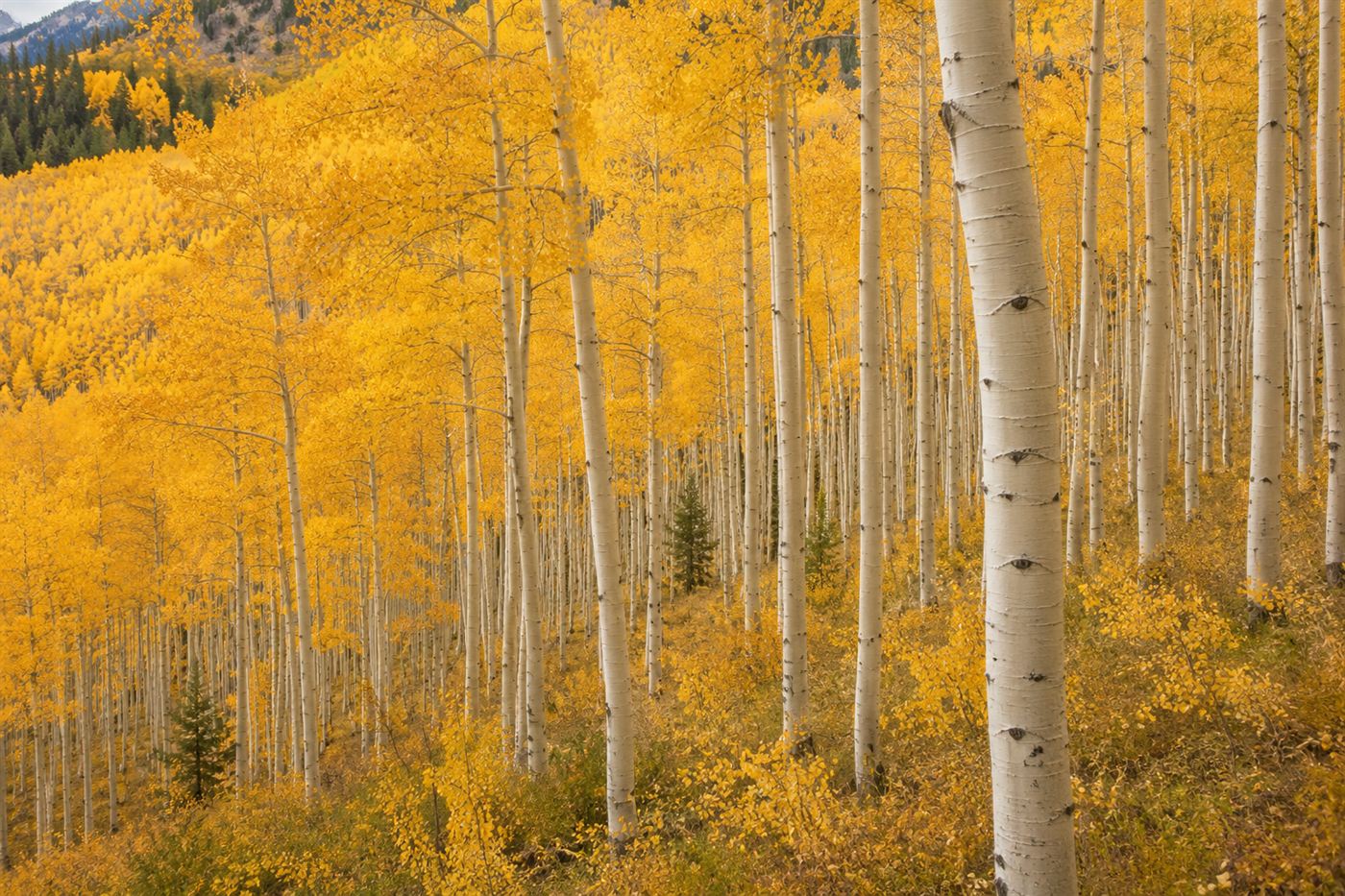
Pando looks like a forest of separate trees, but every trunk is part of one organism. Illustration: Watts & Wild.
Its name is Pando, Latin for "I spread", and it is sometimes called the Trembling Giant. As the science on it is documented, Pando is a single quaking aspen whose roughly 47,000 trunks are all genetically identical and joined underground by one continuous root system spreading across about 106 acres. Every trunk you can see is not a tree in its own right but a stem of the same individual, the way the hairs on your head are all part of one person.
This is the strange genius of the aspen. To us a forest is a crowd of separate lives competing for light. Pando is the opposite: a single life that has spent thousands of years quietly cloning itself across a hillside, until it became a wood you can walk through, and a record holder almost no visitor recognises.
One tree pretending to be a forest
Most trees you know reproduce by seed, each seedling a brand new individual. Aspens can do that too, but their real trick is sending up fresh trunks directly from their own roots, a process called suckering. A new stem pushes up from the root system a few metres from the last one, then another, and another, each one a perfect genetic copy of the original. Given enough centuries, a single seedling can carpet an entire slope in its own clones.
That is exactly what Pando has done. Underneath the soil, the whole grove is wired together into one body, sharing water, sugars and nutrients through a root network that may be the oldest living part of the entire organism. When the leaves turn gold in autumn, they all turn at almost the same time, because in a real sense they are all the same tree deciding it is autumn.
So how old is it
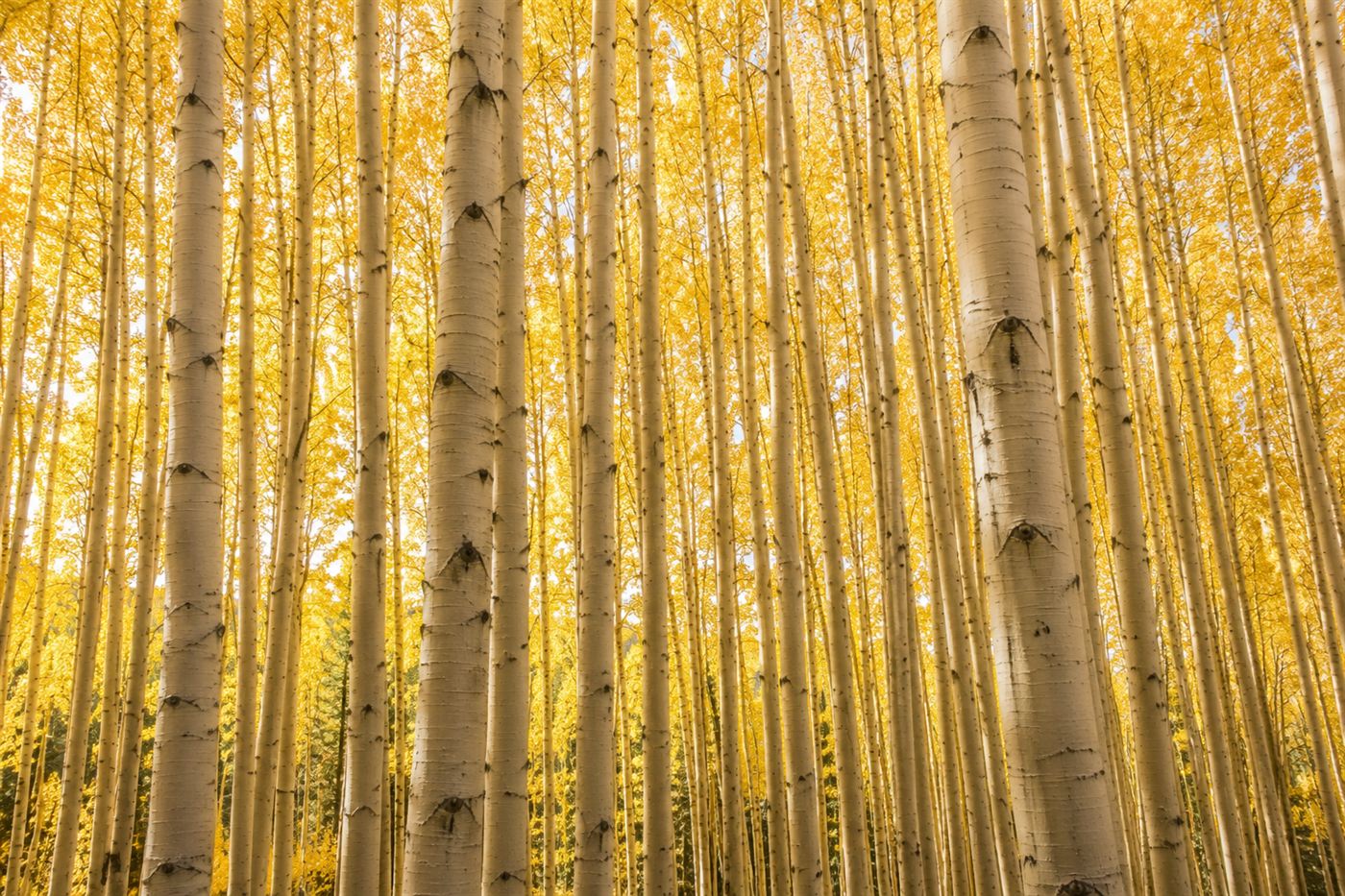
This is where Pando stops being merely strange and becomes almost unbelievable. Individual trunks live perhaps 100 to 130 years, but the organism as a whole, the root system that keeps throwing up new ones, is vastly older. Estimates run from several thousand years to as much as 80,000 years, which would make Pando older than human civilisation, older than the last ice age, older than cave paintings. The honest answer is that nobody knows its true age, because a clone leaves no rings to count, but even the cautious estimates place it among the most ancient living things on Earth.
Sit with that for a moment. If the larger figures are right, this grove has been alive and growing since before modern humans had spread across the planet, riding out ice ages and droughts by the simple, patient strategy of always sending up one more shoot.
The largest living organism we know of
Pando is often crowned the largest living organism, and by dry weight that is fair: as Live Science notes, its combined mass is estimated at around 6,000 tons, far heavier than a blue whale and heavier than any single giant sequoia. Spread that weight across 47,000 trunks and 106 acres, tie it all together below ground, and you have a contender for the most massive single living thing on the planet.
It is worth being precise, because nature loves an asterisk. By sheer ground area, a giant honey fungus in Oregon sprawls across more land. But that fungus is mostly thin threads through the soil, while Pando is thousands of tons of solid living wood standing in the open air. As a single visible, weighable organism, the Trembling Giant has few rivals anywhere.
The honest catch, and why a giant is dying
Here is the part that turns wonder into worry. After tens of thousands of years, Pando is now in trouble, and we are a large part of the reason. As Smithsonian magazine reported, much of the grove is no longer successfully regenerating, because as fast as the roots send up tender new shoots, deer and cattle eat them. A healthy aspen clone needs a steady supply of young stems coming up to replace the old ones that die. In much of Pando, those youngsters are being grazed away before they can ever reach the sky.
The result is a forest of the elderly. Across large parts of the clone there are almost no young or middle-aged trunks at all, just ageing veterans with nothing rising to take their place. The deeper cause is one we have heard before: we removed the wolves and other predators that once kept deer numbers in check, the deer multiplied, and a 6,000 ton organism that survived the ice ages is now being nibbled toward collapse. Fences put up around parts of the grove have let young stems shoot back, a hopeful sign that the giant can still recover if it is simply given the chance to grow up.
Why one quiet tree matters
It would be easy to file Pando under trivia, the fun fact that a forest is secretly one tree. But there is something larger in it. Here is a creature that has been alive for an almost incomprehensible span of time, that ties an entire landscape together underground, and that we could lose within a few human lifetimes through nothing more dramatic than too many deer and too few predators.
Pando is a reminder that the biggest, oldest living things are not always the loudest, and that they can be far more fragile than their size suggests. A single organism the weight of a small ship, possibly older than agriculture, is asking for something very modest in return for its survival: a little room for its children to grow. Whether it gets that room is, as so often, up to us.
A single tree the weight of a small ship, perhaps older than farming itself, is being slowly eaten to death by deer. Does something as ancient and irreplaceable as Pando deserve whatever it takes to save it, even culling the deer or fencing it off, or is this just nature taking its course? Tell us what you think in the comments.
Related reading: Scientists released just 14 wolves into Yellowstone in 1995, and the predators reshaped the elk, the forests, and eventually the very paths the rivers carve through the valley, or the Welwitschia, a desert plant that keeps just two leaves for a thousand years, or the wild horses that survive alone on a sandbar in the open Atlantic.
See also: the wood wide web, and the fight over whether trees really talk through fungi.