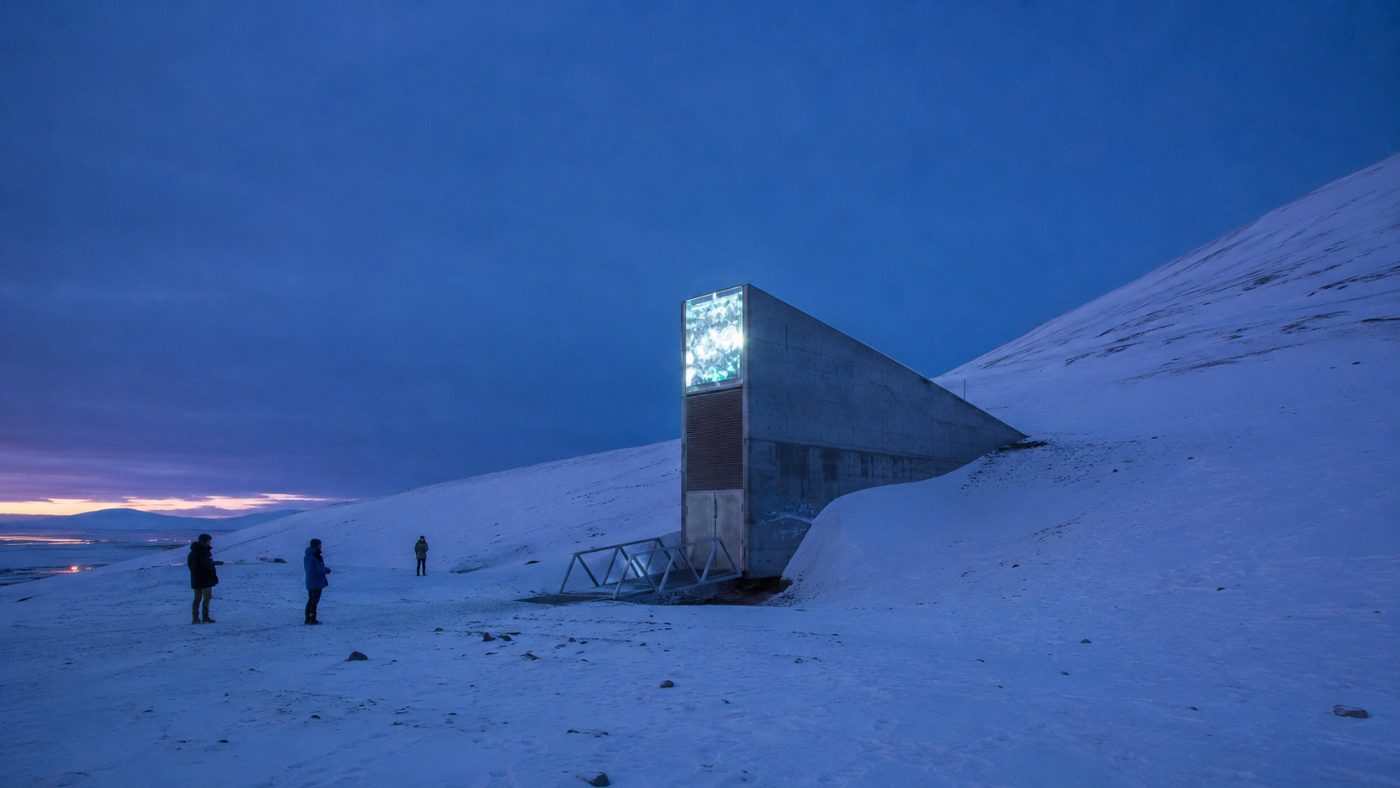
Bill Powell spent 33 years engineering a modified chestnut to rescue a species killed across 3.5 billion trees and died the month his most powerful ally walked away
By 1940 the American chestnut blight, a fungus carried on imported nursery stock, had erased the tree from a quarter of the eastern US forest, killing 3.5 billion of them in forty years. A biologist named Bill Powell gave the next three decades of his life to engineering a chestnut that could change that story. He died in November 2023. One month later, the project's main backer walked away.
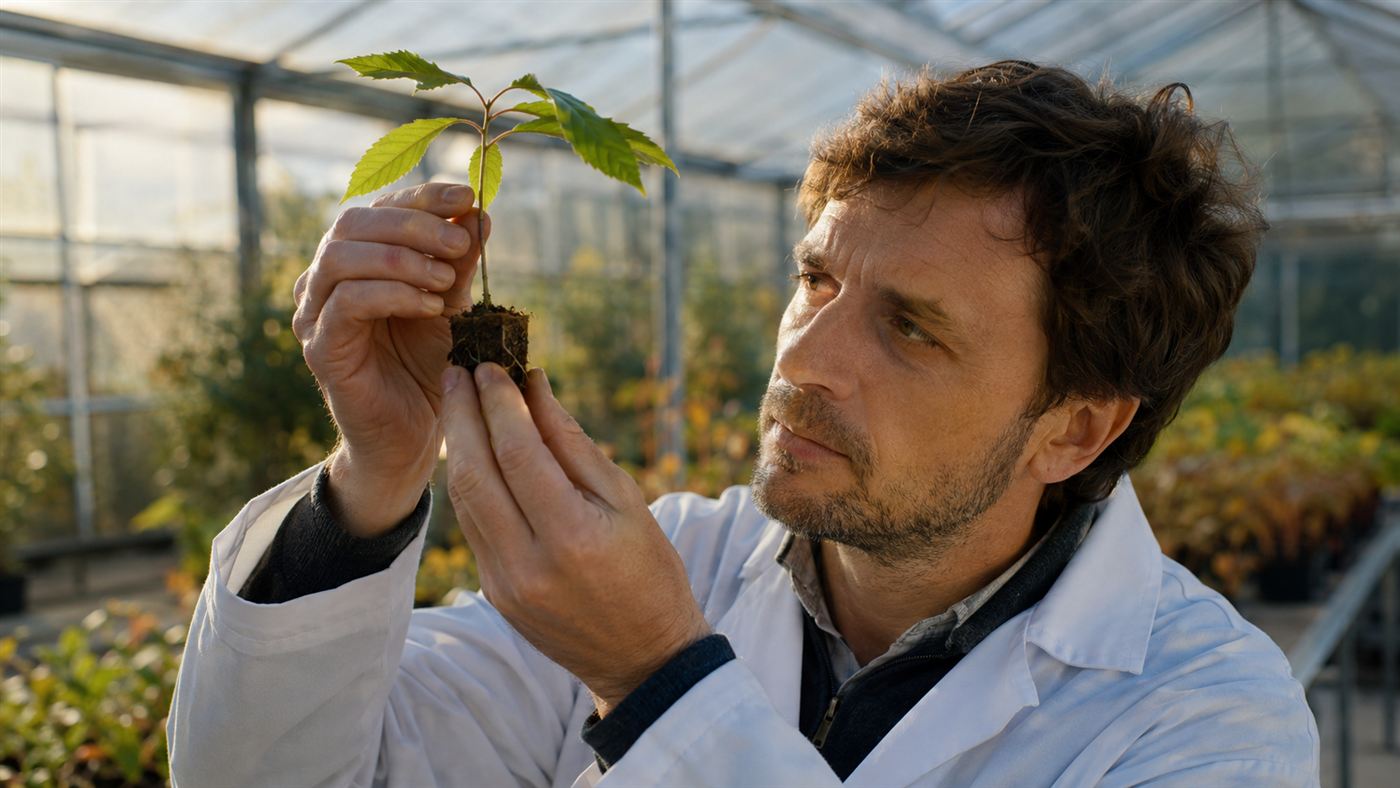
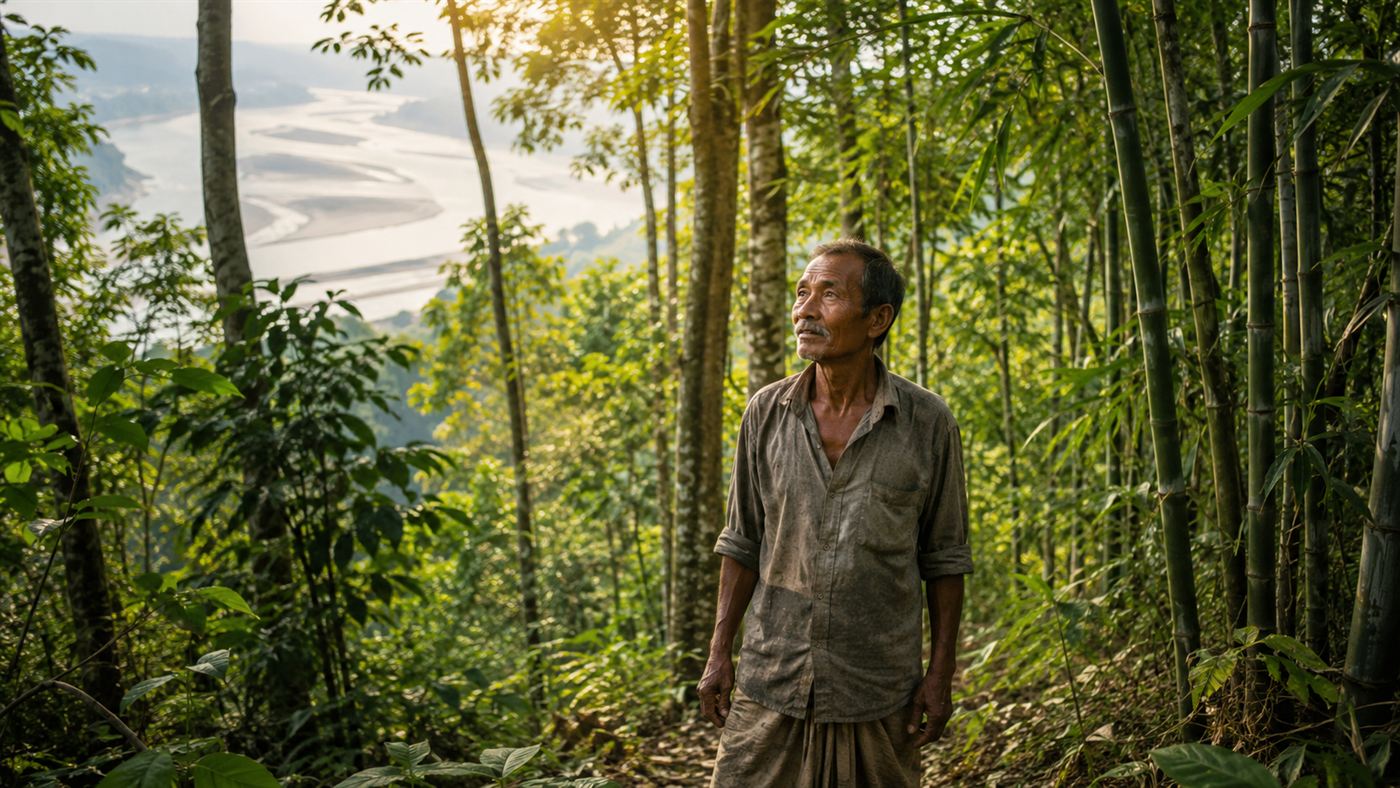
Bill Powell spent 33 years refining a single genetic modification that could let the American chestnut resist the blight that destroyed it. Illustration: Watts & Wild.
On November 12, 2023, William Powell, a biologist at the State University of New York's College of Environmental Science and Forestry in Syracuse, died after a career dedicated almost entirely to one tree. He had joined the faculty in 1983, co-founded the American Chestnut Research and Restoration Project in 1989, and retired in 2022 without seeing a final answer to the question that had shaped his working life: can a single gene from wheat save a species that a fungus wiped off the eastern United States in less than four decades?
Thirty days after Powell died, the American Chestnut Foundation, the country's leading chestnut restoration organization and the project's most prominent backer, announced it was withdrawing support from the petition to release his trees into the wild. It was the biggest institutional blow the project had ever taken, and Powell was not there to respond to it.
The tree that ran the mountains
Before 1904, the American chestnut was not simply another forest tree. It was, by most measures, the dominant hardwood of the eastern United States, growing from Maine to the Gulf states and covering roughly one in every four trees in the Appalachian forest. Individual specimens reached thirty meters tall and lived for centuries, producing an annual nut crop so heavy and reliable that ecologists today refer to it as a "mast superproducer."
Appalachian communities built their economic lives around it. The nuts fed families through winter and fattened hogs that were sold at market. The timber, rot-resistant and straight-grained, went into barns, fence posts, furniture, railroad ties, and telegraph poles. The bark, stripped and hauled to tanneries, fed a leather industry that employed entire counties. In parts of western North Carolina and Virginia, the chestnut was not a resource so much as a foundation, the thing the whole local economy stood on. When it was gone, that foundation went with it.
The American chestnut blight killed 3.5 billion trees in forty years
In 1904, a shipment of Asian chestnut trees arrived at the New York Zoological Garden in the Bronx, carrying an invisible passenger: Cryphonectria parasitica, a fungus that Asian chestnuts had evolved to tolerate and American ones had never encountered. It spread through the wind, through bark beetles, through everything the forest offered as a highway. When it landed on bark, it formed a canker and began producing oxalic acid, a toxin that choked the thin layer of living tissue just beneath the surface. The tree above the infection died. The roots survived and sent up new sprouts, only for the fungus to find them before they reached breeding age.
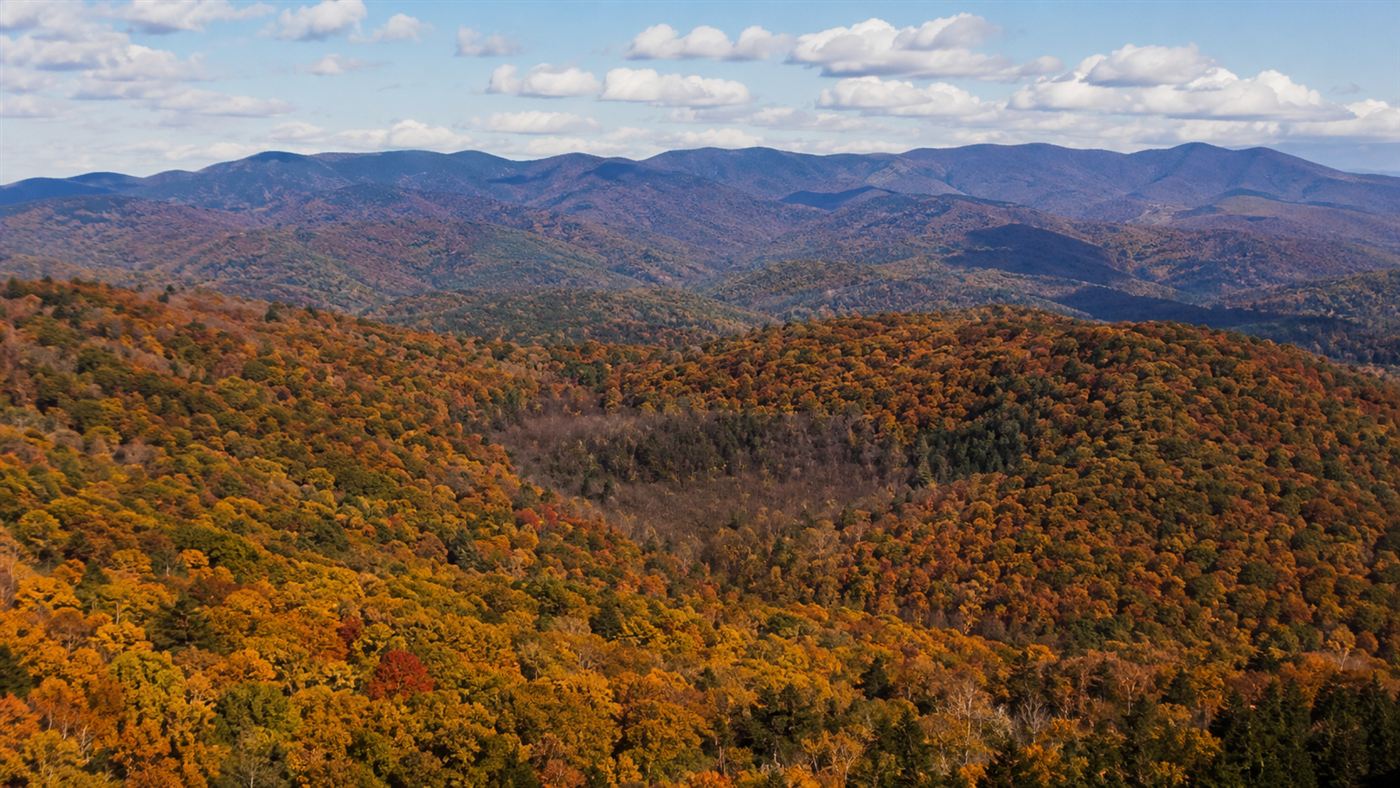
According to the American Chestnut Foundation, the blight killed an estimated 3.5 billion trees between 1904 and 1940, reducing the species from one-quarter of the eastern US forest to functional extinction. The speed of it was extraordinary. A species that had dominated an entire mountain range for thousands of years was ecologically gone within a human lifetime. The Appalachian ridge that had once turned gold and brown in autumn with chestnut canopy fell silent.
A wheat gene in a chestnut
In 1989, a construction magnate from Buffalo named Herb Darling called SUNY ESF to ask whether genetic engineering might offer a path forward on the chestnut. Powell and his colleague Charles Maynard said yes. What followed was a decade of painstaking laboratory work before Powell had a stable line he could actually grow and test.
The gene he eventually settled on was not exotic. Oxalate oxidase, known as OxO, is found in wheat, strawberries, moss, and many other common plants. It breaks down oxalic acid, which is precisely the toxin the blight fungus uses to kill. As MIT Technology Review reported in 2024, Powell spent a decade optimizing the process before inserting the wheat OxO gene into chestnut embryos and selecting the best-performing lines. The most promising result was named Darling 58, after Herb Darling. It looked like an American chestnut, grew like an American chestnut, and in early tests tolerated the blight significantly better than its unmodified relatives.
In January 2020, Powell's team submitted a petition to the USDA, the EPA, and the FDA for permission to release the trees from controlled research plots into the wild. It would have been the first genetically engineered forest tree ever deregulated in the United States. The USDA's own environmental assessment, published in 2022, found the trees "unlikely to pose a plant pest risk" and suggested that the environmental impacts of planting them were likely to be neutral or positive.
The month everything changed
Powell retired in 2022. He handed over the project directorship to Andy Newhouse and watched, from a distance, as the regulatory process ground forward. A final decision from all three agencies seemed closer than it had ever been.
Then two things went wrong in close succession. In mid-2022, directors of the research project entered talks with private investors to form a company, American Castanea Inc., to commercialize production of the Darling trees. The American Chestnut Foundation, which had provided field testing sites and years of institutional support under the explicit understanding that any deregulated tree would be in the public commons, learned about the commercialization effort and was blindsided by it.
The second blow was worse. Late in 2023, a biologist at the University of New England discovered that the research teams had been mislabeling two distinct transgenic lines, D54 and D58, possibly since 2016. As the Allegheny Front reported in its coverage of the split, the regulatory petitions had been filed under the name D58, but many of the field tests and performance data accumulated over years had actually come from D54, which was showing inconsistent blight resistance and reduced growth in broad-scale trials.
On December 12, 2023, the American Chestnut Foundation formally withdrew its support from the Darling petition. It cited the lab error, "disappointing performance results," and the commercialization concern as its reasons. Bill Powell had died thirty days earlier. His life's work, still waiting for federal regulatory decisions from three agencies, had just lost its most prominent institutional champion.
Two roads left open
The story did not end there. Andy Newhouse, who took over when Powell retired, is developing a next-generation approach called DarWin, short for Darwin wound-inducible. Unlike Darling 58, which expresses the OxO gene constantly, DarWin switches it on only when bark is physically wounded, the moment a blight canker actually forms. The idea is that a tree not spending energy fighting a toxin that has not yet arrived can put more into growing and producing nuts. The regulatory process for DarWin would have to start fresh.
Meanwhile, the American Chestnut Foundation's own non-GMO backcross program has been running a parallel path for decades, crossing American chestnuts with blight-resistant Chinese chestnuts and selecting the offspring that resist disease while retaining the growth habit and appearance of their American parent. In February 2026, a paper published in Science brought a significant new tool to this effort. Researchers from Virginia Tech, Berry College, and HudsonAlpha Institute for Biotechnology showed that genomic analysis can now predict which individual trees will resist the blight and grow tall, dramatically shortening the breeding cycle. The next generation of backcross trees is expected to carry about 75 percent American chestnut ancestry with roughly twice the average blight resistance of the current cohort. That is not a tree ready for the wild yet, but it is a measurably shorter path.
The honest catch
A blight-resistant chestnut tree is not the same as a restored chestnut ecosystem. The forests that filled the space after 1940 are not the forests the chestnut shaped. Oaks now dominate mid-Atlantic canopies. Deer browse chestnut seedlings hard in the overgrown understory. The squirrels and bears that once spread chestnut nuts across hundreds of miles have spent eighty years adapting to acorns. Planting chestnuts at scale means competing with an established forest, not filling an empty one.
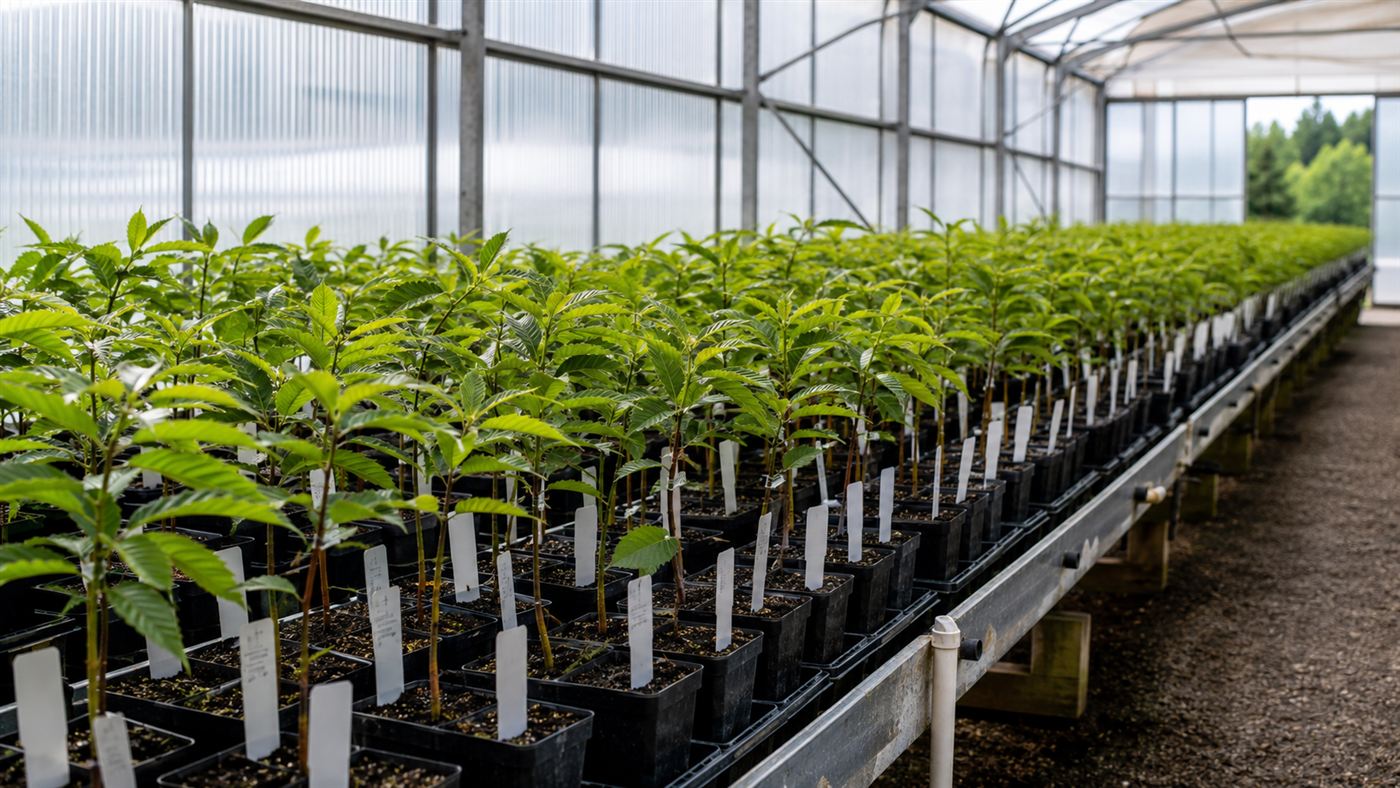
The USDA has still issued no final decision on the Darling 58 petition as of June 2026, more than six years after it was filed. American Castanea has 2,500 transgenic seedlings and four million dollars in seed funding, well short of the seven to ten million it estimates it needs. The non-GMO backcross program, energized by the genomic breakthrough, will not produce restoration-ready trees at meaningful scale for at least another decade. And the chestnut's ecological role, the annual mast that fed bears, turkeys, passenger pigeons, deer, and dozens of other species, cannot simply be plugged back in. The species that once depended on it are either gone themselves or have reorganized their lives around something else.
What is being built, one seedling and one paper at a time, is the foundation for a forest that does not yet exist. Whether it will be built through a gene from wheat, through patient hybridization guided by genomics, or through some combination of both, is still genuinely open.
Bill Powell entered the Air Force out of high school and left it four years later for a biology degree, then spent his PhD studying the very fungus he would spend the rest of his career trying to defeat. He understood the enemy before he tried to beat it. He did not live to see whether the tree he spent 33 years building will ever stand in an eastern forest on its own. His successor is still working on it. So are the genomicists in Georgia and Virginia, and the volunteers testing backcross seedlings across twelve states. The chestnut is not back. But it is not as gone as it was the day Powell started.
Should the American chestnut return through a wheat gene inserted by scientists, through decades of patient crossbreeding, or are both approaches missing the point? Tell us what you think in the comments.
Related reading: Scientists released just 14 wolves into Yellowstone in 1995, and the predators reshaped the elk, the forests, and eventually the very paths the rivers carve through the valley. See also how a fungus erased the world's favorite banana, the Gros Michel, and why its replacement faces the same fate.