This desert plant grows just two leaves and lives for over a thousand years
In one of the driest places on the planet, where almost nothing should be able to grow, sits a sprawling, tattered green monster that looks half dead and is older than most cathedrals. It has only ever grown two leaves, and it has been growing them since before the Crusades. The Welwitschia may be the strangest plant alive.
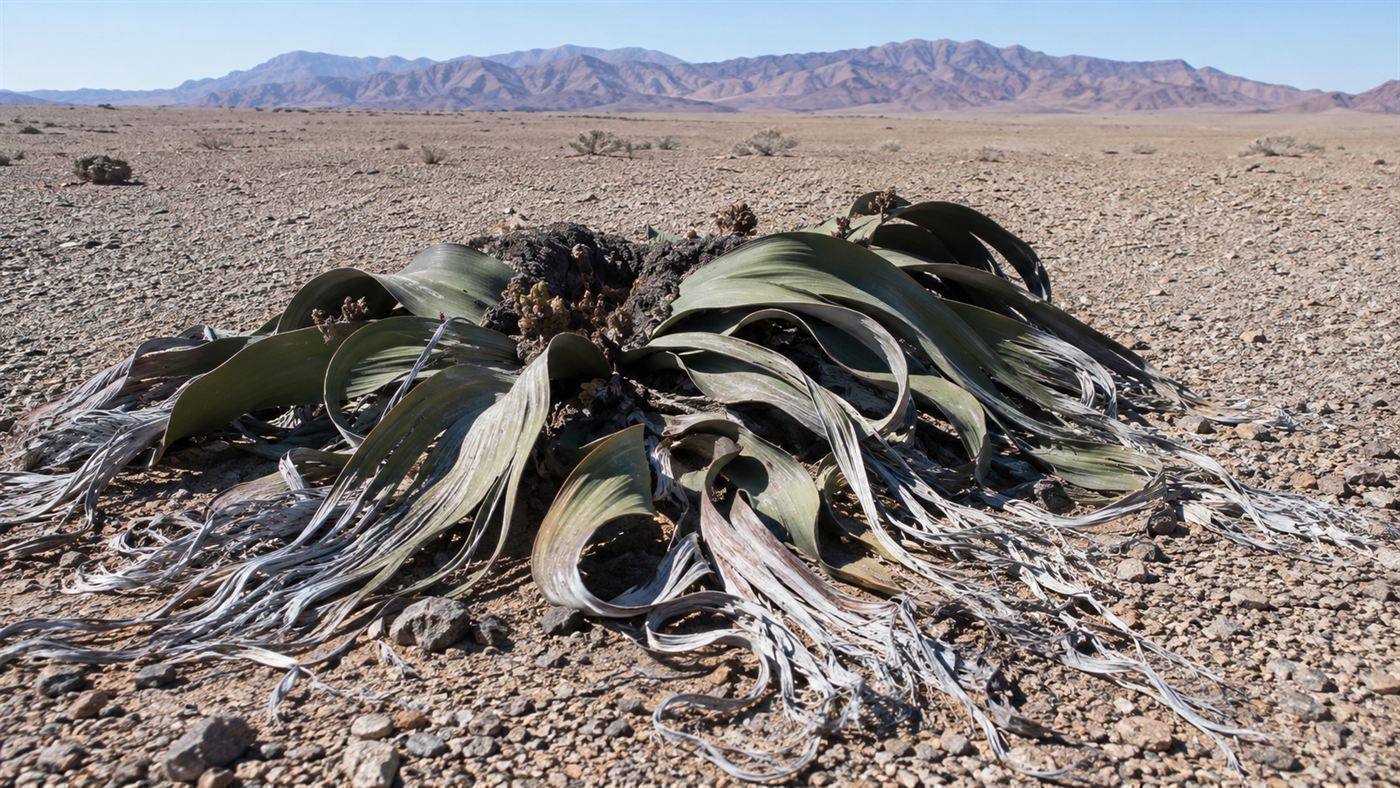
It looks like a heap of dying foliage, but this is a single plant with just two leaves. Illustration: Watts & Wild.
Most plants follow familiar rules. They grow leaves and shed them, they flower and fade, and few last more than a human lifetime. The Welwitschia ignores almost all of those rules, surviving for centuries on two leaves alone in a desert where rain may not fall for years at a time.
To meet one is to look at something that has barely changed since dinosaurs walked the Earth, still quietly going about its business in the sand.
How the Welwitschia survives the desert
Its home is the Namib, a brutal coastal desert in southern Africa and one of the most ancient and arid landscapes on the planet. Ordinary rain is almost useless here, so the plant gets its water another way. The Welwitschia drinks the fog that rolls in off the cold ocean, while sending roots deep underground to reach buried water far below the surface.
That double strategy, catching moisture from the air on its broad leaves and mining it from deep below, lets it endure conditions that would kill almost any other large plant. It is built not to grow fast or spread widely, but simply to persist, hunkered down and patient, outlasting droughts that come and go over hundreds of years.
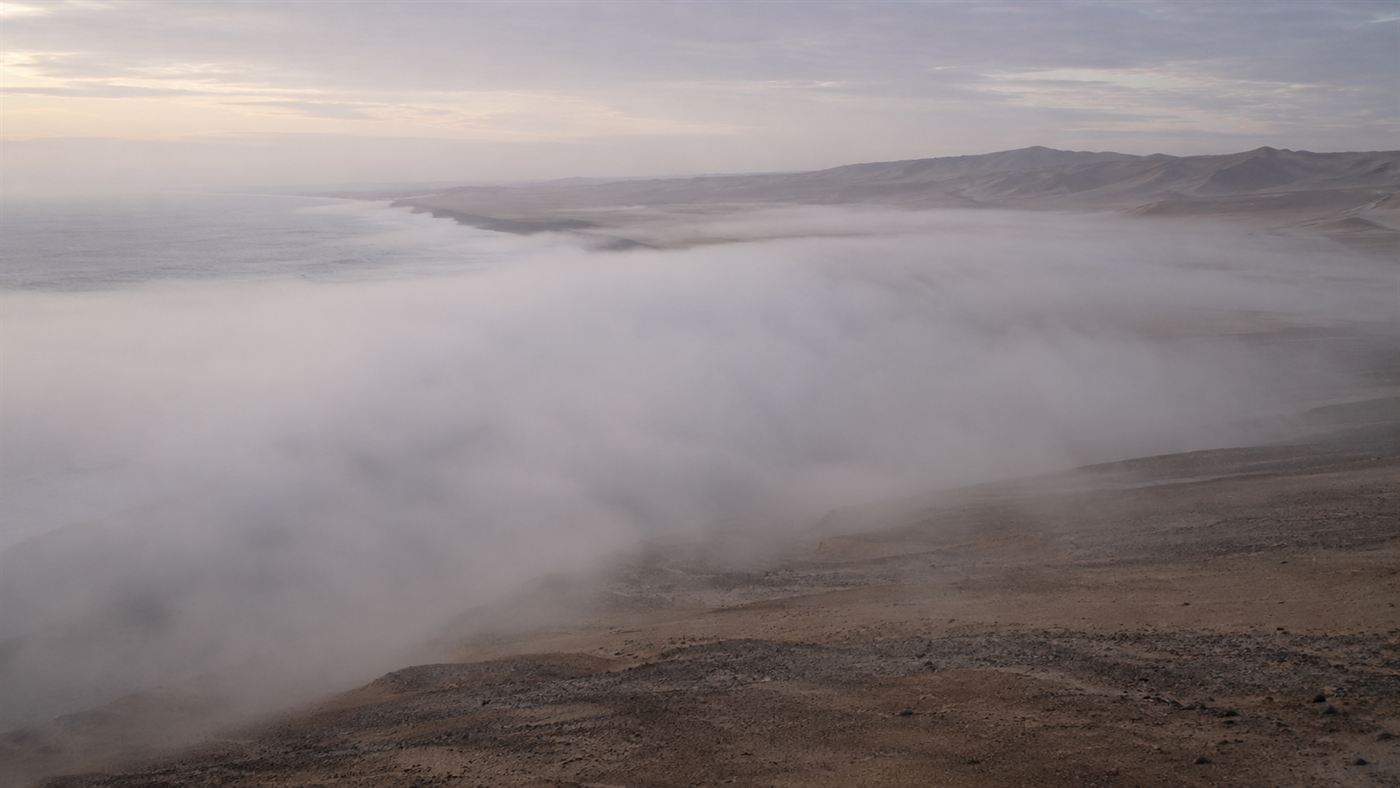
Just two leaves, for a thousand years
The single strangest fact about the Welwitschia is its leaves. It does not grow new ones and drop old ones like a normal plant. A Welwitschia sprouts exactly two leaves and then keeps those same two leaves for its entire life, growing them continuously from their base for as long as the plant lives.
Over the centuries those two leaves grow several metres long, while the desert wind and blowing sand constantly tear at their tips, splitting them lengthwise into a mess of leathery ribbons. That is why an old Welwitschia looks like a chaotic clump of many leaves when it is really just two, endlessly extending and endlessly fraying. They are, by some measures, the longest-lived leaves of any plant on Earth.
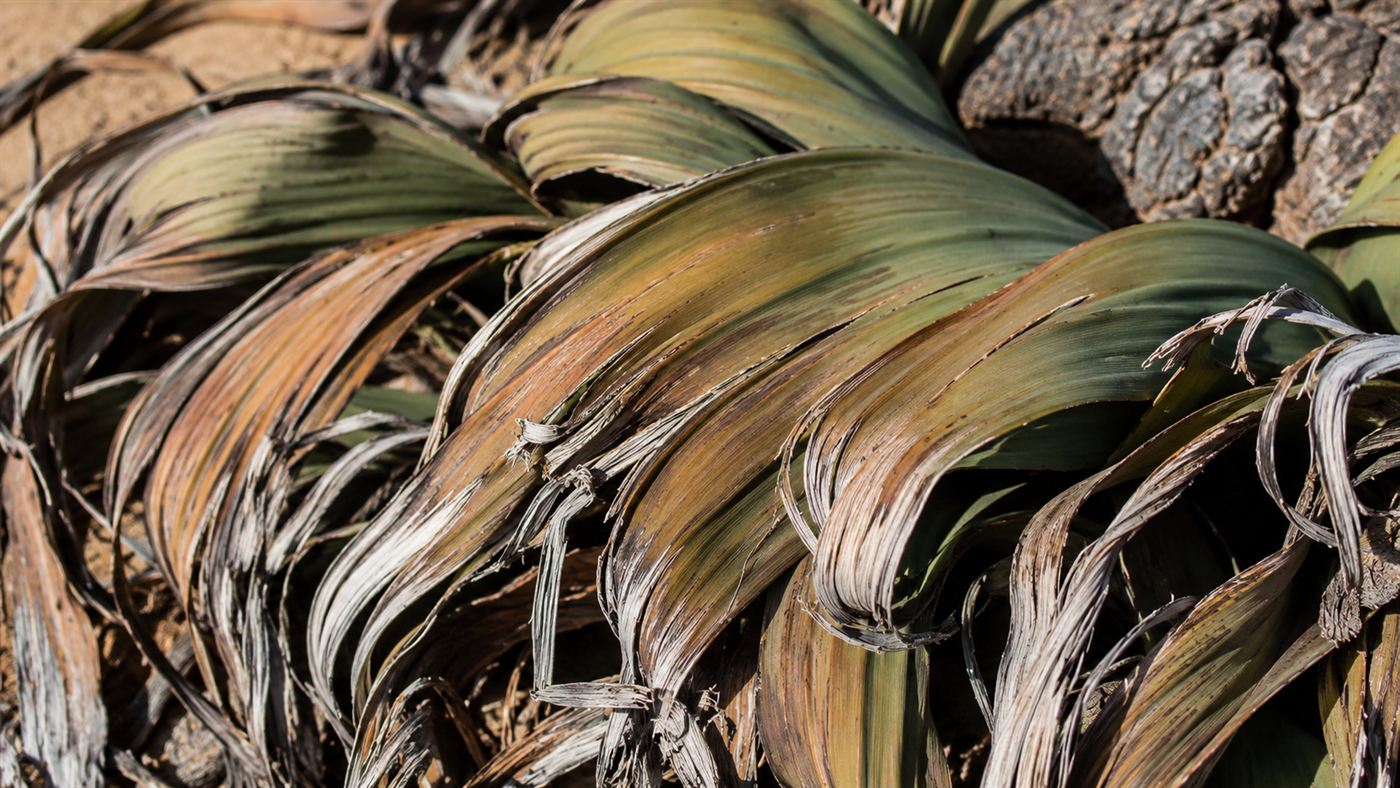
A living fossil from the age of dinosaurs
The Welwitschia is not just old as an individual but ancient as a kind. It is the lone survivor of a plant lineage that stretches back well over a hundred million years, with no close living relatives of its own. Botanists call the Welwitschia a living fossil, a leftover from the time of the dinosaurs that has outlived almost everything related to it.
It is so peculiar that it sits in a family all by itself, neither a normal flowering plant nor quite like the conifers it is distantly related to. The naturalist who first studied it in the 1800s was so astonished that, the story goes, Charles Darwin called it the platypus of the plant kingdom, a creature that seems to break every category we try to put it in.
How long does a Welwitschia live?
Far longer than almost anything green you have ever seen. The oldest Welwitschia plants are believed to be well over a thousand years old, with some estimates reaching close to two thousand, which would mean they were already ancient when Europe was still in the Middle Ages.
That extreme patience is the whole secret of the plant. It does not try to win by growing quickly or producing showy flowers, but by refusing to die, sitting out century after century in a place too harsh for its rivals to follow. In a desert that punishes haste, slowness is the ultimate survival skill.
How many leaves does a Welwitschia have?
The honest, almost unbelievable answer is two, no matter how old or how large the plant becomes. Everything you see in a sprawling, ragged Welwitschia is just those two original leaves, split and shredded by the desert into what looks like a tangle of dozens.
It is worth being clear about the romance, though. The Welwitschia is sometimes described as a plant that "cannot die," which is not quite true; it can be killed and its lifespan is finite, even if enormous. What is real is rare enough: a living thing that drinks fog, hoards two leaves for a millennium, and has watched the world change around it while staying almost exactly the same.
A plant that drinks fog, keeps two leaves for a thousand years, and has barely changed since the dinosaurs is hiding in plain sight in the desert. What else have we overlooked simply because it survives by being slow instead of spectacular? Tell us what you think in the comments.
Related reading: Pando, a forest in Utah that is secretly a single ancient organism, possibly tens of thousands of years old, or Socotra's alien dragon blood trees, an entire island flora found nowhere else on Earth, or the Judean date palm brought back to life from a 2,000-year-old seed, or the fairy circles that tile the Namib in a pattern no one fully understands.