The longest-lived animal with a backbone on Earth is a shark in the Arctic that may live for 400 years, grows barely a centimetre a year, and does not become an adult until it is 150 years old
Somewhere in the cold black water of the North Atlantic and the Arctic, a shark is swimming slowly through the dark that may have been alive when Shakespeare was still writing plays. It is the Greenland shark, and it holds a record so extreme that scientists struggled to believe it: it is the oldest vertebrate, the longest-lived animal with a backbone we have ever found, by a margin of nearly two centuries.
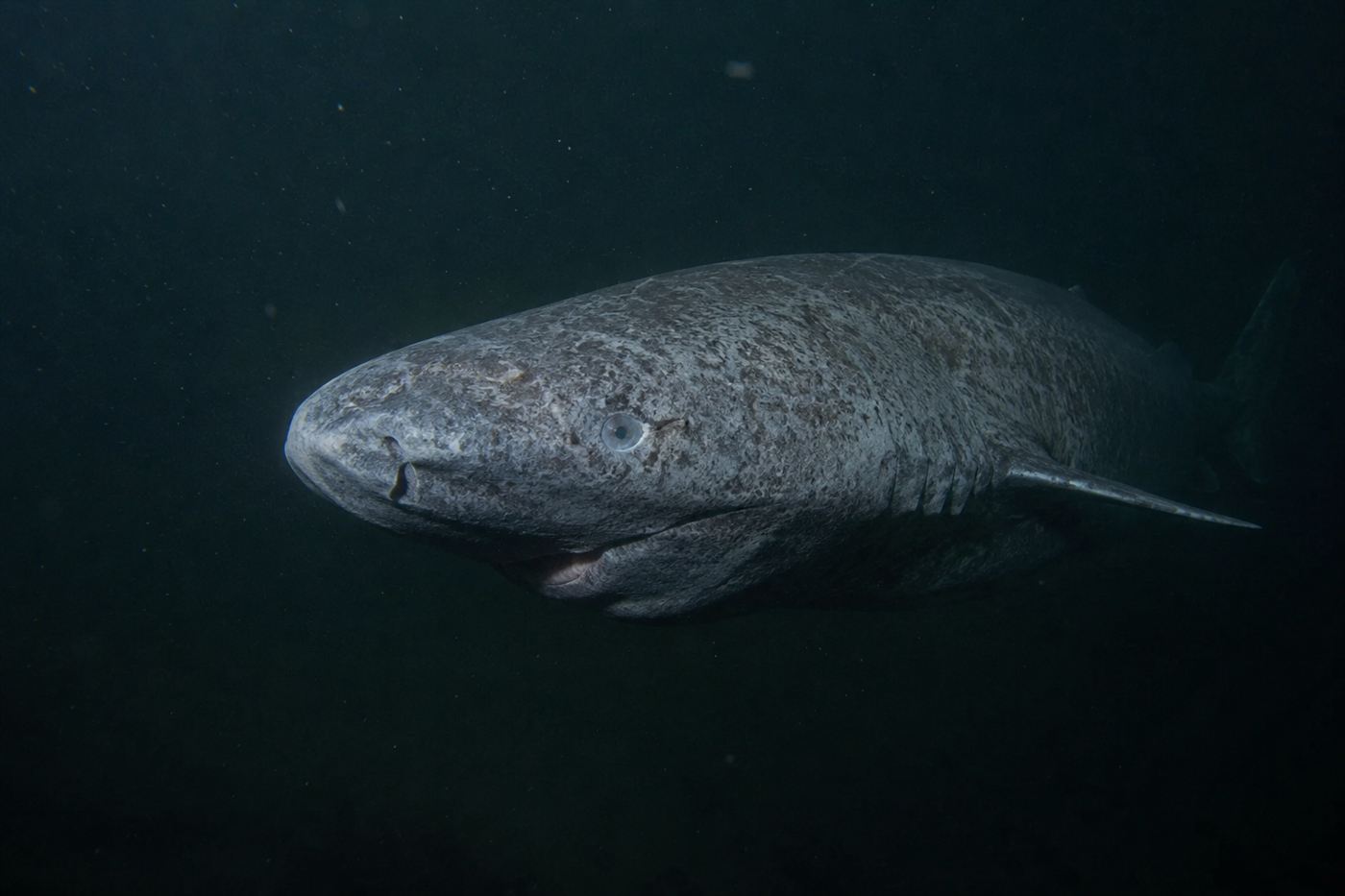
The Greenland shark drifts through the cold dark for centuries. Illustration: Watts & Wild.
For most of history nobody had any idea how old these animals got. They are big, slow, deep-water sharks that few people ever see alive, and there was no obvious way to read their age. Then in 2016 a team of researchers found a clever trick hidden inside the sharks' own eyes, and the answer that came back rewrote the record books.
The numbers are almost hard to process. As the journal Science reported, dating a group of these sharks gave lifespans of at least 272 years, with the largest animal estimated at around 392 years. The previous vertebrate record holder, the bowhead whale, manages a little over 200. The Greenland shark did not just break the record. It doubled it.
How we found the age of the Greenland shark, the oldest vertebrate
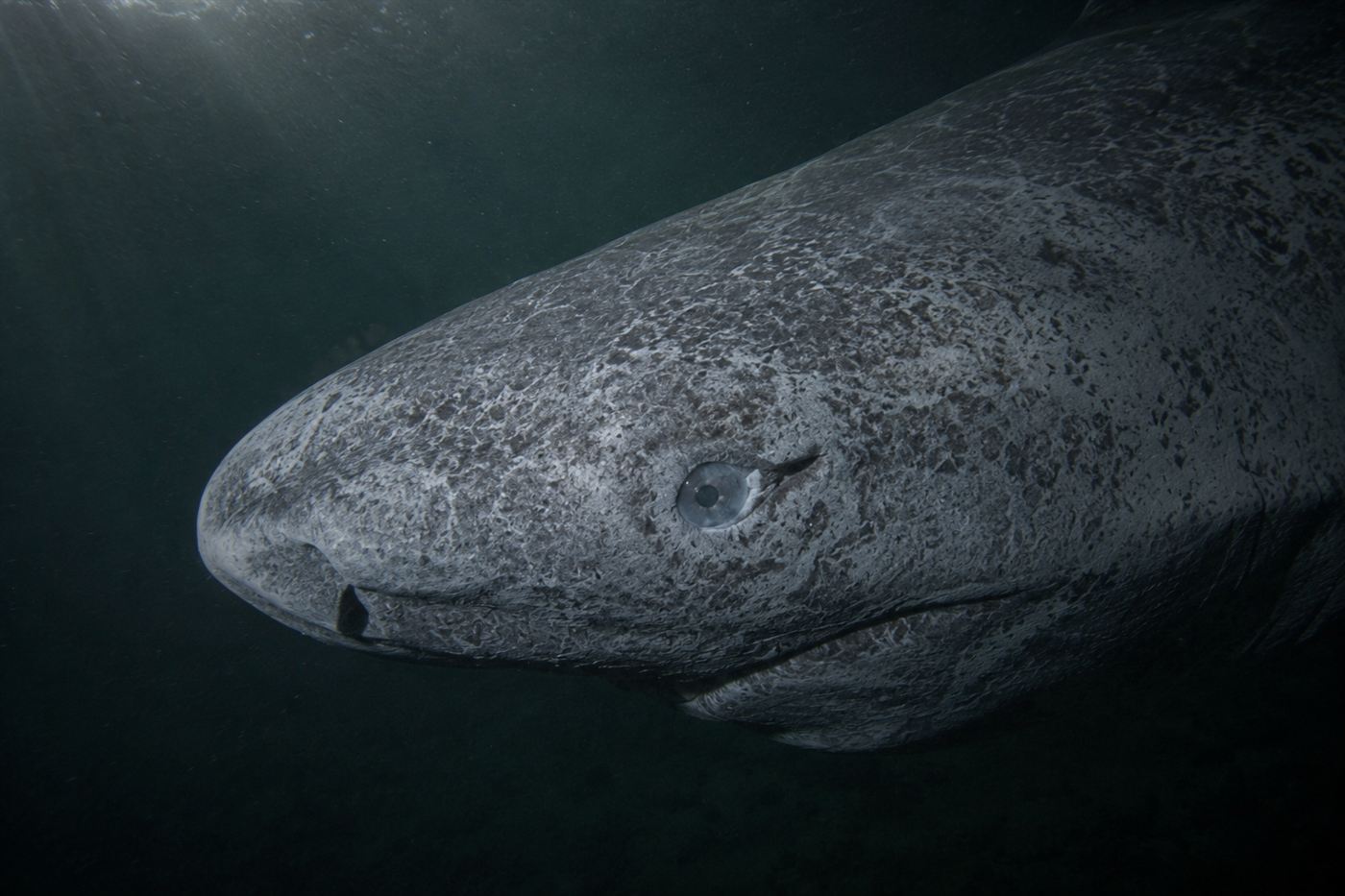
Ageing a fish normally means counting growth rings, like tree rings, in hard parts such as ear bones. Sharks have almost no hard, bony parts to count, so that approach fails completely. The breakthrough was to look at the one part of the shark that never stops being preserved: the centre of the lens in its eye, which forms before birth and stays chemically frozen in time for the animal's whole life.
Researchers measured the carbon in those ancient lens cores, and used a grim accident of history to read it. As the method is documented, the atomic bomb tests of the 1950s released a pulse of radioactive carbon-14 into the oceans, leaving a clear time stamp. Sharks whose eye cores carried that bomb signal were young; sharks born long before it were ancient. From there the team could estimate just how far back the oldest ones reached, and it reached astonishingly far.
The slowest life on Earth
Living for four centuries means doing everything in slow motion. The Greenland shark grows at a crawl, gaining only about half a centimetre to a centimetre in length a year. A big one stretching four or five metres has therefore been growing, steadily and patiently, for hundreds of years.
The strangest consequence is its childhood. As the Smithsonian notes, these sharks are thought to reach sexual maturity only at around 150 years old. Let that sink in: an animal can swim the oceans for a century and a half, longer than most countries have existed in their current form, before it is even old enough to have a single pup. By the standards of the Greenland shark, a 100-year-old is a teenager.
Why the cold and the dark make it possible
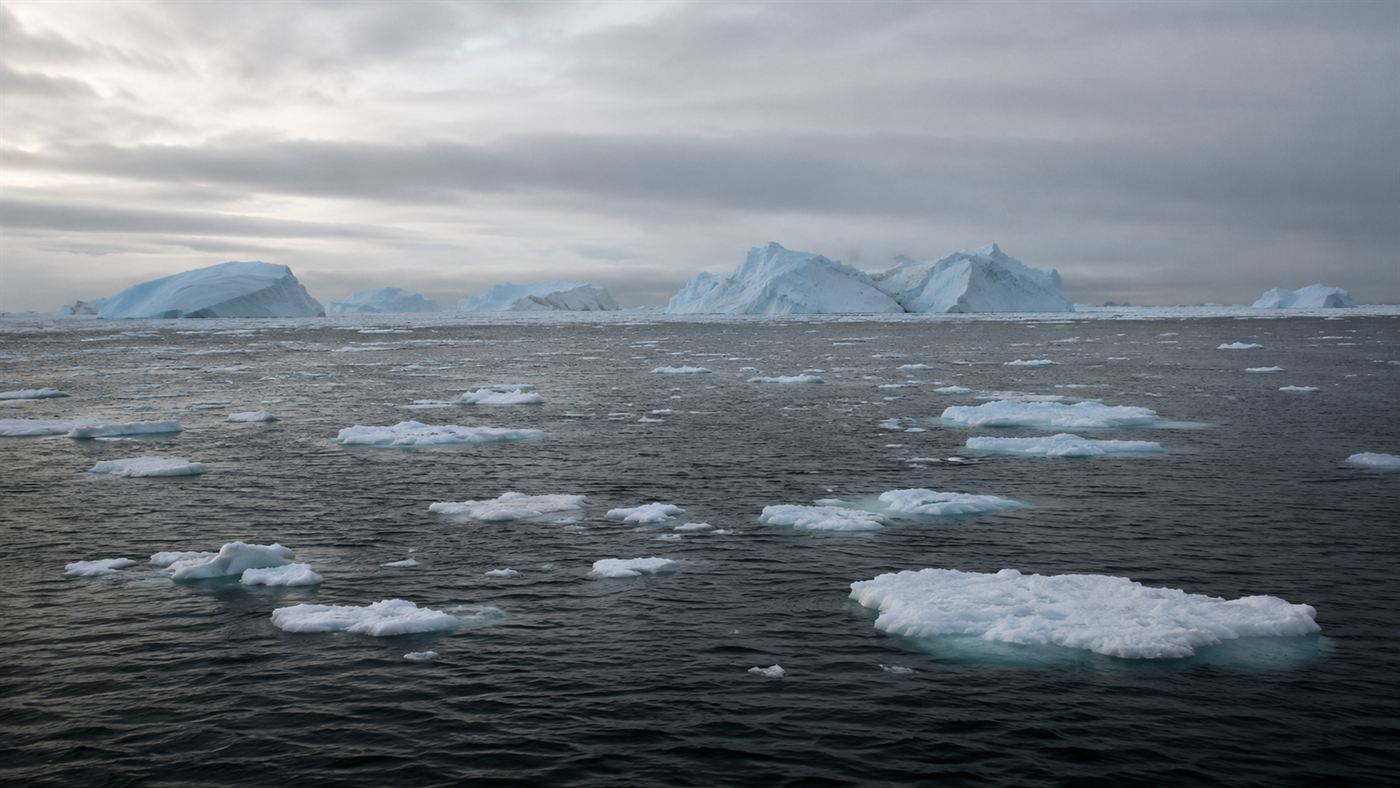
How does anything live this long? The leading idea is that the Greenland shark has turned the harshness of its home into a superpower. It lives in some of the coldest water on the planet, often deep below the surface where the temperature hovers near freezing and the dark is total. In that chill, everything slows down, including the chemistry of life itself.
A body that runs cold and slow ages slowly too. The shark barely moves, eats rarely, grows by millimetres and seems to put off every milestone of life for as long as physically possible. Where most animals burn brightly and briefly, the Greenland shark has made the opposite bargain: live frozen, live slow, and in exchange, live almost unimaginably long.
The honest catch
A few caveats keep this wonder honest. The headline ages come with a wide margin of uncertainty; the oldest shark was dated to roughly 392 years give or take more than a century, so the true figure could be quite a bit less, or even more. We genuinely do not yet know the real upper limit of a Greenland shark's life.
It is also an animal it is easy to romanticise and easy to harm. Growing so slowly and breeding so late makes the species painfully vulnerable; a population that takes 150 years just to start reproducing cannot recover quickly from being killed off. Their flesh is laced with natural toxins and is poisonous unless carefully treated, and many individuals swim half-blind, their eyes hosting a parasite. The four-century lifespan is the headline, but it sits on top of a strange, fragile and barely understood life.
Why a 400-year-old shark matters
Beyond the sheer wonder of it, an animal this old is a scientific treasure. A creature whose body resists ageing for centuries is exactly what researchers studying human ageing dream of understanding; somewhere in the Greenland shark's slow chemistry may be clues about how a body holds off the damage of time. Each old shark is also a living archive, its tissues a record of the ocean it has swum through since the 1600s or 1700s.
There is a humbling perspective in it too. A single one of these sharks, gliding through the dark right now, may have been born before electricity, before the steam engine, before the country you live in took its modern shape. It has outlasted empires without ever knowing they existed, simply by staying cold, slow and patient. In a world obsessed with speed, the longest life on Earth belongs to the animal in the least hurry of all.
The cold deep is full of such survivors, including the coelacanth, a fish thought extinct for 66 million years until one surfaced in 1938.
A shark swimming the Arctic today may have been born before Isaac Newton, and it still might not be fully grown. Does a life measured in centuries make the Greenland shark something we are obliged to protect at all costs, or is it just a strange quirk of very cold water? Tell us what you think in the comments.
Related reading: What looks like a forest of 47,000 trees in Utah is secretly a single living thing, one giant aspen clone weighing 6,000 tons that may be 80,000 years old and is quietly dying. For another side of sharks, meet Eugenie Clark, the Shark Lady who proved they could think. See also the bowhead whale, the longest-living mammal, found carrying a harpoon from the 1880s, or the giant tube worms that live with no mouth on the chemistry of deep-sea vents.