For centuries people believed the wild horses of Sable Island swam ashore from shipwrecks, but the truth is stranger, they are the living survivors of an 18th century expulsion
Out past the edge of Nova Scotia, on a bare ribbon of sand that swallows ships whole, roughly 500 horses live entirely alone. The story everyone tells about how they got there is beautiful, and wrong. The real history of the Sable Island horses is darker, and more human.
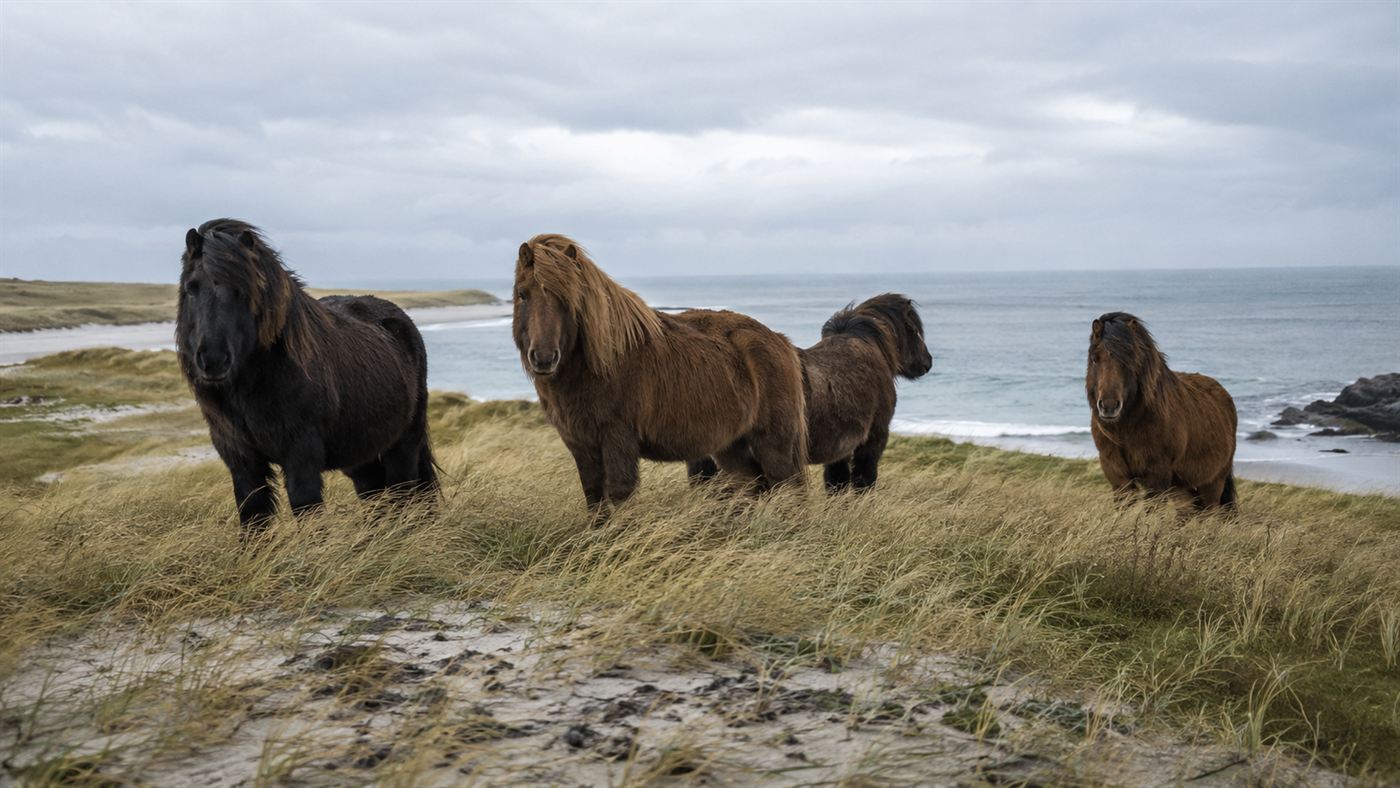
Wild horses on the treeless dunes of Sable Island, hundreds of kilometers out in the Atlantic. Illustration: Watts & Wild.
Look at a map of the North Atlantic and you can almost miss it: a thin crescent of sand hanging in the open ocean, far from anything. This is Sable Island, and it has no business supporting large animals at all. Yet it is home to one of the most famous wild horse herds on Earth, a population that has lived and bred there, untouched, for more than 250 years.
As the Canadian Encyclopedia records, the island sits about 300 kilometers southeast of mainland Nova Scotia, a windblown sandbar with no natural harbor and no shelter. How horses came to gallop across it, and why they were left there, is a story that people have gotten wrong in the most romantic way possible for generations.
The short version: Sable Island is a crescent sandbar 300 km off Nova Scotia, nicknamed the Graveyard of the Atlantic for its 350-plus shipwrecks. It holds about 500 wild horses. They did not swim from wrecks, as legend says. They descend from Acadian horses shipped there by a Boston merchant around 1760, and since 1960 Canadian law has protected them, unmanaged and untouchable.
A sandbar in the middle of the ocean
Sable Island is barely there. It stretches about 42 kilometers from end to end but is only around a kilometer and a half across at its widest, a sliver of dune and marram grass that the wind is constantly reshaping. There are no trees. There is no bedrock. The whole thing is essentially a pile of sand riding on the continental shelf, and it moves and shifts a little with every storm.
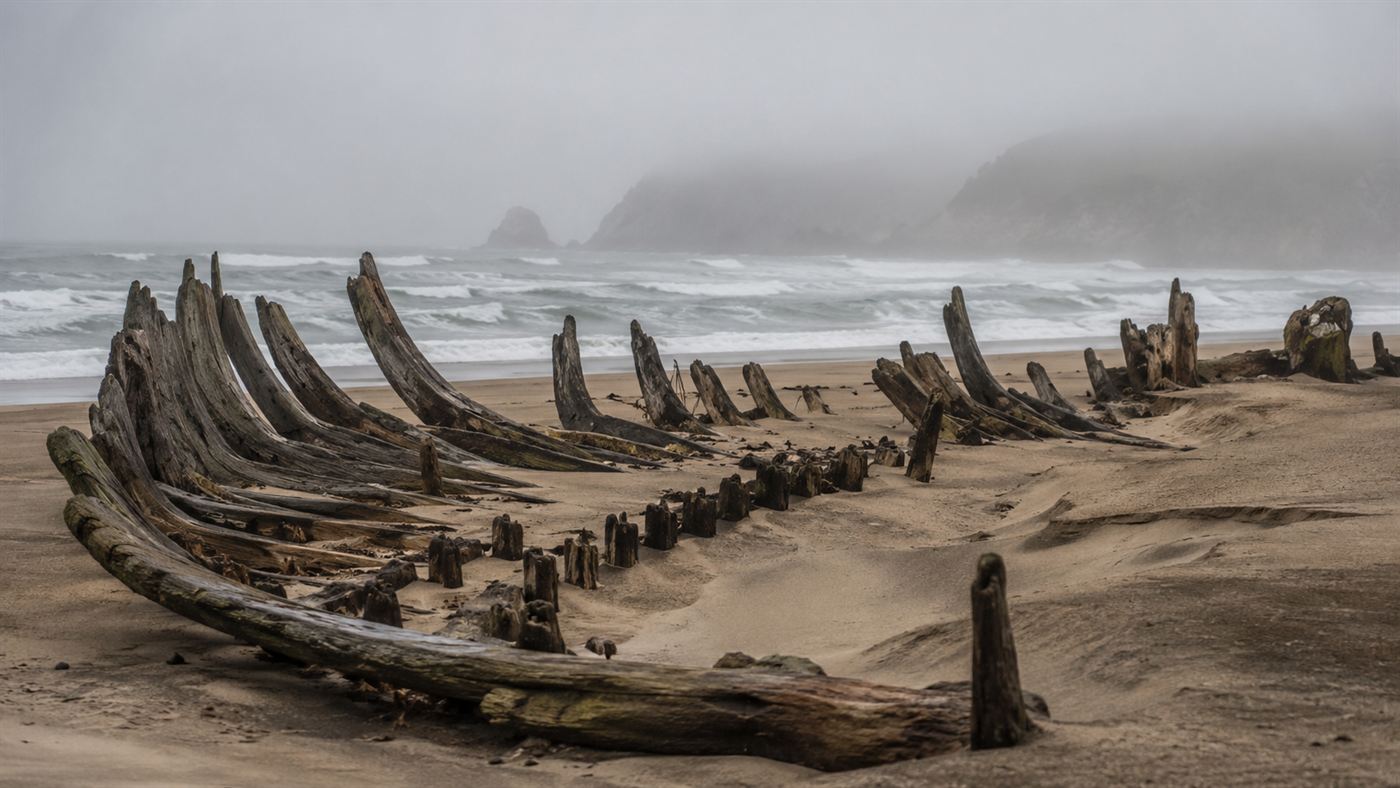
That location made it lethal. Sitting right in the path of Atlantic shipping and wrapped in fog and hidden shoals, Sable Island has wrecked more than 350 known vessels over the centuries, which is how it earned the grim nickname the Graveyard of the Atlantic. For a long time the only humans there were the crews of lifesaving stations, posted to the sand to rescue sailors from the ships the island kept eating.
The wild horses that should not exist
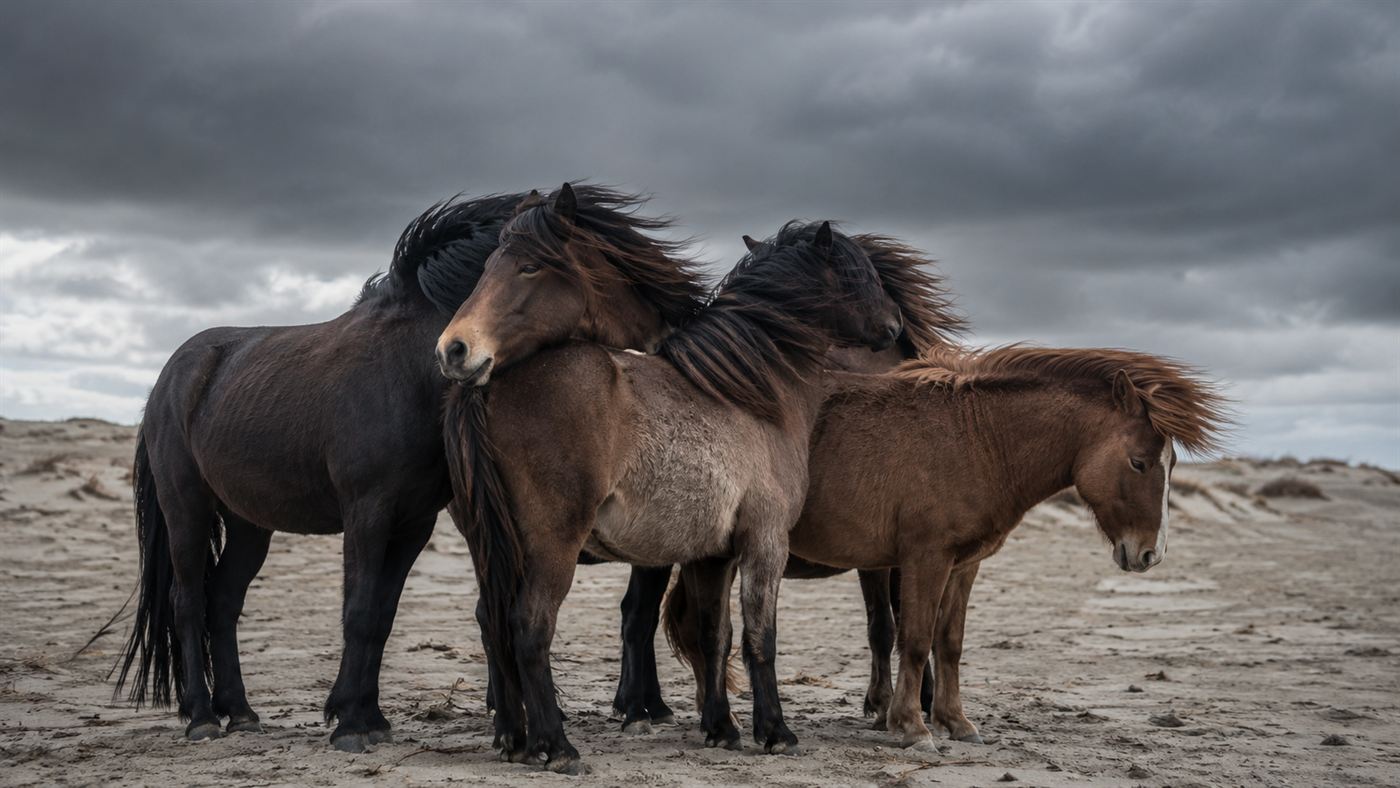
Into that hostile place, somehow, went horses, and they thrived. Today the herd numbers around 500 animals, up from roughly 300 in the 1970s. They are small, stocky and shaggy, with thick manes and winter coats, and they live completely on their own terms. Nobody feeds them, vaccinates them, or trims a single hoof.
To survive, the wild horses dig shallow pits in the sand to reach fresh rainwater, graze on the tough marram grass and beach pea, and huddle against the dunes when the winter gales howl in off the Atlantic. Life is short and hard, and many foals do not make it through their first winter. But the population holds, generation after generation, a herd of horses living as wild as any large animal on the continent.
The shipwreck legend, and the darker truth
Here is where the story people love falls apart. The romantic legend says the horses are the descendants of animals that swam ashore from the wrecks that litter the island, survivors of some 18th century disaster who clawed their way onto the sand. It is a lovely image. It is also almost certainly false.
The horses were put there on purpose. The first recorded horses arrived in 1737 with a Boston clergyman named Andrew Le Mercier. But most of today's herd traces back to something bleaker: the Acadian expulsion, when the British forcibly deported the French-speaking Acadians from the region in the 1750s and seized their property. A Boston merchant and shipowner, Thomas Hancock, uncle of the famous American founder John Hancock, bought up some of those confiscated Acadian horses and shipped them to Sable Island around 1760 to graze. The wild herd of today is, in a real sense, the living echo of an ethnic cleansing, left behind on a sandbar and forgotten.
Why Sable Island leaves them completely alone
For a long time the horses were treated as a resource, rounded up and shipped off to be sold for farm and mine work. That nearly ended them. Then public sentiment shifted hard in their favor, and in 1960 the Canadian government did something unusual: it protected the horses by law in their feral state, banning people from interfering with them at all.
As Parks Canada explains, the herd is left entirely unmanaged, and visitors must keep their distance. No feeding, no touching, no helping a struggling foal. In 2008 the animals were named the official horse of Nova Scotia, and in 2011 the whole island became Sable Island National Park Reserve. The horses that people once carted away by the boatload are now among the most legally untouchable animals in Canada.
The fight over the horses' future
That hands-off protection is not as simple as it sounds, and it hides a real scientific argument. To many people the horses are a symbol of wild freedom worth defending at any cost. To some ecologists, they are an introduced species trampling and overgrazing a fragile dune ecosystem that evolved without them, damaging the very island that shelters rare plants and the world's largest breeding colony of grey seals.
As Hakai Magazine has reported, that tension between romance, politics and ecology runs right through the island's management. Any suggestion of removing or reducing the herd runs headlong into how deeply the public loves it. The horses are protected less by biology than by human feeling, which is a powerful and complicated thing to build a conservation policy on.
The honest catch
It is worth being clear-eyed about what these horses are. They are not a pristine piece of untouched wilderness. They are an introduced species, descendants of farm animals dumped on a sandbar, living hard and often short lives in a place that never evolved to hold them. Their protection is driven as much by sentiment and national identity as by ecological logic, and reasonable scientists disagree about whether leaving them entirely alone is the right call.
And the ground under them is not guaranteed. Sable Island is a shifting sandbar in a warming ocean, exposed to rising seas and fiercer storms, and its long-term future is genuinely uncertain. But maybe that is part of why the horses grip us. On a scrap of sand that swallows ships and may not outlast the century, a few hundred animals keep going, wild and indifferent, living proof that life will take root in the least likely place we leave it.
A treeless sandbar that eats ships is home to 500 horses nobody is allowed to touch. Should we keep protecting the Sable Island horses no matter what, or listen to the ecologists who say a fragile island cannot afford them? Tell us what you think in the comments.
Related reading: The single trembling forest in Utah that is secretly one enormous organism.
More from Watts & Wild
More in Energy & the Wild →

Maria writes about wildlife, ecology, and the strange places where nature and human history collide. She is based in Brazil.