A strange ice-age antelope that once collapsed to 48,000 animals, and lost 200,000 more in a single three-week die-off, has roared back to nearly 3 million and off the critically endangered list
The saiga looks like a creature left over from the ice age, which is more or less what it is, with a drooping, trunk-like nose and a habit of crossing the steppe in vast herds. A few years ago it was nearly gone. Today there are close to 3 million of them.
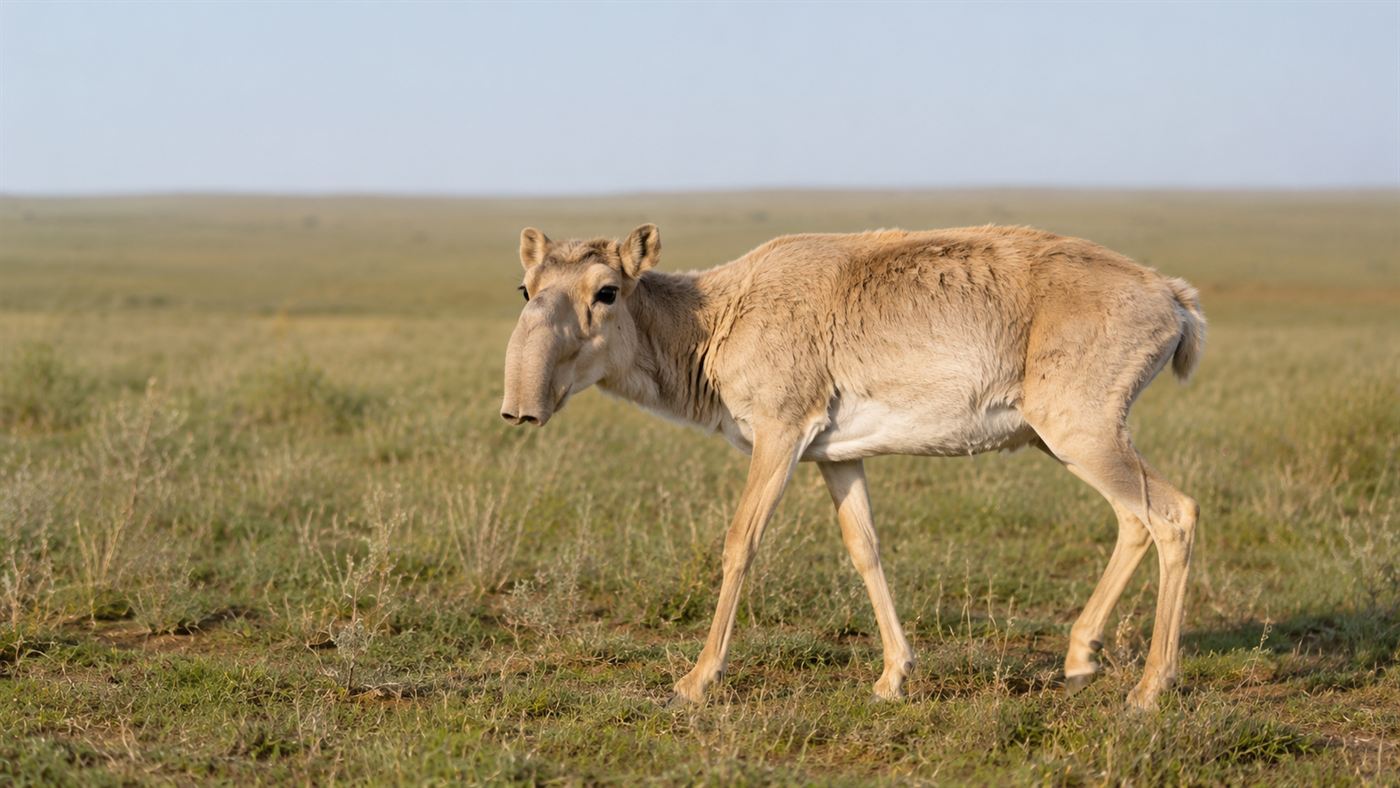
The saiga's bulbous, trunk-like nose filters dust and warms freezing winter air. Illustration: Watts & Wild.
If you wanted to design an animal that looked both ancient and faintly ridiculous, you might land on the saiga. It is a smallish antelope of the Central Asian steppe with a large, soft, downward-hanging nose that looks like a half-finished trunk, and it has been wandering the grasslands since the days of the mammoth. It is, quite literally, a relic of the ice age that never left, and the saiga antelope recovery now under way is one of the most surprising comebacks in conservation.
For a while it looked like its luck had finally run out. By the mid-2000s the saiga had been hunted and starved down to a tiny remnant, and then, in 2015, it suffered one of the most shocking mass deaths ever recorded in a mammal. That it is still here at all is remarkable. That there are now millions of them is one of the great conservation stories of our time.
An animal from the ice age
The saiga's strange nose is not just for show. That bulbous snout is lined with structures that filter out the dust kicked up by a moving herd in summer and warm the brutally cold air of the steppe winter before it reaches the lungs. It is a piece of survival equipment honed over hundreds of thousands of years in one of the harshest open landscapes on Earth.
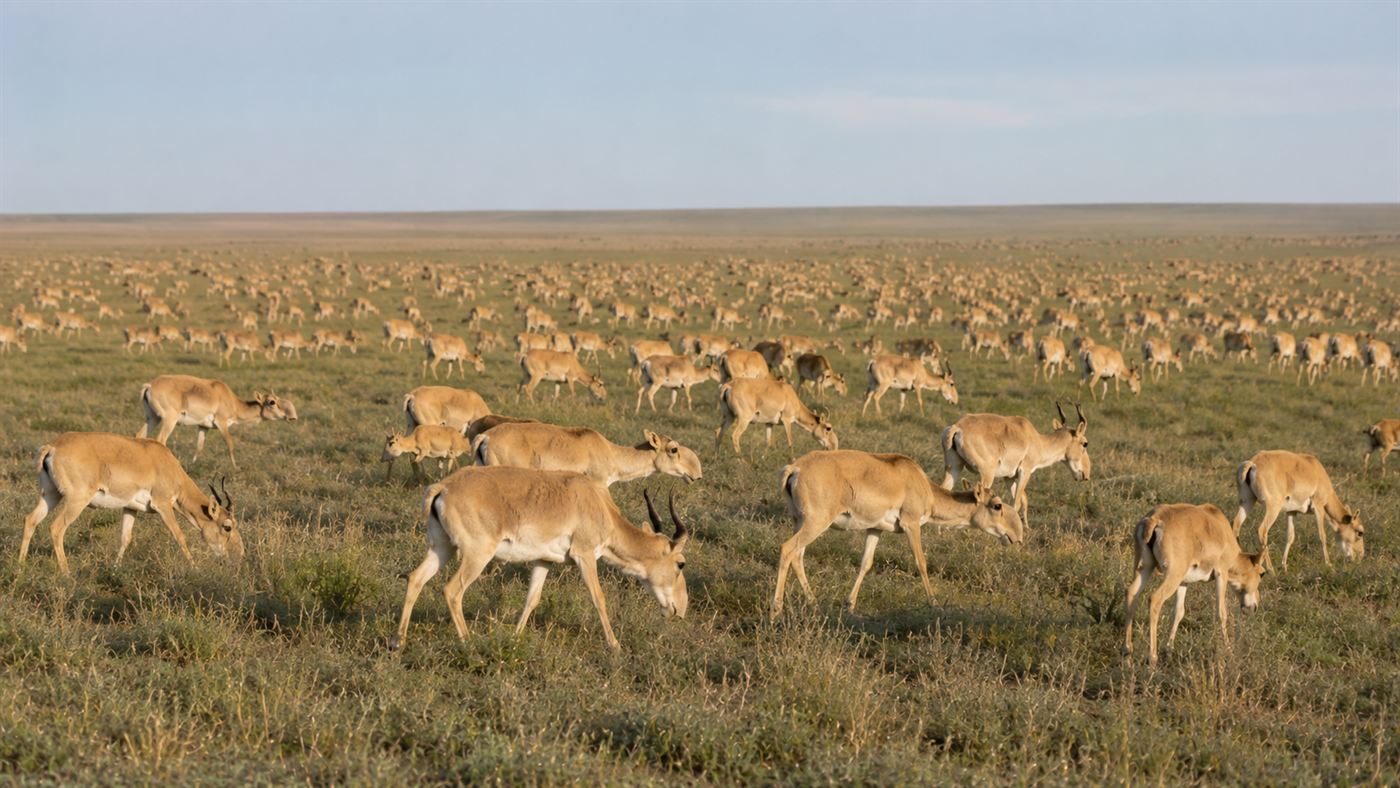
Saiga live mostly in Kazakhstan, with smaller numbers in Mongolia, Russia and Uzbekistan, and they move in enormous migrating herds across the flat, dry grassland. Like the bison of North America, they are a defining grazer of their ecosystem, shaping the steppe simply by moving across it in their millions, cropping and fertilising the grass as they go.
How it almost vanished
The collapse came fast. After the fall of the Soviet Union, the rural economy of Central Asia crumbled, controls vanished, and the saiga was hammered by poaching, hunted for its meat and for the horns of the males, which are prized in traditional medicine. A population that had once numbered in the millions crashed catastrophically.
By 2005 there were only around 48,000 saiga left, scattered and shrinking, and the species was listed as critically endangered. For a grazer that survives by sheer weight of numbers, dropping that low is extraordinarily dangerous, because the herd strategy that protects it from predators and bad years only works when there are a great many animals.
The three weeks that killed 200,000
Then came the catastrophe. Starting around 10 May 2015, roughly 200,000 saiga died within about three weeks, killed by a blood infection from a bacterium called Pasteurella multocida. The terrifying part is that this microbe normally lives harmlessly inside the animals themselves. Researchers concluded that unusual heat and humidity in the days before calving had turned a resident bacterium into a mass killer.
In a matter of weeks, entire calving herds simply dropped where they stood, and a large share of the world's saiga was wiped out. Coming on top of an already fragile population, it looked like it might be the beginning of the end. Instead, it became the low point of a comeback.
An unprecedented saiga antelope recovery
What happened next surprised even the experts. With poaching cracked down on, huge protected areas established across the steppe, and dedicated conservation programmes in place, the saiga did what it does best when left alone: it bred, fast. From that desperate low, the population climbed to roughly 2.8 million animals by 2024, a recovery on a scale rarely seen in any large mammal.
The turnaround was formally recognised in December 2023. the IUCN reclassified the saiga from critically endangered all the way to near threatened, calling it an unprecedented conservation triumph. To jump two whole categories on the Red List, in a single assessment, is almost unheard of.
The honest catch
It is a genuine triumph, but not a tidy one. The saiga's great weakness is exactly the thing that makes it spectacular: it lives and dies in huge synchronised herds, which means a single bad disease outbreak or freak weather event can still erase enormous numbers in days, as 2015 proved. A species that can lose 200,000 animals in three weeks is never entirely safe.
Success has also created a brand-new problem. With millions of saiga back on the steppe, farmers in Kazakhstan now complain that the herds trample and eat their crops, and there are growing calls to cull them, the very animal the world just spent decades saving. Poaching for horn has not disappeared either. The saiga has gone from too few to, in some eyes, too many, which is a far better problem to have but a real one all the same.
Why the saiga's comeback matters
Strip away the details and the saiga delivers a blunt, hopeful message: even a species battered to a tiny remnant and then gutted by a freak mass death can come roaring back, if the pressure is taken off and there is somewhere wild left for it to do so. Recovery is not always slow and partial. Sometimes it is explosive.
It is also a reminder that saving a species is the start of a relationship, not the end of a problem, because abundance brings its own hard choices. When a rescued animal becomes so successful that people start asking to control it, how should we decide what counts as enough? Tell us in the comments.