A century after they vanished, humpback whales are feeding again within sight of the Statue of Liberty, up from three sightings off New York in 2011 to more than 300 a year
For most of the twentieth century the water around New York was too dirty to feed a whale. Then the fish came back, and the giants followed them in. Now humpback whales lunge through silver clouds of menhaden where the container ships run, and a retired aquarium man is counting every one of New York's whales.
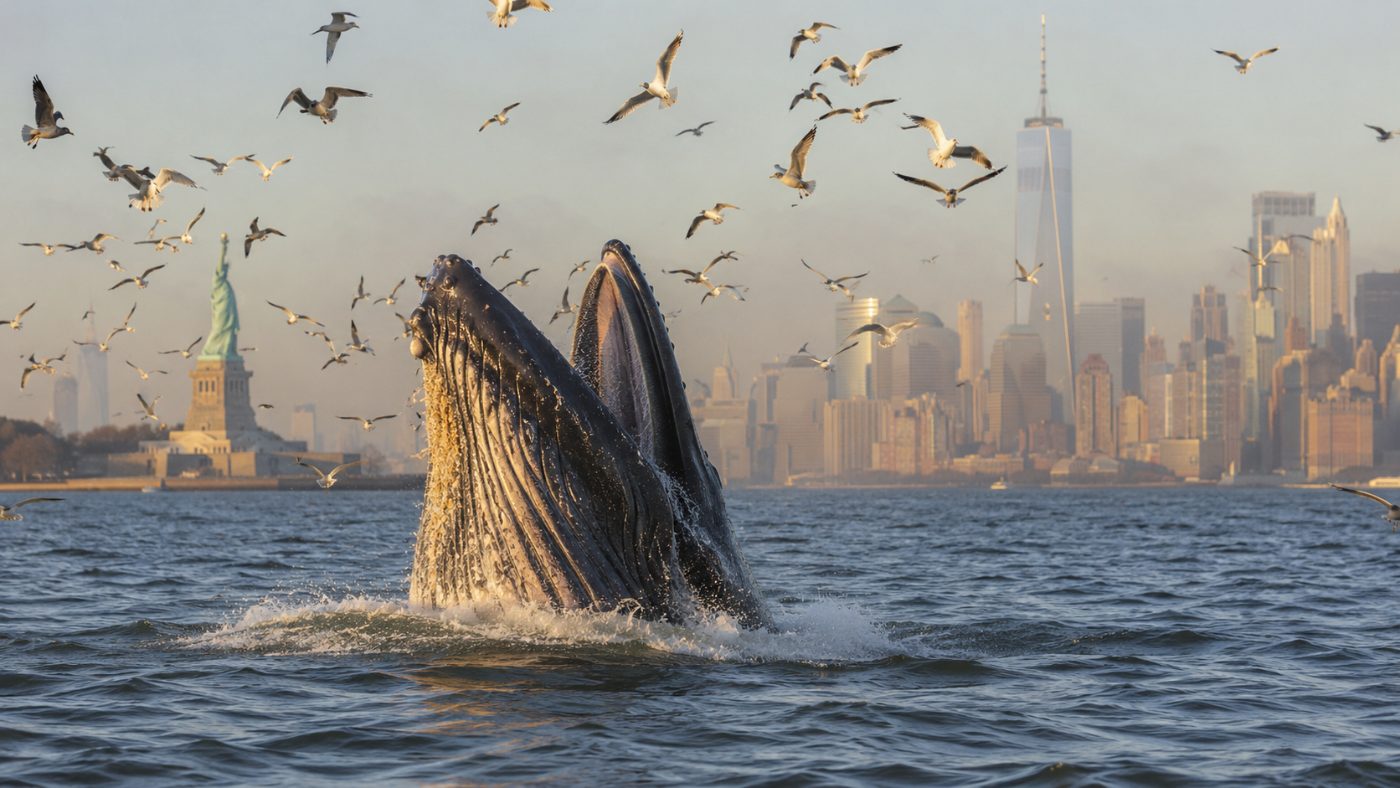
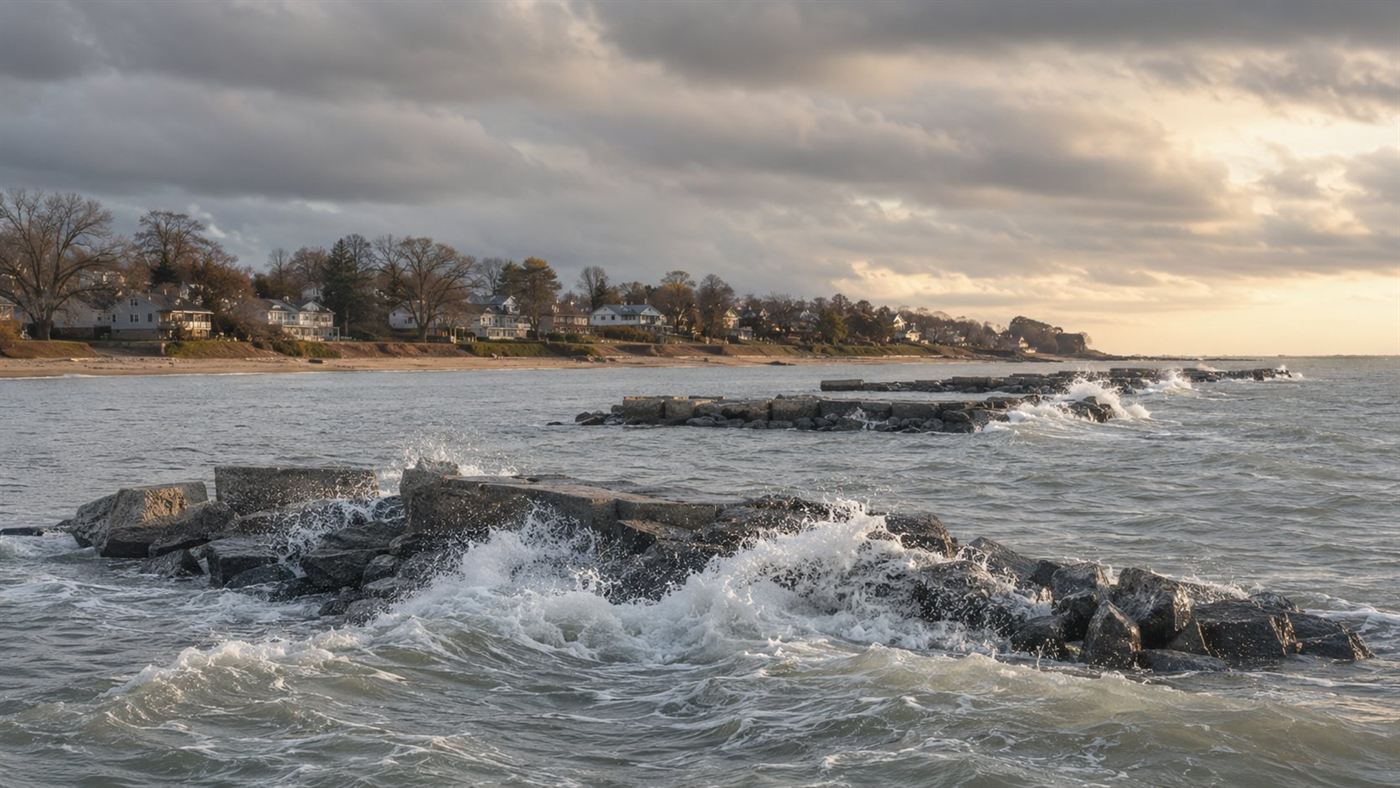
A humpback feeds in New York's harbor, where a century ago the water was too polluted to support one. Illustration: Watts & Wild.
Paul Sieswerda spent about forty years working in aquariums, first at the New England Aquarium in Boston and then at the New York Aquarium out on Coney Island, around the animals most city people only ever meet behind glass. When he retired and started scanning the open water off New York in 2011, he counted three humpback whales the entire year. He did not expect that number to become a crowd.
More than a decade later, the tally is unrecognizable. The group he founded, Gotham Whale, now logs well over three hundred humpback sightings in a strong year, with the animals surfacing off the Rockaways, in the shipping lanes under the Verrazzano, and even within sight of the Statue of Liberty. As CBS News reported on the comeback, New York went from three whales in 2011 to more than 300 by 2019, and the curve has not flattened since.
From three humpback whales to a New York crowd
The strange thing about this comeback is that nobody released the whales, fenced them in, or fed them. They simply arrived, in greater numbers each season, and started doing something humpbacks had not done in these waters within living memory: feeding right up against one of the most built-up coastlines on the planet.
The counting is done the hard way, by people. Gotham Whale rides out on commercial whale-watch boats and trains a network of citizen spotters who photograph the underside of each whale's tail, the fluke, which is as individual as a fingerprint. That is how a hobbyist's snapshot becomes a data point. "The whales come here to eat," Sieswerda told CBS. "New York is famous as being a good place to find good food."
The pattern holds further out, too. Off Montauk, at the eastern tip of Long Island, naturalists have logged record seasons, with researchers reporting more whales per hour on their trips than at any point in two decades of watching, and animals feeding on nearly every outing. The harbor is no longer a place a whale passes by mistake. It has become a destination. Whales keep surprising us that way, none more than the famous loneliest whale, whose lonely reputation the science quietly takes apart.
The fish that brought them back
Strip away the skyline and this is really a fish story. The whales are chasing menhaden, an oily, palm-sized baitfish that New York fishermen call bunker. Menhaden travel in enormous tight schools, turning the surface a flickering silver, and a humpback can swallow thousands in a single open-mouthed lunge.
That buffet had to be rebuilt before the whales could come. National Geographic traced the boom to purer water and a brimming supply of Atlantic menhaden, which have surged along the coast since tighter limits were placed on how many could be netted for fishmeal and fish oil. More bunker near the surface means more lunging whales near the shore, often close enough to watch from a beach.
A century of filth, then a law that changed the water
To understand why the fish vanished and came back, you have to look at what New York poured into its own harbor. For a hundred years the Hudson and the Upper Bay were a working sewer for raw waste, factory runoff and industrial chemicals, water so fouled that the base of the food chain could barely function. No plankton, no baitfish. No baitfish, no whales.
Two laws from 1972 quietly rewrote that. The Clean Water Act forced the cleanup of what cities and factories could dump, and the Marine Mammal Protection Act made it illegal to harass or kill the whales themselves. The water slowly cleared, and the food web rebuilt from the bottom up. "The Hudson River is a lot cleaner than it was in the past, and so it's bringing nutrients out rather than pollution," Sieswerda has said of the change.
Danielle Brown, a biologist with Gotham Whale, frames the whales as a kind of verdict on all that work. "Seeing more whales in this area is a sign that the waters are cleaner and there's more food here for these whales," she told CBS. The animal you see breaching off Brooklyn is, in effect, a fifty-year-old environmental policy finally cashing out.
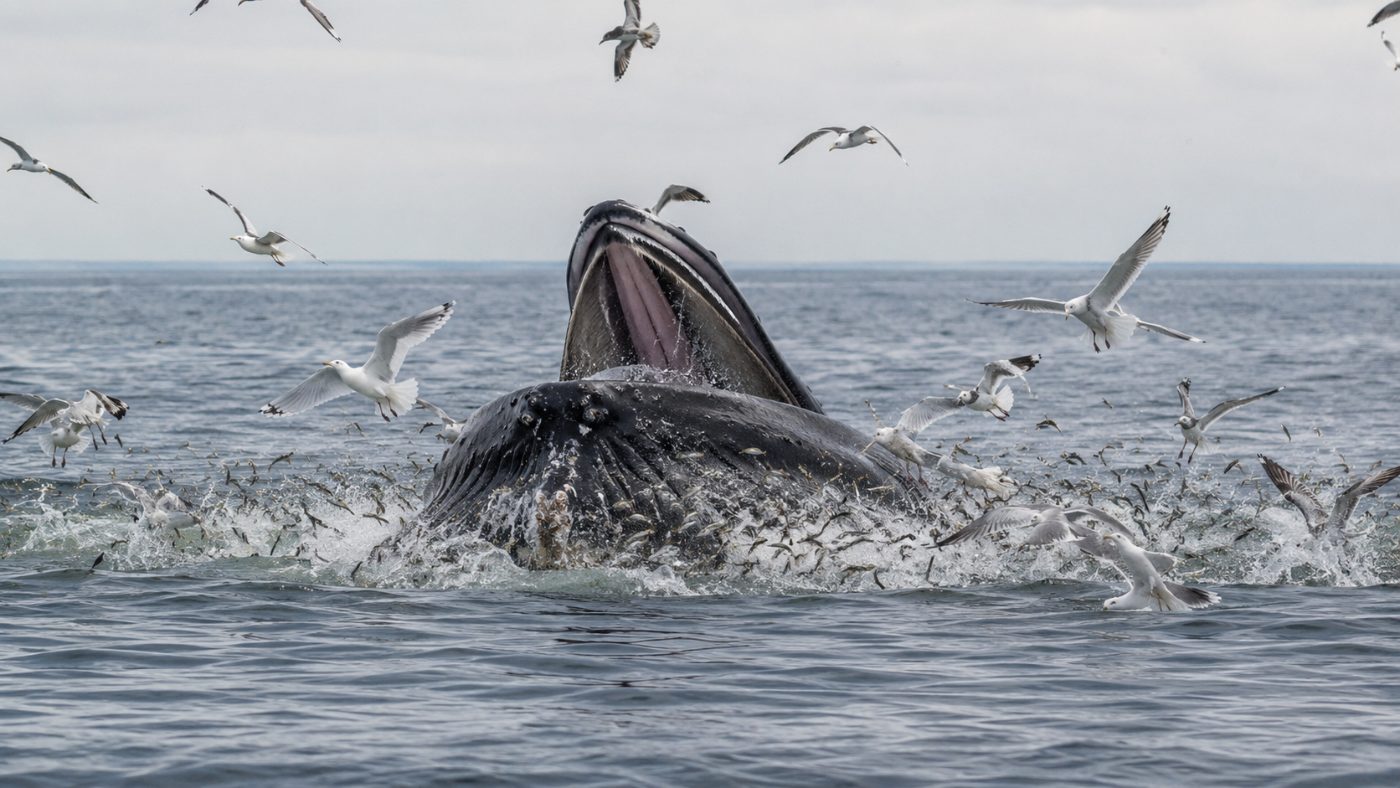
Mostly teenagers, learning a new city
The whales showing up off New York are not the old giants of the open Atlantic. Most are young, juveniles roughly the human equivalent of teenagers, striking out to find their own feeding grounds and discovering a rich one hiding in plain sight beside eight million people.
That detail matters. These animals are not here to breed; humpbacks calve in warm southern waters far away. The harbor is a summer and autumn dinner table, a stopover stuffed with food. A young whale that learns to feed safely here may keep coming back for decades, which means the city's relationship with its whales is only just beginning rather than peaking.
The honest catch: whales playing in traffic
None of this is a tidy happy ending, and the danger is built into the geography. The same channels that funnel menhaden toward New York also funnel cargo, and the port is the busiest container gateway in the United States. A feeding whale rises slowly to the surface, mouth full, exactly where the steel comes through.
Sieswerda puts it bluntly. "The whales are actually playing in traffic," he told CBS, because the roadways of the big vessels coming into the harbor are the same place where the whales are feeding. The federal record is sobering: in the humpback die-off that began along the East Coast in 2016, about 40 percent of the animals that were examined showed signs of a ship strike or entanglement in fishing gear, which scientists call the greatest human threats to large whales. The same rope is even deadlier for their scarcer cousin, the North Atlantic right whale, now down to about 384 animals as fishermen test ropeless gear.
It is worth clearing up one myth that rode in on those deaths. As the strandings made headlines, some blamed offshore wind construction, but NOAA Fisheries says no humpback death in the ongoing event has been linked to offshore wind activities, a conclusion echoed by the Bureau of Ocean Energy Management and the Marine Mammal Commission. The real culprits are older and duller than turbines: propellers, hulls and rope. The fix is unglamorous too, with slow-speed zones and better lookout rules where the whales gather.
What a whale in the harbor really tells us
It is easy to read a breaching humpback off Manhattan as a feel-good postcard, and harder to see it for what it is. The whale is the visible tip of a recovered ecosystem, the largest animal in a chain that runs down through dolphins and seals to the menhaden and the plankton beneath them, all of it knitted back together by water that finally got clean.
That is the quietly radical part. A city that spent a century treating its harbor as a place to dump things now has 30-ton wild animals choosing to eat there. The whales came back on their own, but only because people, decades ago, made a boring legal decision to stop poisoning the water, and then a retired aquarium man bothered to count what showed up.
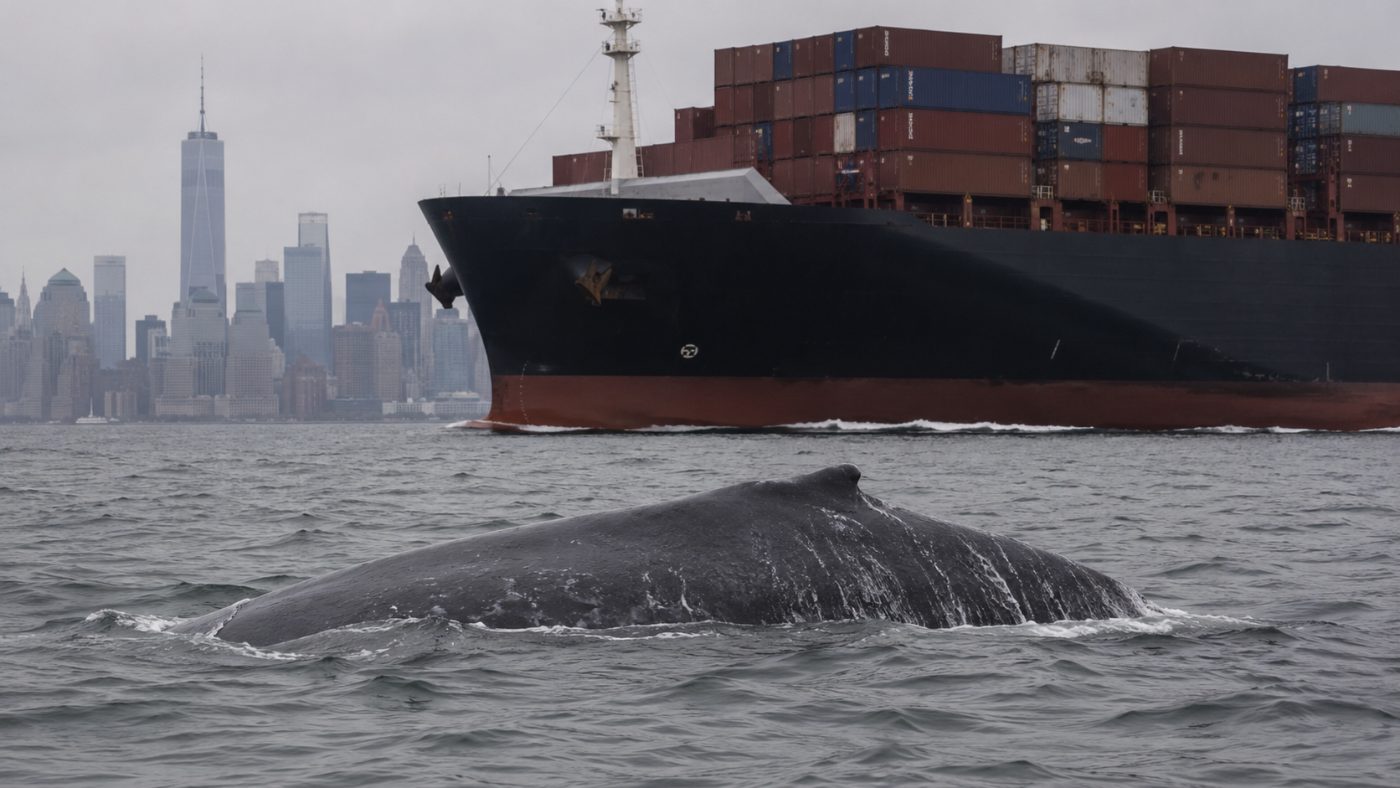
A century after New York fouled its own water badly enough to drive the whales out, the giants are back, feeding in the shadow of the skyline and dodging the ships that share their lanes. If a 30-ton humpback surfaced off your local shoreline, would it make you trust the water again, or worry about what it has to survive to feed there? Tell us what you think in the comments.
Related reading: New York just finished a 111 million dollar living seawall off Staten Island, a 2,400 foot chain of eight stone reefs built to grow oysters and break storm waves.