Its horn was sold as a unicorn's for centuries, but it is really a tooth that can feel the ocean
In the freezing seas around the Arctic swims a whale with a long, straight, spiralling spear jutting from its head, the closest thing the real world has to a unicorn. For hundreds of years that spear was sold to Europe's kings as proof that unicorns existed. The truth is even stranger: it is not a horn at all, but a single enormous tooth that can taste the sea.

The narwhal's spiral tusk can be nearly half as long as its body. Illustration: Watts & Wild.
The narwhal is a medium-sized whale of the high Arctic, a relative of the beluga, living among the sea ice off Greenland, Canada and Russia. It is a strange and elusive animal in its own right, but everything about its fame comes down to one feature: the long, twisted ivory tusk that grows straight out from the head of the males, sometimes reaching two or three metres, close to a third of the whole animal's length.
For most of human history, people who saw that tusk had no idea what it really was, and the guesses they made shaped legends and emptied royal treasuries. The reality, only properly understood in recent decades, is one of the most surprising facts in all of nature.
The whale that grew a spear
Unlike an elephant's tusks or a rhino's horn, the narwhal's spear is almost always single, and it always twists the same way, in a left-handed spiral. Most adult males grow one, a small number grow two, and females usually grow none at all and live perfectly well without one. That single detail, that half the species thrives with no tusk whatsoever, is the first clue that this is not really a weapon or a tool the animal needs to survive.
Whatever the tusk is for, it is clearly not essential to being a narwhal. And the more closely scientists looked at it, the less it resembled any normal tooth, horn or antler in the animal kingdom.
Why the narwhal tusk is a tooth, not a horn
The first surprise is simply what it is. The tusk is a tooth, specifically the upper left canine, which instead of sitting quietly in the jaw grows forward and out through the lip into a long ivory spear. But the truly astonishing part is how it is built. An ordinary tooth is hard and dead on the outside, with the living, sensitive nerves buried safely inside. The narwhal tusk is turned inside out: its surface is soft and porous, with no enamel, and it is wired with millions of nerve endings reaching to the outside world.
That makes the tusk not a lance but a giant sensory organ. Sea water flows into the porous surface and the nerves read it, letting the narwhal sense changes in things like temperature, pressure and the saltiness of the water around it. It is, in effect, a tooth that can taste and feel the ocean, a sensing instrument three metres long carried in front of the animal's face.
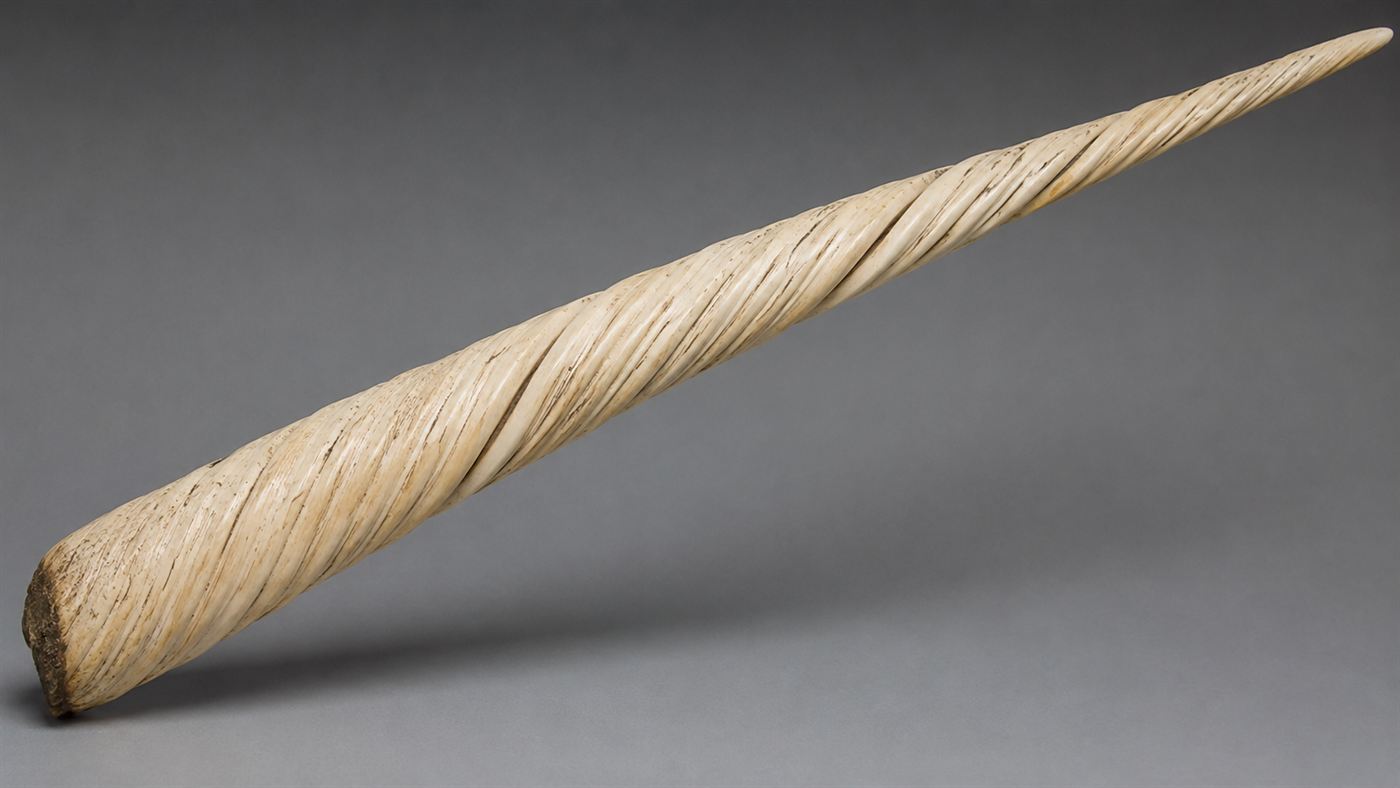
The unicorn horn worth more than gold
Long before anyone understood any of this, the tusk was making people rich. Traders from the far north brought these straight, spiralled spears down into medieval Europe and sold them as the horns of unicorns, creatures everyone believed in but no one could find. A unicorn horn was thought to detect and cure poison, and so it was prized above its weight in gold, bought by kings, popes and queens who had no idea they were paying a fortune for a whale's tooth.
Some of these "unicorn horns" became crown treasures, set with jewels and valued like castles. The narwhal, swimming unseen in the Arctic, was quietly propping up one of the most persistent myths in European history. The legend of the unicorn owes a great deal to a shy whale almost no one in Europe had ever laid eyes on.
What the tusk is actually for
Even now, the full purpose of the tusk is not completely settled, and it probably does more than one job. The sensory role is well supported, but males have also been seen "tusking", gently crossing and rubbing their tusks at the surface, which looks like a contest of rank or a way of comparing one another. More recently, drones have filmed narwhals using their tusks to tap and stun fish before eating them, and even to investigate objects, so the spear seems to be sense organ, social signal and occasional tool all at once.
The likeliest answer ties it all together. Because only males grow a big tusk, it is partly a showpiece, a sign of fitness much like a peacock's tail, which happens also to be a genuinely useful instrument. Nature rarely keeps things tidy, and the narwhal's tusk may simply be several good ideas grown into one spiralling tooth.
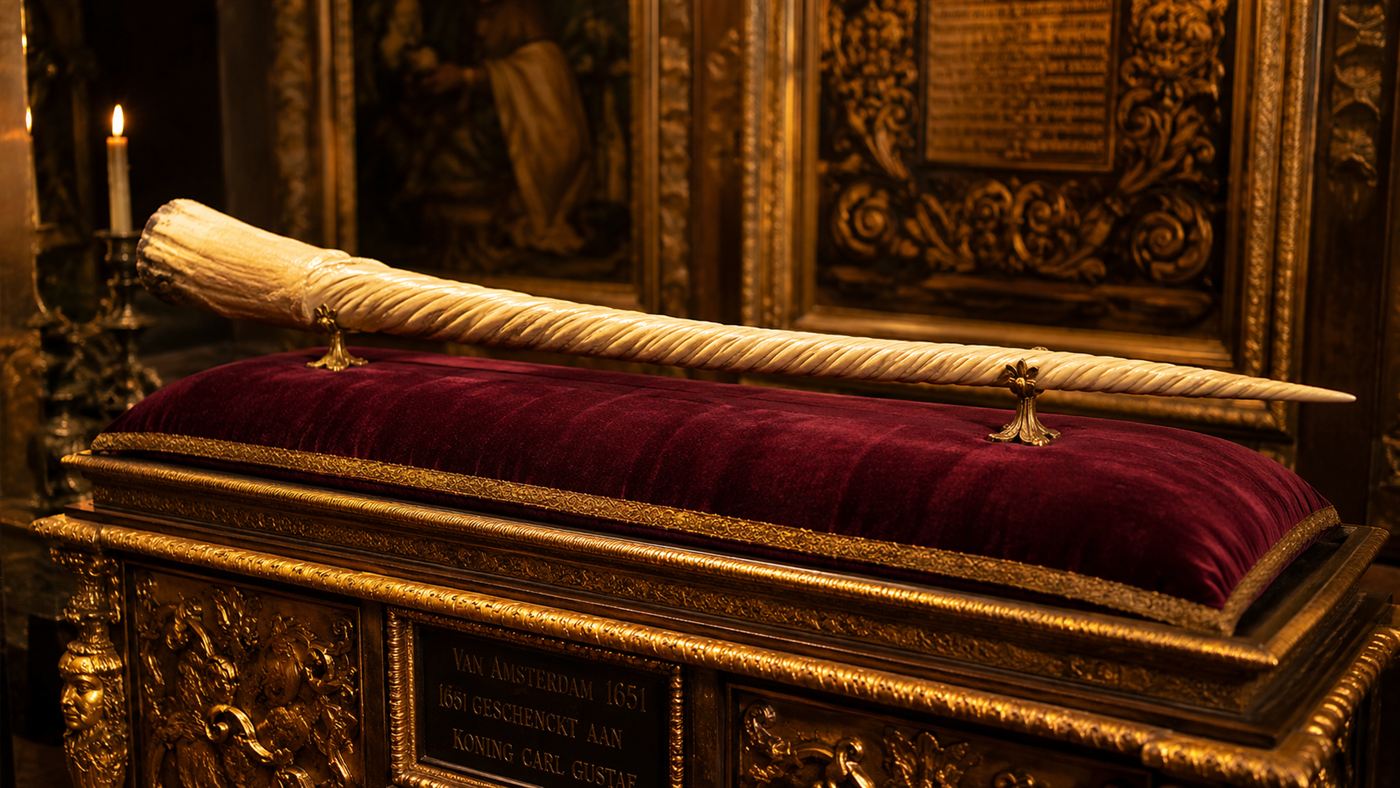
The honest catch
A few honest notes are in order. The sensory function of the tusk is real and well-studied, but scientists are careful to say it is not the whole story, and arguments about the spear's main purpose are still going on. The fact that females flourish without one means the tusk is best understood as a male trait that is useful rather than as something the species could not live without.
There is also a quieter, sadder thread. The narwhal is one of the Arctic animals most exposed to a warming world, dependent on sea ice, sensitive to noise from ships, and increasingly hunted by killer whales pushing north as the ice retreats. For the Inuit communities who have lived alongside narwhals for generations, the animal is food, culture and history all at once. The unicorn of the sea turns out to be real, marvellous and quietly vulnerable, which is somehow even better than the myth.
A shy Arctic whale grew a three-metre tooth that can feel the sea, and accidentally invented the unicorn. Is the real narwhal more wonderful than the unicorn legend it inspired? Tell us what you think in the comments.
Related reading: the Greenland shark, an Arctic giant that may live for 400 years. See also the Heikegani, the crab whose samurai face built a legend and fooled Carl Sagan.