In 1859 a solar storm set telegraph offices on fire and lit auroras over the tropics, and a repeat today could black out the grid
For two nights the sky turned to fire and the world's newest technology turned against its operators. The Carrington Event, the 1859 solar storm we still study today, was the most violent ever recorded, and what it did to the telegraph is a warning we are still trying to heed.
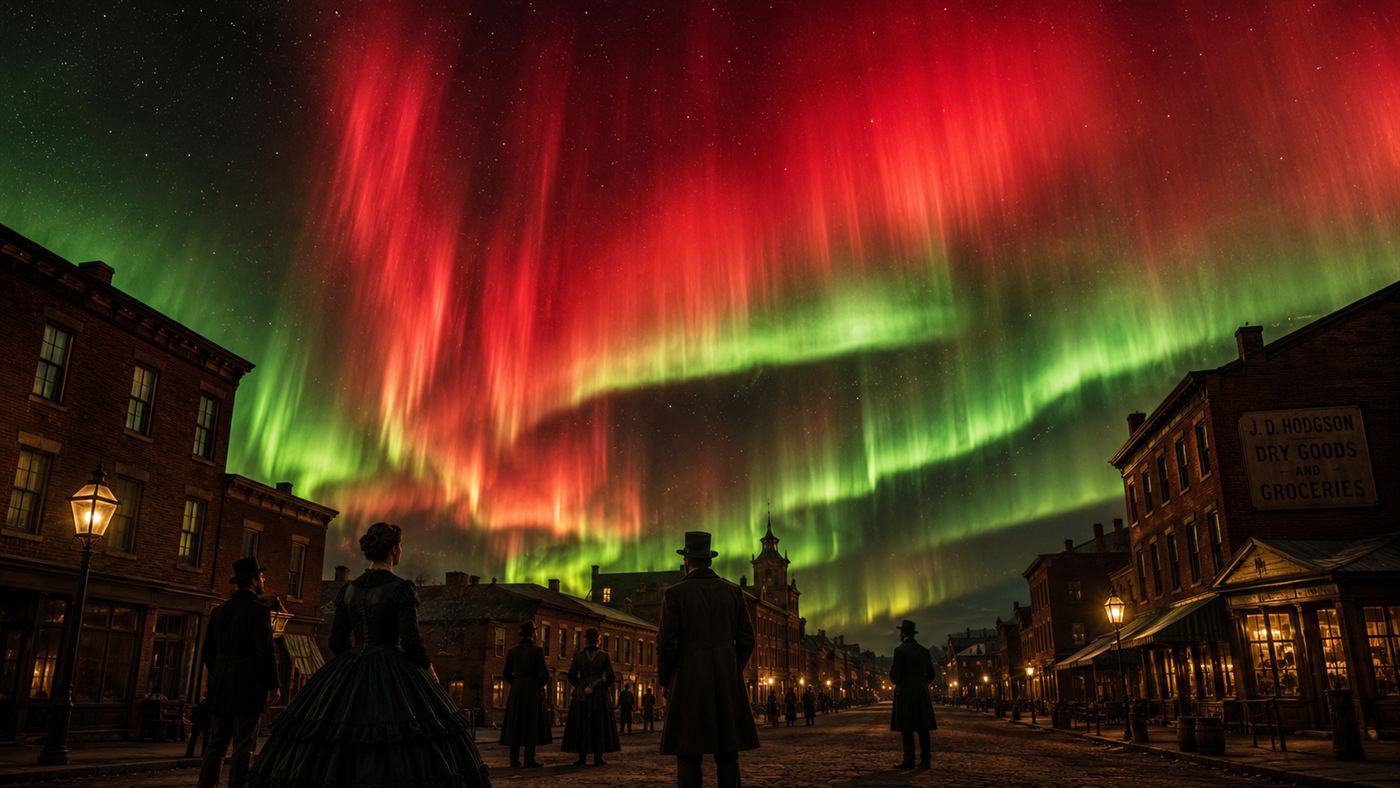
In 1859 auroras blazed far from the poles, bright enough to read a newspaper by. Illustration: Watts & Wild.
We tend to think of the Sun as a steady, dependable light in the sky.
Every so often, though, it hurls a piece of itself at us, and in 1859 it threw one of the biggest we have ever seen.
What was the Carrington Event? The Carrington Event was a huge solar storm that struck Earth on 1 and 2 September 1859. It remains the most intense geomagnetic storm in recorded history, famous for setting telegraph systems sparking and for lighting auroras visible almost to the equator.
The morning the sky caught fire
On the nights of the storm, auroras that normally hide near the poles spilled across the whole planet.
People saw the lights glowing over the Caribbean, Hawaii, Colombia and other places that almost never witness them.
In parts of the world the glow was so bright that people could read a newspaper outdoors in the middle of the night.
Gold miners in the Rocky Mountains are said to have woken and begun making breakfast, convinced that dawn had arrived.
It was beautiful and deeply unsettling in equal measure, a sky no one had seen before.
The man who saw the flare
The event takes its name from the English astronomer Richard Carrington, who was sketching sunspots on 1 September 1859.
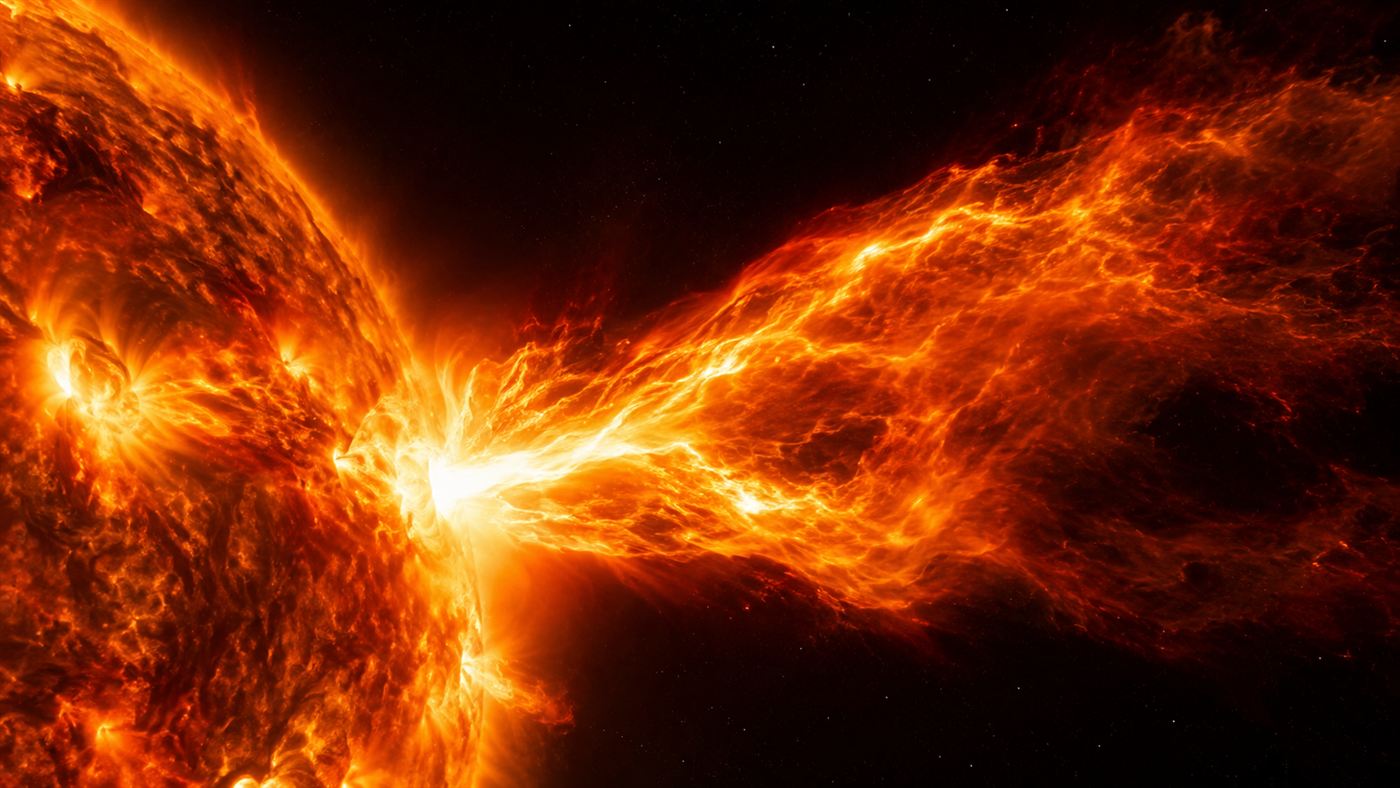
As he watched, he saw two brilliant points of white light flare up on the Sun, the first solar flare ever recorded.
That flash marked the launch of an enormous cloud of charged particles, what we now call a coronal mass ejection.
Normally such a cloud takes days to cross the gap to Earth, but this one arrived in about 17 hours, a sign of its terrible power.
When it hit, the planet's magnetic field convulsed, and the trouble began.
When the telegraph turned on its operators
In 1859 the cutting edge of technology was the electric telegraph, the network sometimes called the Victorian internet.
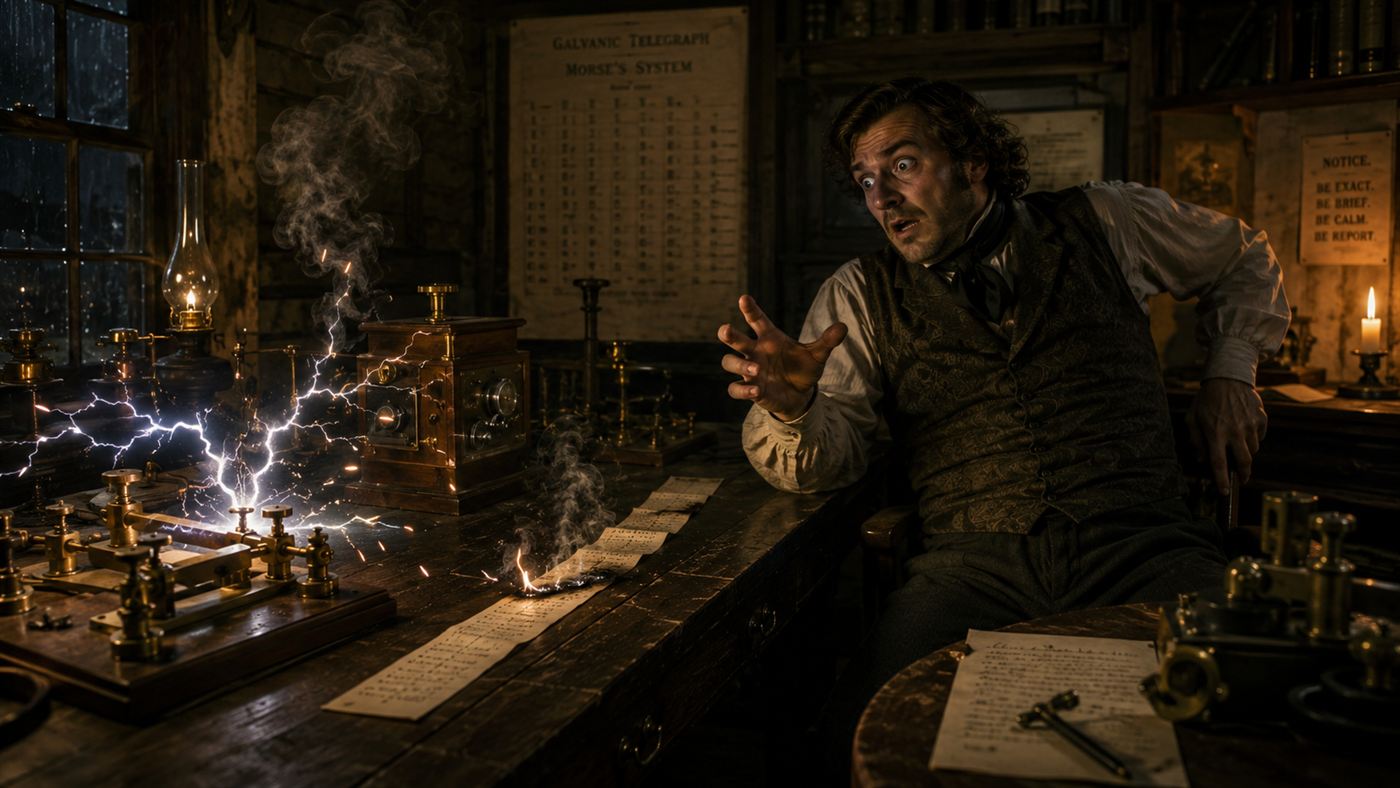
As the geomagnetic storm surged through the wires, telegraph keys threw sparks, shocked their operators and set message paper smouldering.
In the strangest twist of all, some operators disconnected their batteries entirely and found they could still send messages, powered purely by the electric current the aurora was inducing in the lines.
For a few hours the natural world was running the telegraph instead of the power supply.
It was the first time humanity learned that space weather could reach down and touch its machines.
What an 1859 solar storm would do today
In 1859 there was very little electrical equipment to damage, so the harm was limited and almost quaint.
Today our entire civilisation is wired together, and a storm of the same size would be a very different matter.
A direct hit could overload the power grid, burn out the giant transformers that are slow and costly to replace, and knock out satellites, GPS and communications.
Studies have put the potential damage in the trillions, with some regions facing blackouts lasting weeks or months.
We have already seen a smaller taste of it, when a 1989 geomagnetic storm knocked out the power across the Canadian province of Quebec in about 90 seconds.
The honest catch
It is easy to turn this into an end-of-the-world story, but the reality is more balanced.
We now watch the Sun constantly from spacecraft that can give grid operators anywhere from minutes to a day of warning to protect the grid.
In July 2012 a Carrington-class cloud did erupt from the Sun and crossed Earth's orbit, missing us by only about nine days, a genuinely close call.
The transformers and satellites remain vulnerable, and nobody can say exactly when the next great storm will come.
But forewarned is forearmed, and the more seriously we take the Carrington Event, the better our chances of riding out its successor.
The Carrington Event is a reminder that for all our technology, we still live inside the weather of a star.
It belongs with the other ways the sky shapes life below it, from the probe we sent to fly through the Sun's atmosphere to the dream of gathering solar power in orbit. For a shock that came from below instead of above, see the New Madrid earthquakes that made the Mississippi run backwards.
If the Sun could overwhelm our machines in 1859, how ready do you think we really are for the next great storm, and should we be spending more to harden the grid? Tell us in the comments.
More from Watts & Wild
 The man struck by lightning seven times
 The magnetic north pole is racing to Siberia
 The 72-second signal from space we never heard again
 The 1908 blast that flattened a Siberian forest
 The probe that touched the Sun
 Solar power beamed from orbit
 The largest camera ever built
 Eunice Foote, the forgotten climate pioneer