Solar power is beaten by night and clouds, so the new plan is to put the panels in orbit where the sun never sets and beam the energy back to Earth by microwave, a feat just tested in space
Every solar panel on Earth shares the same two weaknesses: it goes dark every night, and a passing cloud can knock it out in seconds. For decades, engineers have dreamed of an audacious way around both at once. Lift the panels off the planet entirely, hang them in space where the sun shines without pause, and beam the power back down through the sky. This is the idea behind space-based solar power, and it always sounded like pure science fiction. In 2023, it stopped being only that.
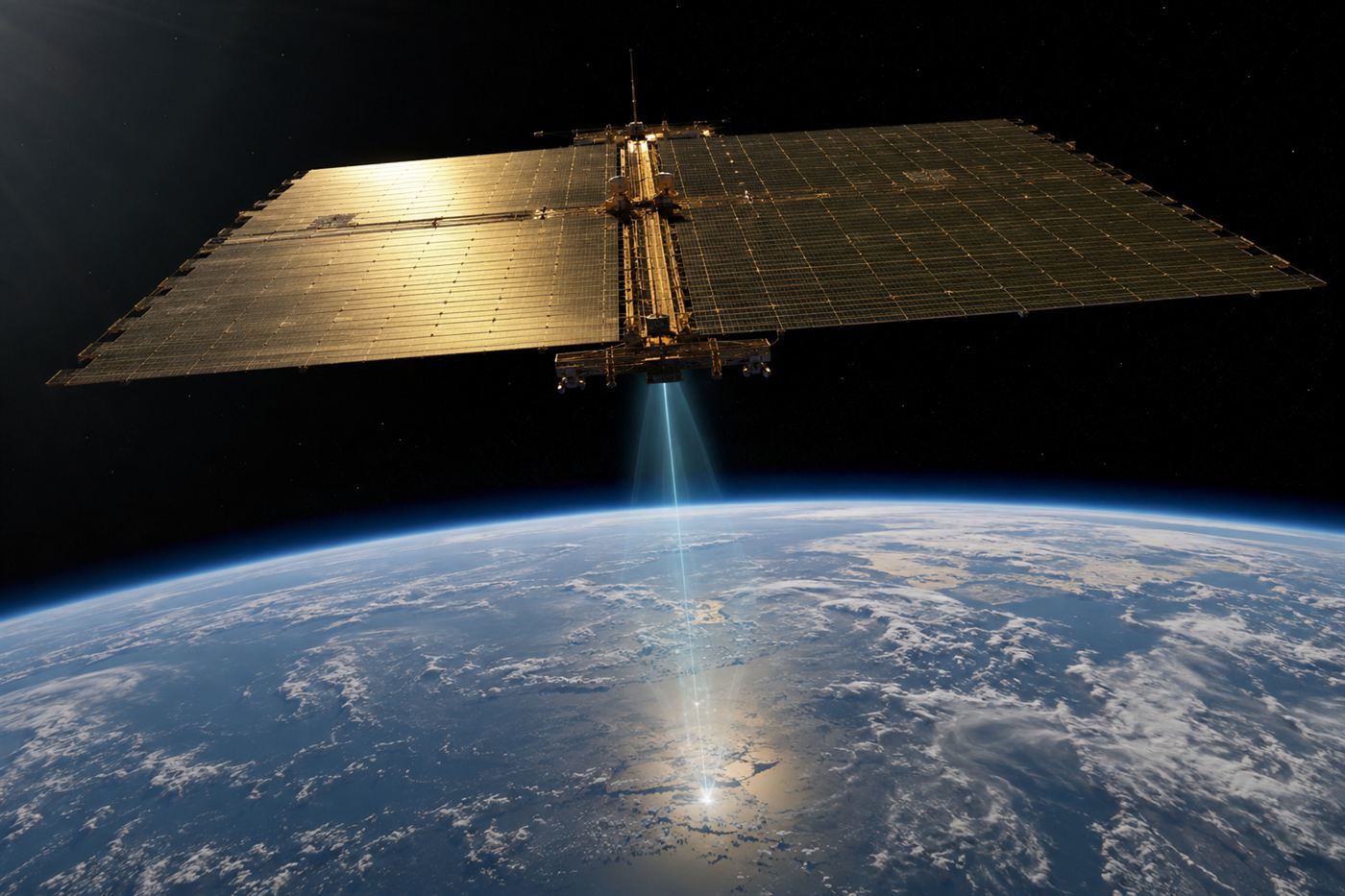
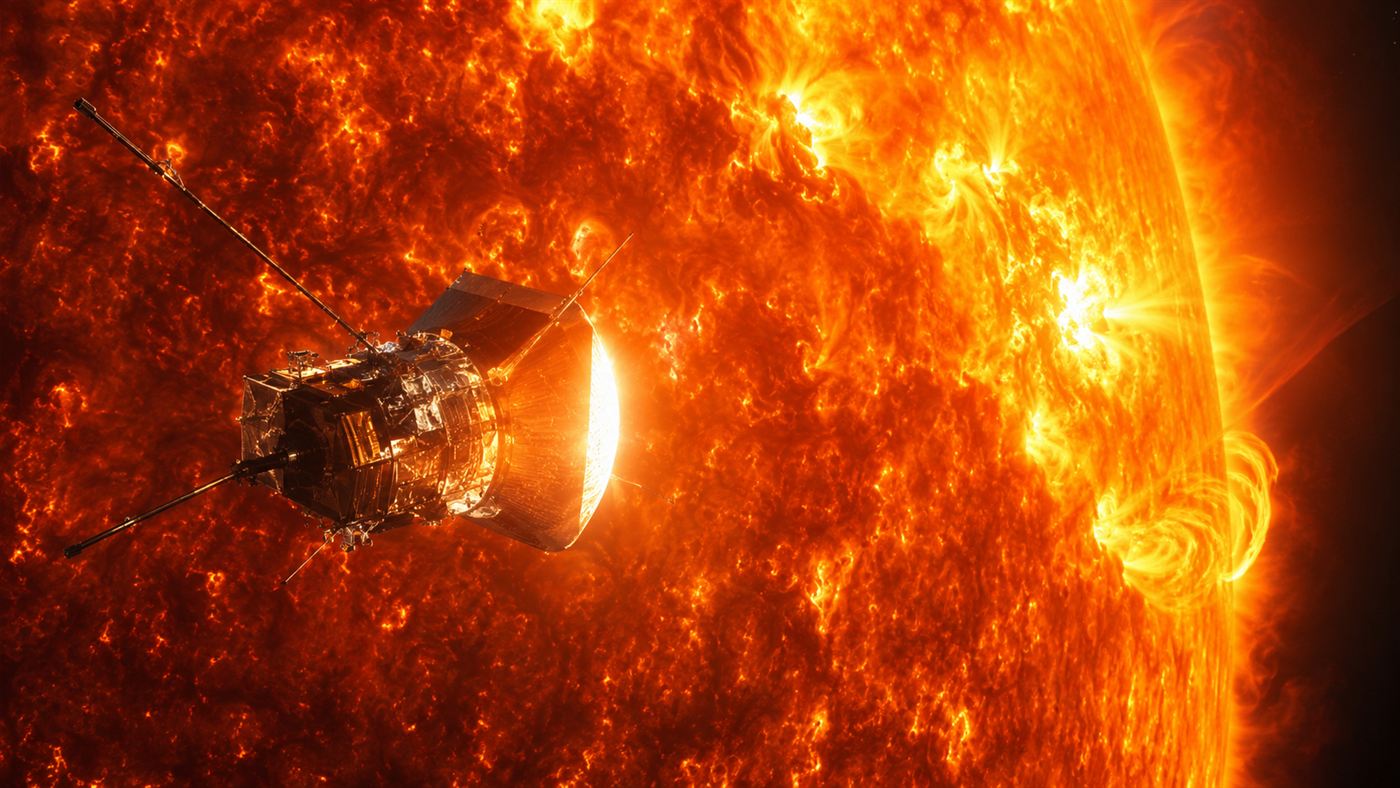
A solar power station in orbit would catch sunlight no cloud or night can ever block. Illustration: Watts & Wild.
The idea is called space-based solar power, and once you hear it, it is hard to unhear. Put a giant array of solar panels in orbit, where it is bathed in sunlight nearly around the clock. Convert that electricity into a beam of microwaves. Aim the beam at a receiving antenna on the ground, which turns it back into electricity and feeds it to the grid. A power plant in the sky, sending its output down an invisible wire of radio waves. The dream of sending power through the air without wires is more than a century old, reaching back to Nikola Tesla's doomed Wardenclyffe Tower.
For most of the space age this was a thought experiment, too expensive and too hard to take seriously. What changed is that the pieces, cheap launches, lightweight electronics and a real in-space demonstration, have started to line up, and suddenly some of the biggest players on Earth are treating it as a race worth entering.
The two enemies of solar power
To see why anyone would go to such lengths, look at what limits an ordinary solar farm. The sun is only overhead for part of the day, vanishes entirely at night, and is dimmed by clouds, dust and the thickness of the atmosphere even when it is up. A panel on the ground spends a large share of its life producing little or nothing, which is why solar needs so much battery backup to be useful after dark.
Now move that same panel out to orbit. In the right path around the Earth it sits in near-constant sunlight, with no night to speak of, no weather and no air in the way. Estimates suggest a panel in space can gather many times more energy over a year than the same panel on the ground. The sunlight up there is simply richer, steadier and always on.
How you beam power out of the sky
The genuinely strange part is the delivery. Instead of wires, the satellite converts its electricity into microwaves, the same family of radio waves that carry phone signals, and broadcasts them down to a dedicated receiver on the ground called a rectenna, a large mesh-like antenna that turns the beam back into usable power. As the concept is documented, frequencies in the range of a few gigahertz are used because they slip through the atmosphere with little loss, even passing cleanly through cloud.
It sounds alarming, a power beam fired from orbit, but the physics is gentler than it seems. To send a usable amount of energy the beam has to be spread over a wide area, so the intensity arriving at any point on the ground stays modest, and the receiving antenna can sit over farmland or desert without scorching anything beneath it. The challenge is not danger so much as scale: catching enough of that diffuse beam means a rectenna potentially kilometres across.
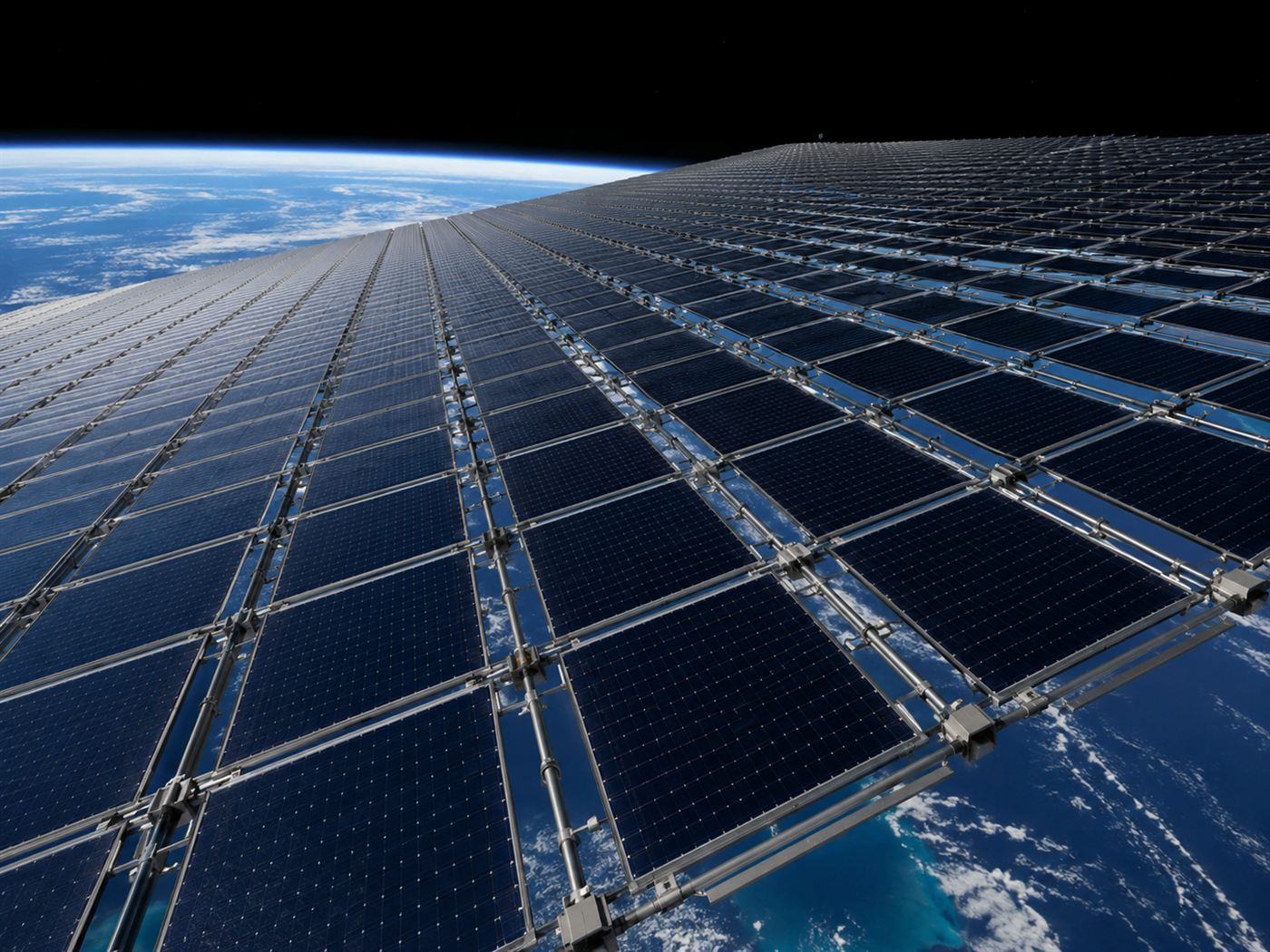
Space-based solar power is not science fiction anymore
The turning point came in 2023. As Caltech announced, its Space Solar Power Demonstrator wirelessly transmitted power in orbit and, for the first time, beamed a detectable amount of energy down to a receiver on Earth. The experiment, called MAPLE, used an array of lightweight microwave transmitters built on low-cost chips to light up small receivers in space. The amounts were tiny, but the principle had finally been proven off the planet rather than just on paper.
That proof has set off a quiet race. China has laid out a roadmap toward a multi-gigawatt solar power station in orbit by around the middle of the century, with smaller test satellites planned along the way, a project one of its own scientists compared in ambition to the Manhattan Project. The European Space Agency has launched a programme called SOLARIS to study whether commercial space solar is feasible, and Japan has been preparing its own satellite test of beaming solar power down from orbit. After decades of being a curiosity, space solar has become a serious national contest.
The honest catch
Now the cold water, because it is a lot of cold water. Space-based solar power is staggeringly hard and expensive. You would have to launch and robotically assemble structures kilometres across in orbit, something far beyond anything built in space so far, and every kilogram lifted up there costs a fortune even at today's lower launch prices. Energy is lost converting electricity to microwaves and back, and the giant ground antenna takes its own large bite of land.
So nobody serious is promising power from the sky this decade. The honest status is a single small in-space demonstration plus a stack of ambitious national roadmaps stretching toward 2050. It may yet turn out that simply covering more of the Earth in cheap panels and batteries is the smarter bet, and space solar could remain a brilliant idea that economics never quite allows. This is a frontier, not a finished technology.
Why a power plant in orbit matters anyway
Even with all those caveats, the prize explains why the big agencies cannot leave it alone. A working space solar station would deliver something no wind farm or ground solar array can: clean power that flows steadily day and night, in any weather, deliverable to almost anywhere on Earth with a receiver. That is the one thing a renewable grid most lacks, and it would arrive without burning anything at all.
There is also a reason it has become a contest between superpowers rather than a lab curiosity. Whoever first masters gathering energy in space and sending it where it is needed would hold a genuinely new kind of power, in every sense of the word. The sun has been pouring its energy past our planet and into empty space since the beginning. Space-based solar power is the audacious bet that we are finally close to reaching up and catching some of it before it goes by.
The sun never sets in orbit, and we have now proven we can beam its power down through the sky. Is space-based solar power the clean, always-on energy source worth a moonshot budget, or a dazzling distraction from just building more panels and batteries down here? Tell us what you think in the comments.