The world's largest camera, a 3,200-megapixel machine the size of a car, has started filming the entire southern sky over and over for ten years to build the first true time-lapse of the universe
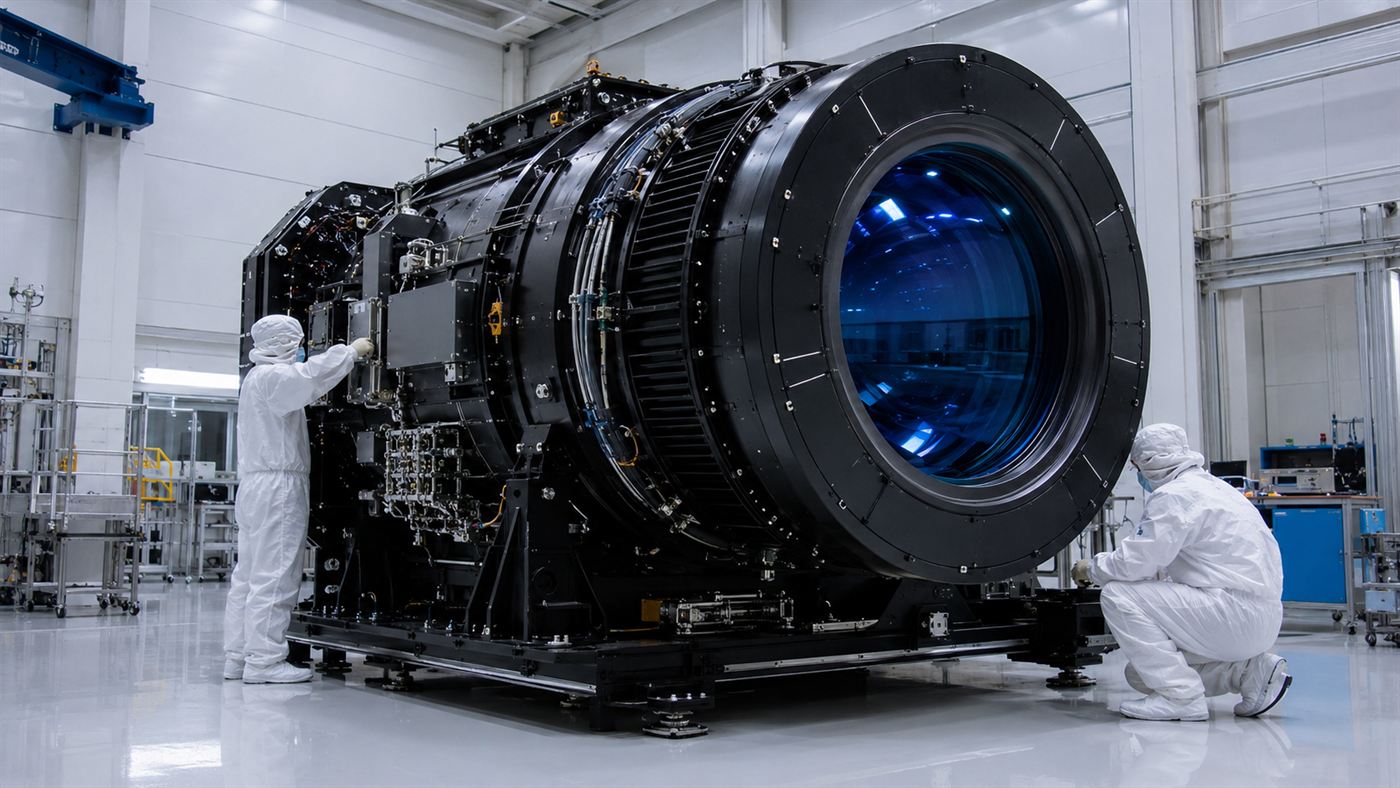
On a mountain in Chile sits the Vera Rubin camera, so large it has to be moved by crane, with a sensor of 3,200 megapixels, the biggest ever built. In June 2025 it took its first images, and it is now beginning a ten-year mission to photograph the whole southern sky on repeat.
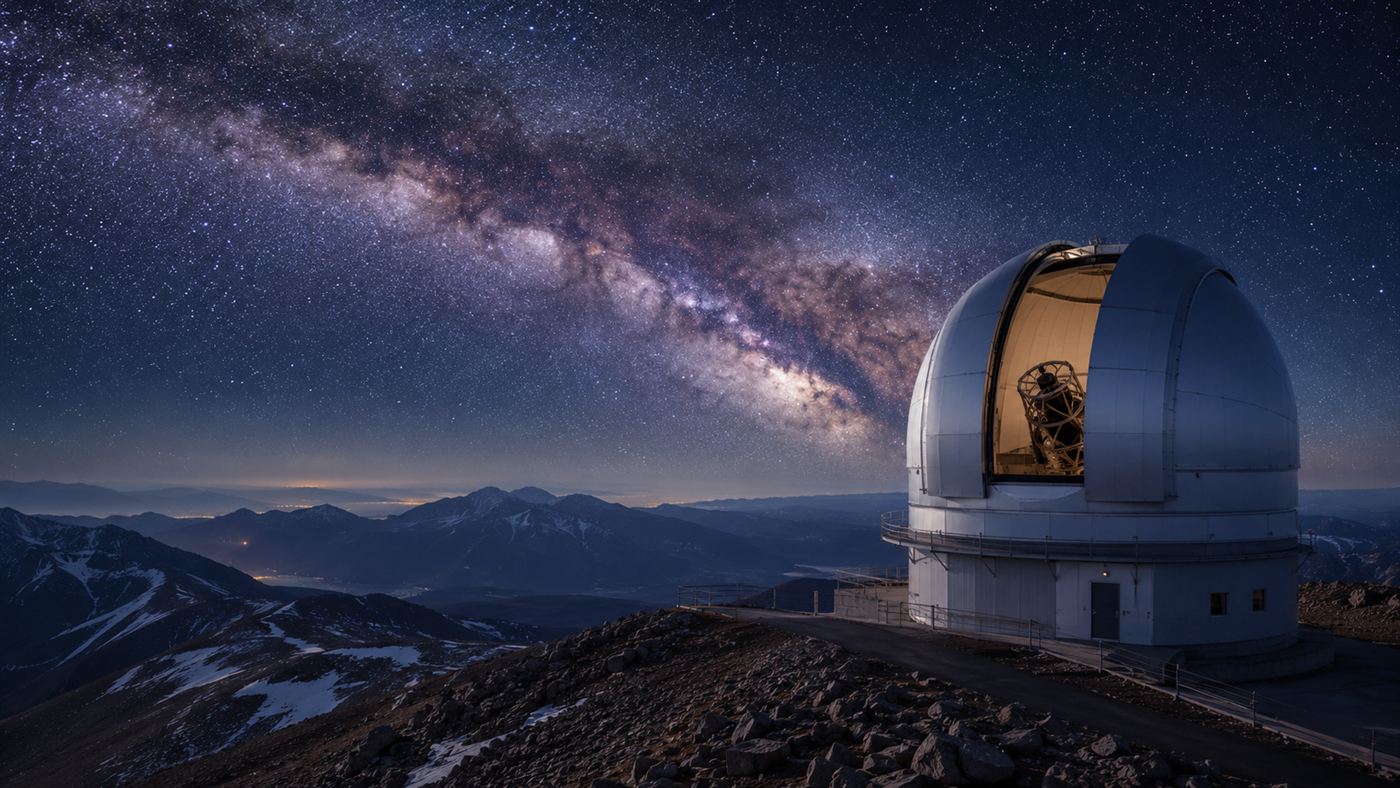
The Vera Rubin Observatory in Chile, home to the largest camera ever built. Illustration: Watts & Wild.
High in the Chilean Andes, on a peak called Cerro Pachón, sits the Vera C. Rubin Observatory, and inside it is a machine that breaks records just by existing. The Vera Rubin camera, known formally as the LSST camera, is by a wide margin the largest digital camera humanity has ever made. As New Atlas reported when the first images were unveiled on June 23, 2025, the camera packs a staggering 3,200 megapixels, and the pictures it produces are so detailed they would need hundreds of ultra-high-definition screens to show at full size.
To put that in human terms, 3,200 megapixels is roughly the resolution of about 260 modern phone cameras stitched into one. The instrument itself is the size of a small car and roughly twice as heavy. This is not a camera you hold. It is a camera you build an observatory around.
A single photo that swallows 45 full moons
The most useful thing about the camera is not just how sharp it is, but how much sky it sees at once. According to ScienceDaily's account of the first images, each exposure covers an area of sky about 45 times the size of the full moon. Most big telescopes peer at a tiny patch of sky in exquisite detail. Rubin does something different: it captures a huge swathe of sky in exquisite detail, all at once.
That wide, deep view is the whole point. By taking in so much sky per shot, the observatory can sweep across the entire southern sky again and again in a matter of nights, rather than years. It trades the narrow, deep stare of a traditional telescope for something closer to a fire hose, drinking in the cosmos at a scale no instrument has managed before.
How the Vera Rubin camera films the universe
This leads to the mission that gives the camera its name, the Legacy Survey of Space and Time, or LSST. Over the next ten years, Rubin will scan the whole southern sky over and over, returning to the same stars and galaxies every few nights. Stack those repeated images together and you do not get a photo. You get a movie: the first true time-lapse of the universe, ten years long.
The numbers attached to that mission are almost absurd. Across the decade, the survey is expected to catalogue something like 20 billion galaxies, along with billions of stars and countless smaller objects, building a map of the cosmos in both space and time. It is less like taking a picture of the sky and more like putting the whole southern sky under continuous surveillance.
What you find when you look that often
Looking at the same sky again and again is how you catch the universe in the act of changing. Anything that moves or flares will give itself away between one night and the next: asteroids drifting through the solar system, stars that suddenly brighten, distant supernovae flaring and fading. The observatory is expected to spot millions of these changing objects, issuing alerts so fast that other telescopes can swing round to look.
It is also built to chase the invisible. The observatory is named after Vera Rubin, the astronomer whose work provided some of the strongest early evidence for dark matter, the unseen stuff that seems to outweigh everything we can see. By mapping how billions of galaxies are arranged and how their light is subtly bent, Rubin should give scientists their best look yet at the dark matter and dark energy that shape the universe but have never been seen directly.
The honest catch
For all the wonder, it is worth being clear about what this is and is not. Rubin does not show the universe live; each frame is a long exposure, and the time-lapse is built by comparing images taken over many nights. And the survey has only just begun, so the headline promises, the 20 billion galaxies, the map of dark matter, are the goal of a ten-year campaign, not something delivered on day one.
There is also the small matter of drowning in data. The camera produces such a torrent of images that no human could ever sift through it, so the science depends entirely on software and machine learning to flag what matters and discard the rest. The risk is not too little information but far too much, and a great deal of the real work will be in building the tools to make sense of the flood.
Why filming the sky matters
For all of history, looking at the night sky has been like glancing at a single still photograph. The Vera Rubin Observatory turns that photograph into a film. By watching the whole southern sky change, night after night, for a decade, it promises to catch things we have only ever guessed at, and almost certainly things we have not thought to look for.
A camera the size of a car, perched on a mountain, quietly recording 20 billion galaxies as they shift and flare, is one of the more astonishing instruments humans have ever pointed at the dark. The first images were just the trailer. If you could ask this camera to find one thing out there over the next ten years, what would you want it to look for? Tell us what you think in the comments.
Related reading: China's "artificial sun" held a 100-million-degree plasma steady for 1,066 seconds, the first reactor ever to break the 1,000-second wall.