An American woman heated a jar of carbon dioxide in the sun in 1856 and predicted global warming, but a man got the credit for the next 150 years
Her name was Eunice Newton Foote, an amateur scientist and women's rights campaigner. In 1856, working with a couple of glass jars on a sunny day, she became the first person known to link carbon dioxide to a warming planet. Then history handed the discovery to someone else and forgot her for over a century.
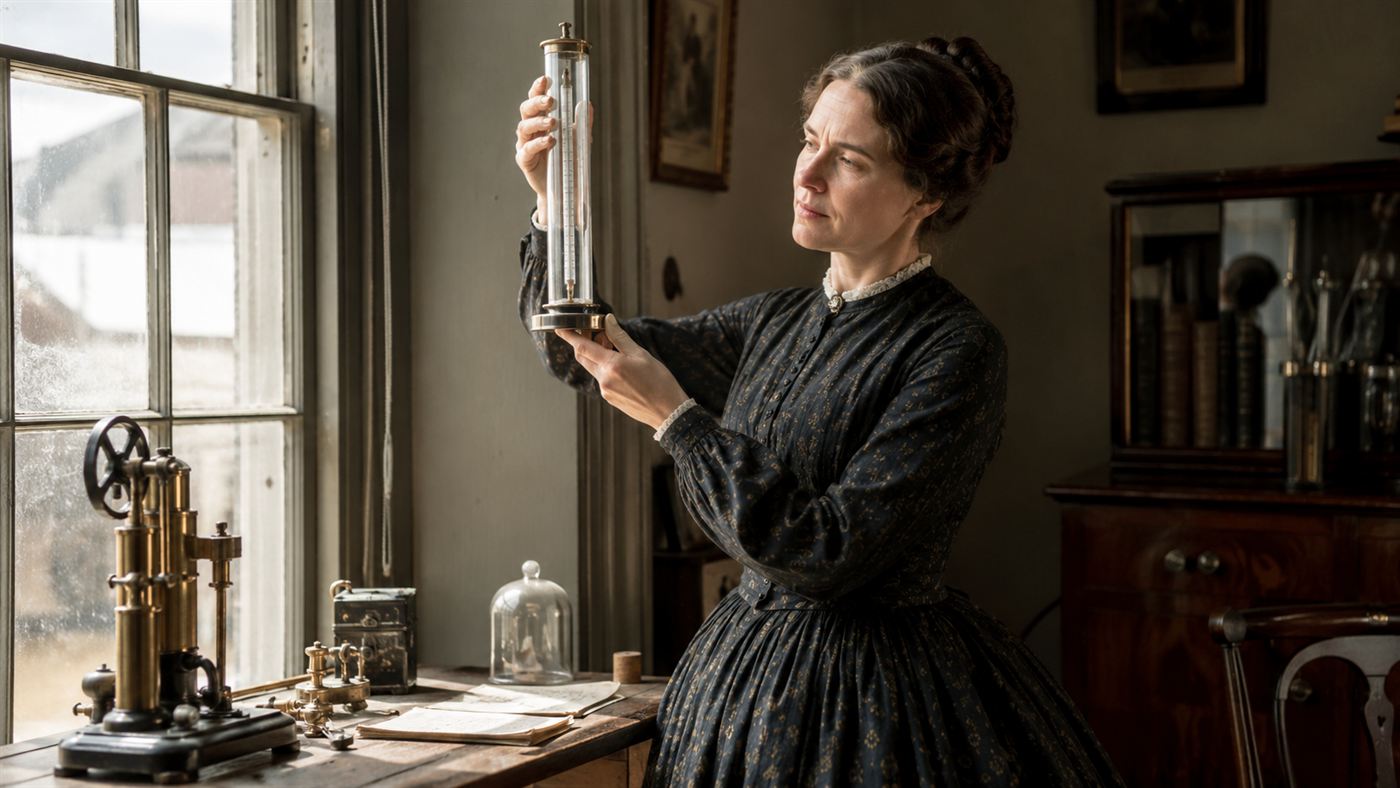
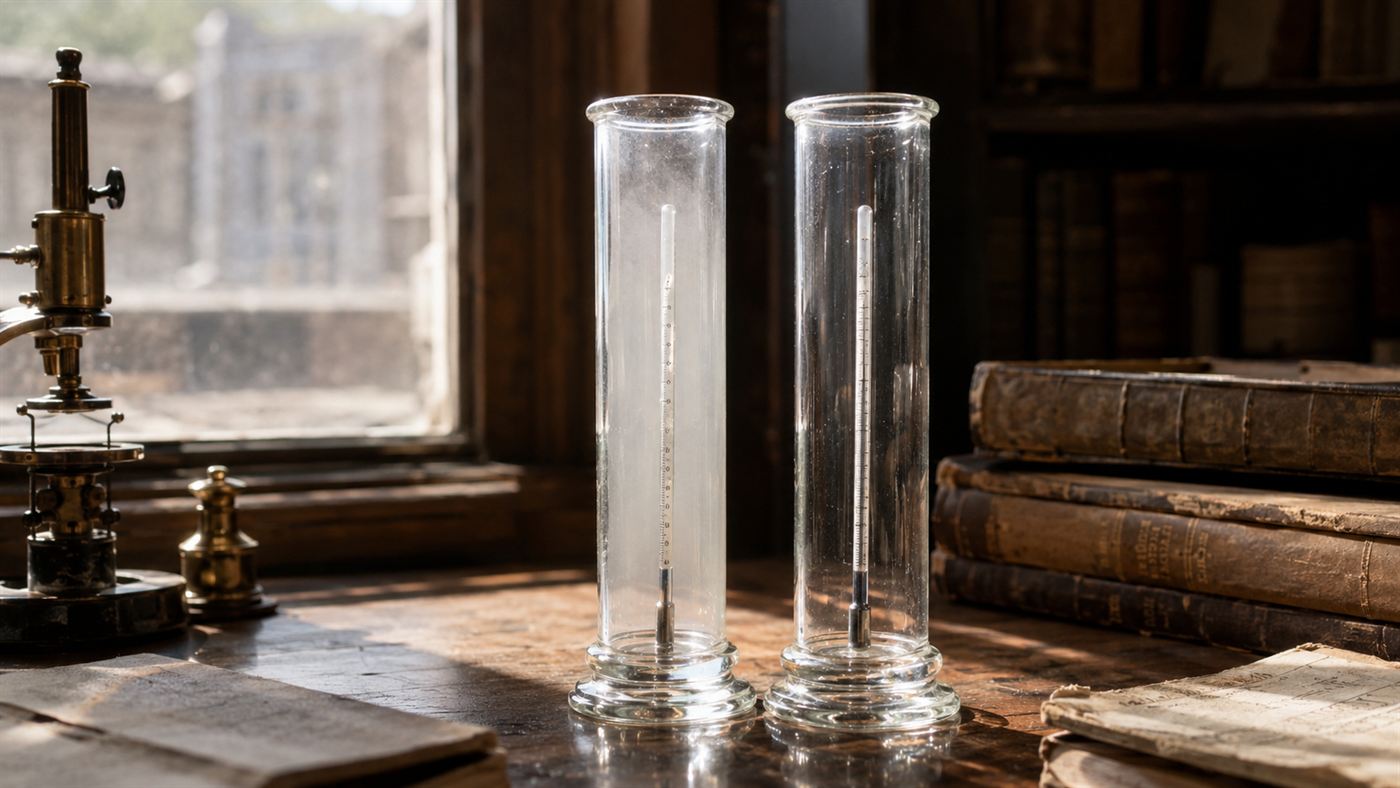
In 1856 a woman with a few glass jars first linked carbon dioxide to a warming Earth. Illustration: Watts & Wild.
The experiment could hardly have been simpler. On a clear day in 1856, Eunice Foote, a woman in upstate New York, filled glass cylinders with different gases, slid a thermometer into each, and stood them in the sun to see which grew hottest. The cylinder filled with carbon dioxide climbed far higher than the rest, an early glimpse of the greenhouse effect. From that small result she drew a conclusion the rest of the world would take more than a century to take seriously.
The woman was Eunice Newton Foote, and she was not a professional scientist but a New York inventor and campaigner for women's rights. As Scientific American has told her story, she was the first person to show that carbon dioxide traps heat and to suggest that more of it would warm the planet, the idea at the very heart of climate science. Almost nobody remembers her name.
A jar of gas and a thermometer
Foote's apparatus was modest: an air pump, a pair of tall glass cylinders and four mercury thermometers.
The cylinder of carbon dioxide grew far hotter than the others, climbing to around 52 degrees Celsius.
"The receiver containing this gas became itself much heated, very sensibly more so than the other," she wrote of the result.
How Eunice Foote saw the greenhouse effect coming
It was the conclusion Foote drew, not the measurement itself, that was extraordinary.
She reasoned that if the air held more of this gas, the whole planet would be warmer.
"An atmosphere of that gas would give to our earth a high temperature," she wrote, adding that if the air had once held a larger share of it, a hotter world must have followed.
In a single careful sentence, written in 1856, she had described the greenhouse effect that now drives climate change.
A man read her words for her
When Foote's paper was presented, she was not the one allowed to read it.
It went before the American Association for the Advancement of Science on 23 August 1856, and because she was a woman, a male scientist, Joseph Henry of the Smithsonian, read it aloud on her behalf.
Henry introduced it with a line that was generous for its time: "Science was of no country and of no sex."
It was, by the standards of the day, a landmark, the first physics paper by an American woman to appear in a scientific journal.
Foote had every right to be remembered for it, and instead she was left out of the story altogether.
How John Tyndall got the credit
Three years later, in 1859, the Irish physicist John Tyndall ran a far more sophisticated version of the same investigation.
With delicate instruments he measured precisely how gases like carbon dioxide and water vapour absorb heat, and, crucially, he explained why.
Tyndall's work was deeper and more rigorous, and it is his name that sits in the textbooks as the discoverer of the greenhouse effect.
Foote, an amateur and a woman working an ocean away, simply slipped out of the record.
She was far from the only one, as Emily Roebling, who helped finish the Brooklyn Bridge, would also discover.
Found again, 150 years later
For a century and a half, almost no one knew her experiment had ever happened.
Then, around 2010, a retired petroleum geologist named Ray Sorenson stumbled on a summary of Foote's work while leafing through an old scientific annual from 1857.
He realised that a woman had described the warming power of carbon dioxide years before Tyndall, and he set out to put her back into the record.
The recovery spread through the climate science community, and in 2022 the American Geophysical Union created a medal in her name.
A discovery that had been hiding in plain sight for 150 years finally had its author back.
The honest catch
It is tempting to turn this into a simple tale of a genius robbed, but the real story is more interesting than that.
Tyndall almost certainly did the greater science, because his instruments could separate the heat arriving from the sun from the heat radiating off the Earth, something Foote's jars could not do, and he uncovered the actual mechanism.
There is also no evidence that he stole anything, and historians still argue over whether he ever even heard of her work.
What is not in doubt is her priority: Foote got there first, in print, and the world looked straight past her because of who she was.
No portrait of her is even known to survive, which is its own quiet measure of how completely she was forgotten.
Foote's jars did not stop the planet from warming, and they did not make her famous in her own lifetime.
But they hold a quiet warning, set down 170 years ago, that the world is still struggling to act on today.
Does it change how you see climate science to learn that a forgotten woman saw it coming in 1856? Tell us what you think in the comments.
Related reading: Climeworks switched on the world's largest machine for sucking carbon dioxide out of the air, and in its first ten months it captured a tiny fraction of the goal.

Maria Heloisa Barbosa Borges covers energy, heavy industry and the natural world for Watts & Wild, with an eye for the people caught where engineering meets the wild.