The warship Vasa capsized minutes into its maiden voyage in 1628, and the cold Baltic kept it almost whole for 333 years
The Vasa was meant to be the proudest ship in the Swedish navy, a floating fortress covered in gilded carvings. Instead the Vasa warship sank on its maiden voyage, becoming the most famous shipwreck in the world, undone by the very grandeur that was supposed to make it great.
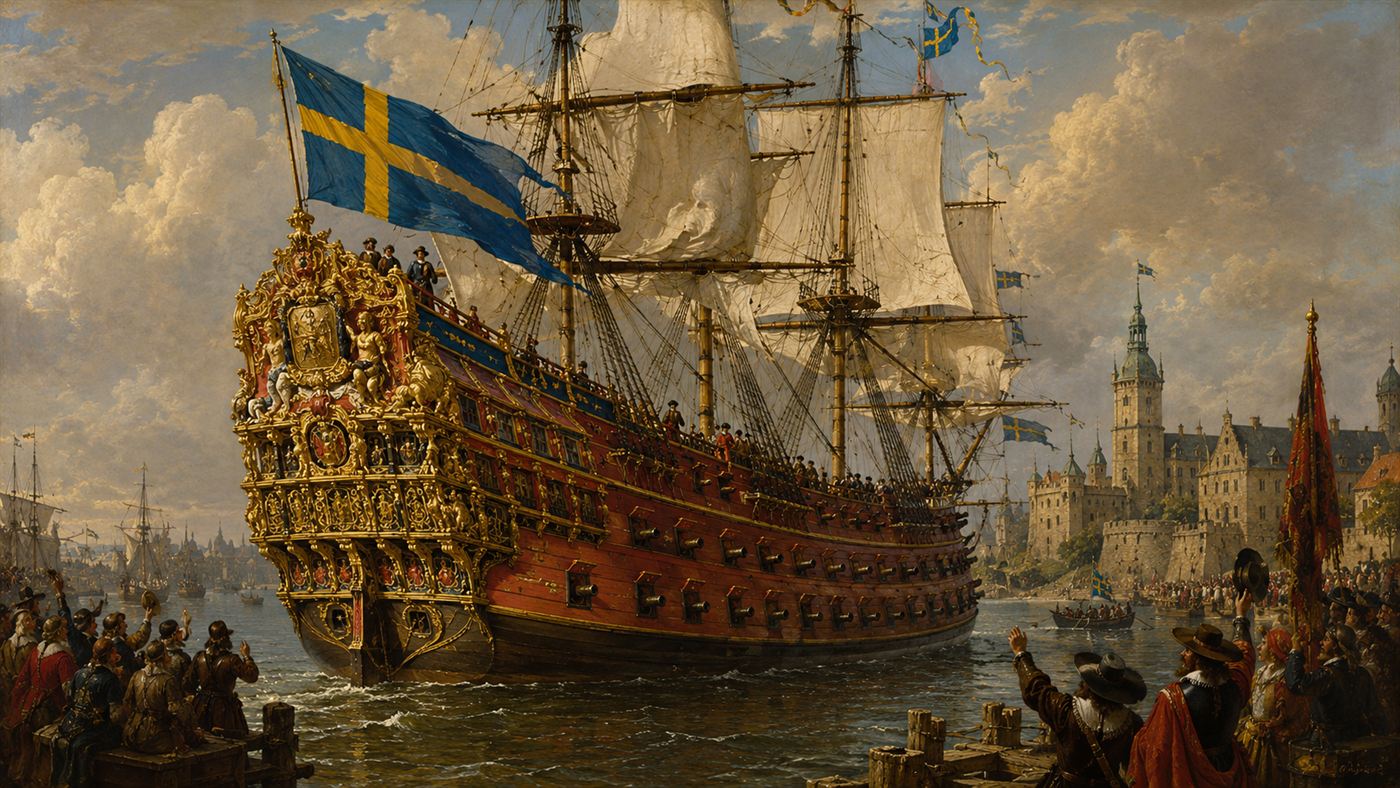
The Vasa was built tall, ornate and bristling with cannon, a statement of royal power. Illustration: Watts & Wild.
On a calm August afternoon in 1628, thousands of people lined the shore of Stockholm to watch their kingdom's new super weapon set sail.
What they actually witnessed was one of history's great engineering disasters, unfolding in front of them in a matter of minutes.
Why did the Vasa sink? The Vasa sank because it was built too tall and narrow, with two heavy gun decks that left it top-heavy and unstable. On its maiden voyage a light gust of wind tipped the warship over, water poured in through its open lower gun ports, and it went down in Stockholm harbour after sailing barely 1,300 metres.
A floating symbol of royal power
The Vasa was ordered by King Gustavus Adolphus, who was waging war across the Baltic and wanted a flagship to match his ambitions.
He demanded a towering warship carrying 64 bronze cannon on two full gun decks, far more firepower than such ships usually bore.
The hull was smothered in hundreds of carved and painted sculptures, lions, sea gods and Roman emperors, all meant to dazzle friend and enemy alike.
It was less a piece of naval engineering than a piece of propaganda built from oak.
The problem was that all that height, weight and ornament sat on a hull that was simply too narrow to carry it.
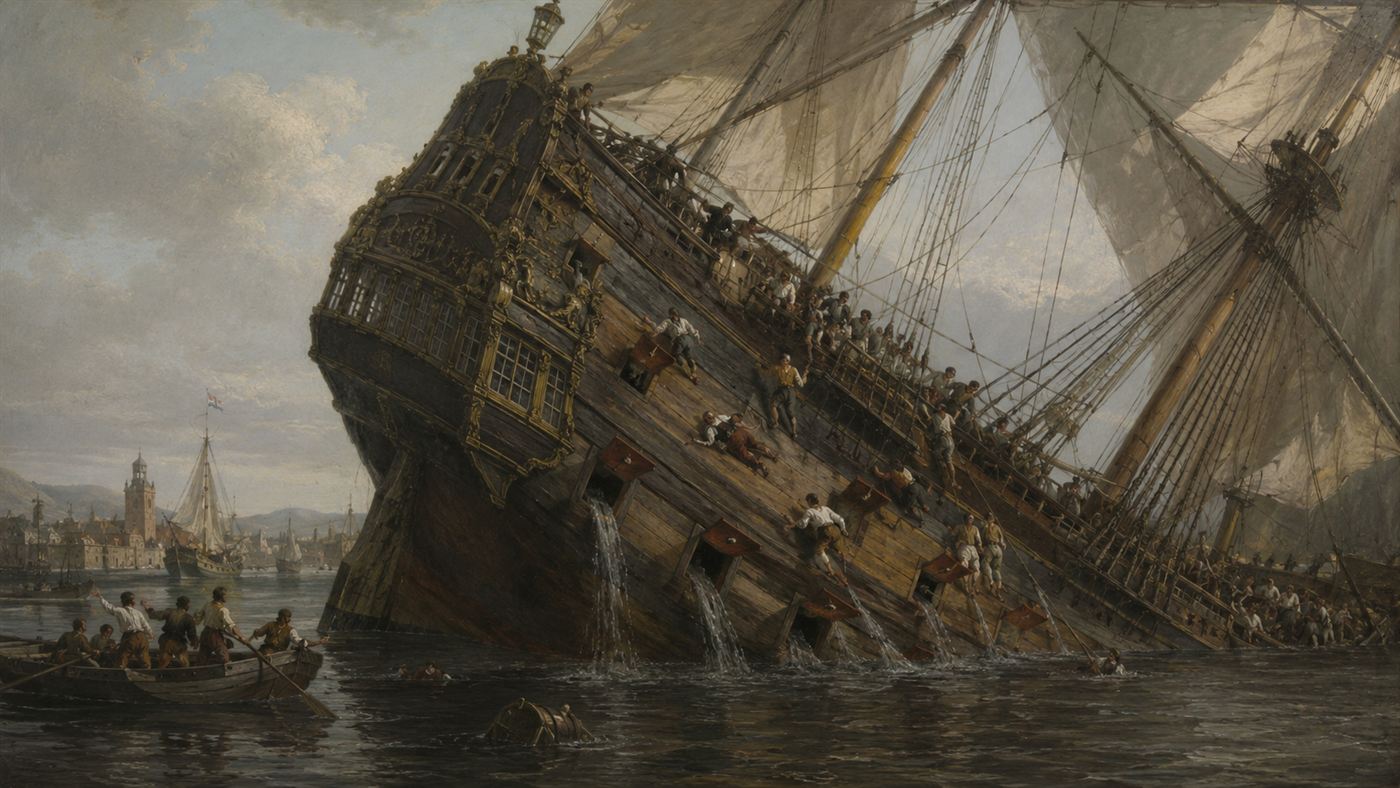
How the Vasa warship sank on its maiden voyage
On 10 August 1628 the Vasa finally cast off into the harbour, decked with flags and firing a salute.
A first puff of wind heeled the ship over, and it slowly righted itself, which should have been the final warning.
A second, still gentle gust pushed it over again, and this time the open lower gun ports dipped below the waterline.
Water flooded in, the ship lurched onto its side and sank within minutes, taking around 30 people down with it.
The pride of the navy had managed a voyage of barely 1,300 metres before vanishing beneath its own home harbour.
Nobody dared blame the king
What makes the story so human is that almost everyone involved seems to have known the warship was dangerous.
Before it sailed, the captain had run a stability test in which 30 men ran back and forth across the deck to see how the ship rocked.
The Vasa swayed so violently that the test was stopped for fear of capsizing it right there at the quay, yet the voyage went ahead anyway.
At the inquiry afterwards, no one was ever punished for the loss.
The master shipwright had conveniently died before the launch, and since the deadly proportions traced straight back to the king's own demands, blaming anyone in particular was politically impossible.
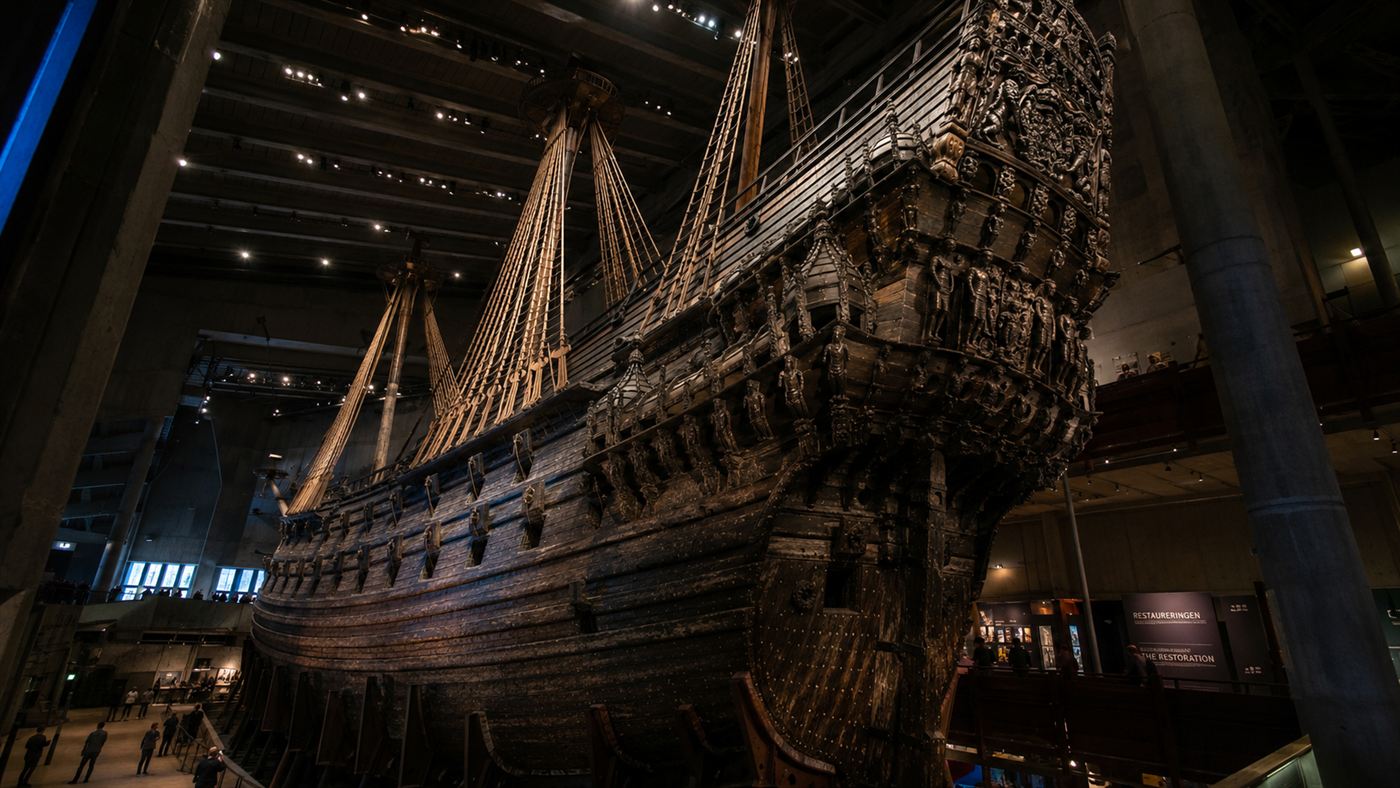
How the cold Baltic saved it
Here is where the disaster turns into a strange gift to history.
The wreck settled on the bottom of Stockholm harbour and stayed there, more or less forgotten, for over three centuries.
In most of the world's oceans the oak would have been devoured within years by the shipworm Teredo navalis, a mollusc that eats wooden hulls.
But the Baltic Sea is cold, only faintly salty and low in oxygen, and that brackish water is too fresh for the hungry shipworm to survive.
So while the warship sat in the dark Baltic mud, the very conditions that make the sea so harsh kept its timbers whole for 333 years. Raising a sunken ship intact is never simple, as the engineers behind the $2 billion Costa Concordia salvage rediscovered in our own century.
Raised from the dead
The wreck was rediscovered in the 1950s by the engineer Anders Franzen, who had become quietly obsessed with finding it.
In 1961, after divers tunnelled cables beneath the hull, the Vasa was lifted back into daylight remarkably intact, with an estimated 98 percent of the original ship surviving.
Out of the mud came not just the warship but a frozen moment of the 1600s, with sails, tools, coins, clothing and the bones of the dead.
Today the restored hull stands in its own purpose-built hall, and the Vasa Museum in Stockholm is one of the most visited museums in all of Scandinavia.
A humiliating failure had become, four centuries later, a priceless treasure.
The honest catch
The miracle of the Vasa comes with an asterisk, because keeping a waterlogged wooden ship intact in the open air is a slow battle that never really ends.
For 17 years the timbers were sprayed with a waxy chemical called polyethylene glycol to replace the water and stop them cracking as they dried.
Now a deeper threat is creeping out from inside the wood itself.
Sulphur compounds the hull soaked up in the polluted harbour are reacting with iron from its corroding bolts to form sulphuric acid, slowly attacking the oak from within.
Conservators are replacing thousands of bolts and carefully controlling the air, knowing the fight to preserve the warship may outlast everyone now working on it.
The Vasa is a rare thing, a monument to human error that we managed to pull back from the deep and put on display.
It sits alongside the other rescued and reborn wonders we love, from the ancient Greek computer hauled up from a shipwreck to the painstaking work of the artisans who rebuilt Notre-Dame after the fire. In 2026 the sea gave up another prize: the Porcelain Wreck, an 18th-century cargo found deep in the Skagerrak.
If a king's vanity could sink the mightiest warship of its age in minutes, what does the Vasa teach us about ego, engineering and the cost of ignoring the people who know the numbers? Tell us in the comments.
More from Watts & Wild
 The first tunnel under a river, built on a trick stolen from a shipworm
 The Hindenburg burned on hydrogen because the US withheld helium, and thirty-six deaths ended the entire era of airship travel
 The lighthouse built on a drowning reef
 The line that stopped the coffin ships
 The ancient Greek computer from a shipwreck
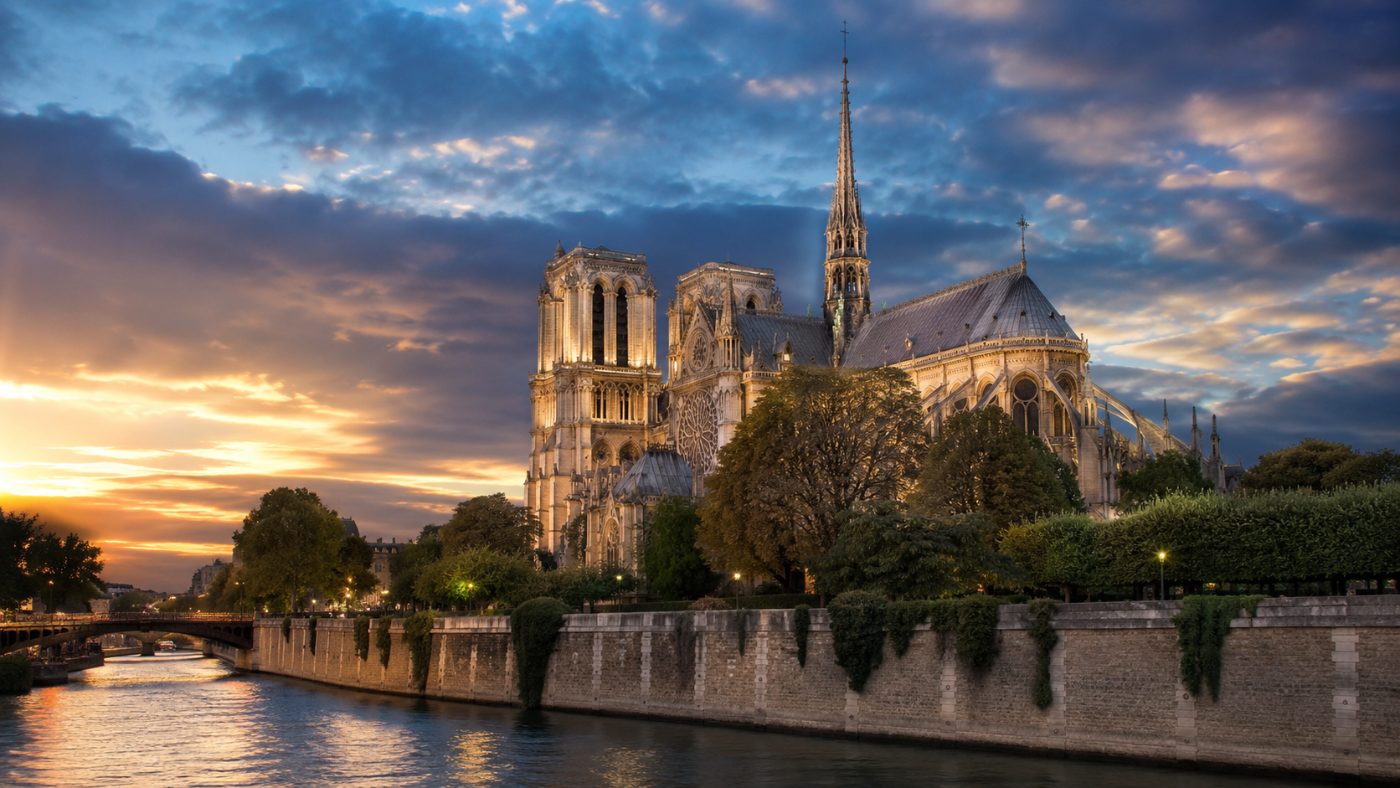 Rebuilding Notre-Dame by hand