For 30 months a South African salvage master and 500 workers fought to roll the wrecked Costa Concordia upright, the largest ship ever lifted off the seabed in one piece
The Costa Concordia salvage was the most expensive wreck removal in history, a 2-billion-dollar gamble to lift a 114,000-ton cruise ship that had capsized off the Italian island of Giglio in 2012. The man put in charge had never tried anything close to this size.
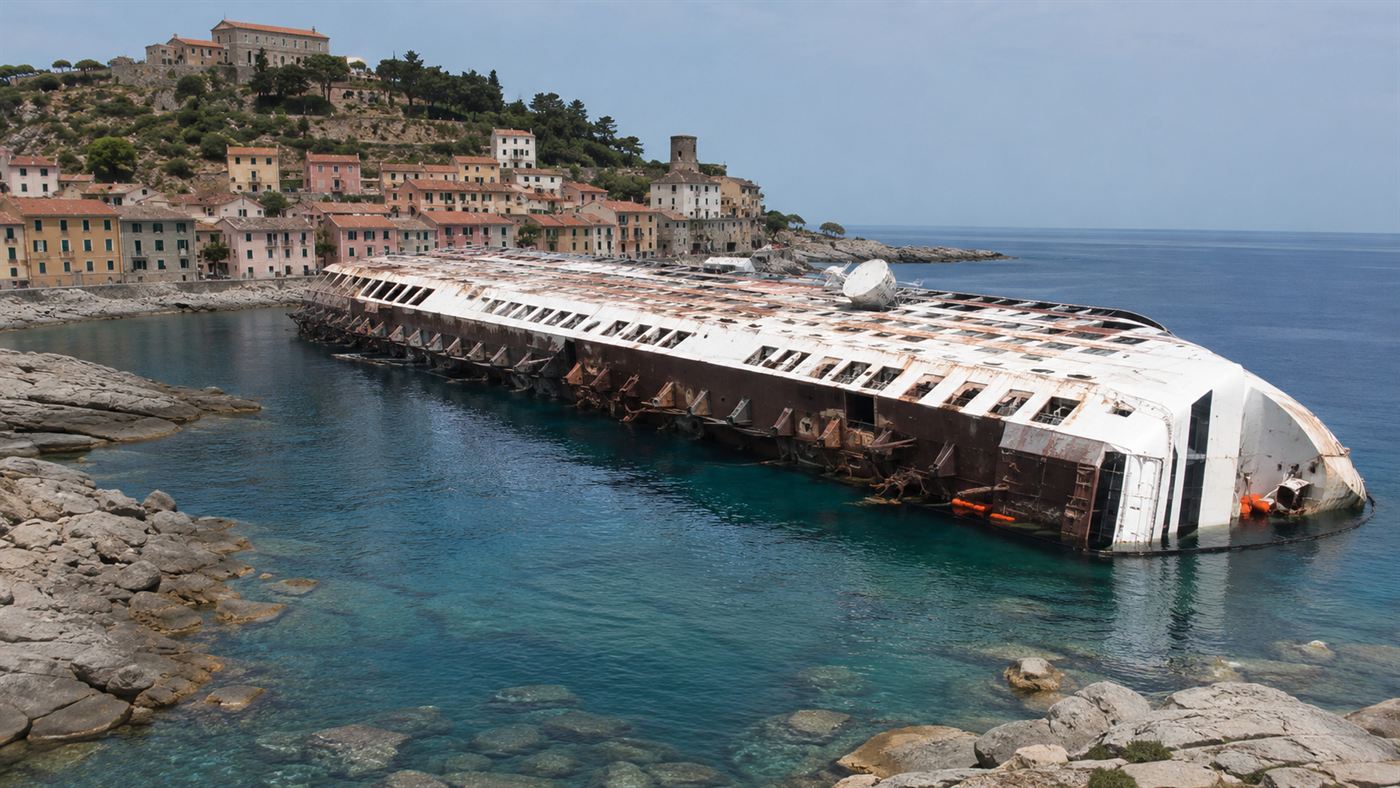
The wreck lay on its side for 20 months beside Giglio before engineers rolled it upright. Illustration: Watts & Wild.
The Costa Concordia salvage began with a wreck nobody knew how to move. On the night of January 13, 2012, the cruise ship Costa Concordia sailed too close to the island of Giglio off the coast of Tuscany, tore a long gash in her hull on a rock, and rolled onto her side in shallow water. Of the roughly 4,200 people aboard, 32 died. What was left was a 290-meter liner, longer than the Titanic and more than twice her weight, lying on its flank a stone's throw from a tiny harbor town.
Pulling the ship apart and lifting the pieces was the obvious plan, and the one everyone rejected. Giglio sits inside a protected marine sanctuary, and the ship lay balanced on an underwater ledge with a drop into deep water just beyond her. As CNN reported when the operation reached its climax, Italian authorities insisted the wreck come out in one piece, in what became the largest and most expensive maritime salvage ever attempted. Leading it was a South African named Nick Sloane.
What was the Costa Concordia salvage? It was the operation to right and remove the capsized cruise ship wreck from the seabed off Giglio, Italy. Engineers rolled the 290-meter wreck upright in a single 19-hour move in September 2013, then welded huge flotation tanks to her sides and floated her to Genoa for scrapping in 2014.
Why couldn't they just cut up the Costa Concordia?
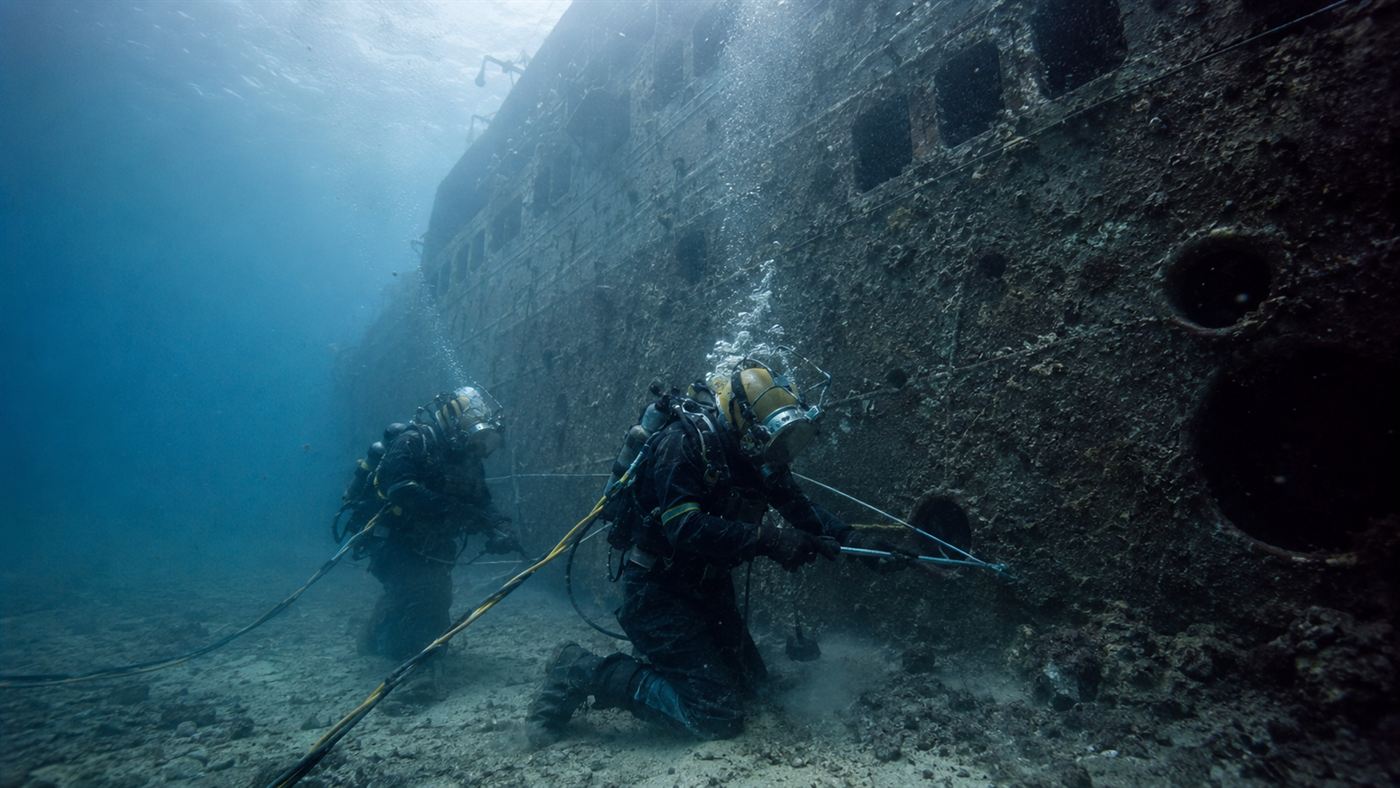
The instinct with any shipwreck this badly damaged is to break it into manageable chunks and barge them away. Here that was the nightmare option. The hull held thousands of tons of fuel, sewage, food, and furnishings, and tearing into it risked turning a contained wreck into a slick across one of the cleanest stretches of the Mediterranean. The ship also sat on a narrow rock shelf, and a clumsy cut could have sent her sliding into deep water where recovery would become almost impossible.
So the brief from the Italian government was strict: remove the ship whole, protect the sanctuary, and leave the seabed clean. That single requirement turned an ugly cleanup into one of the hardest engineering problems of the decade. Nothing of this mass had ever been raised intact, and the cruise ship wreck would have to be rebuilt into something that could float again before it could leave.
How do you roll a 114,000-ton ship upright?
The answer is an old sailor's trick scaled up to absurdity: parbuckling. Parbuckling is simply rotating a fallen object upright by pulling on it from above while it pivots on a fixed edge, the same move you might use to right a barrel with a loop of rope. The principle is centuries old. The challenge was doing it to an object the size of a city block without snapping it in half.
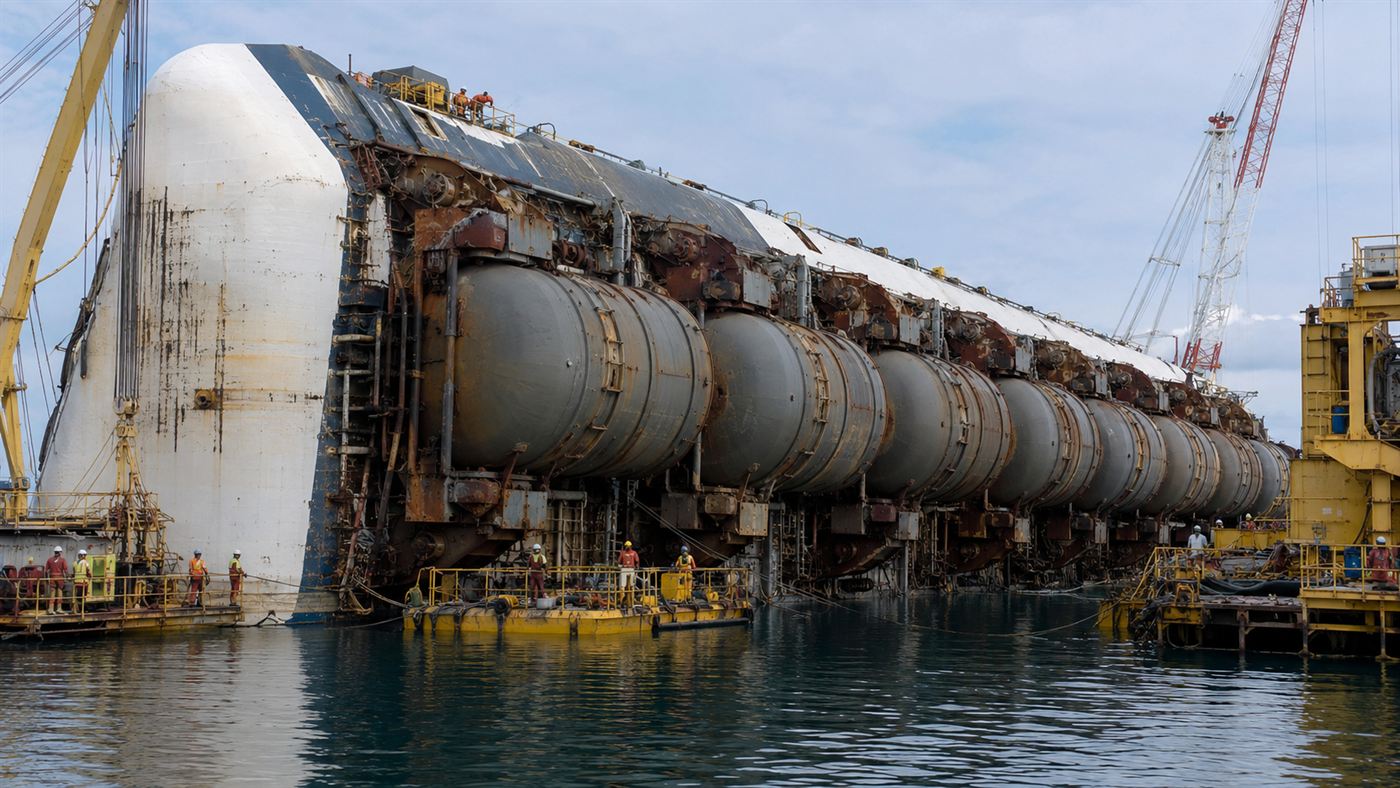
To make it work, divers and engineers spent months building a false seabed beneath the wreck: six enormous steel platforms anchored into the rock with grout and piles, forming a cradle for the ship to land on. They welded huge hollow tanks called sponsons to the exposed flank, ran chains under and around the hull, and connected them to strand jacks on the platforms. On the morning of September 16, 2013, the jacks began to pull and the flooded tanks added their weight, and over 19 hours the Costa Concordia groaned a few degrees at a time until, by dawn, she stood upright on her cradle for the first time since the disaster.
The salvage master who had never faced anything this big
Nick Sloane had spent decades pulling stricken ships off reefs and out of storms, but nothing in his career as a salvage master compared to this. He moved to Giglio and ran a crew of roughly 500 experts from 24 countries, divers, welders, naval architects, and technicians, working around the clock in shifts for the better part of three years. He has said the hardest part was not the physics but the patience, because a single rushed step could have lost the ship and poisoned the bay.
Sloane also carried something heavier than steel. The bodies of two of the 32 victims had never been recovered, and part of the reason for keeping the wreck intact was the chance of finding them once the ship was upright and drained. As The Local reported from Giglio, Sloane described the operation as a matter of dignity as much as engineering. The pressure on one man to get an untested maritime salvage right, in front of the world's cameras, was immense.
30,000 tonnes of steel and a seabed built by hand
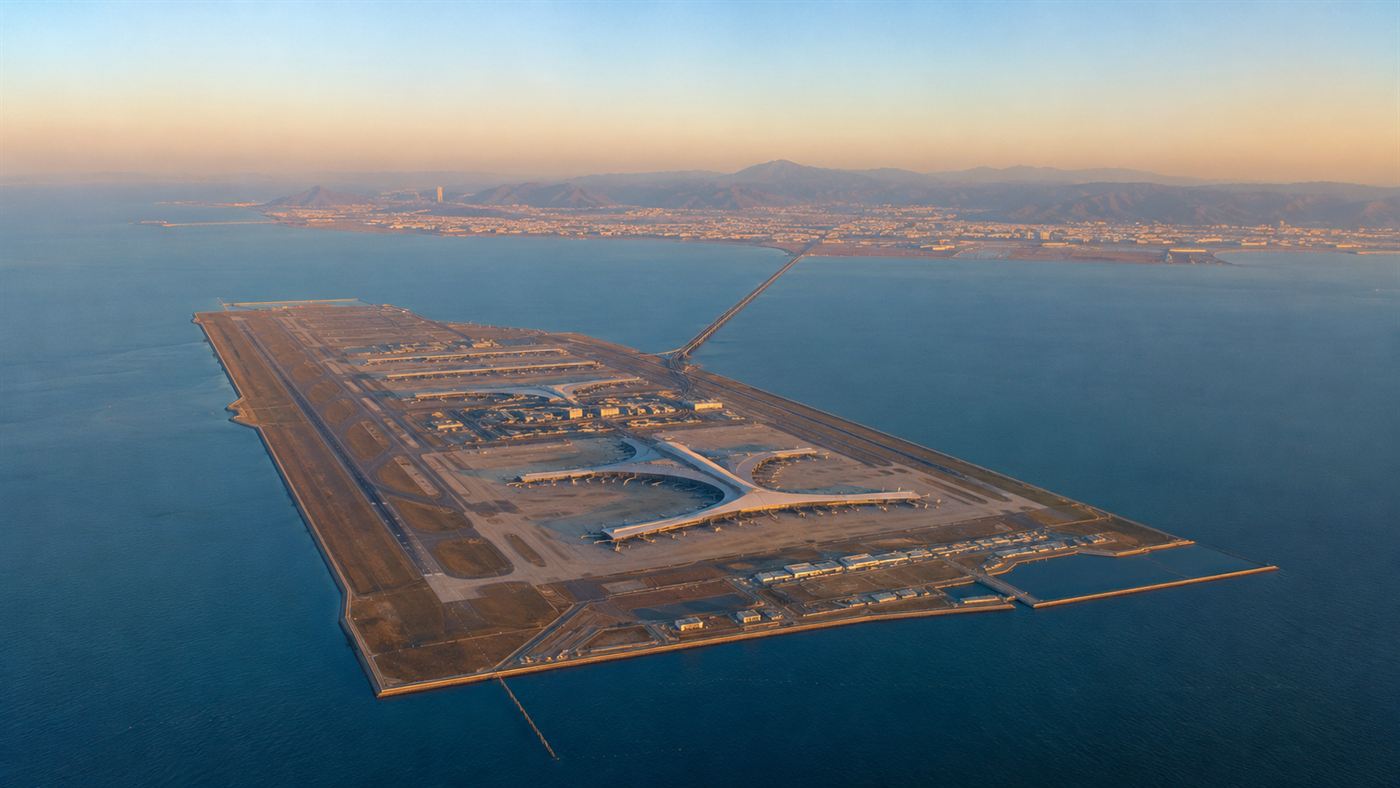
The scale of the supporting work is easy to miss behind the drama of the roll. The operation consumed more than 30,000 tonnes of steel, roughly four times the weight of the iron in the Eiffel Tower, almost all of it sunk out of sight into platforms, sponsons, and anchors. Building a stable artificial shelf on a sloping rock seabed, deep enough to hold a capsizing skyscraper of a ship, was itself a feat on the level of the marine engineering behind Japan's airport built on a sinking artificial island.
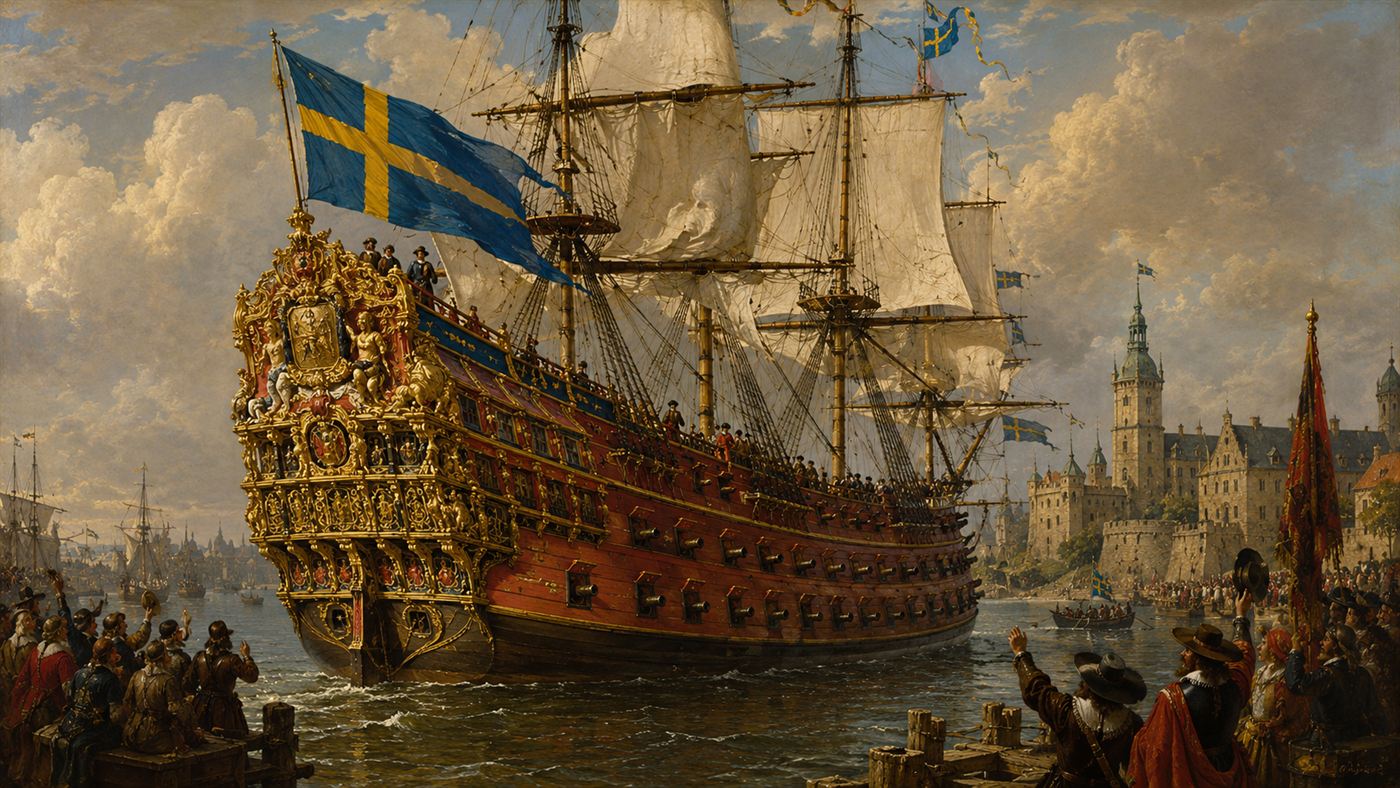
Once upright, the Costa Concordia still could not simply be towed. Engineers fixed flotation tanks to both sides and pumped them with air, lifting the hull off its cradle like a stricken whale brought back to the surface, a slower cousin of the centuries-old struggle to raise sunken ships such as the Swedish warship Vasa. In July 2014 the refloated wreck was towed 170 nautical miles north to Genoa, where breaking her down for scrap took until 2017.
What the Costa Concordia salvage cost
The bill was staggering. The full cost of the disaster, including the salvage, the towing, the scrapping, and compensation, has been estimated at around 2 billion dollars, more than three times the roughly 612 million it had cost to build the ship in the first place. The Costa Concordia salvage alone redrew the upper limit of what wreck removal could cost, and what it could achieve.
The human ledger sat behind the financial one. The ship's captain, Francesco Schettino, was later convicted of manslaughter and abandoning ship, and sentenced to 16 years for the night that put the liner on the rocks. The salvage could recover the hull and most of the lost, but it could not undo the 32 deaths that made the whole operation necessary in the first place.
The honest catch
It is worth being clear about what this story is. The Costa Concordia salvage is rightly studied as a triumph of engineering, but it was the cleanup of an entirely avoidable human catastrophe, not a feat anyone set out to perform. The need for it came from a captain's catastrophic errors, and no amount of clever steelwork changes that 32 people died.
The operation was also a one-off, not a template you can pull off a shelf. It worked because it had an almost unlimited budget, a calm and shallow site, years of time, and one of the best salvage crews ever assembled. Most wrecks get none of those luxuries. What Giglio proved is narrower but still real: that with enough money, patience, and nerve, even a capsized ocean liner can be stood back up and carried away whole.
A cruise ship wreck the size of a skyscraper was rolled upright on a hand-built seabed and carried away in one piece, in the most expensive salvage the sea has ever seen. Was spending 2 billion dollars to remove the wreck whole worth it, or should they have cut it apart and accepted the mess? Tell us what you think in the comments.
Related reading: The Swedish warship that sank on her maiden voyage in 1628 and was raised, almost whole, three centuries later.