The first tunnel ever dug under a river was made possible by a creature engineers had spent centuries trying to destroy: the shipworm that eats ships from the inside
For centuries the shipworm was the sailor's nightmare, a creature that quietly ate wooden hulls from within until whole fleets rotted and sank. Then one engineer looked at the thing the navy was trying to exterminate and saw a machine. The Thames Tunnel, the first ever driven under a navigable river, was built on a trick Marc Brunel stole from a worm.
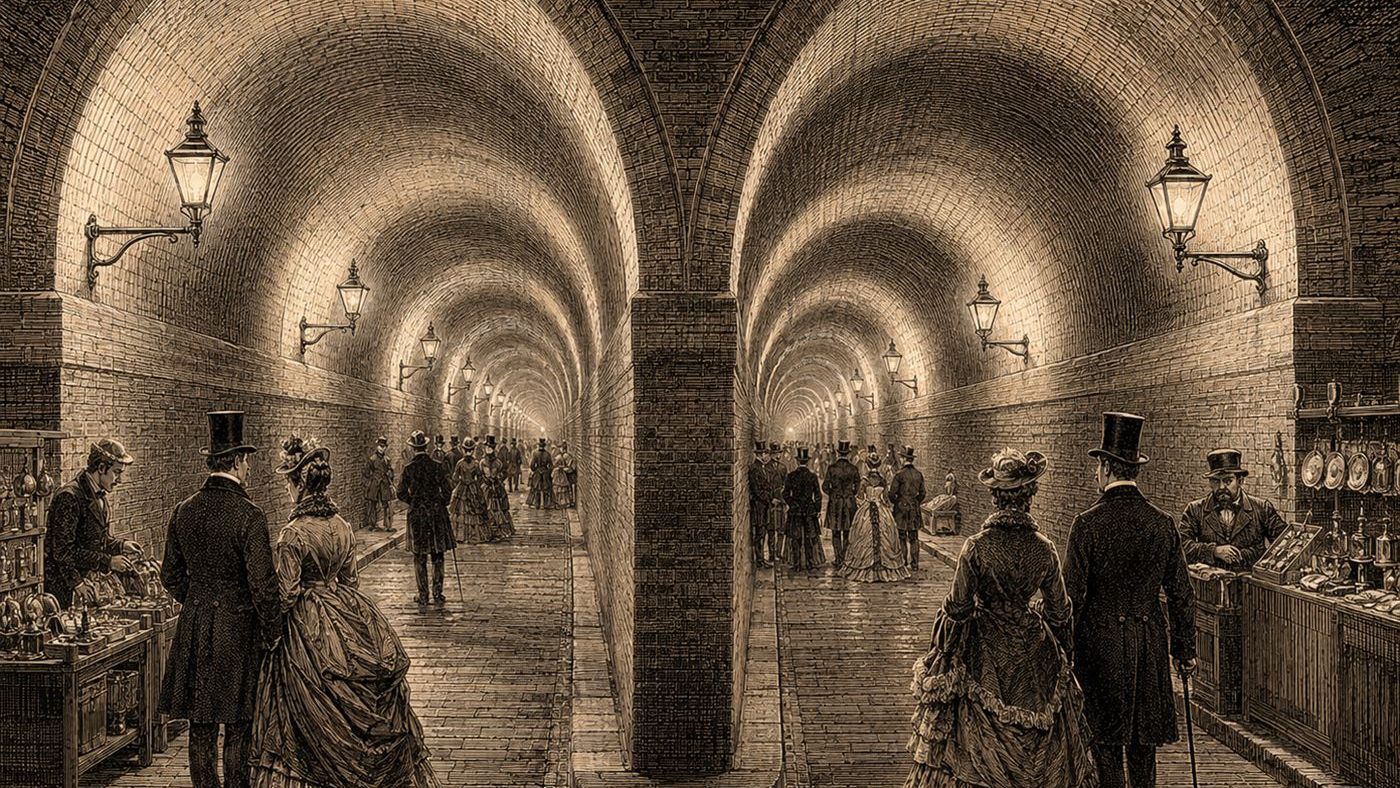
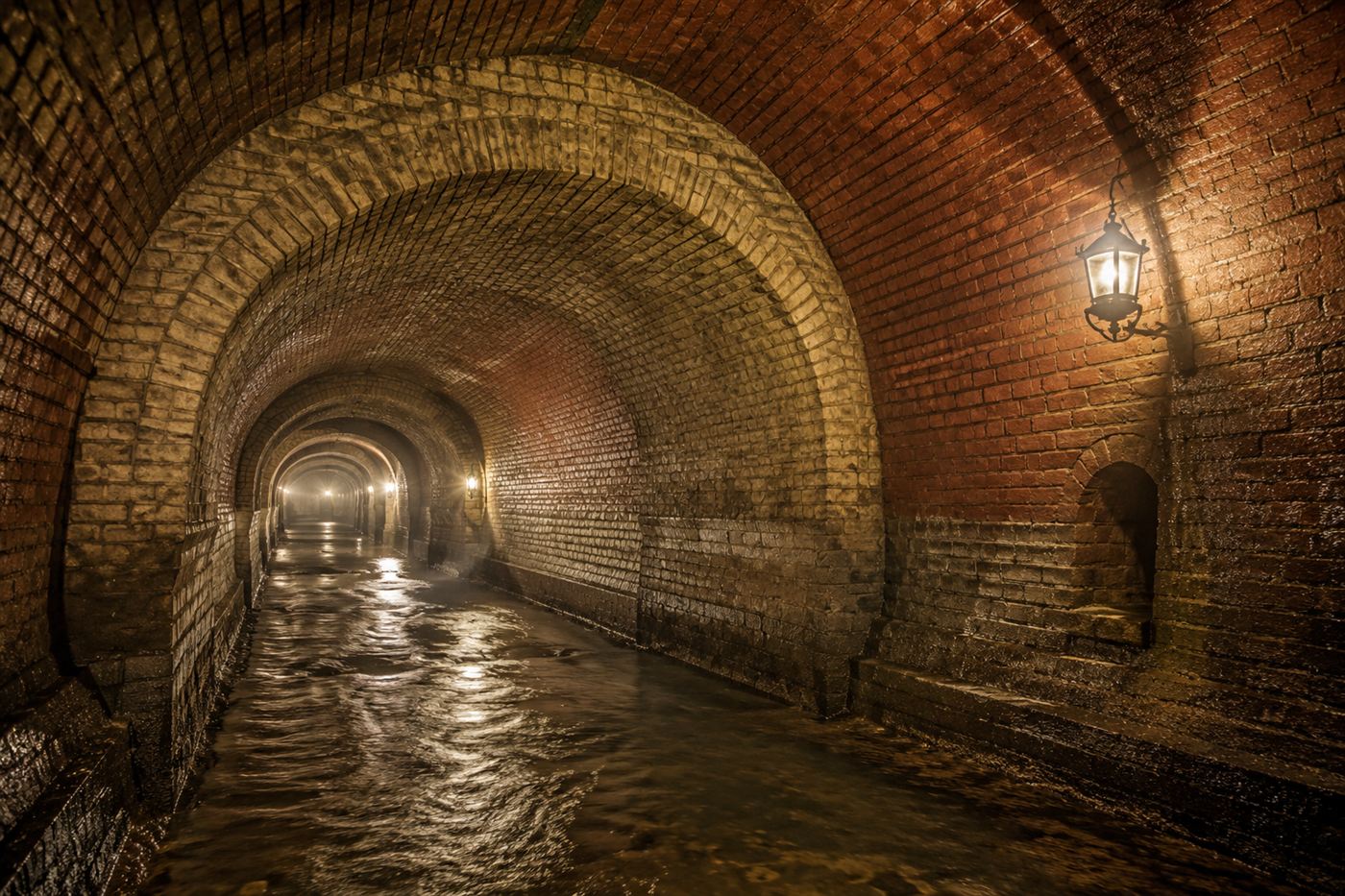
The twin arches of Brunel's tunnel, driven under the Thames itself. Illustration: Watts & Wild.
The problem looked impossible. By the early 1800s London had outgrown its river crossings, but a bridge low enough to be useful would block the masts of the ships that made the city rich, and nobody had ever tunnelled under a wide, tidal river. Dig too close to the bed and the whole Thames would come pouring in through the soft, waterlogged clay. Several attempts had already failed, and engineers had begun to treat the idea as a fantasy.
The man who solved it, Marc Isambard Brunel, was a French-born engineer with a restless eye for how things worked. His answer did not come from a drawing board. It came from a piece of rotten ship's timber.
What inspired the Thames Tunnel shield
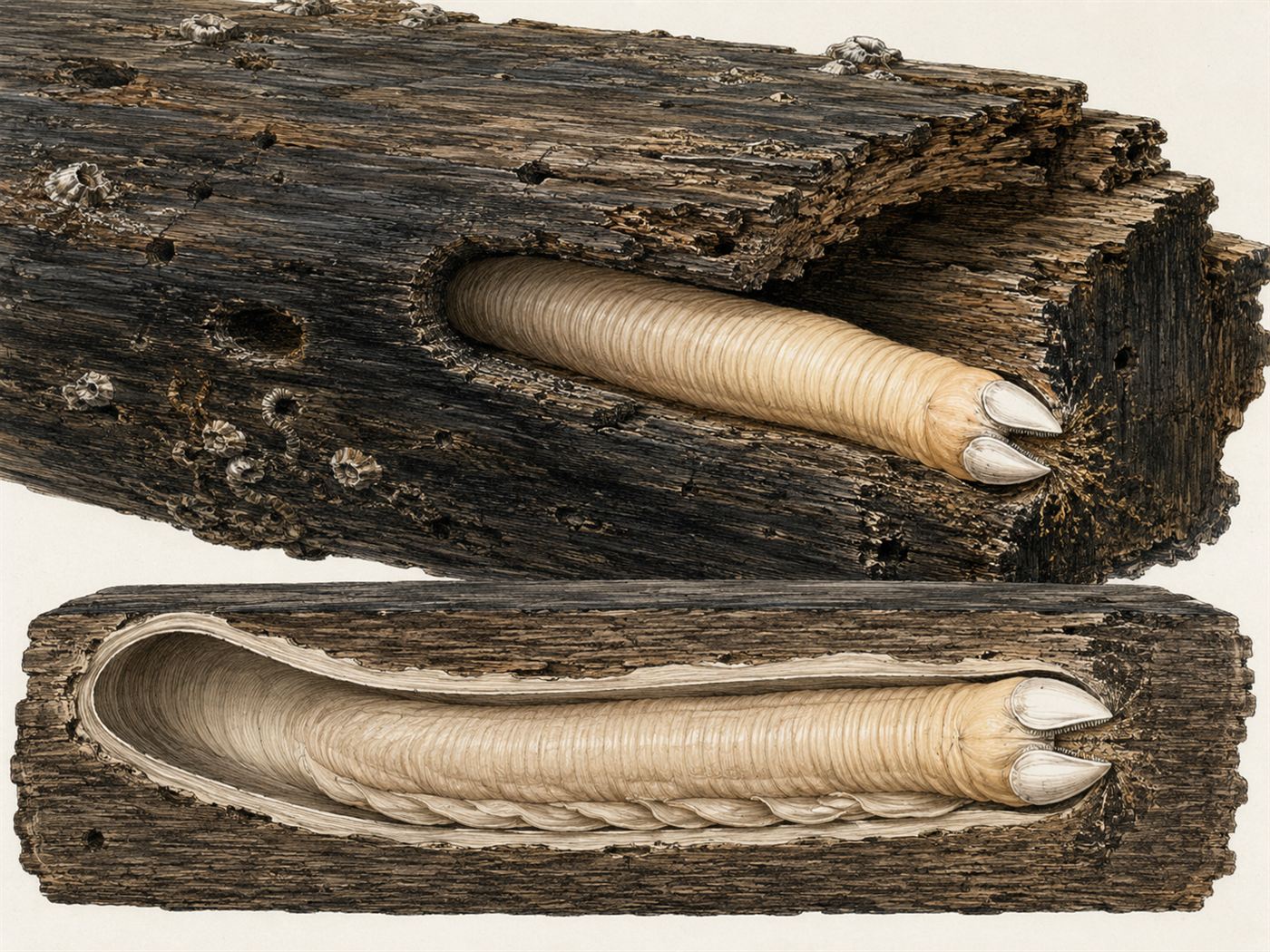
Brunel had been fascinated by the shipworm, Teredo navalis, the scourge of every wooden navy. As Royal Museums Greenwich recounts, he noticed that the creature's soft body is protected by a pair of hard shell plates on its head, which it uses to rasp through the wood while its body stays safe behind. As it bores, it coats the walls of its burrow with a hard lining, so the tunnel never collapses behind it.
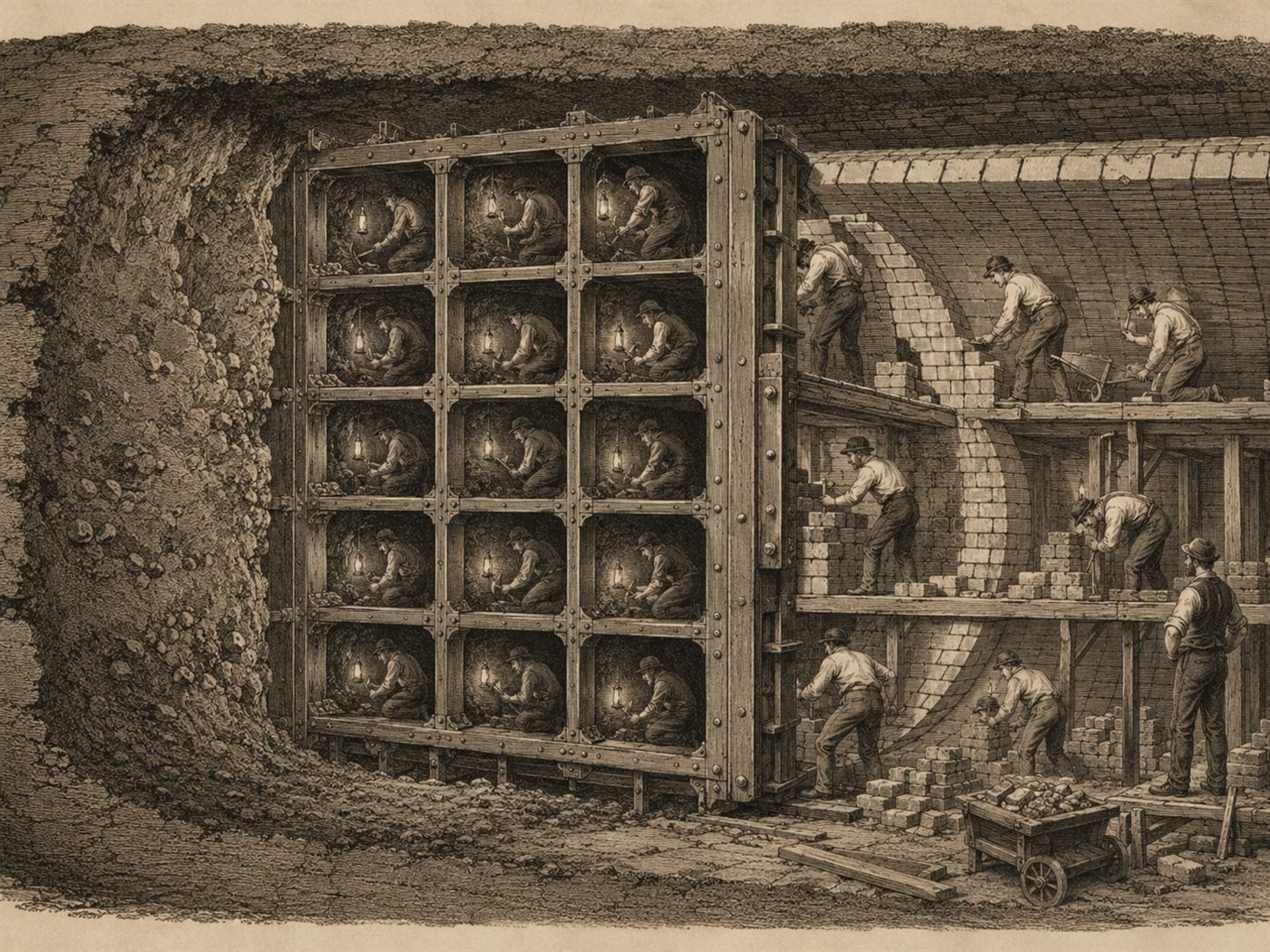
That was the whole secret of digging through ground that wants to fall in on you: protect the worker at the face, and line the tunnel as you go. Brunel turned the animal into a machine. He patented a tunnelling shield in 1818, a great iron frame weighing more than seven tons, divided into thirty-six cells, each holding a single miner who could dig safely in front of him while bricklayers sealed the finished tunnel behind. The shield inched forward, and the river stayed out.
A tunnel that nearly killed its builders
Having the right idea did not make the work safe. From the moment digging began at Rotherhithe in 1825, the tunnel fought back. The Thames broke in again and again, flooding the works with cold water and raw sewage, and the men breathed foul gases that left them sick and sometimes blind for days. Progress was measured in inches, and the money ran out more than once, leaving the half-finished tunnel sealed up and abandoned for years.
The most famous near disaster came in 1828, when the river burst through and drowned six men at the face. The young resident engineer was hauled out of the rising water barely alive: Isambard Kingdom Brunel, Marc's son, who would go on to become the most celebrated engineer of the age, almost died in his father's tunnel before his own career had properly begun.
Why the Thames Tunnel still matters
The tunnel finally opened on 25 March 1843, eighteen years after the first spadeful, and London treated it as a wonder. As the Brunel Museum records, the first underwater tunnel in the world drew enormous crowds, with around a million people walking through it in the months after it opened. For a while it was the great sight of the city, a gas-lit promenade under the river lined with stalls.
Its real legacy, though, was the method. As Rail magazine notes, Brunel's shield established the principle behind every tunnelling shield since, the technique that later carved out the London Underground and soft-ground tunnels around the world. The Thames Tunnel itself was eventually taken over by the railways, and trains still run through it today as part of the London Overground, more than 180 years after a worm showed an engineer how to dig it.
The honest catch
It would flatter the story to call the tunnel a triumph and leave it there. In truth it was a financial and human catastrophe for most of its life. It cost far more and took far longer than promised, men died and were maimed, and the grand plan was never finished: the spiral ramps that were meant to let horses and carriages down were never built, so the great river tunnel opened as a mere footway. Within years it had slid from marvel to seedy underground bazaar, a place of fairground stalls and pickpockets.
So the shield did not so much save the project as redeem it. The biology was sound and the machine worked, but the economics were brutal, and without the railway age finding a use for the hole, Brunel's tunnel might have been remembered only as a ruinous folly. What survived was not the profit but the principle, an idea good enough to outlive every disaster that surrounded it.
What a worm taught engineering
The lasting charm of the Thames Tunnel is where its genius came from. Not from heroic calculation but from close attention to a despised little animal, the kind of creature people paid to poison. Marc Brunel's gift was to look at the shipworm and see, instead of a pest, a working design for surviving underground, and to copy it well enough to change how humans move through the earth.
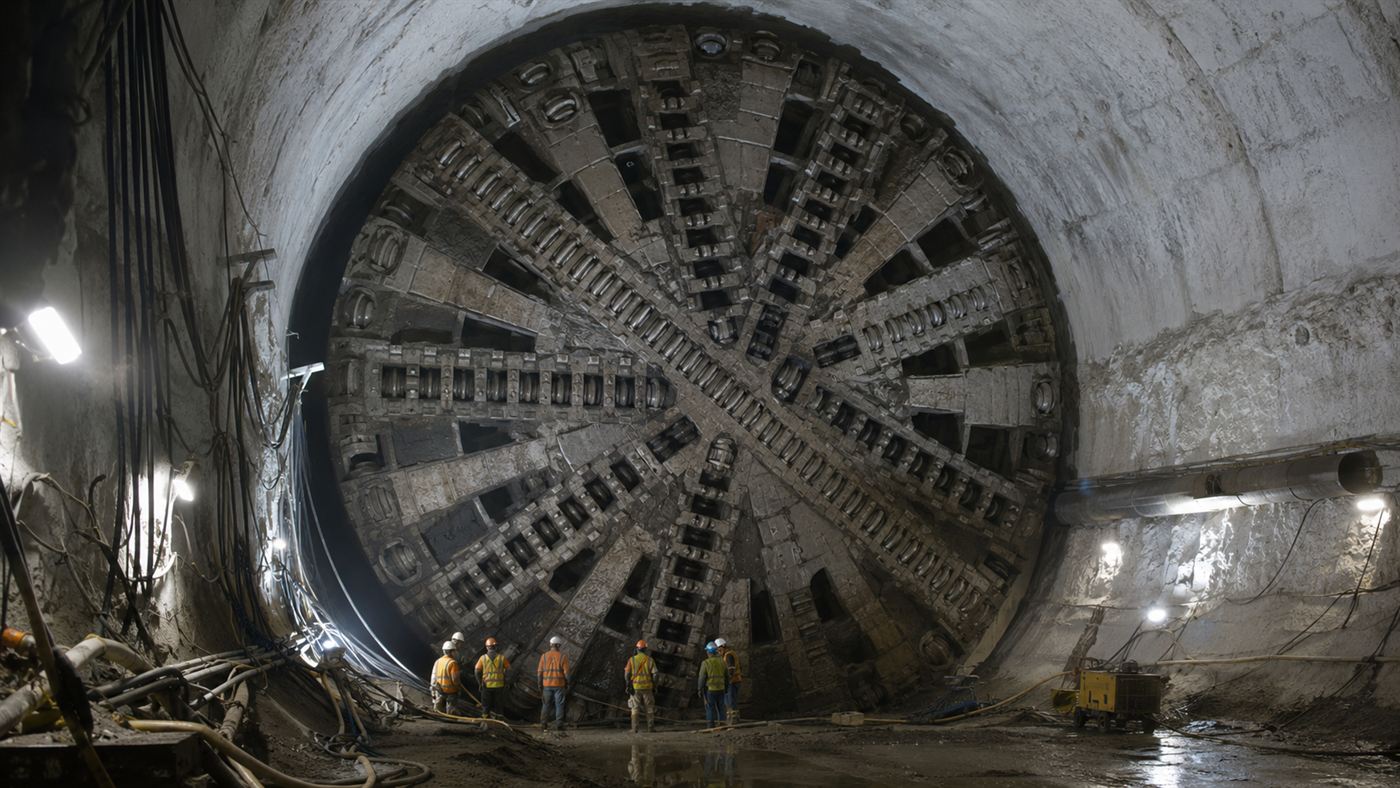
That is worth remembering every time a tunnel-boring machine grinds out a new metro line. Does it surprise you that modern tunnelling began with a worm that eats ships? Tell us in the comments.
Related reading: A king's vanity sank the warship Vasa in 1628, and the same cold sea that drowned it kept it almost perfectly preserved for 333 years. Two centuries after Brunel, a giant boring machine is now digging under Sydney Harbour.