Five years after the world watched Notre-Dame burn, an army of 2,000 carpenters and stonemasons has raised it from the ashes by hand, rebuilding its lost oak forest with medieval axes
When Notre-Dame caught fire in April 2019, the worst loss was its roof, a lattice of medieval oak so vast it was called the forest. France could have replaced it with steel and concrete. Instead it chose the hard way, and Notre-Dame was rebuilt by hand, with carpenters sent back into the woods with axes.
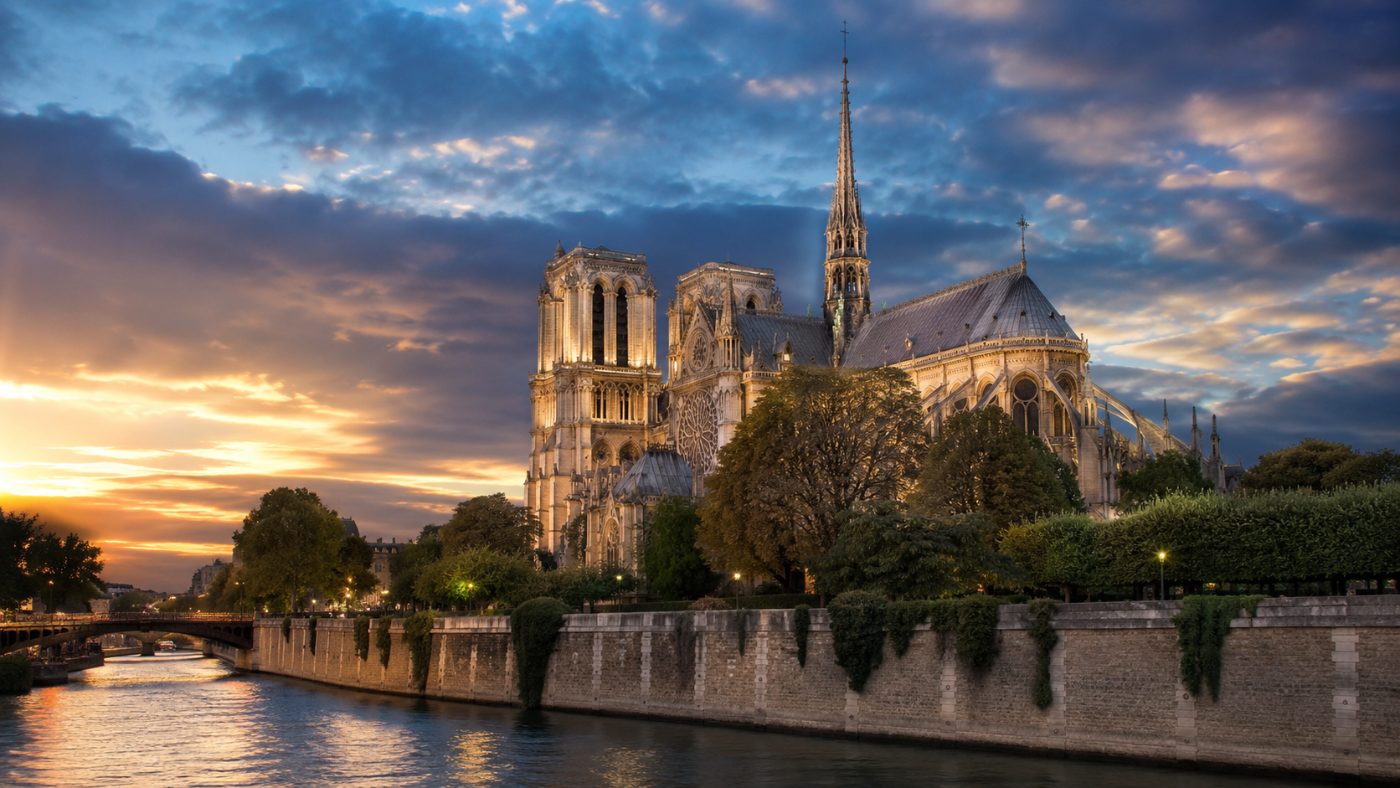
Notre-Dame reopened in December 2024, its spire and roof rebuilt as they were. Illustration: Watts & Wild.
On the evening of April 15, 2019, hundreds of millions of people watched live as flames tore through the roof of Notre-Dame de Paris and its 19th-century spire toppled, burning, into the cathedral below. The 850-year-old church, one of the most visited monuments on Earth, looked for a few hours as though it might be lost entirely. Firefighters saved the stone shell and the bell towers, but the roof was gone.
Five years and almost eight months later, on December 7, 2024, its doors opened again. What happened in between is one of the most ambitious restoration projects of the century, and the strangest part is the method. Rather than rebuild fast in modern materials, France chose to put the cathedral back almost exactly as it had stood, and to do much of it by hand. As CBS News reported, roughly 2,000 craftspeople worked on the cathedral, drawn from quarries, forests and workshops across the country.
The forest that burned
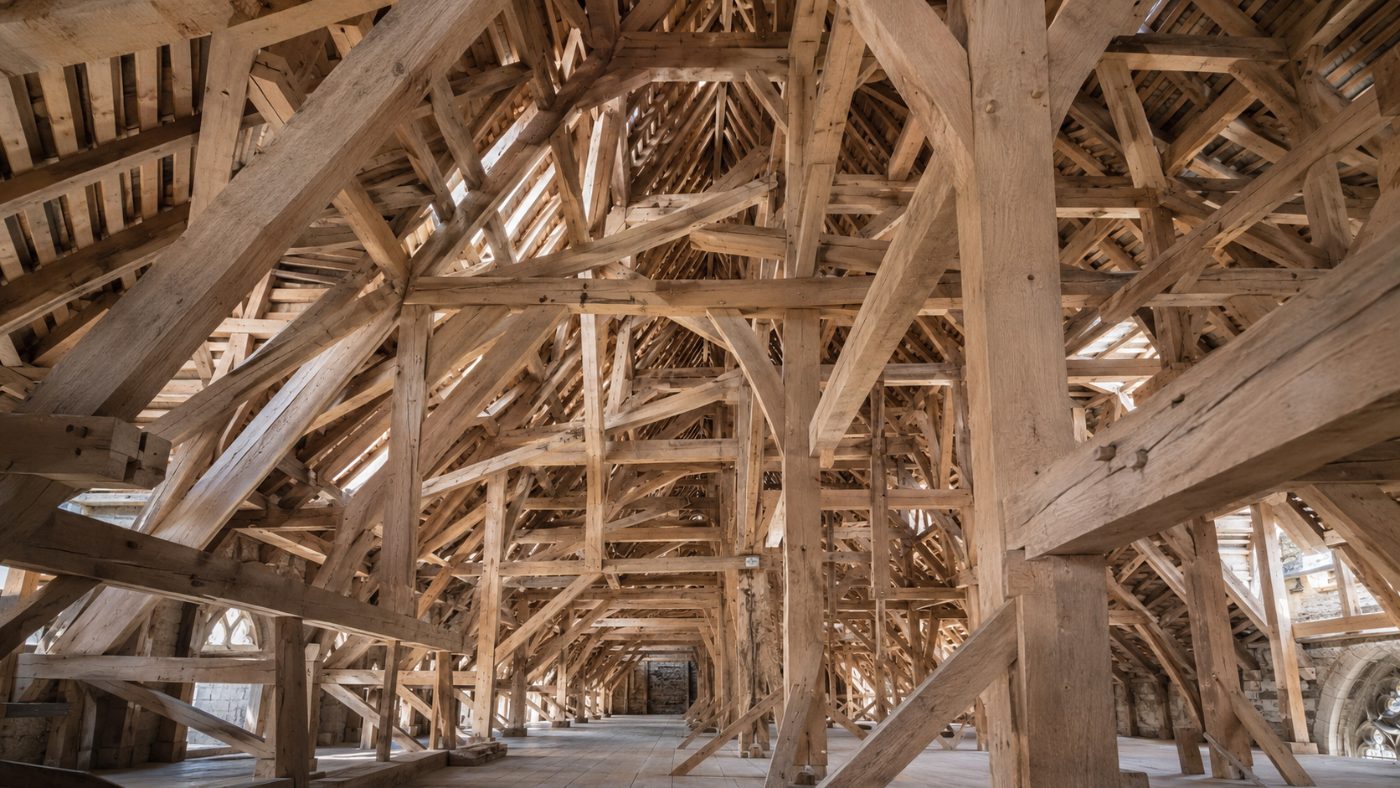
To understand the achievement, you have to understand what was destroyed. Above the stone vaults of Notre-Dame sat a roof frame built in the 1200s, a dense web of oak beams, each one shaped from a single tree by medieval carpenters. It was so thick with timber that for centuries people simply called it la charpente, the frame, or more poetically, the forest.
That forest was the part the fire ate. The flames raced through the bone-dry oak, brought down the spire, and destroyed around two thirds of the roof before firefighters could stop them. What burned was not just wood but eight centuries of craftsmanship, the kind of structure that no longer gets built because almost nobody alive still works that way.
Going back to the woods with an axe
France made a choice that surprised a lot of people. Architects and engineers proposed modern roofs, glass, even a rooftop garden, and all of it was rejected. The cathedral would be rebuilt identically, with the same oak, cut and shaped the same medieval way.
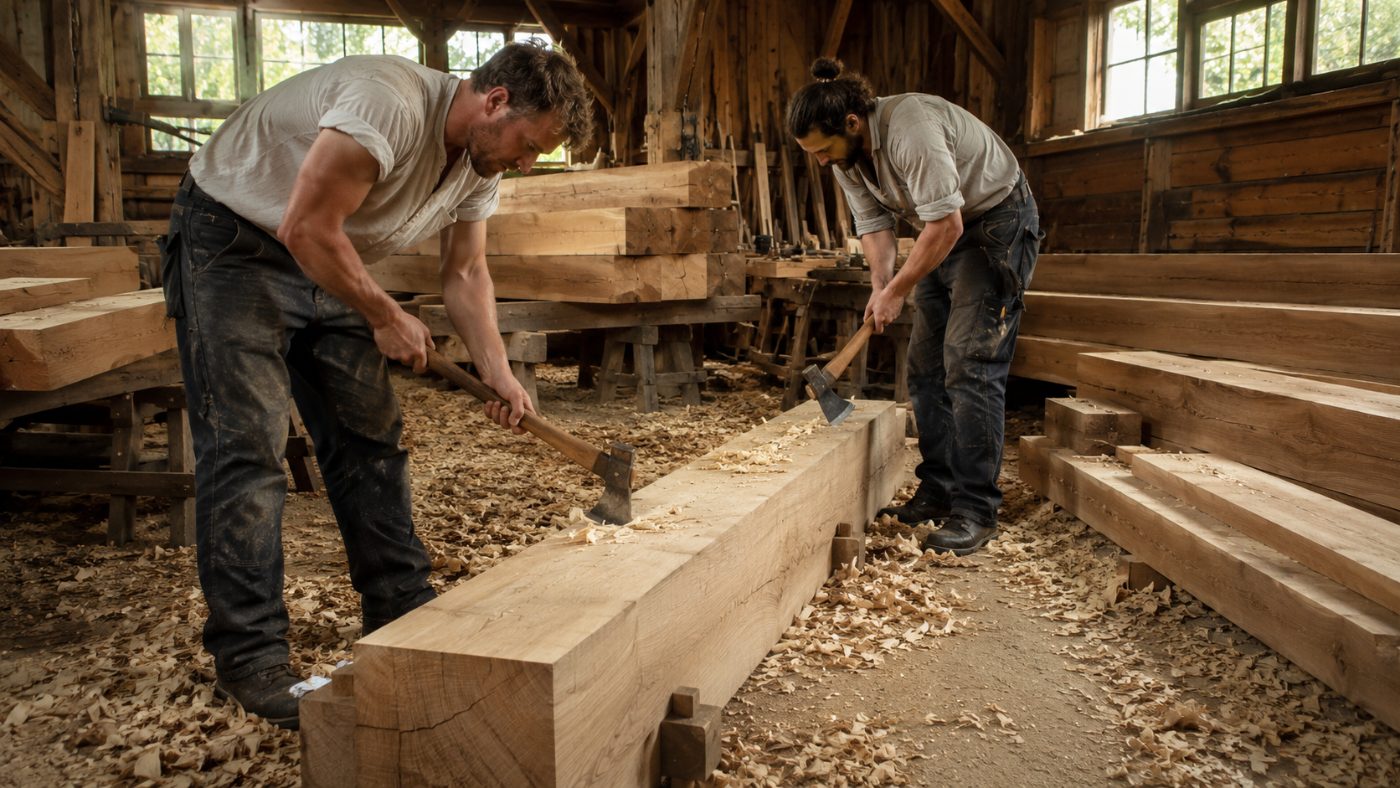
As The Art Newspaper described, carpenters selected around 1,300 oak trees from across France, hunting for trunks as straight and slender as the ones the medieval builders had used, with no defects. Then, instead of running them through modern sawmills, they worked the fresh green wood by hand with axes, hewing each beam so it carried the same faceted marks a 13th-century tool would leave. By the spring of 2024 the entire frame stood again, and the spire, the one designed by the architect Viollet-le-Duc in the 1800s, rose back into the Paris skyline.
The compagnons who did the work
The people who pulled this off are not a single company but a small nation of trades: stonecutters, roofers, mortar makers, sculptors, glass and art restorers. Many belong to the Compagnons du Devoir, a guild with roots in the Middle Ages that still trains craftspeople the old way, through long apprenticeships and a tour of workshops around France. The site became, in effect, a giant school, logging tens of thousands of hours of apprentice training during the rebuild.
For the artisans, the work was about more than a deadline. One of the compagnons restoring the cathedral put it simply, that they are the link, the hand that preserves these monuments so that children and grandchildren can still look up at them long after the makers are gone. The fire, in a grim way, handed a generation of craftspeople the commission of their lives.
The people who carried it
Two names sit behind the army. Philippe Villeneuve, the chief architect responsible for Notre-Dame, fought hard for the identical rebuild and against every proposal to crown the cathedral with something modern, insisting the spire return exactly as it fell. He got his way.
The man tasked with actually delivering it on the impossible five-year timetable that President Emmanuel Macron had promised was General Jean-Louis Georgelin, a blunt former army chief brought in to drive the project. He never saw it finished. Georgelin died in August 2023 in a fall while hiking in the Pyrenees, more than a year before the doors reopened on the deadline he had pushed everyone to meet.
The honest catch: a toxic legacy and unfinished work
The reopening was genuinely moving, but it is not the whole story. The old roof and spire were covered in hundreds of tonnes of lead, and the 2019 fire melted much of it, scattering toxic lead dust through the cathedral and over the surrounding streets and rooftops. As France 24 reported, the lead became the fire's lingering legacy, forcing the site to be sealed at times, workers into hazmat suits, and nearby children to be tested for exposure.
There is a quieter irony, too. The rebuilt roof and spire use lead again, because that is what was there before, a traditional choice that keeps the old risks alive. And for all the celebration, the cathedral is not actually done. The interior reopened in December 2024, but work on the exterior, the flying buttresses, the sacristy and more, is scheduled to carry on into 2026, paid for out of the roughly 840 million euros that poured in from donors around the world.
Why Notre-Dame was rebuilt by hand, the slow way
France could have rebuilt Notre-Dame faster and cheaper, and plenty of people argued it should have. Choosing the medieval way instead did something a steel roof never could. It pulled dying crafts back into daylight, put axes into the hands of a new generation, and kept an 850-year chain of human skill unbroken at exactly the moment it might have snapped.
A building everyone watched burn was put back together beam by beam, by hand, the slow and dangerous way, by people who will mostly never be named. When something irreplaceable is lost, should we rebuild it exactly as it was, even the hard way, or build something new for our own time? Tell us what you think in the comments.
See also: the robots printing 3D-printed homes in a day, from Texas to Malawi.