The heaviest vehicle ever built is a 382 metre ship that swallows an entire oil platform between two giant hulls and lifts its 48,000 ton deck out of the sea in a single move, then carries it away
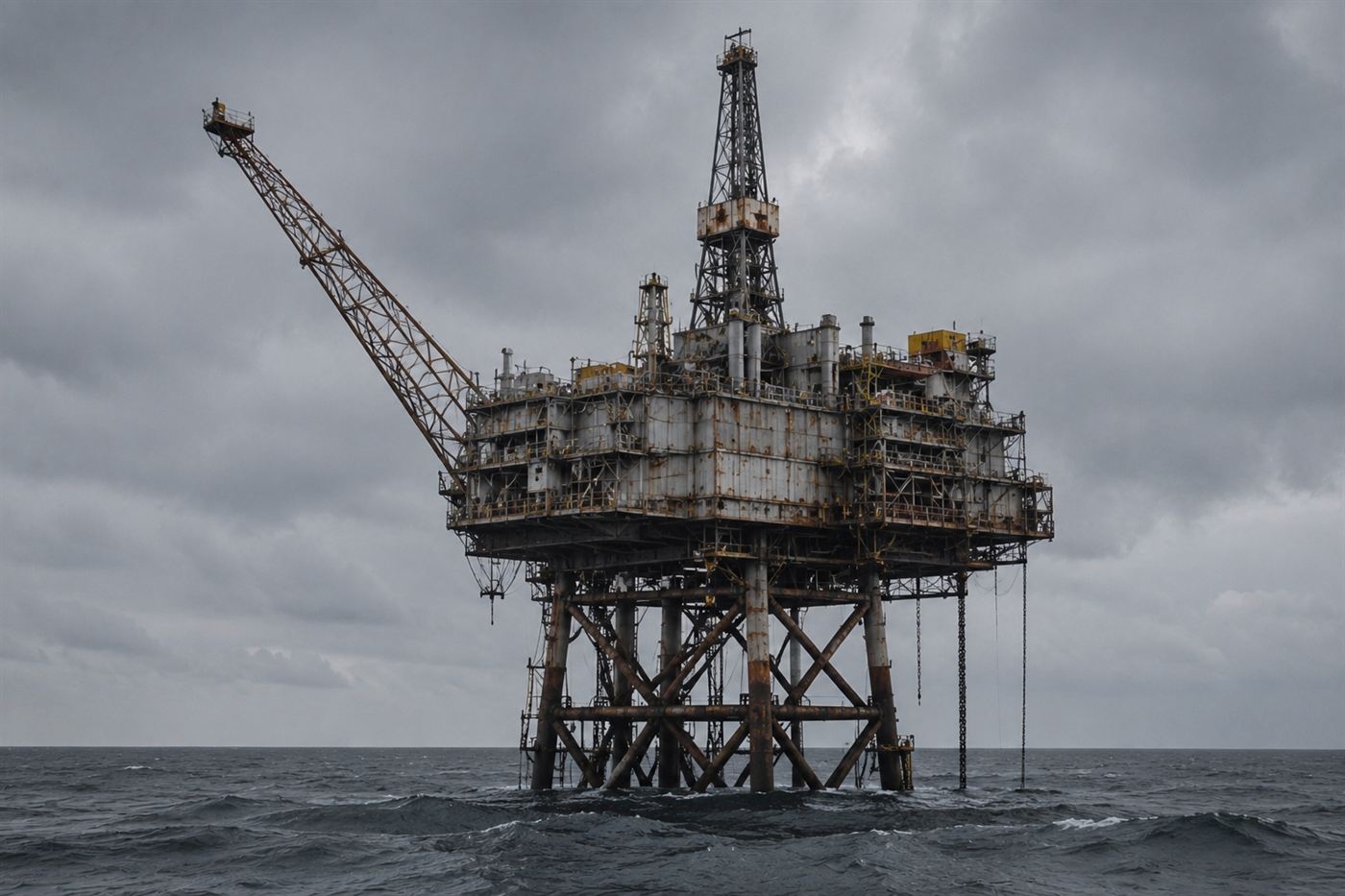
Out in the North Sea there is a machine so large it is hard to think of it as a ship at all. It is called the Pioneering Spirit, it is the largest ship ever built and the heaviest vehicle humans have ever made, and it exists to do one almost unbelievable trick: sail up to an offshore oil platform, take the entire top of it in a single bite, and lift tens of thousands of tonnes clean out of the ocean in one move.
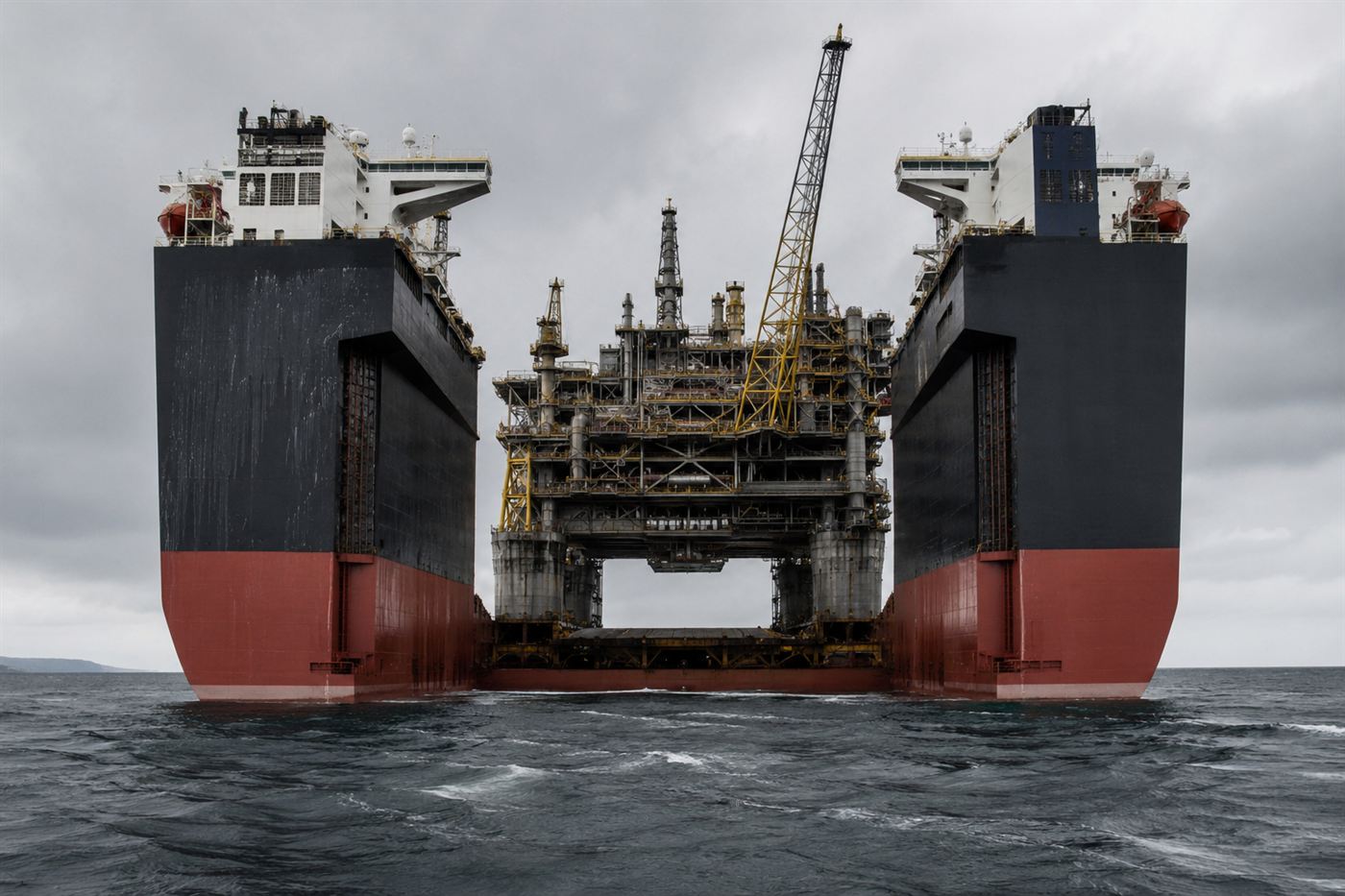
The Pioneering Spirit closes its split bow around a platform and lifts the whole deck at once. Illustration: Watts & Wild.
For most of the oil age, putting a platform up or taking it down was a long, dangerous grind. Crews worked for months or years out on the open water, cutting a structure apart piece by piece with cranes and torches, every lift a risk, every storm a delay. The Pioneering Spirit was built to make almost all of that vanish, by doing the job in one enormous motion instead of a thousand small ones.
The vessel is owned by the company Allseas, and from above it looks like a normal supertanker that has had a giant rectangular notch cut into its bow. That slot is the whole point. The ship reverses around a platform until the structure sits inside the notch, between its two hulls, and then a set of huge beams reaches out, takes hold of the platform's deck, and lifts.
The largest ship ever built swallows a platform whole
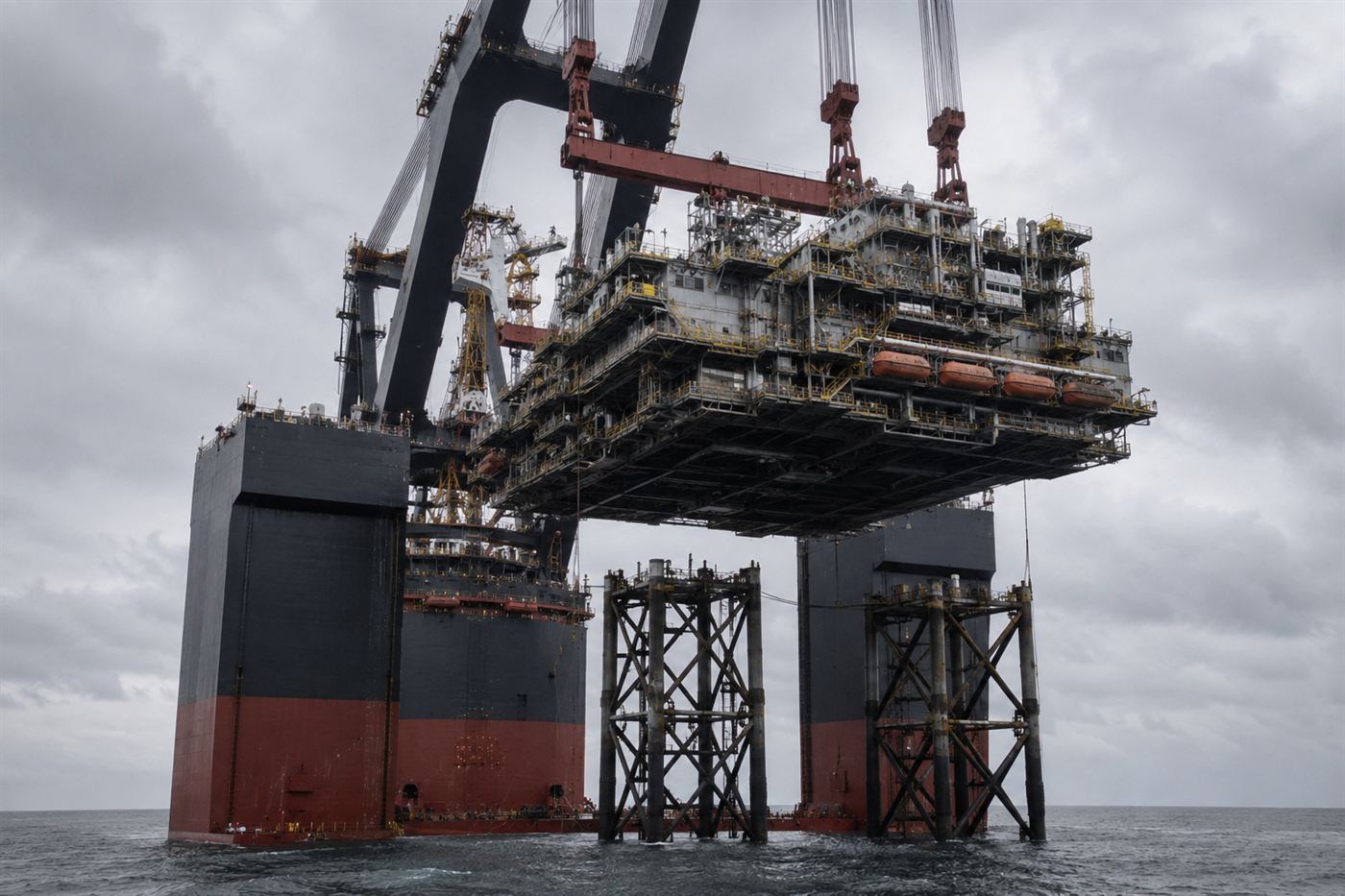
The technical name for what it does is the single lift, and the scale is genuinely staggering. As the vessel is documented, it can install or remove platform topsides, the inhabited upper decks, weighing up to around 48,000 tonnes, since upgraded toward 60,000, plus the steel support legs, or jackets, of up to 20,000 tonnes. A single deck it picks up can weigh as much as a tall steel skyscraper, and it raises the whole thing in seconds rather than dismantling it over a year.
The lifting itself is a feat of timing as much as muscle. The beams slide under the platform deck while the ship sits in the swell, and then, in a fast coordinated heave, they take the full weight off its legs all at once. From that instant the platform is no longer standing in the sea; it is riding on the largest ship in the world, ready to be carried back to shore.
The numbers behind the heaviest thing that moves
Everything about the vessel strains belief. It is 382 metres long and 124 metres wide, far broader than an ordinary tanker, a width forced on it by that platform-swallowing slot. As its owner Allseas describes it, the ship is the largest vessel in the world by gross tonnage, which also makes it, when fully loaded, the heaviest vehicle of any kind ever built, on land, sea or air.
And it keeps breaking its own records. As it has spent recent years clearing old fields in the North Sea, the size of the lifts has crept upward, culminating in the removal of platform decks in the range of 31,000 tonnes in a single pick, each one a new high-water mark for the heaviest object ever lifted at sea. Numbers like these have no real comparison in everyday life; the closest is to picture lifting an entire steel high-rise off its foundations and setting it on a boat.
Why lift it all in one go
The reason for all this size is not showing off; it is safety and time. Every hour a crew spends doing heavy work out on the open sea is dangerous and expensive, exposed to weather, height and the constant hazard of cutting steel above water. By taking a platform in one lift and carrying it whole back to a quay, the Pioneering Spirit moves nearly all of that risky work onto dry land, where it can be done more safely and far faster.
It turns a job measured in seasons into one measured in a single weather window. Sail out, wait for calm water, lift, and sail home. What used to be a drawn-out offshore campaign becomes, in the best case, a matter of days at sea, with the messy business of taking the structure apart happening back in port.
The honest catch
A machine this specialised comes with obvious limits. It cost on the order of 2.6 billion euros to build, there is essentially only one of it, and it only makes sense for the very largest platforms; for a small structure, sending the biggest ship on Earth is wild overkill. It is also, unavoidably, a creature of the oil and gas industry, built to serve the very platforms that pumped the fuels now warming the planet.
But that last point is also where the story turns. The North Sea is dotted with hundreds of ageing rigs that have pumped their last and now have to come out of the water safely, and that decommissioning, cleaning up the leftovers of the fossil age, has become some of the ship's most important work. The same giant built to raise the oil platforms is now one of the few machines on Earth that can efficiently take them away again.
Why one absurd ship matters
It is tempting to file the Pioneering Spirit under sheer spectacle, a record-breaking monster for its own sake. But it is really a glimpse of a problem the world is only starting to face: we built an enormous amount of heavy infrastructure out at sea during the fossil-fuel century, and now much of it has to be taken back down. Doing that without leaving a graveyard of rusting steel in the ocean takes tools at a scale to match what was put there.
So the heaviest vehicle ever built is, in a sense, a clean-up machine for a previous era of energy, and a sign of the one we are entering. The skills and the slot that let it swallow an oil platform are the same ones being turned toward installing the foundations of giant offshore wind farms. The largest ship in the world spent its first years lifting the old energy out of the sea; it may spend its next ones lowering the new energy in.
We built the largest ship in history to lift entire oil platforms out of the sea, and now it is being used to clean them away. Is a single 2.6 billion euro super-ship the right way to dismantle the fossil age at sea, or proof of how absurdly large the mess we left out there really is? Tell us what you think in the comments.
Related reading: To guard Rotterdam from the sea, the Dutch built two of the largest moving structures on Earth, a pair of steel arms each the size of the Eiffel Tower that a computer swings shut across the water by itself. See also the Caspian Sea Monster, the giant Soviet craft that flew on a cushion of air.