To guard Rotterdam from the sea, the Dutch built two of the largest moving structures on Earth, a pair of steel arms each the size of the Eiffel Tower that a computer swings shut across the water by itself
Much of the Netherlands sits below sea level, kept dry only by an endless fight against the water. Nowhere is that fight stranger, or more gigantic, than at the mouth of the canal that leads to Rotterdam, where the Maeslant Barrier, two of the biggest moving objects humans have ever built, lies waiting on the banks for the day the North Sea tries to come in.
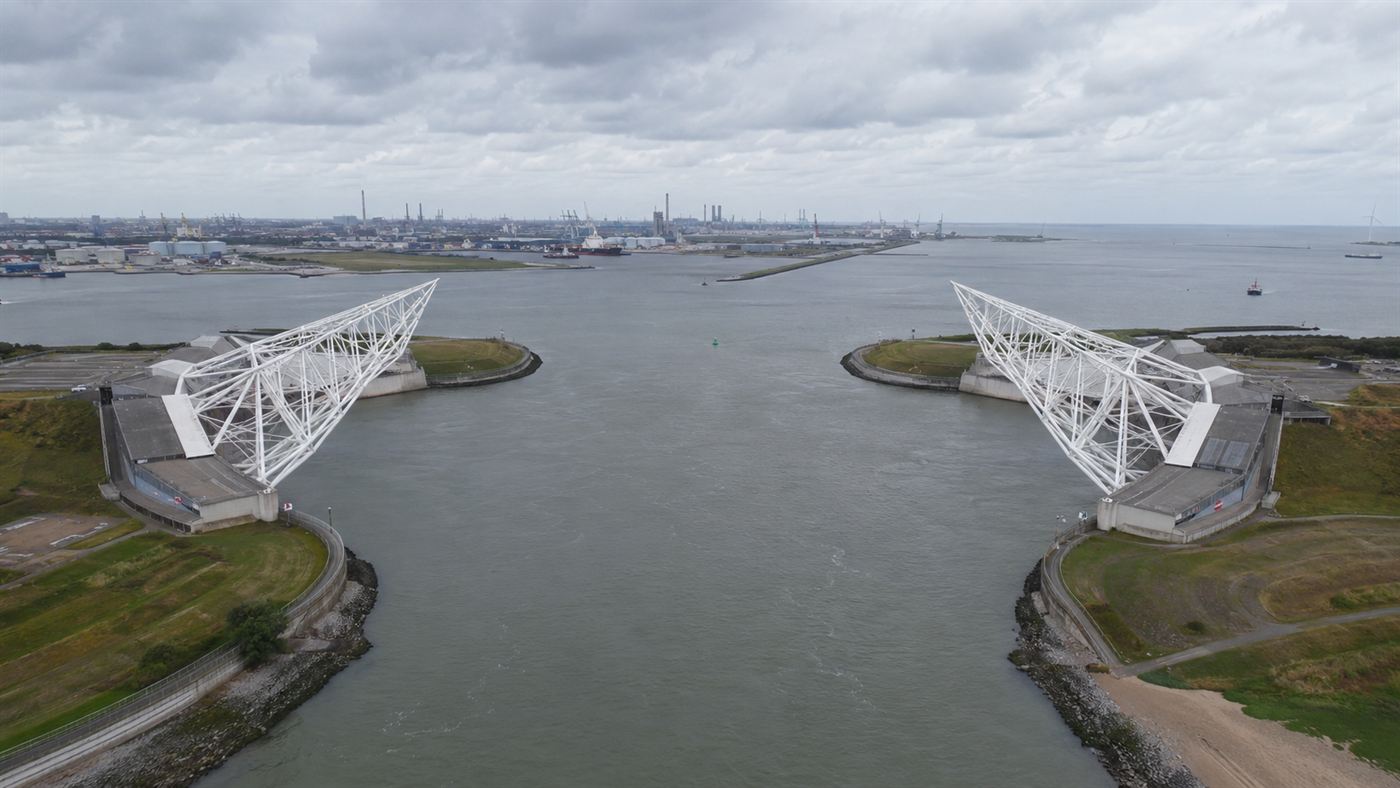
The two arms of the Maeslant Barrier wait open on the banks of the Nieuwe Waterweg. Illustration: Watts & Wild.
The structure is called the Maeslantkering, the Maeslant Barrier, and it guards the Nieuwe Waterweg, the deep channel that connects the Port of Rotterdam to the open sea. Most of the time it does absolutely nothing, and that is the point. Two vast white arms sit parked in docks on opposite banks, the canal between them wide open so the world's ships can come and go.
Then, a few times in a generation, a storm lines up just wrong, the sea piles up against the coast, and the barrier does the thing it was built for. The arms swing out, meet in the middle of the canal, fill with water and sink to the bottom, turning an open waterway into a solid wall against the sea. And the order to do it is given not by a person, but by a machine.
A country that has to let the sea in
To understand why this exists you have to understand the Dutch problem. Rotterdam is the largest port in Europe, and its lifeblood is the open channel to the sea; close it permanently and you strangle the economy. But that same open channel is a doorway for storm surges, the walls of water that big North Sea storms shove inland, and behind it lie millions of people living below sea level.
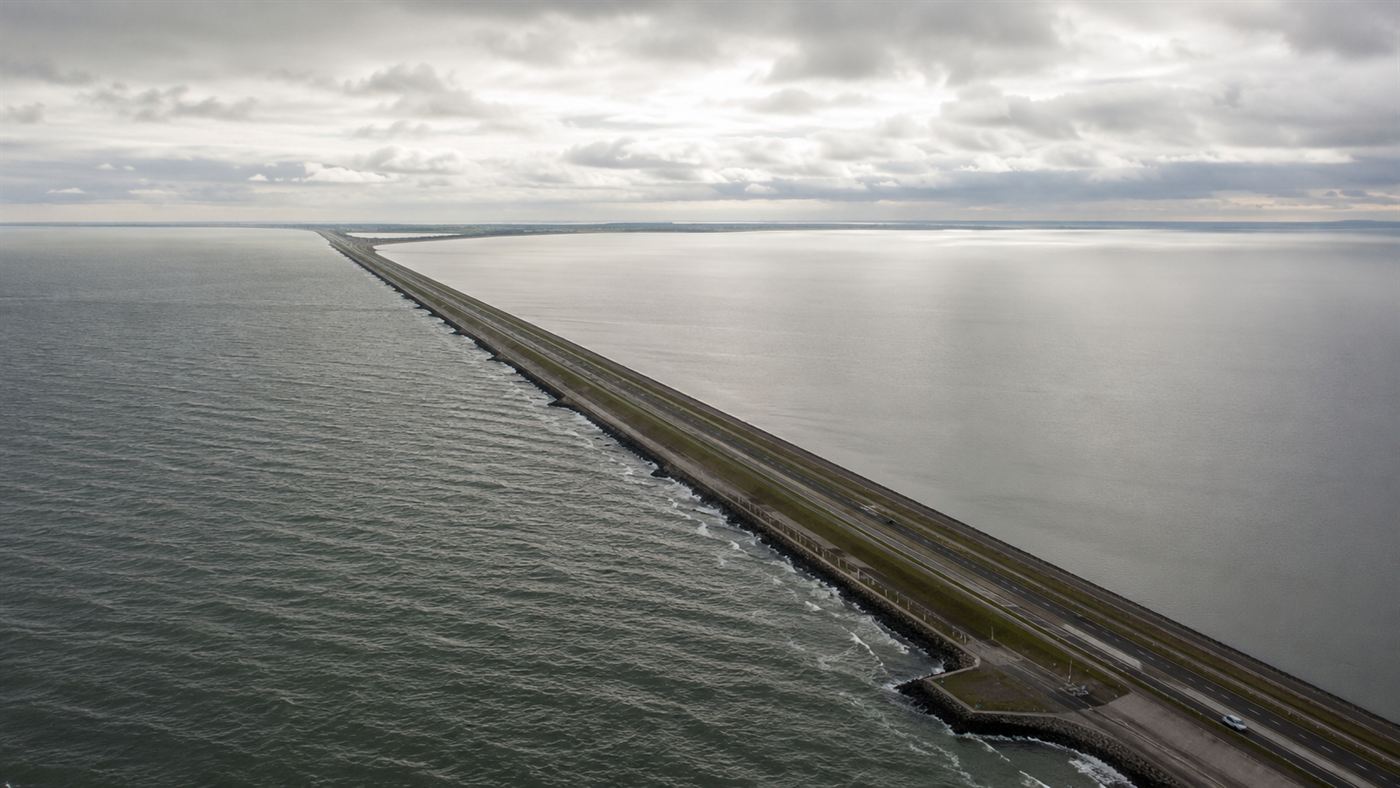
For centuries the answer was simply higher dikes, and a few decades earlier the Dutch had even walled off an entire sea, the Zuiderzee, behind the Afsluitdijk, but you cannot wall off a working harbour. The Maeslant Barrier was the audacious solution: a gate big enough to seal the entire channel when needed, yet able to vanish out of the way the rest of the time so the port never closes. It was finished in 1997 as the final piece of the Delta Works, the colossal system of dams and barriers the Dutch built after a catastrophic flood in 1953 killed more than 1,800 people.
Two arms the size of the Eiffel Tower
The scale is genuinely hard to take in. Each half of the barrier is a hollow steel arm built from a curved gate over 200 metres long, braced by a lattice truss that reaches back to a giant ball-and-socket joint anchored on the bank. As the engineering is documented, each arm is roughly the size of the Eiffel Tower and is counted among the largest moving structures on the planet, in the same breath as a giant German digging machine and a steerable radio telescope.
Those ball joints are the trick that makes such a monster movable. Each arm pivots on a single enormous spherical bearing, so the whole Eiffel-Tower-sized structure can swing on one point, the way your arm rotates at the shoulder. It means a person could, in principle, push one of the largest moving objects ever built, because almost all of its weight rests on that one perfectly balanced joint.
How you close the sea
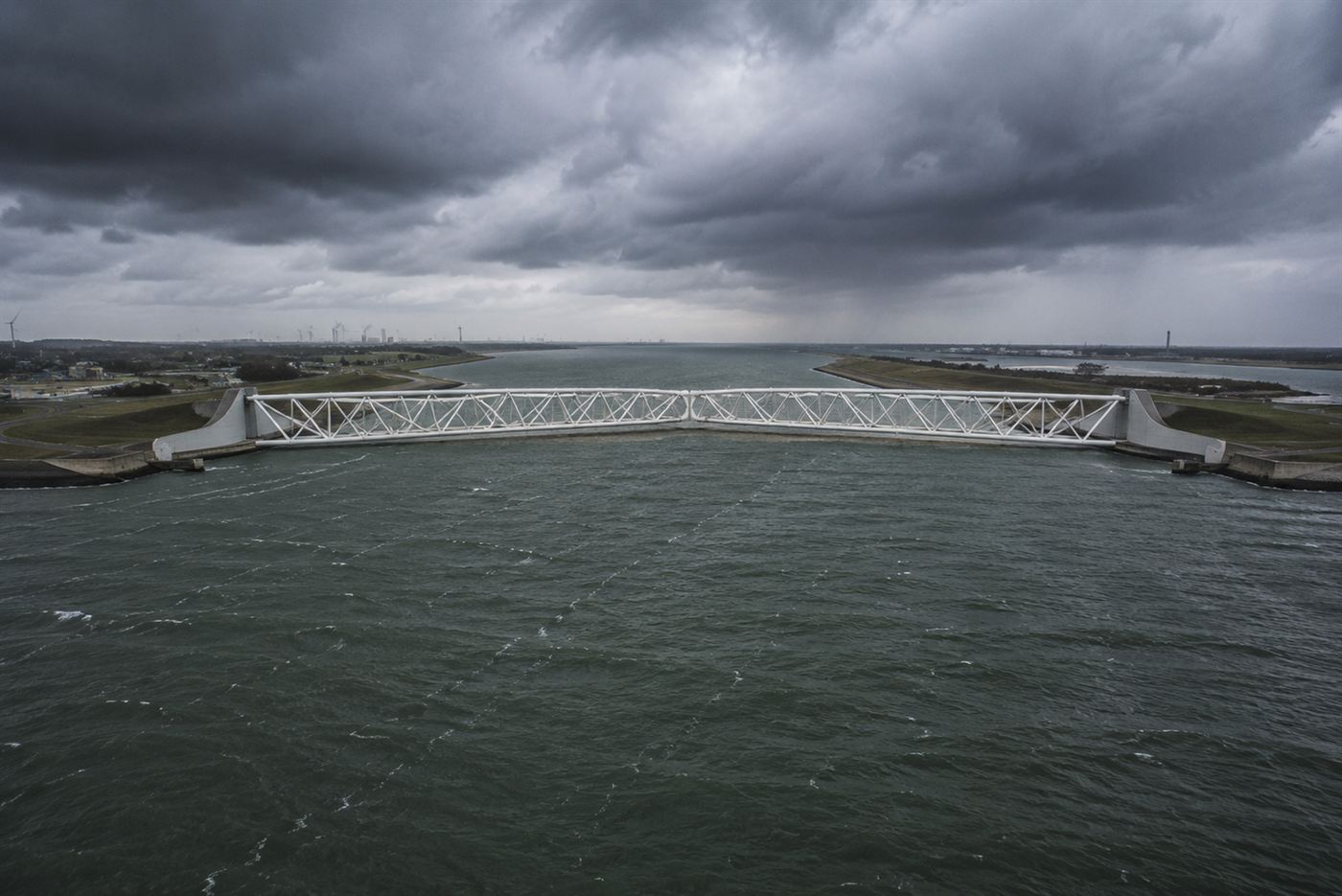
Shutting the barrier is a slow, deliberate ballet. Hours ahead, ships are warned and traffic on the canal is brought to a halt. Then the dry docks holding the two arms are flooded, so each gate lifts off and floats. A pair of powerful machines nudges the floating arms out across the water until they meet in the centre of the channel, nose to nose.
Only then comes the clever finish. With the arms joined in the middle, water is let into the hollow gates, and the whole assembly slowly sinks down onto a prepared sill on the canal bed, sealing the gap to the bottom. The swing takes around half an hour, and the full settling onto the seabed takes longer still, but when it is done the Port of Rotterdam is shut off from the North Sea by a wall that was, hours earlier, simply not there.
The computer that pulls the trigger
The most quietly radical thing about the Maeslant Barrier is not its size. It is who decides. As the Dutch authority Rijkswaterstaat describes it, the closure is controlled by a computer system that automatically orders the barrier shut when it predicts the water will rise dangerously high, around three metres above normal at Rotterdam. No official weighs the politics of shutting Europe's busiest port. The machine runs the numbers and acts.
That was a deliberate choice. In the panic of an approaching storm, the engineers decided, a calm and consistent computer would make a faster, cleaner call than a room full of anxious humans worried about the cost of closing the port for nothing. So they handed the final decision to the software, and built one of the largest machines on Earth to obey it.
The honest catch
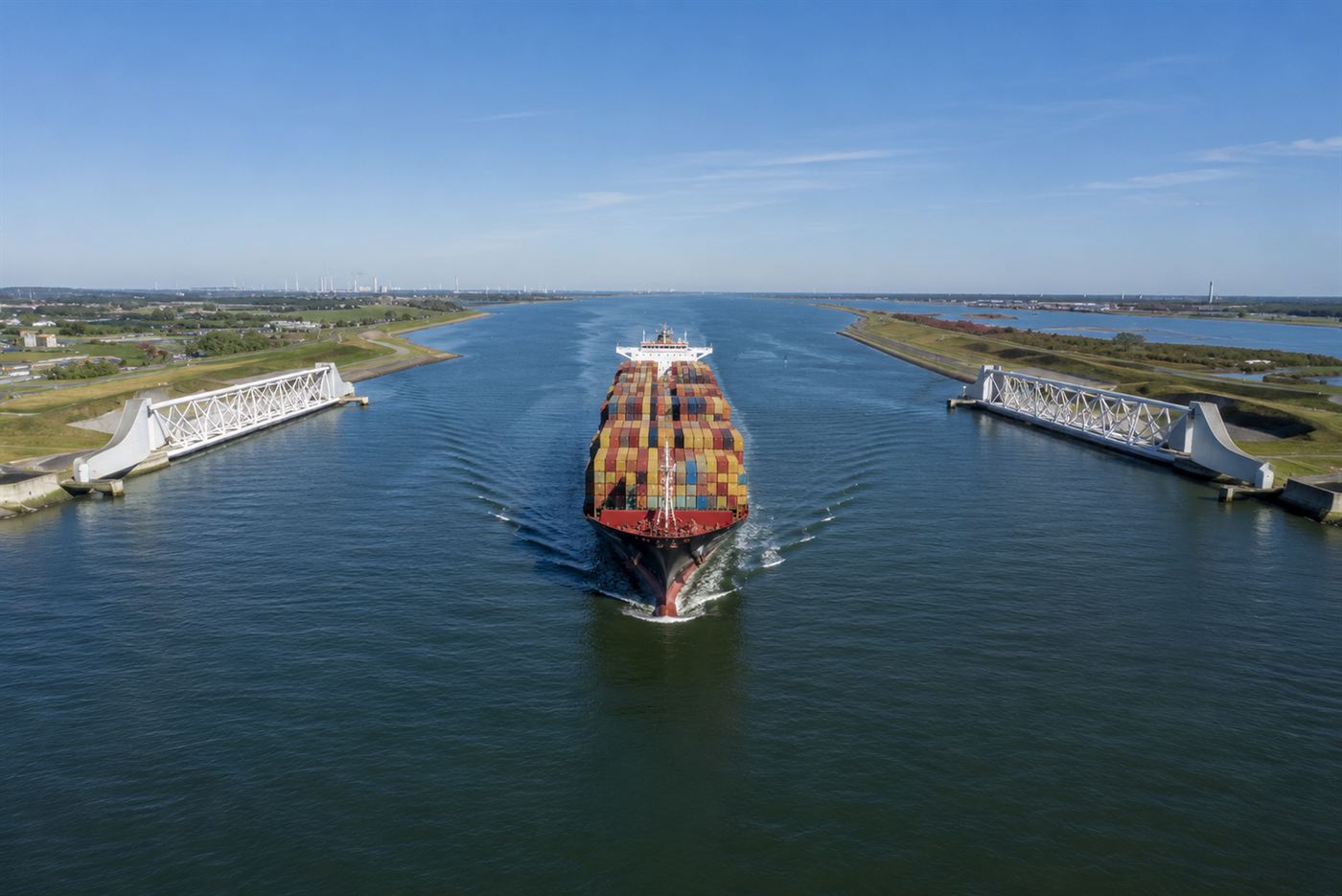
For all its drama, the barrier is almost never used, and that is worth being honest about. In storm conditions it has closed only a handful of times since it opened, and it spends most of its life being tested once a year and otherwise standing aside. That is success, not failure, but it means this colossal machine earns its keep on a tiny number of days across decades.
The harder truth is the future. The Maeslant Barrier was designed for the sea of the twentieth century, and the sea is now rising and storms are growing fiercer. Engineers expect it will have to close far more often in the decades ahead, and at some point a barrier built to shut occasionally may be asked to shut routinely, which is not what it was made for. It is a magnificent answer to the storms of the past, and an open question against the storms to come.
Why the Maeslant Barrier matters far beyond Holland
The Netherlands is a preview of a problem the whole coastal world is heading toward. As seas rise, more and more cities will face the same impossible demand the Dutch already live with: stay open to the water for trade and life, yet be ready to slam shut against it in an afternoon. The Maeslant Barrier is one of the boldest attempts yet to do both at once.
It is, in the end, a strange monument to a very human bargain with nature. The Dutch did not try to defeat the sea or pretend it was not there. They built a door for it, the size of the Eiffel Tower, and taught a computer when to close it. As the water keeps rising, a lot more of the world is going to be looking very closely at how well that bargain holds.
The Dutch handed the decision to flood-proof a whole region to a computer, and built two Eiffel Towers that move to obey it. Is trusting a machine to seal off Europe's biggest port on its own brilliant engineering, or a gamble we will regret as the seas keep rising? Tell us what you think in the comments.