The Panama Canal does not run on seawater but on rain, and every giant ship that crosses dumps about 200 million litres of fresh water into the ocean, which is why a drought can choke world trade
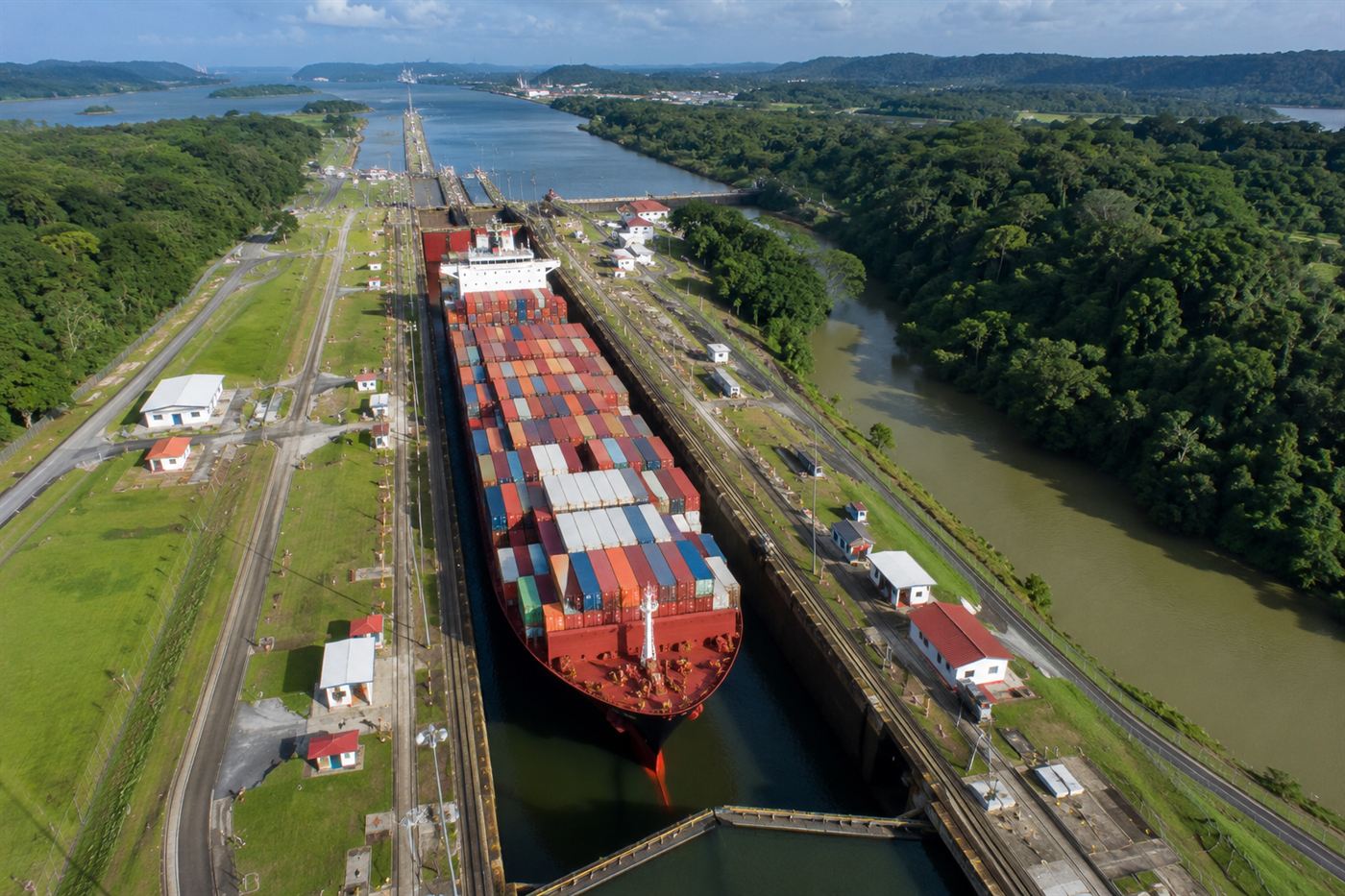
Most people picture the Panama Canal as a sea-level ditch where the Atlantic simply flows into the Pacific. It is nothing of the sort. It is a staircase of water that lifts 200,000 tonne ships 26 metres up into an artificial lake and back down again, and it is filled not with seawater but with rain. That single fact is the canal's genius and its deepest weakness, and it is the reason a Panama Canal drought can throttle global trade.
Each ship is lifted up to a freshwater lake and lowered again, locks spilling water the whole way. Illustration: Watts & Wild.
The Atlantic and the Pacific are not actually at the same height where the canal cuts through, and the land in between rises well above the sea. Rather than dig all the way down to sea level through a mountain range, the builders did something cleverer. They dammed a river to create Gatun Lake, a vast freshwater reservoir sitting high above both oceans, and they use water from that lake to lift ships over the hump.
A ship arrives at one ocean, sails into a lock chamber, and water pours in to float it upward, step by step, until it reaches the lake 26 metres up. It crosses the lake, then is lowered down the other side the same way. Gravity does the lifting, and the price of every single crossing is paid in fresh water, drained out of that lake and lost forever into the sea.
How much water one ship really costs
The numbers are genuinely hard to believe. As shipping analysts have laid out, a single transit through the original locks can use on the order of 50 million gallons of fresh water, somewhere around 200 million litres, released downhill to the ocean and gone. That is roughly the daily drinking water of a decent-sized city, spent to move one vessel from one ocean to the other.
Multiply that by dozens of ships a day and the canal becomes one of the thirstiest machines on the planet, a structure that quietly pours small lakes into the sea around the clock. The newer, larger locks opened in 2016 were built with side basins that claw back roughly 60 percent of the water for reuse, a serious improvement, but even they cannot change the basic bargain. To move ships, the canal must spend rain.
The rain that the whole system depends on
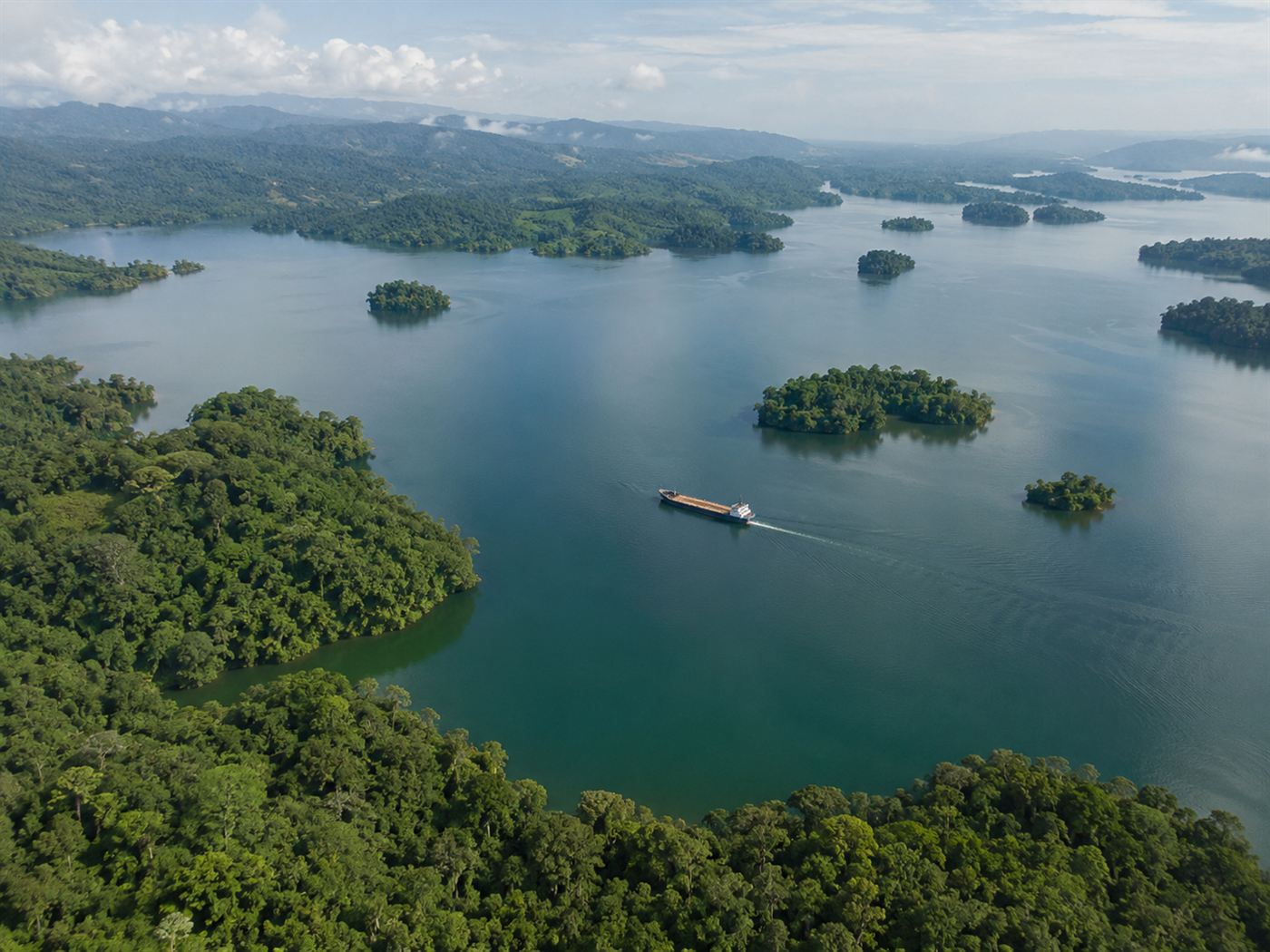
For most of its life this was no problem at all. Panama sits in one of the wettest parts of the planet, and Gatun Lake was refilled year after year by tropical downpours that nobody thought twice about. The canal was effectively running on one of the most reliable rainfalls on Earth, free fuel falling out of the sky.
That reliability is exactly what cracked. The same lake that floats the world's cargo is also the drinking water supply for much of Panama, so every litre sent out to sea is a litre not in a tap. As long as the rains came, the lake could do both jobs at once. The system had quietly bet everything on the assumption that the sky would keep delivering on schedule.
The year the Panama Canal drought hit
In 2023 a severe drought, deepened by an El Nino, settled over Panama, and Gatun Lake began to fall. With less water to spend, the canal authority had no choice but to do something almost unthinkable for a global trade artery: ration it. As CNBC reported, daily transits were cut sharply and ships were put on weight limits to draw less water, with the slots dropping from around 38 vessels a day to as few as 18 by early 2024.
The knock-on effects rippled out across the world. Shipping companies bid huge sums in auctions to jump the queue, some vessels rerouted the long way around South America or past Africa, and the canal saw a sharp double-digit drop in traffic over the year. A waterway that carries a large slice of the trade between Asia and the US east coast had been throttled, not by war or politics, but by a shortfall of rain.
The honest catch
It would be easy to turn this into a tidy disaster story, so a few things are worth keeping straight. The crisis of 2023 and 2024 has eased. The rains returned, and by 2025 the canal was back to operating with a full water supply and normal traffic, not stuck in permanent decline. This was a severe scare, not the death of the canal.
It is also not a simple morality tale about waste. The canal is not being careless; spilling water downhill is simply how a lock works, the unavoidable cost of lifting ships over high ground. The real issue is not that the canal uses fresh water but that the climate it was built around is becoming less dependable, turning a once-safe assumption about rainfall into a genuine risk.
Engineering its way out of a dry future
Panama is not waiting for the next drought to find out what happens. Plans are advancing for a new dam on the Rio Indio to feed extra water into the system, a multi-year, billion-dollar project meant to give the canal a larger and steadier reserve to draw on. It will not be ready for the El Nino that forecasters expect around 2027, which means the waterway may have to sweat through at least one more dry spell on its existing margin.
There is a wider lesson hiding in all this. We tend to think of mega-infrastructure as something that conquers nature, a canal that beats the continent in two. The Panama Canal is a reminder that the biggest machines we build are often still quietly leaning on the natural world, in this case on the simple act of rain falling on a lake. Cut off the rain, and the staircase of water that moves a chunk of global trade has nothing left to climb.
One of the greatest machines ever built can be slowed to a crawl by something as ordinary as a dry season. Should the world be nervous that a single rain-fed lake in Panama holds this much sway over global trade, or will engineering always stay one step ahead of the weather? Tell us what you think in the comments.