Unable to capture a port, the Allies built two entire harbours in secret and towed them across the Channel to keep the D-Day invasion alive
An invasion needs a port. To take Normandy in 1944, the Allies faced a brutal problem: every French harbour was heavily defended, and seizing one looked suicidal. So they did something audacious instead. They built two complete artificial harbours, the Mulberry harbours, in Britain, and towed them across the sea.
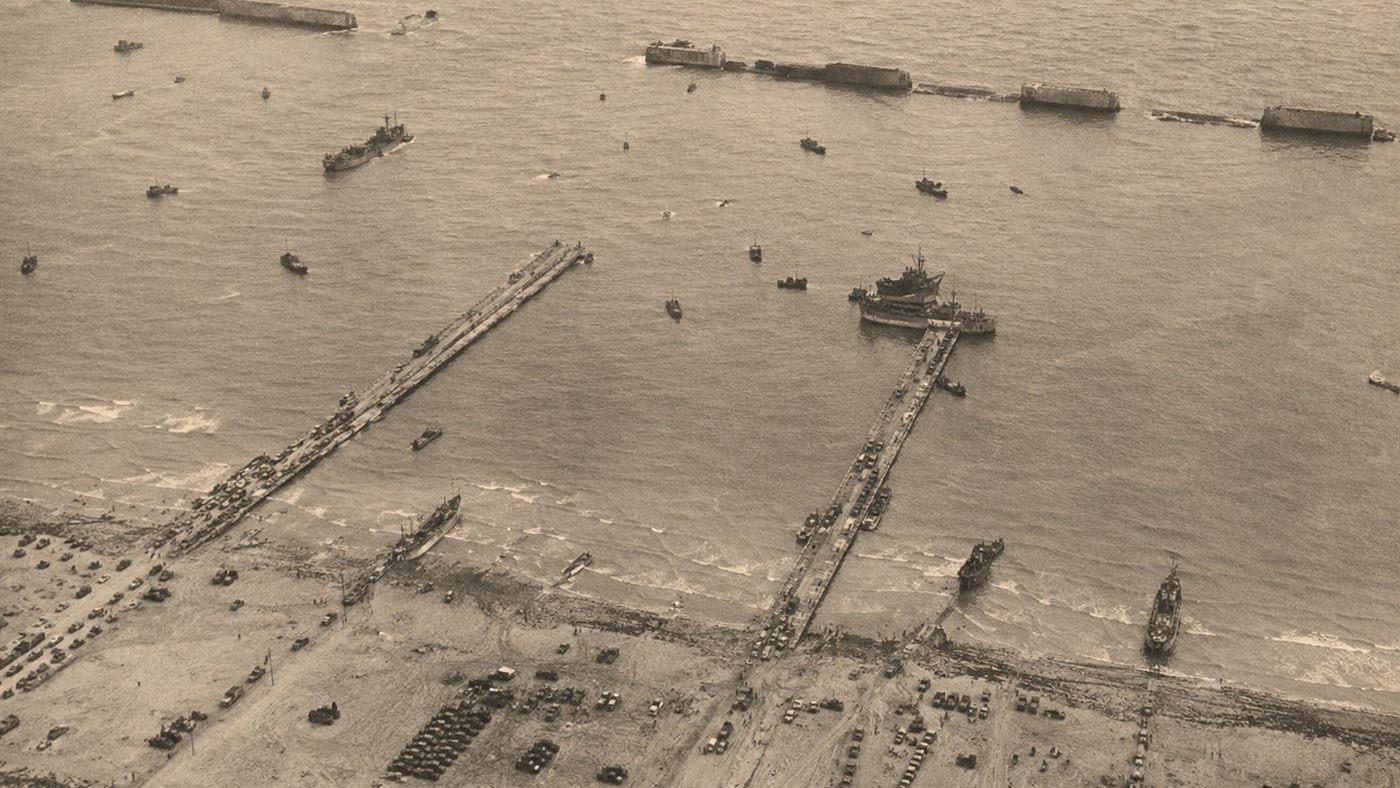
A Mulberry harbour off Normandy, an instant port towed across the Channel. Illustration: Watts & Wild.
The thinking behind it was shaped by a disaster. In 1942 a raid on the French port of Dieppe had ended in slaughter, proving that attacking a defended harbour head-on was a recipe for catastrophe. Yet without a port, an army cannot be fed, fuelled and reinforced; the men who land on the beaches will run out of everything within days. The Allies needed harbours they did not have and could not safely capture.
The answer was to stop thinking of a harbour as a fixed place and start thinking of it as a thing you could manufacture and move. If you could not take a port, you would bring your own.
Why the Mulberry harbours were needed
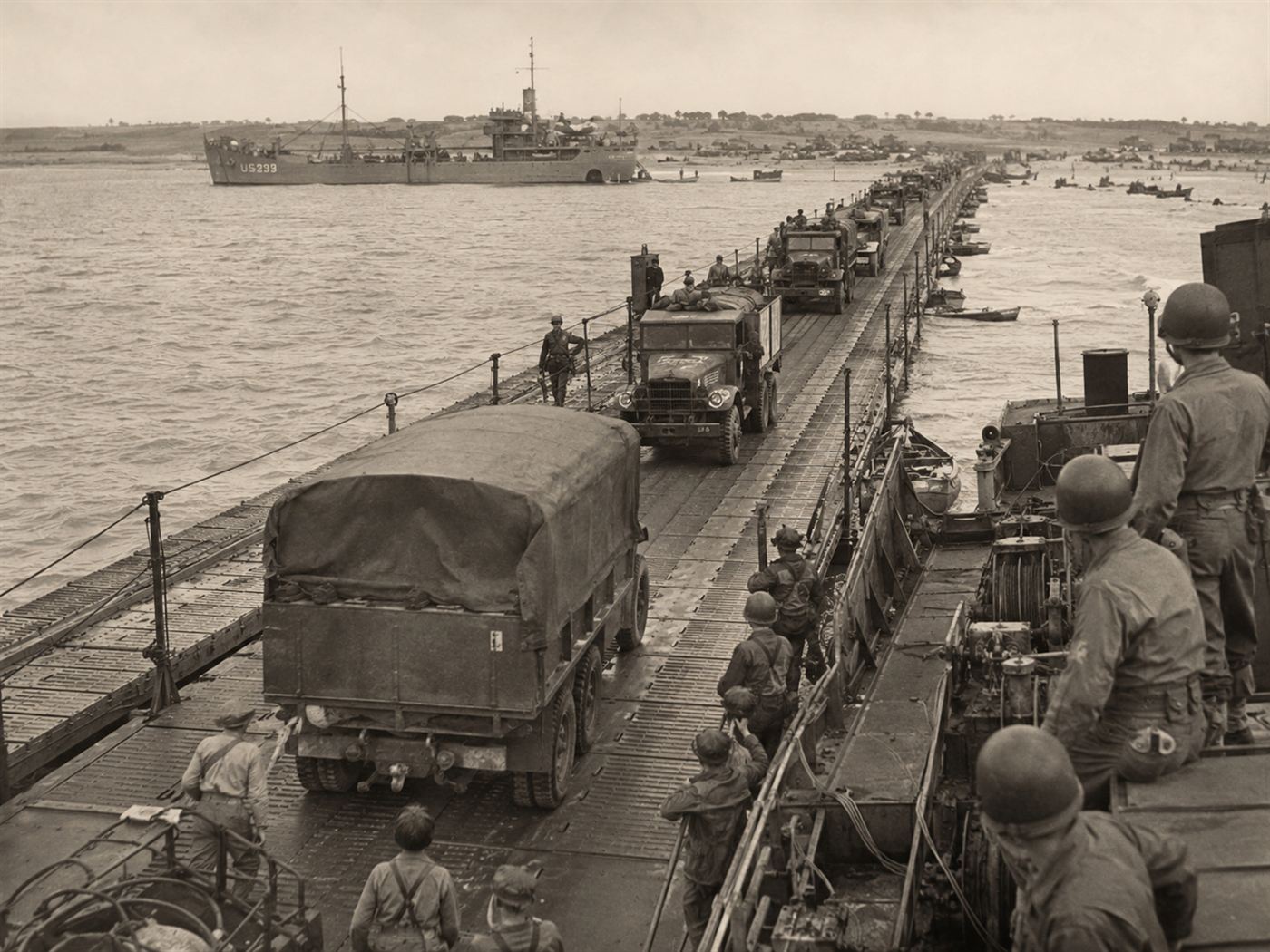
Winston Churchill had pushed the idea for years. As The Conversation recounts, the plan was for artificial breakwaters made of sunken ships and huge concrete chambers, sheltering a system of floating piers anchored to the seabed. Ships could then dock at the piers and pour men and machines straight onto roadways leading to the beach, exactly as they would at a real harbour.
The crucial demand came in a famous Churchill note from 1942 about the floating piers: "They must float up and down with the tide." It sounds obvious, but it was the heart of the engineering challenge. The Normandy tides rise and fall by several metres, so a fixed pier would be useless half the day. The pier heads had to ride the tide on legs that rose and sank, a problem the engineers, among them Allan Beckett, who designed the floating roadway, had to solve from scratch.
What the Mulberry harbours were made of
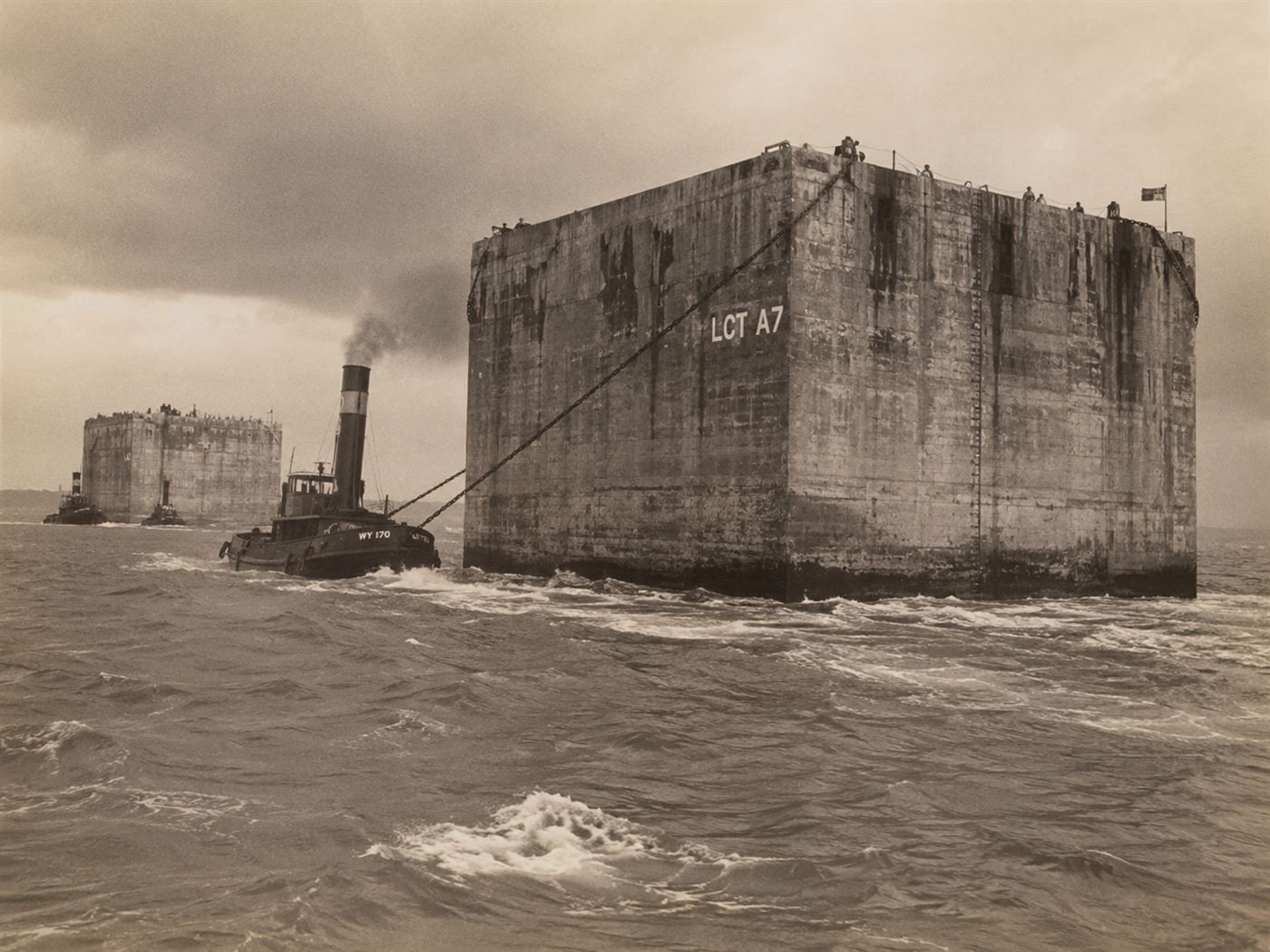
Each Mulberry was a kit of giant parts with their own codenames. Vast reinforced-concrete caissons called Phoenixes, some the size of a small apartment block, were floated across and sunk in lines to make a breakwater, helped by old ships scuttled in place. Outside them sat floating breakwaters, and inside, the floating roadways, nicknamed Whales, ran on pontoons to pier heads that climbed and dropped with the water.
The scale was staggering and the secrecy total. Something like two million tonnes of concrete and steel were built into the components in British yards over a matter of months, by tens of thousands of workers who mostly had no idea what they were making. Then the whole thing was dragged roughly thirty miles across the Channel at walking pace and assembled off the French coast within days of the landings.
Did the Mulberry harbours survive?
Two harbours were placed: Mulberry A off the American beach at Omaha, and Mulberry B off the British beach at Arromanches. For a couple of weeks they worked, and the flood of supplies they allowed helped the fragile beachhead hold and grow. Then the weather intervened.
On 19 June 1944 a fierce storm tore into the coast. As the History Learning Site notes, the storm wrecked the American Mulberry beyond repair, while the British harbour at Arromanches survived and went on serving the Allies for months. Mulberry B handled an enormous tonnage of men, vehicles and stores over roughly ten months, far longer than the temporary structure was ever meant to last, and its remains still sit in the sea off Arromanches today.
The honest catch
The Mulberries deserve their fame, but the story is often told too tidily. For one thing, half the plan failed almost immediately: the American harbour lasted barely a fortnight before the storm destroyed it, which is a sobering result for so vast an effort. The harbours were a gamble that only half paid off in the way intended.
Historians also debate how decisive they really were. A great deal of cargo was landed not through the Mulberries at all but straight onto the open beaches, with flat-bottomed landing ships simply running aground at low tide to be unloaded. The Mulberry harbours were a remarkable feat and a real help, especially the surviving British one, but they were one part of a huge supply effort, not a single magic key to victory. It is also worth remembering that crediting Churchill alone flattens the work of the many engineers who actually made it float.
Why two towed harbours still matter
Even with the caveats, the Mulberry harbours remain one of the boldest pieces of improvised engineering ever attempted. Faced with an impossible requirement, an enemy-held coast with no usable port, people decided to manufacture a harbour like any other piece of war material and ship it to the battle. The sheer nerve of treating a port as something portable is what makes it unforgettable.
They are a reminder that engineering is often less about elegance than about refusing to accept a problem as fixed. Does it surprise you that the supply line for D-Day depended on harbours that were towed across the sea? Tell us in the comments.
Related reading: The largest ship ever built lifts entire oil platforms out of the sea in a single bite.