Denmark just sank the first of 89 giant concrete tubes into the Baltic Sea to build the world's longest immersed tunnel, which will turn a 45 minute ferry to Germany into a 7 minute train ride
On May 7, 2026, engineers lowered a 217 metre, 73,500 tonne block of concrete onto the floor of the Baltic Sea. It was the first of 89 that will form the Fehmarnbelt tunnel, an 18 kilometre link between Denmark and Germany that will be the longest immersed tunnel ever built.
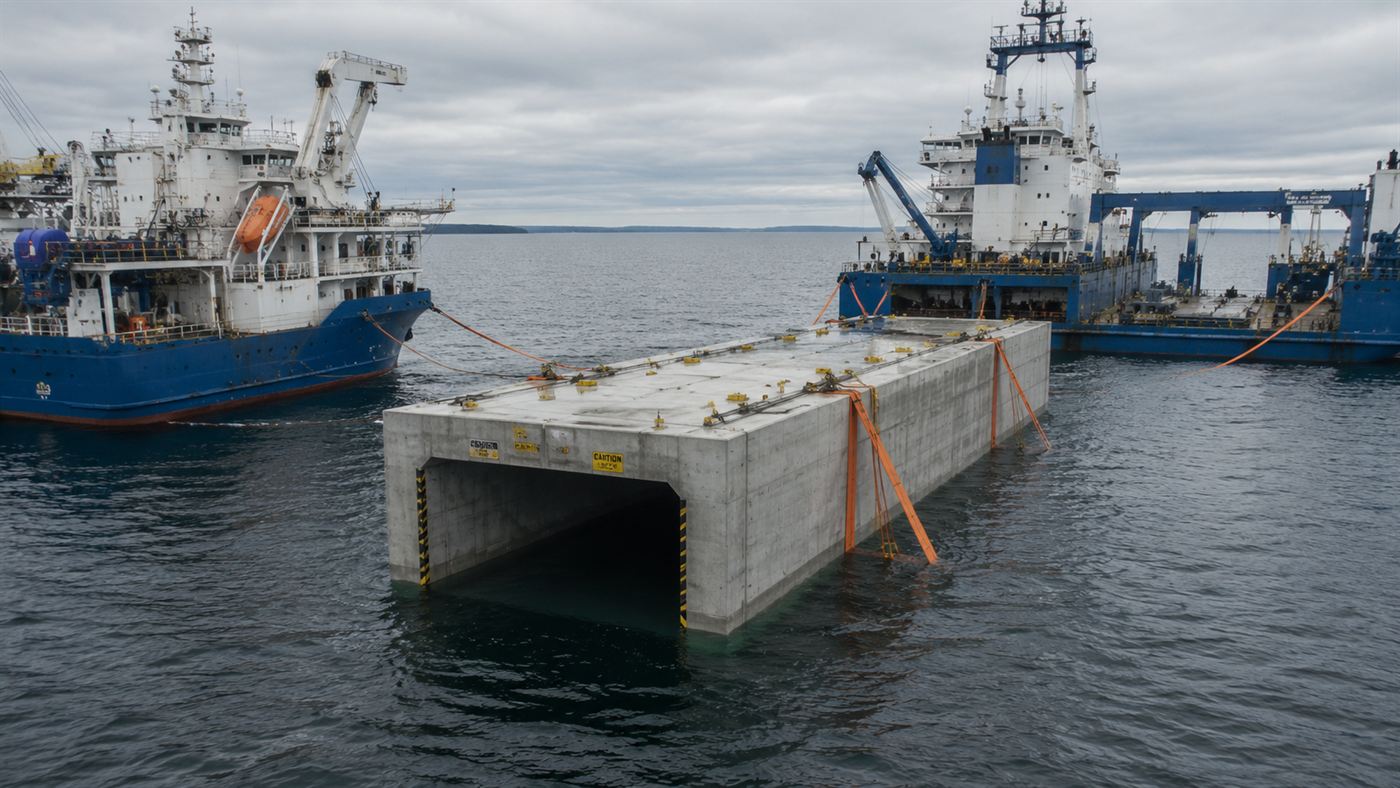
Each tunnel section is the length of two football pitches and weighs more than 70,000 tonnes. Illustration: Watts & Wild.
There are two ways to put a tunnel under the sea. You can bore through the rock far below the seabed, the way the Channel Tunnel was dug, or you can do something that sounds almost too simple to work: build the tunnel in giant pieces on land, float them out, and sink them into a trench on the seabed one by one. The second method is how the Fehmarnbelt tunnel, set to become the world's longest immersed tunnel, is being built, and on a spring day in 2026 the first piece went down.
The Danish state company in charge, Sund & Bælt, marked the moment as historic. As Femern, the project behind the tunnel, announced when the first element was immersed on May 7, 2026, the operation lowered a single concrete section 40 metres down onto the bed of the Baltic. Mikkel Hemmingsen, the chief executive of Sund & Bælt, said his contractors had "achieved something no one has done before." It was the start of an assembly job 89 pieces long.
A tunnel you build like a kit
An immersed tunnel is, at heart, an enormous flat-pack. Each of the 89 elements is cast in a dry factory on the Danish coast, sealed at both ends, and towed out to sit, floating, above its final position. Then it is carefully flooded and lowered into a dredged trench on the seabed, where divers and survey gear line it up against the piece before it to within a few centimetres. Once joined, the water inside is pumped out, the seal between the sections is opened, and the tunnel grows by one more length.
The scale of each piece is hard to picture. A single element runs 217 metres long, about the length of two football pitches end to end, and weighs more than 73,500 tonnes. Ninety of those, laid nose to tail along an 18 kilometre line on the floor of the Baltic, will make the longest immersed tunnel and the longest combined road and rail tunnel anywhere in the world.
Five tubes inside one box
Look at a cross-section of the tunnel and you do not see a single tube but five, moulded into one rectangular box. According to the project's overview, the Fehmarn Belt fixed link carries a four-lane motorway and a twin-track electrified railway, with a small service and escape corridor running between them. Drivers and trains travel under the sea at the same time, in parallel, sealed off from one another.
This is the part that makes the Fehmarnbelt more than just a long tunnel. Most undersea crossings carry either cars or trains. This one carries both, which is why it is built as a wide box on the seabed rather than a pair of narrow drilled tubes. At roughly 7.4 billion euros, it is the largest infrastructure project in Danish history, and a big slice of the construction cost is being met with European Union funding, because the link matters far beyond the two countries it touches.
From a 45 minute ferry to a 7 minute drive
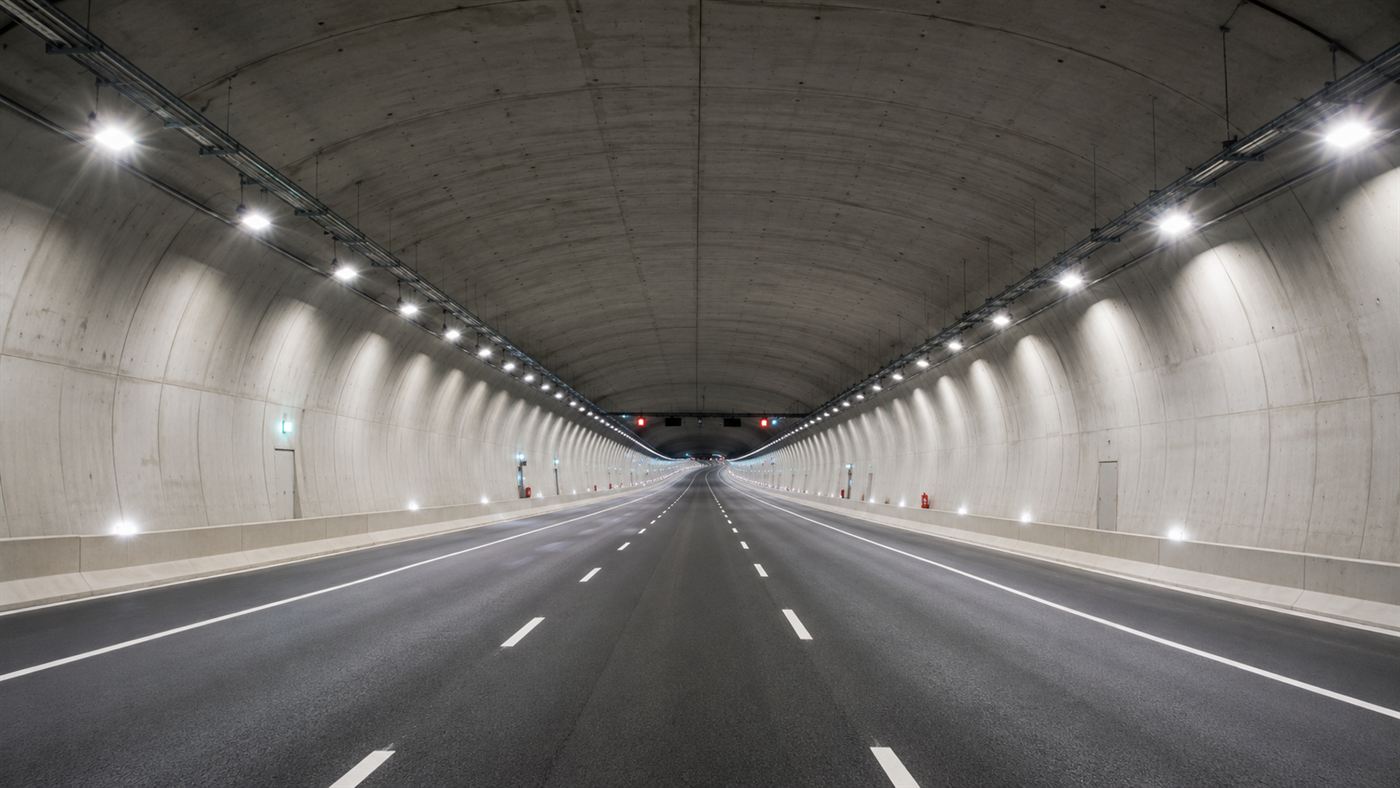
Today, crossing the Fehmarn Belt, the stretch of water between the Danish island of Lolland and the German island of Fehmarn, means catching a ferry that takes about 45 minutes. When the tunnel opens, the same crossing will take roughly 10 minutes by car and 7 minutes by train, with no timetable to wait for and no weather to cancel the trip.
The bigger prize is what happens to the map of northern Europe. The tunnel plugs a missing link in the route between Scandinavia and the continent, and the rail journey from Copenhagen to Hamburg is expected to fall from around five hours to two and a half. Freight and passengers that now take a long detour around the land border will have a fast, direct path straight under the sea, which is the real reason the European Union is helping to pay for it.
The honest catch
A project this size does not arrive without friction, and it is worth being honest about that. The Fehmarnbelt has run years behind its original timetable and faced long legal challenges, much of it from ferry operators and German environmental groups worried about the effect of dredging an 18 kilometre trench across a busy stretch of sea. Building the link means disturbing a lot of seabed, and that argument was fought all the way through the German courts before work could begin in earnest.
There is also the simple fact that a tunnel is only as useful as the railways it connects to at each end, and upgrading those lines on the German side has its own delays and costs. The crossing itself is a marvel, but a marvel that depends on a lot of less glamorous track work happening on schedule around it. The current plan is for the tunnel to open near the end of the decade, and on a project that has already slipped, that date is best read in pencil.
Why the world's longest immersed tunnel is built like a kit
It is easy to be wowed by the numbers, the 73,500 tonne sections and the 18 kilometre line of them. But the quiet genius of the Fehmarnbelt tunnel is the method, the idea that you can build something colossal in calm, controllable pieces on land and then assemble it on the floor of the sea like a model kit. It turns an impossible single object into 89 manageable ones.
When the last of those pieces is joined and the water is pumped out for good, two countries that have always been separated by a cold strip of sea will be stitched together by a dry road and a railway running beneath it. A 45 minute ferry will become a seven minute glide through a tube on the seabed, and a gap on the map of Europe will quietly close. That is what 89 sunken boxes of concrete add up to.
Engineers are building the world's longest immersed tunnel by sinking 89 concrete boxes, each heavier than 70,000 tonnes, into a trench on the floor of the Baltic Sea. Would you rather drive under the sea through a tunnel like this, or do you still prefer the open deck of a ferry? Tell us what you think in the comments.
Related reading: China opened the world's longest expressway tunnel, a 22.13 kilometre bore through the Tianshan Mountains that cuts an hours-long crossing to about 20 minutes.