American spy satellites spotted a 500-tonne machine skimming the Caspian Sea metres above the water, and the Soviet craft nicknamed the Caspian Sea Monster was neither ship nor plane
In the Cold War, Western analysts stared at spy photos of an enormous Soviet machine racing over the water on stubby wings and could not say what it was. They called it the Caspian Sea Monster, and it was the strangest giant of the ekranoplan age.
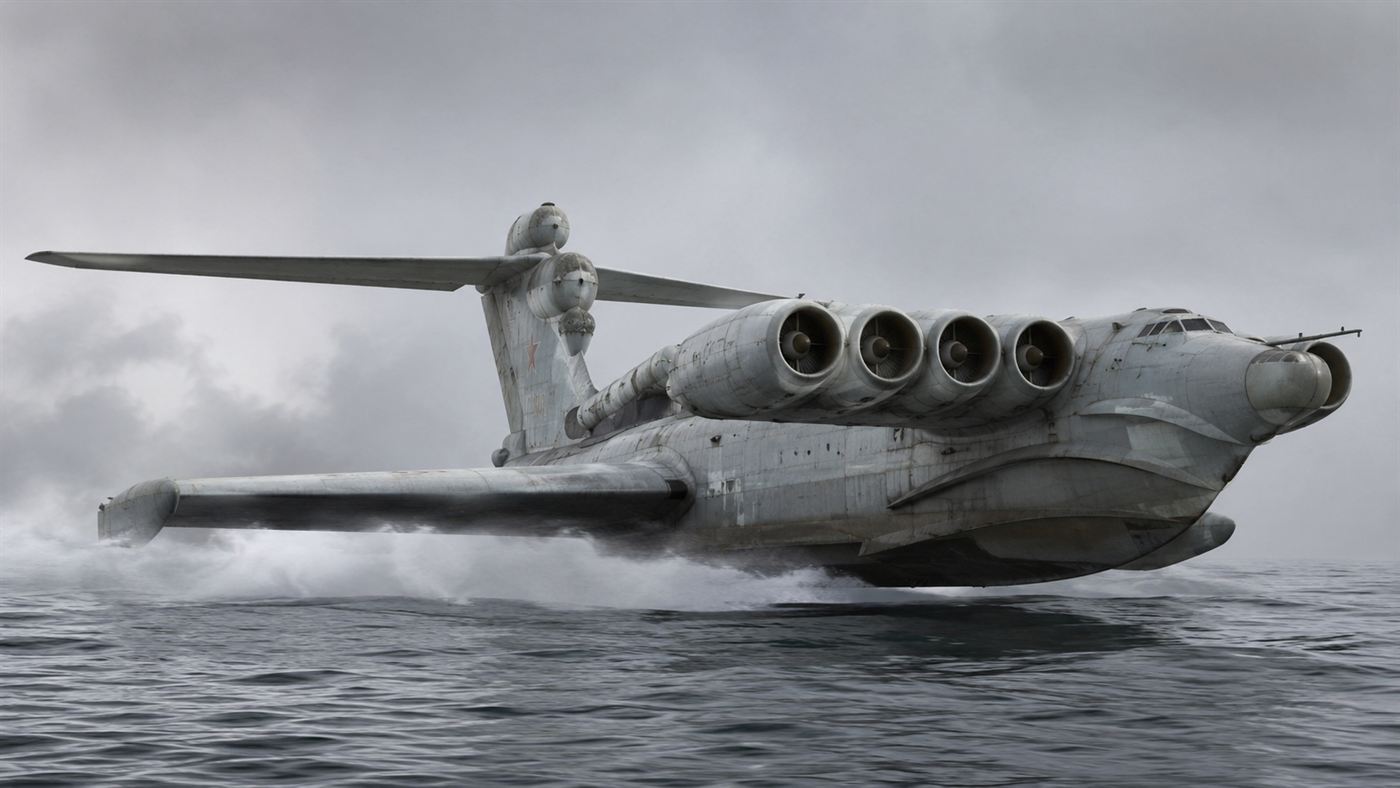
The Caspian Sea Monster skimmed the water on a cushion of air, neither flying high nor floating. Illustration: Watts & Wild.
In the late 1960s, American intelligence officers studying satellite images of what they would come to call the Caspian Sea Monster found something that made no sense.
A machine the size of an airliner was tearing across the water at hundreds of kilometres an hour, far too low to be a normal plane and far too fast to be any ship, so they gave it a name that stuck: the Caspian Sea Monster.
What was the Caspian Sea Monster? It was a giant Soviet ekranoplan, or ground-effect vehicle, that flew just a few metres above the water on a cushion of trapped air. Western analysts nicknamed it the Caspian Sea Monster after spotting it on the Caspian Sea in spy photographs.
Neither ship nor plane
The secret of the Caspian Sea Monster was a piece of physics called ground effect.
When a wing flies very close to a surface, the air trapped between the wing and the ground forms a cushion that gives a big boost in lift and efficiency.
A craft built to ride that ground effect cushion is called an ekranoplan, and a ground-effect vehicle can carry heavy loads using far less power than a normal aircraft.
The trade-off is that it only works within a few metres of a flat surface, which is why these machines hug the water.
An ekranoplan is, in effect, a plane that can never climb, and a ship that never quite touches the sea.
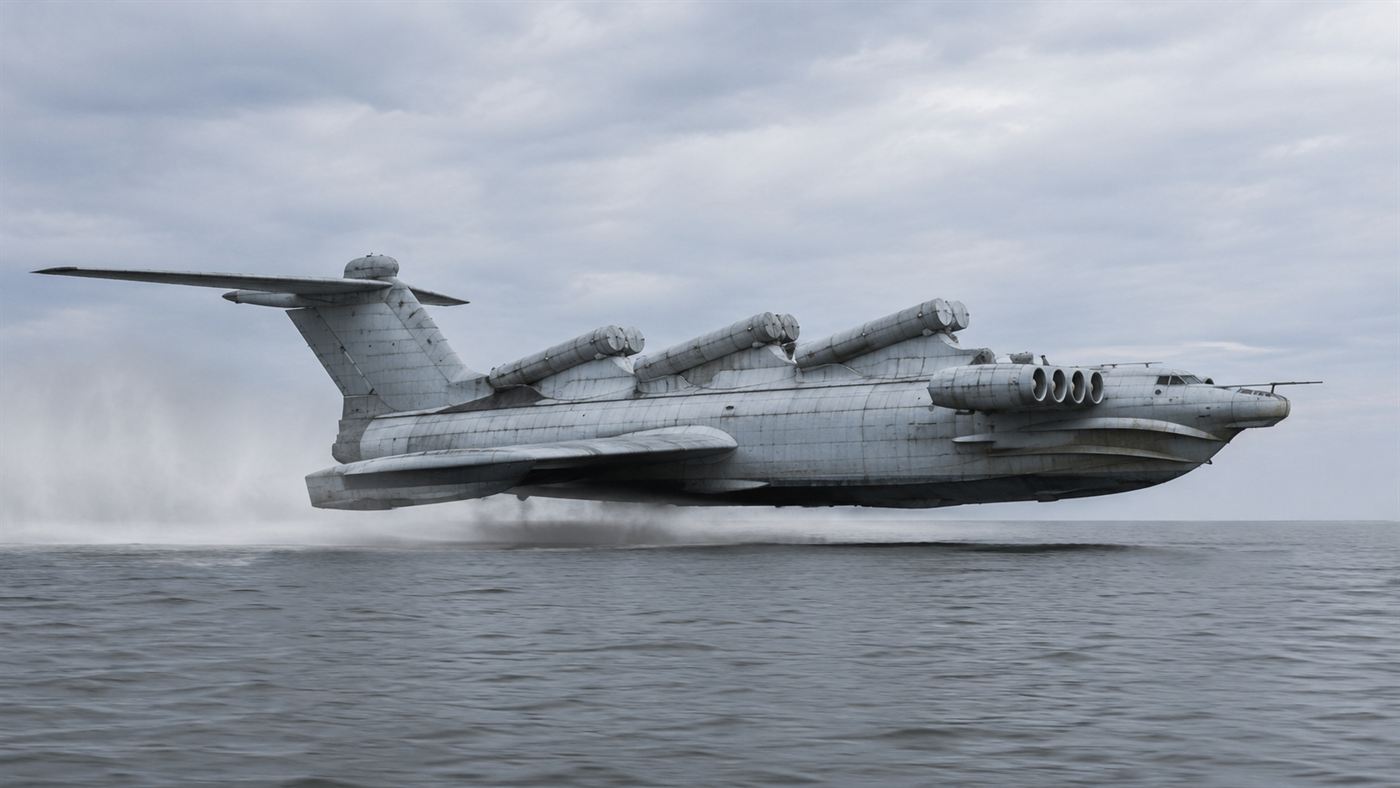
The Caspian Sea Monster on the spy photos
The craft that earned the nickname was a prototype the Soviets called the KM.
It weighed around 544 tonnes fully loaded and was, at the time, the largest and heaviest aircraft in the world, longer than a Boeing 747.
To Western eyes it was a baffling, almost frightening thing, and the letters KM on its hull were jokingly read as Kremlin's Monster.
Because it flew so low, the Caspian Sea Monster could in theory slip beneath enemy radar while moving at the speed of a plane.
For a while, it looked like the Soviet Union had invented an entirely new kind of war machine.
The man who built it
The Caspian Sea Monster was the work of Rostislav Alexeyev, a brilliant Soviet engineer already famous for fast hydrofoil boats.
Alexeyev was obsessed with the idea of combining the speed of flight with the lifting power of ground effect.
His ekranoplan could haul enormous loads of troops or cargo across the Caspian Sea and other inland waters at incredible speed.
For the Soviet military it promised a fast way to move forces that no ordinary ship or plane could match.
Missiles and military dreams
The most fearsome version was a later ekranoplan called the Lun-class.
The Lun bristled with launchers for huge anti-ship missiles mounted on its back, a flying missile boat built to ambush enemy fleets.
Skimming the surface at high speed, it was meant to appear with almost no warning and strike before a ship could react.
The Soviet navy imagined fleets of these machines guarding its coasts and seas.
It was the Caspian Sea Monster's promise scaled up into a weapon.
Why the monster died
For all its menace, the dream came apart.
Ekranoplans turned out to be hard to fly, unstable, and useful only over calm water near a coast, not the open ocean.
The original KM crashed and sank in 1980 after a pilot error, and it was never rebuilt.
When the Soviet Union itself collapsed, the expensive programme lost its backing and quietly ended, and the sole Lun-class craft was eventually left beached on the Caspian coast in Dagestan.
The monster had run out of sea.
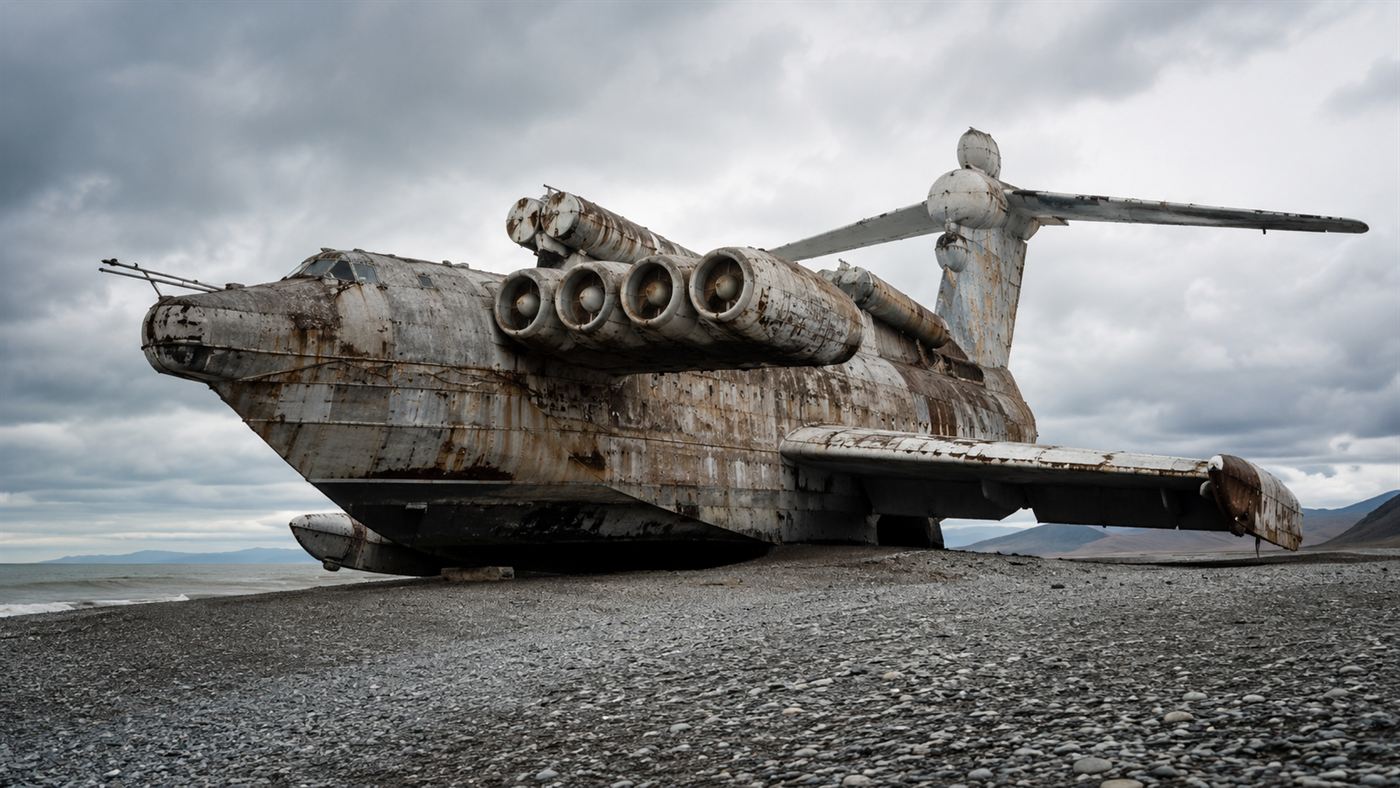
The honest catch
It is tempting to see the Caspian Sea Monster as a lost super-weapon, but its limits were real.
Ground effect only works in a narrow band just above a smooth surface, so the craft were fragile in rough seas and tricky to control.
They were expensive, narrow in purpose, and never the game-changer the early spy photos seemed to promise.
Yet the underlying physics is sound, and the ground-effect idea is quietly returning in modern designs for efficient cargo and passenger craft, so the Caspian Sea Monster may turn out to be ahead of its time rather than simply a dead end.
The Caspian Sea Monster remains one of the most extraordinary machines ever built, a 500-tonne giant that chose to fly forever just out of reach of the waves.
It belongs in the company of the other record-breaking colossi humans have engineered, from the largest ship ever built to the biggest machine ever to move on land, and the lost Soviet ambition of the deepest hole on Earth.
Was the Caspian Sea Monster a brilliant idea killed by bad timing, or a dead end that deserved to fail, and would you fly across the sea on a craft that never climbs more than a few metres? Tell us in the comments.