The world's largest electric ship is a passenger ferry built to carry 2,100 people across the river between Argentina and Uruguay, running on 250 tonnes of batteries instead of a drop of diesel
When you picture the biggest electric ship on Earth, you probably imagine a sleek cargo vessel or a navy prototype. The real one is a 130-metre catamaran ferry named China Zorrilla, built in Tasmania to shuttle tourists and their cars across the wide river between Buenos Aires and Uruguay, carrying the largest battery ever put to sea.
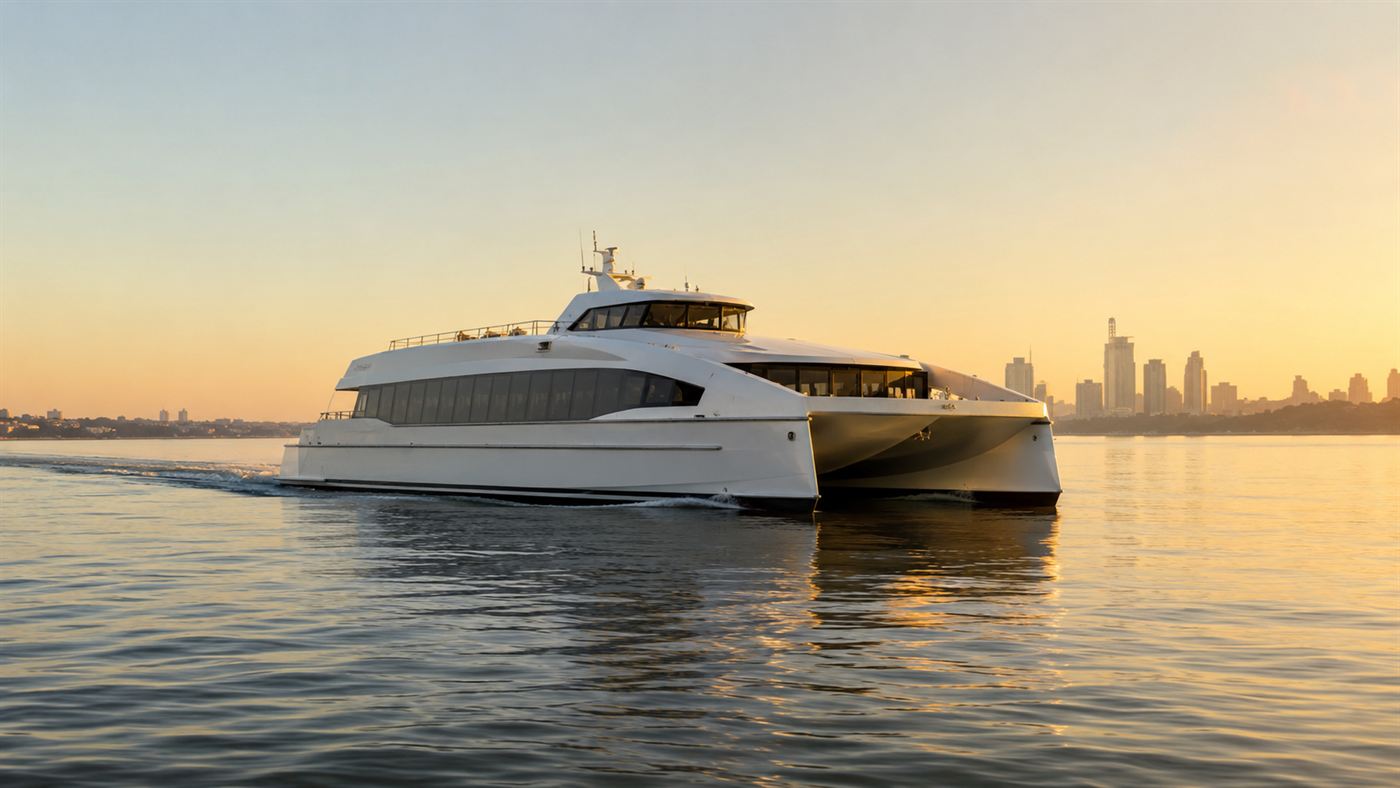
The largest battery-electric ship in the world is a passenger ferry, not a freighter. Illustration: Watts & Wild.
In the first days of 2026, a ship the length of a city block slipped out of a shed in Hobart, Tasmania, and began running circles in the harbour under its own power. It made no smoke and almost no noise, because there is nothing aboard to burn. The vessel is called China Zorrilla, it is known on the slipway as Hull 096, and according to its builders it is the world's largest electric ship ever constructed.
The boat was built by the Australian shipyard Incat and floated out in May 2025, then powered up for the first time that December. As New Atlas reported when the catamaran started its harbour trials, it stretches 130 metres, carries up to 2,100 passengers and more than 220 cars, and stores its energy in more than 40 megawatt-hours of batteries. That is roughly four times the biggest battery ever fitted to a ship before it. And the job it was built for is wonderfully ordinary: a ferry run.
A ship the size of a freighter, built for a day trip
The China Zorrilla was ordered by Buquebus, the South American operator that has spent decades carrying passengers across the Rio de la Plata, the enormous river-mouth that separates Argentina from Uruguay. The crossing between Buenos Aires and Colonia del Sacramento is short, busy, and famous, equal parts commuter route and weekend escape, and it is exactly the kind of trip an electric ferry is suited to. The idea began a decade earlier and far smaller, with the Ampere, the world's first all-electric car ferry, on a Norwegian fjord.
At 130 metres, this is not a small boat. It is a twin-hulled aluminium catamaran wide enough to swallow more than 220 vehicles on its car deck and seat 2,100 people above them, and it will house what the company bills as the largest duty-free shopping deck at sea. Most ships this size run on heavy marine diesel, the thick, dirty fuel that powers global shipping. This one runs on electrons, and that single swap is what makes it remarkable.
Why the world's largest electric ship is a humble ferry
It feels backwards that the world's largest electric ship is a passenger ferry rather than a cutting-edge cargo carrier. But it makes complete sense once you think about how batteries behave at sea. A battery is heavy and holds far less energy per kilogram than diesel, so the further a ship needs to go, the more impossible electric propulsion becomes. Cross an ocean and you would need a battery bigger than the cargo.
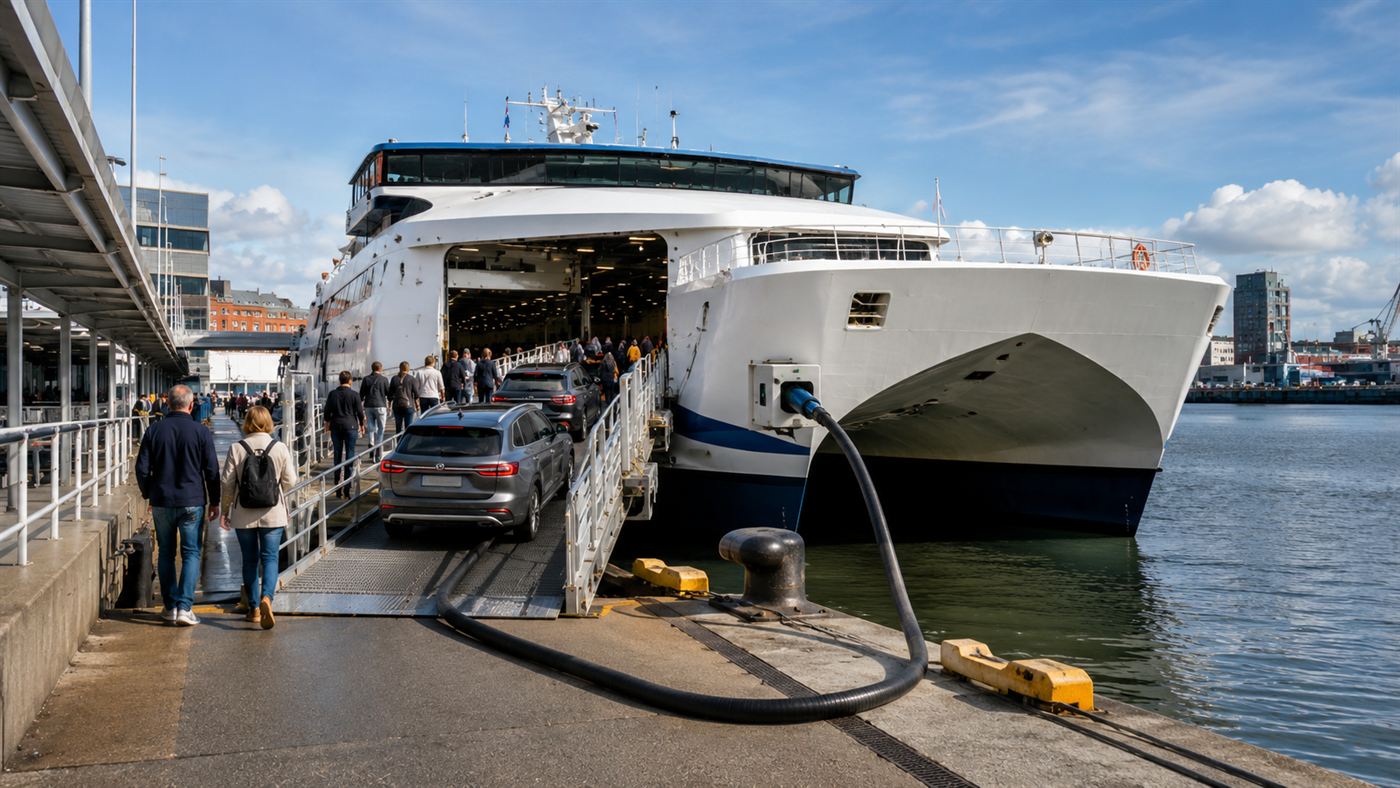
A ferry escapes that trap. It runs the same short route over and over, never far from shore, and it sits at a dock between trips. That means it only needs enough charge for one crossing, and it can top up at the terminal while passengers and cars roll on and off. Short hops with frequent stops are the sweet spot for going electric on the water, which is why the breakthrough showed up on a river crossing and not in the middle of the Atlantic.
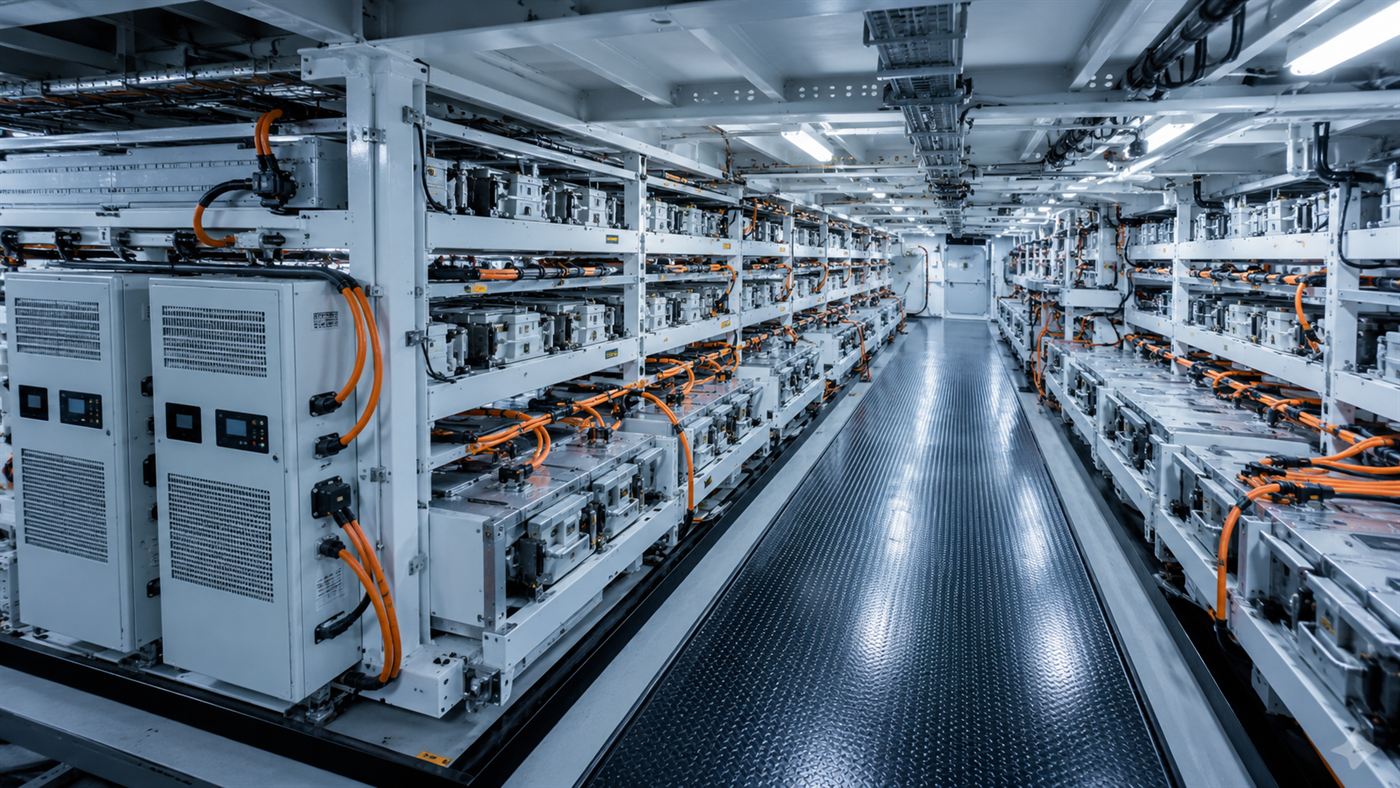
The battery is four times bigger than anything afloat
The number that matters here is 40 megawatt-hours. That is the size of the battery pack riding inside the China Zorrilla, and it weighs more than 250 tonnes, about the same as two and a half blue whales sitting in the bottom of the boat. The Finnish marine technology company Wartsila, which supplied the propulsion and energy system, describes the package as four times the power of any battery on an electric or hybrid ship sailing today.
All that stored energy feeds eight electric waterjets, driven by eight permanent-magnet motors, that push the catamaran through the water without a propeller or a gearbox in sight. There is no engine room in the traditional sense, no exhaust stacks, no fuel tanks of diesel. In their place sit banks of battery modules and a control system that manages the flow of power, a layout that looks far more like the floor of an electric car than the belly of an old ferry.
The trick is to build the ship featherlight
Here is the engineering puzzle Incat had to solve. Batteries are heavy, and a heavy ship needs more energy to move, which needs more batteries, which adds more weight. Left unchecked, that spiral makes a big electric vessel impossible. The way out is to make everything else as light as you can, and this is the trick Incat has spent half a century perfecting.
The whole hull is built from aluminium rather than steel, a material the yard has used for its high-speed catamarans for decades. A lighter boat needs less push to reach the same speed, which means smaller motors and a smaller battery for the same range. Robert Clifford, the chairman of Incat, has called the project a turning point for the company, and the reason is that lightweight shipbuilding, once a niche skill for fast ferries, turns out to be the key that makes a giant battery ship float at all.
The honest catch
None of this means diesel ships are about to vanish, and it is worth being straight about the limits. The China Zorrilla works because its route is short. The same battery that comfortably carries it across the Rio de la Plata would be useless on a long ocean voyage, where the weight of the cells alone would sink the economics. Nobody is about to cross the Pacific on a battery, and this ship was never meant to suggest otherwise.
There is also the matter of where the electricity comes from. An electric ferry is only as clean as the grid that charges it, so if the terminal pulls its power from a coal plant, the emissions simply move ashore rather than disappear. And the vessel still has to prove itself in regular service after its trials, with the fast terminal charging that a busy timetable demands. The promise is real, but it is a promise about the right ship on the right route, not a silver bullet for all of shipping.
Why a river ferry points the way
Shipping is one of the hardest industries to clean up, responsible for around three percent of global greenhouse emissions, and for years the standard line was that batteries could never do serious work at sea. A 130-metre catamaran running quietly between Buenos Aires and Uruguay is a direct answer to that doubt. It shows that for the thousands of short ferry routes that stitch coastlines and rivers together around the world, the electric option is here now, not decades away.
The China Zorrilla will not decarbonise global trade, and it does not pretend to. What it does is take one of the busiest passenger crossings in South America and prove that a ship the size of a freighter can make it on batteries alone. For everyone who lives near a harbour and breathes the fumes of the boats that cross it, that is the part worth watching.
The largest electric ship ever built turned out to be an ordinary ferry, carrying 2,100 people and their cars across a river on the biggest battery ever sent to sea. Would you happily ride a fully electric ferry across open water, or does the idea of 250 tonnes of batteries under your feet give you pause? Tell us what you think in the comments.
Related reading: BYD's new megawatt platform charges an EV with about 400 km of range in just 5 minutes, roughly as fast as a petrol fill-up.
See also: the giant wing sails bringing wind power back to cargo ships.