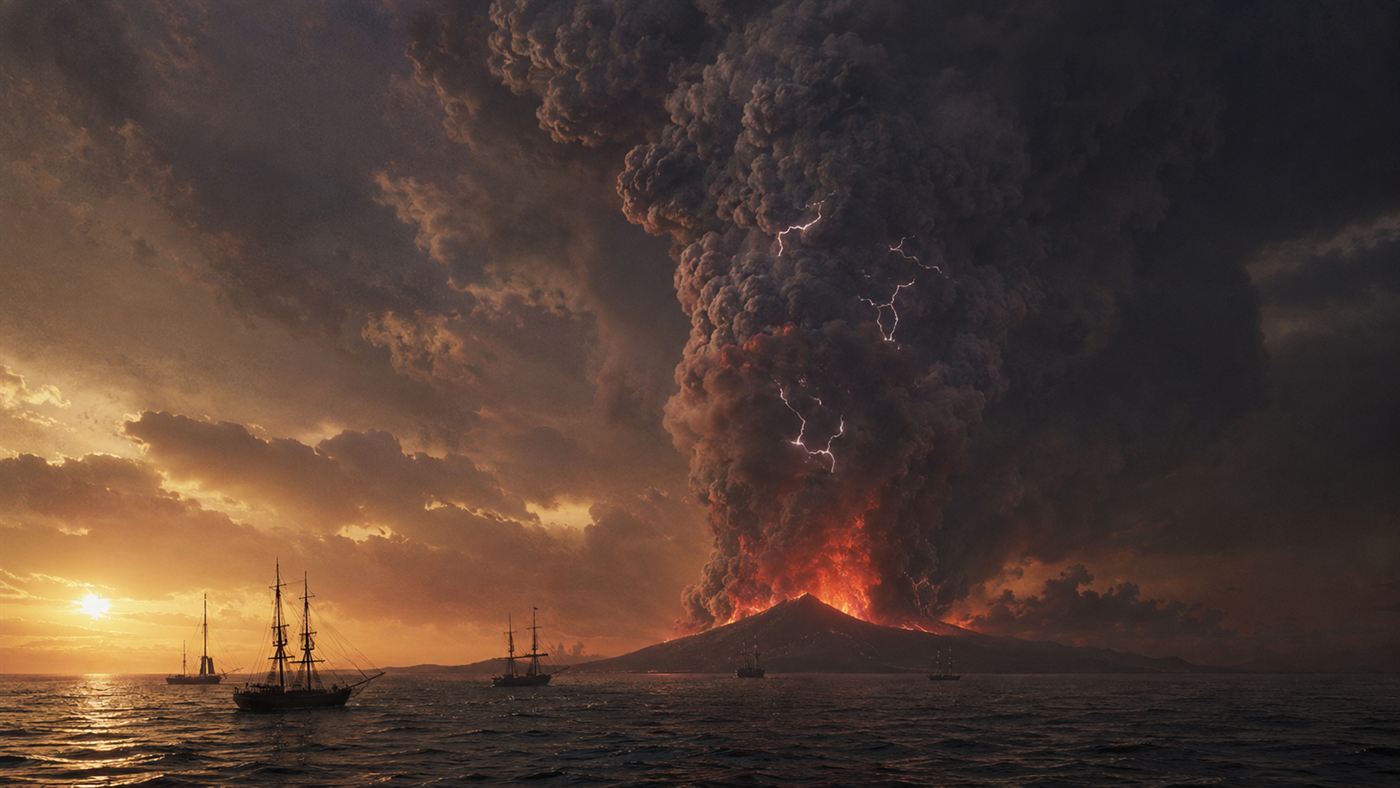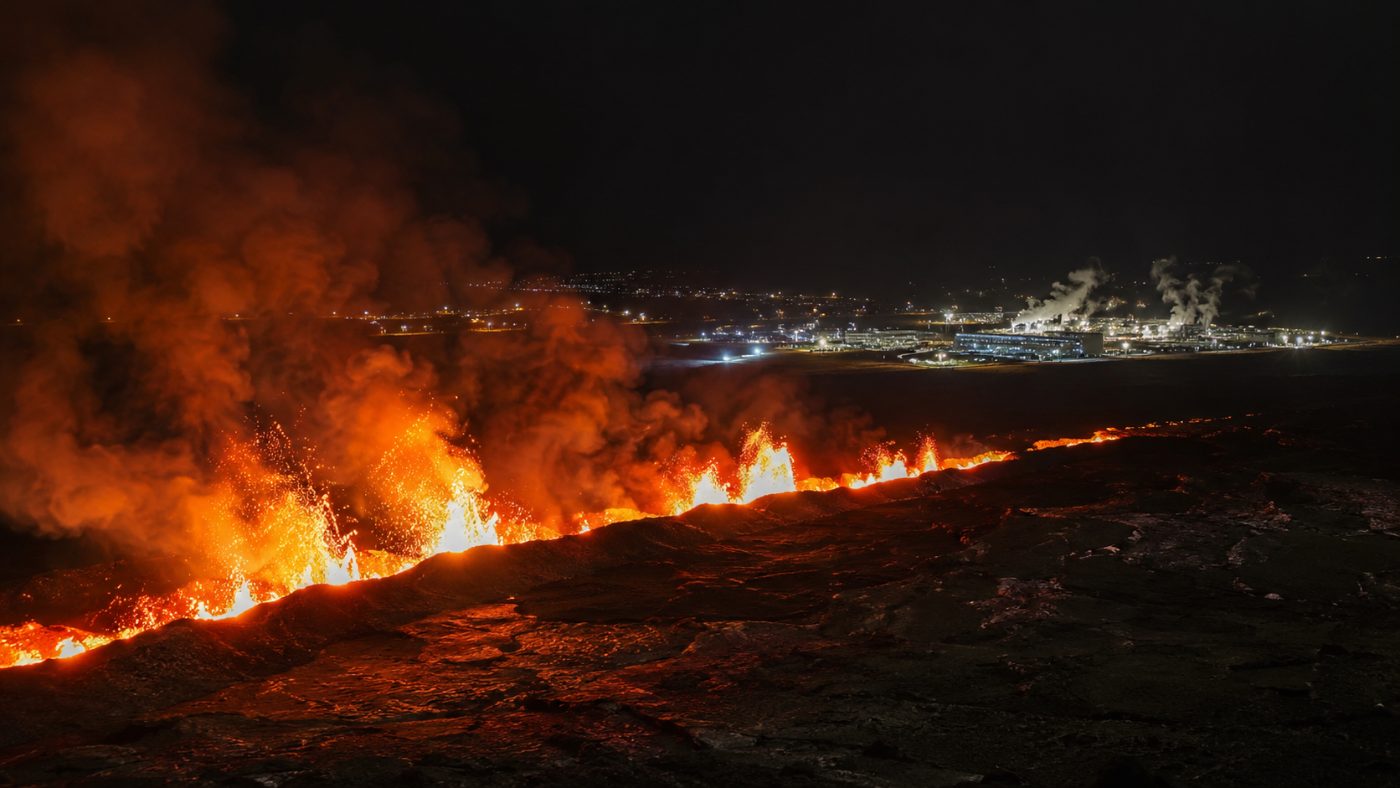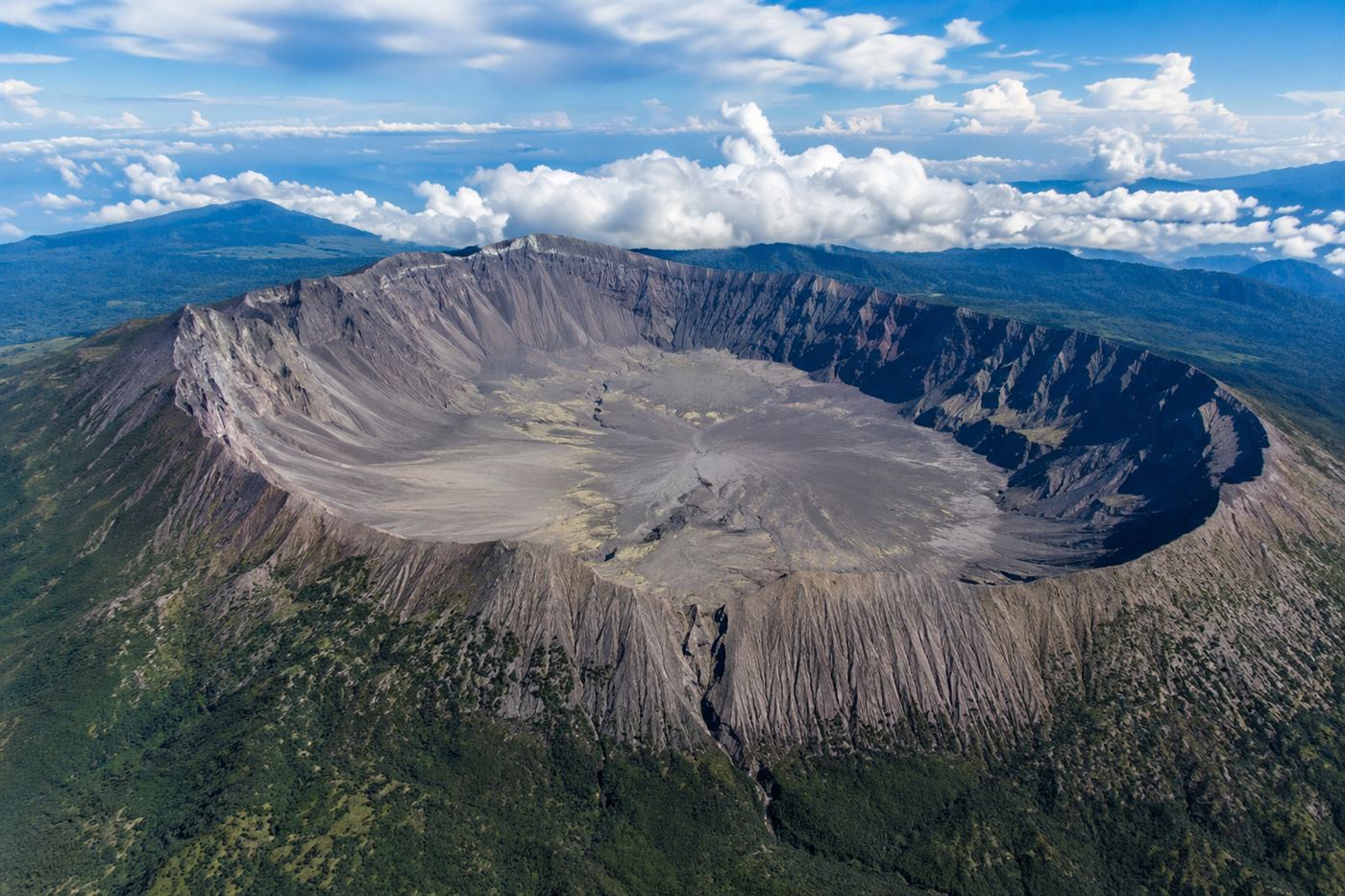
On the night of 10 April 1815, Mount Tambora on the island of Sumbawa in what is now Indonesia erupted with a force that geologists classify as a VEI 7, the most powerful volcanic eruption in recorded history. The explosion was heard 2,600 kilometres away. Pyroclastic flows killed roughly 11,000 people on the island within hours.
But the deadlier consequence was invisible and global. Mount Tambora threw an estimated 55 cubic kilometres of ash and sulfur dioxide into the stratosphere, where the particles formed an aerosol veil that created a volcanic winter lasting more than a year. The result was 1816: the year without a summer, the year without a harvest, the year that killed somewhere between 90,000 and 200,000 people across Europe and North America.
Mount Tambora erupted on 10 April 1815, ejecting enough ash and sulfur dioxide to dim the sun across the Northern Hemisphere for more than a year. Crop failures followed in 1816 during the year without a summer across Europe and North America. The volcanic winter killed up to 200,000 people and contributed, indirectly, to both Frankenstein and the bicycle.
What happened when Mount Tambora erupted in April 1815?
Mount Tambora sits on the island of Sumbawa in what is now Indonesia.
In early April 1815 it had been rumbling for weeks.
On 5 April a moderate eruption began.
Then, on the night of 10 April, the mountain exploded in a cataclysm that geologists rank as a VEI 7, placing it among the largest volcanic events of the past ten thousand years.
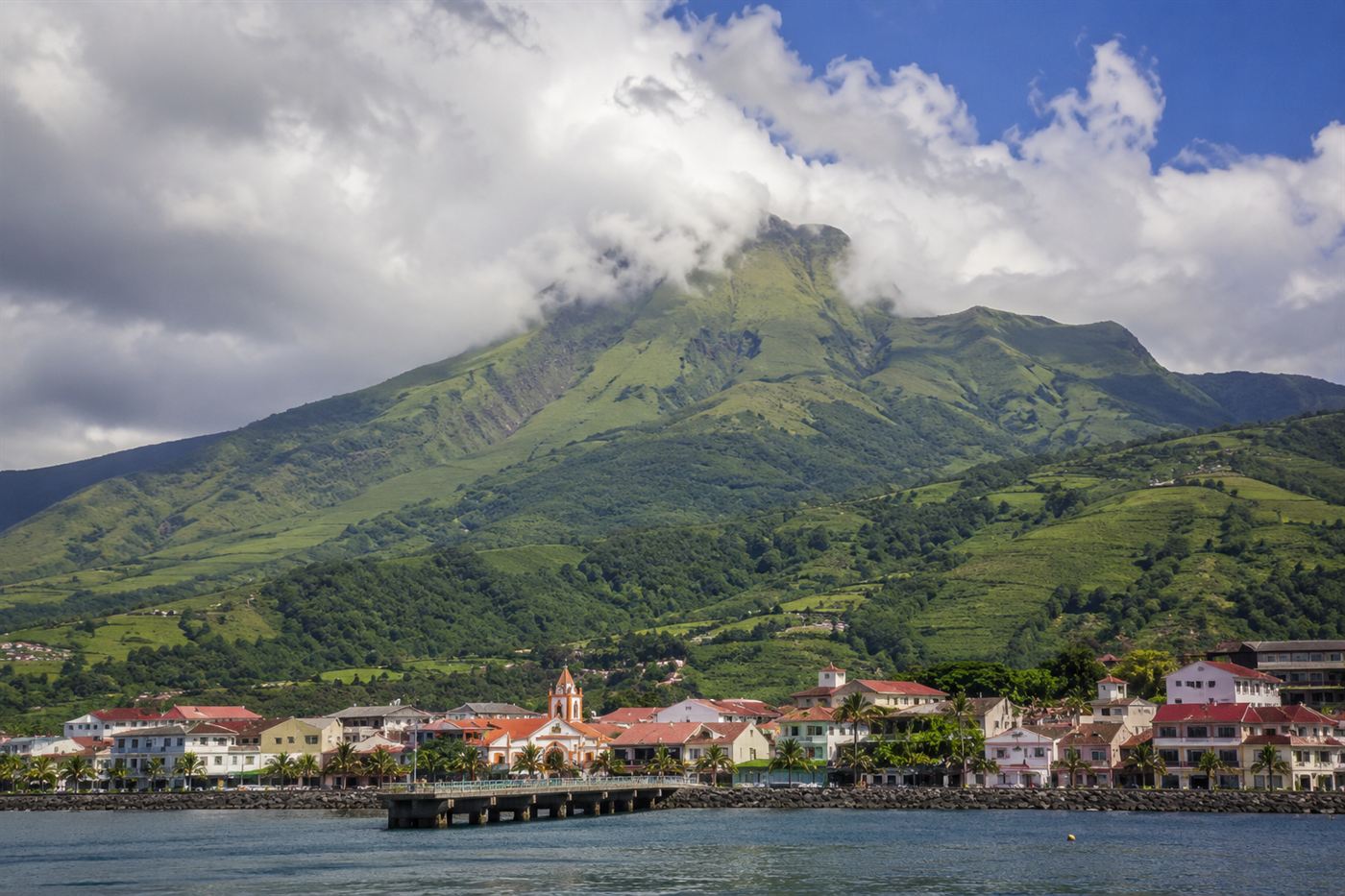
The explosion sent pyroclastic flows down every slope of the mountain, comparable in character to those that destroyed Saint-Pierre in the Mount Pelée eruption of 1902 but vastly larger in scale.
Three kingdoms on the island, Tambora, Sanggar and Papekat, were essentially wiped out.
The eruption column reached at least 43 kilometres into the atmosphere, well above the troposphere and deep into the stratosphere.
When the column collapsed, it fell back as surges of superheated gas and ash that killed anyone within reach.
Estimates of those killed on Sumbawa in the immediate aftermath range from 10,000 to 11,000 in the pyroclastic flows, with another 60,000 dying in the months that followed from starvation and disease on the devastated island.
The sound of the explosion was so loud that it was heard on the island of Sumatra, more than 2,000 kilometres to the west, where people initially mistook it for cannon fire.
British officers in Batavia, now Jakarta, sent troops to investigate what they believed was a naval battle.
Why did the Mount Tambora year without a summer cancel the harvest across the Northern Hemisphere?
The immediate horror of Tambora was local.
The global disaster arrived slowly, over the following months.
Mount Tambora ejected an estimated 55 cubic kilometres of material, including roughly 60 megatons of sulfur dioxide gas.
In the stratosphere, above the weather systems that would wash it out, the sulfur dioxide reacted with water vapor to form sulfate aerosols, tiny droplets that reflect sunlight back into space before it can warm the Earth's surface.
The aerosol veil spread through the stratosphere over the following months, thinning but not dissipating.
By 1816, the volcanic winter had reduced the amount of solar radiation reaching the surface of the Earth by a measurable amount.
The average global temperature in 1816 was roughly 0.4 to 0.7 degrees Celsius lower than normal, a number that sounds modest until you look at what it did to agriculture.
In New England, frost was recorded in every single month of 1816.
The region acquired the grim name "Eighteen Hundred and Froze to Death."
In Europe, the summer of 1816 was the coldest since temperature records began.
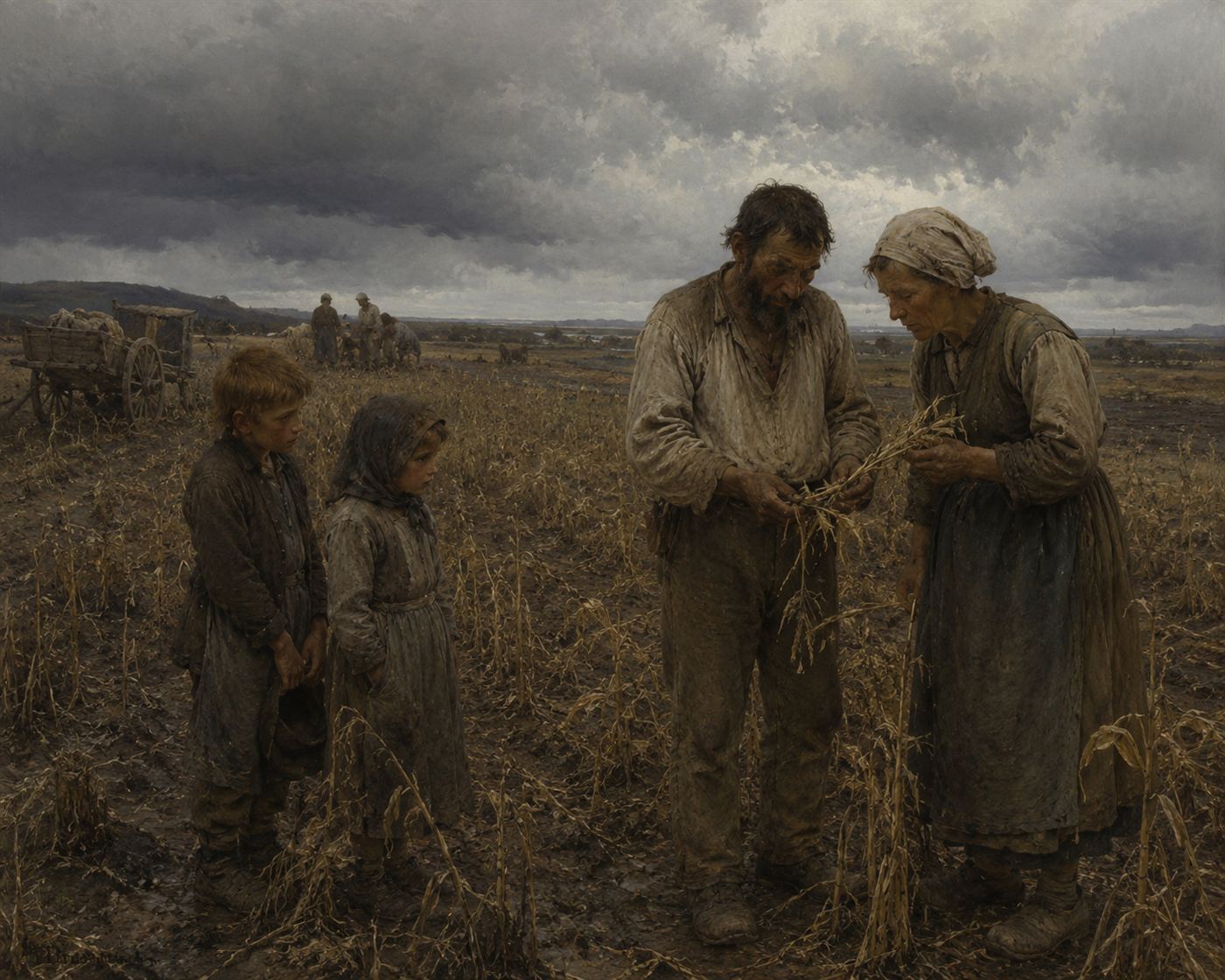
Sustained rainfall, unseasonably low temperatures and late frosts arriving in June destroyed harvests from Ireland to Ukraine.
The volcanic winter from Mount Tambora was not a metaphor.
It was a measured, physical event with a direct and deadly causal chain running from a volcano in Indonesia to the breadbaskets of the Northern Hemisphere.
How did the year without a summer kill people across Europe and North America?
In 1816, the harvest failed.
The volcanic winter imposed by Tambora's aerosol veil had shortened the growing season across the Northern Hemisphere to the point where crops that should have ripened simply could not.
Across Ireland, the potato crop was devastated by a cold and wet growing season.
In Switzerland, the summer temperature was the coldest since at least 1753.
Grain prices in Britain quadrupled between 1815 and 1817.
In France and Switzerland, food riots broke out in the summer of 1816 as desperate populations attacked grain convoys and markets.
The German states saw bread prices rise so sharply that the poor simply could not eat.
In New England, farmers who had already planted their spring crops watched them freeze and die.
Many abandoned their farms entirely, contributing to a mass migration westward into Ohio, Indiana and Illinois that reshaped the demography of the United States.
Historians estimate the European death toll from the famine and associated disease at somewhere between 90,000 and 200,000, with the hardest hit regions in Switzerland, Germany, France and Ireland.
China was also affected.
The Yunnan province, normally warm and wet, experienced severe cold and flooding in 1816 and 1817 that destroyed crops and may have contributed to a cholera epidemic that eventually spread globally.
The year without a summer was the last great subsistence crisis in Western Europe, the last time famine on a catastrophic scale killed large numbers of people across what was then considered a relatively prosperous region.
The causal chain from Tambora to global famine was not understood at the time, but the principle that one event can cascade into unintended consequences across an entire system is exactly what the Borneo DDT trophic cascade illustrated a century later in a different context.
How did the year without a summer inspire Mary Shelley to write Frankenstein?
In the summer of 1816, a group of young English writers took a holiday on the shores of Lake Geneva in Switzerland.
The group included the poet Lord Byron, his physician John Polidori, the poet Percy Bysshe Shelley, and his eighteen-year-old companion Mary Godwin, who would shortly become Mary Shelley.
They had planned to spend the summer outdoors, boating on the lake and walking in the Alps.
Instead, the year without a summer trapped them inside the Villa Diodati.
Day after day of cold, continuous rain and a sky too dark for outdoor activity drove the group to read German ghost stories aloud and eventually to propose a competition: each member would write their own.
Polidori produced "The Vampyre," the first vampire story in modern literature, published in 1819.
Byron wrote a fragment that would influence Gothic fiction for generations.
And Mary Shelley, eighteen years old, had a waking dream one sleepless night in which she imagined what she later described as "the pale student of unhallowed arts" kneeling beside a creature assembled from the dead.
Mary Shelley began writing it the next morning.
Frankenstein, or The Modern Prometheus was published in 1818 by Mary Shelley and has not been out of print since.
Byron also wrote the poem "Darkness" during that same summer at Villa Diodati, a vision of a world with no sun in which the last survivors burned cities for warmth.
He wrote it in July while watching snow fall on Lake Geneva.
The Villa Diodati summer stands alongside the dancing plague of 1518 as one of history's most unexpected cultural eruptions triggered by a physical crisis nobody present fully understood.
Why did the year without a summer help invent the bicycle?
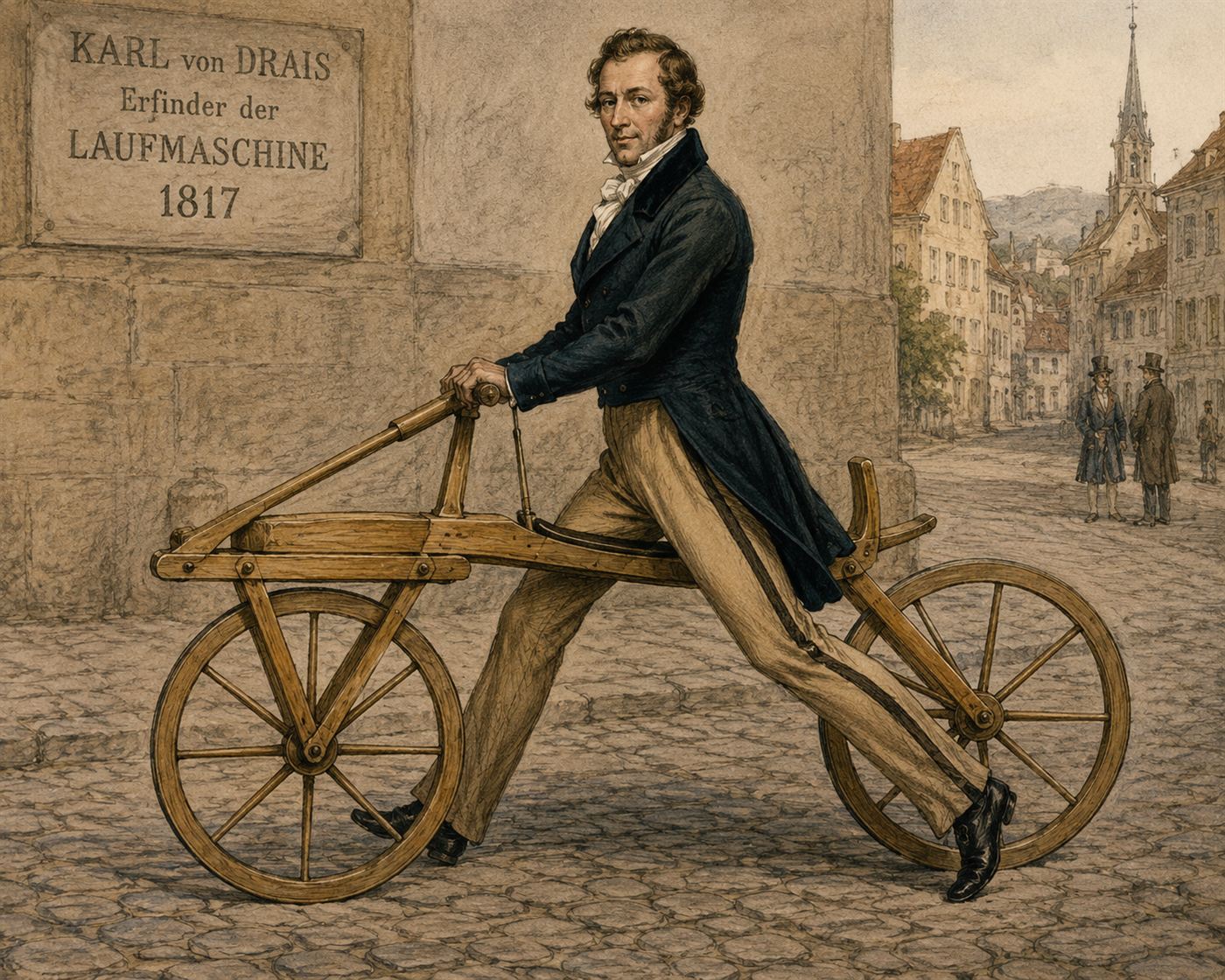
In Mannheim, in the German state of Baden, a civil servant and inventor named Karl von Drais was watching the oat harvest fail.
Karl von Drais was not a farmer.
But he noticed something important: oats were the fuel that kept horses moving, and horses were the fuel that kept everything else moving, from mail coaches to agricultural carts to military supply lines.
As the year without a summer destroyed the oat harvest across Europe, horses became an expensive luxury.
Many were slaughtered for food.
Others were simply too costly to feed through a winter that arrived on the back of a failed summer.
Karl von Drais recognized the gap.
In June 1817, Karl von Drais completed and demonstrated the Laufmaschine, which translates as "running machine" and which history now calls the draisine.
It was a wooden frame with two wheels, a padded chest rest and a steering bar, propelled by the rider pushing along the ground with both feet alternately.
It had no pedals.
It was the direct ancestor of every bicycle, motorcycle and wheeled personal vehicle that followed.
The specific connection to Mount Tambora is partly circumstantial: Karl von Drais was working on the concept before 1815.
But the timing of his patent, the acceleration of his work in 1817 and the documented shortage of horses in the post-Tambora years are examined in the standard biography of Karl von Drais by Hans-Erhard Lessing, who traced the horse-famine link explicitly.
The horse shortage created the market for the machine.
The honest catch
The death toll from the volcanic winter is genuinely disputed and should be treated as a range, not a precise figure.
Isolating Mount Tambora-related mortality from the already-high baseline of early nineteenth-century death rates in Europe is methodologically difficult, and historians' estimates vary widely.
The link between Mount Tambora and the invention of the draisine by Karl von Drais is documented but sometimes overstated in popular accounts.
Karl von Drais was already experimenting with wheeled vehicles before 1815, and the horse shortage is one factor among several in his development timeline.
The connection to Mary Shelley and Frankenstein is real but the causality is occasionally sharpened beyond what the evidence supports.
Mary Shelley was already a writer before Villa Diodati.
She may well have written a great novel in a different summer.
What the year without a summer undeniably did was put her in a house with bad weather, a competitive social group and a sleepless night at the right moment in her development.
The timing did the rest.
Sources
Of all the volcanic eruptions in history, Mount Tambora left the strangest cultural aftermath: a monster, a vampire and a bicycle. If you could trace one modern invention or work of art back to an unexpected crisis, what would it be?