On May 8, 1902, Mount Pelée erupted above Saint-Pierre and killed thirty thousand people in under four minutes, and the one survivor inside the city walls was in a stone prison cell
The Mount Pelée eruption of May 8, 1902, sent a pyroclastic surge down the volcano's southern flank at more than 150 kilometers per hour and destroyed the city of Saint-Pierre, Martinique, in under four minutes. Approximately thirty thousand people died. One man survived inside the city walls. His name was Louis-Auguste Cyparis. He was a convicted prisoner held in a stone dungeon beneath the city jail. He was later pardoned, released, and joined Barnum and Bailey's circus as "the only living object that survived in the 'Zone of Death'."
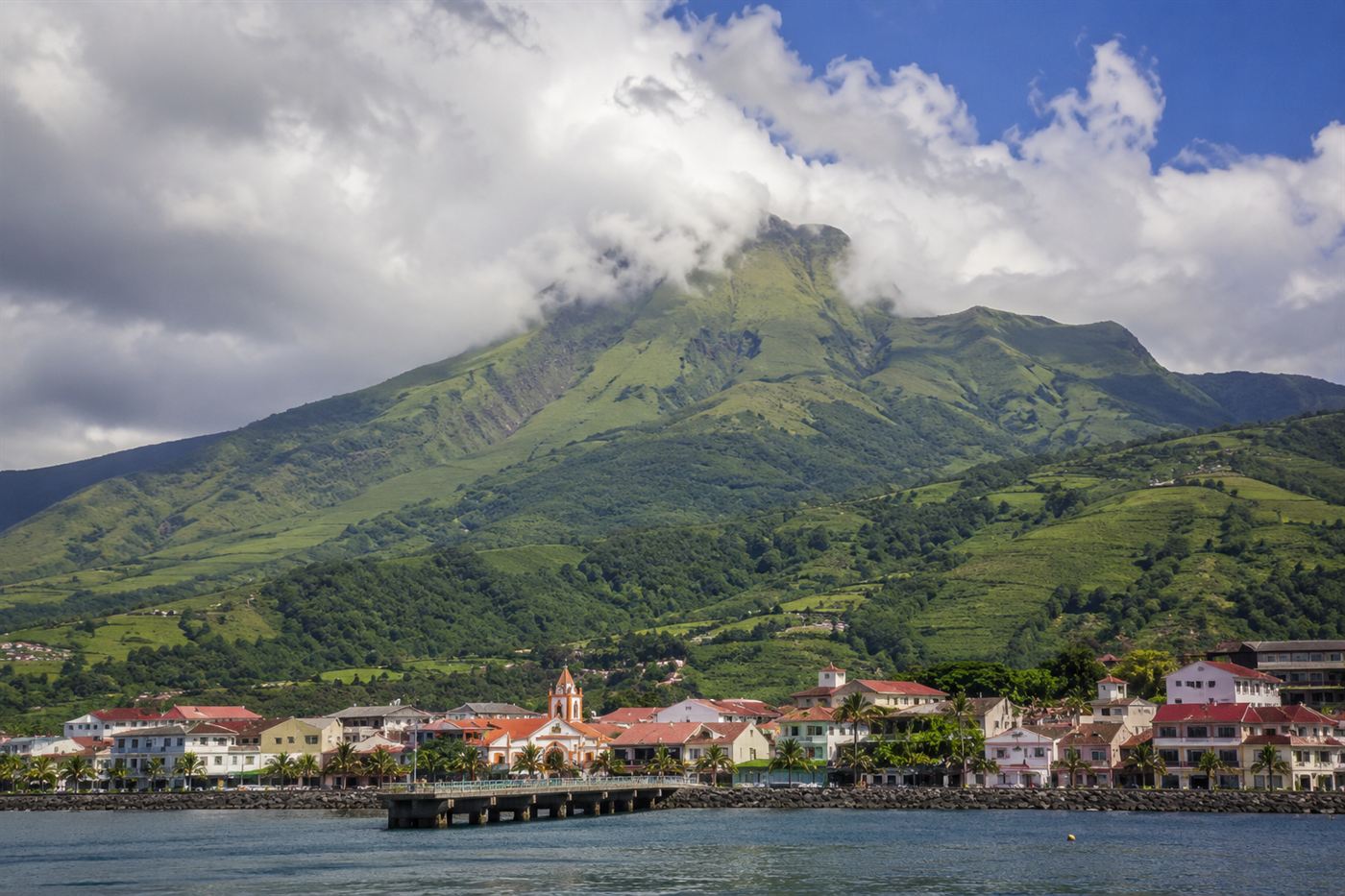
Saint-Pierre in 1902 was the cultural and commercial capital of Martinique and one of the most prosperous cities in the Caribbean. Its residents called it the Paris of the Antilles. It had an opera house, a cathedral, a theater, telegraph connections to France, and a population of about 30,000 people living in stone houses on a hillside above a deep harbor. Mount Pelée, the volcano that rose 1,397 meters above the city's northern edge, had not erupted seriously in living memory.
In the spring of 1902, Mount Pelée began showing signs of life. Steam vents opened near the summit. Sulfurous fumes drifted into the valleys below. On May 5, a lahar, a volcanic mudflow of ash and water, swept down the Rivière Blanche and destroyed a sugar refinery, killing about 30 people. On May 7, the night before the catastrophe, ash was falling on the rooftops of Saint-Pierre and the city smelled of sulfur. The residents had been repeatedly told by local officials that there was no danger. At approximately 7:52 AM on May 8, 1902, Mount Pelée erupted in one of the most destructive volcanic events of the twentieth century.
The Mount Pelée eruption produced a pyroclastic surge, a fast-moving current of superheated gas and volcanic matter traveling at extreme velocity. Within two minutes, it reached Saint-Pierre. Within four minutes, the city was gone. The pyroclastic surge from Mount Pelée moved so fast and with such heat that the contents of wine barrels in the city's warehouses were flash-boiled and the bottles exploded. The harbor was struck by a tsunami generated by the eruption. Eighteen ships anchored there were sunk or thrown onto the shoreline.
What a pyroclastic surge does that makes it different from lava
The Mount Pelée eruption is the event that defined the "Pelean" type of volcanic eruption in volcanology.
Most people imagine volcanic danger as lava, the slow red flow that destroys property but rarely outpaces a person walking.
A pyroclastic surge is a different phenomenon entirely.
It is a ground-hugging cloud of superheated gas, ash, and rock fragments that can travel at speeds between 100 and 700 kilometers per hour and at temperatures between 200 and 700 degrees Celsius.
It follows the terrain downhill, flows around obstacles, and can travel tens of kilometers from the eruption point.
The pyroclastic surge from Mount Pelée that reached Saint-Pierre on May 8, 1902, moved so fast that there was no time to run.
The contents of human lungs were damaged by the superheated gas before the ash could even settle.
The stone buildings of Saint-Pierre, which had made the city look solid and permanent from the harbor, offered almost no protection against a pyroclastic surge.
The heat was sufficient to melt glass and ignite wood simultaneously.
The only structure that provided adequate insulation was a small stone dungeon below street level with a thick door and a single tiny ventilation window, in the basement of the Saint-Pierre city jail.
That is where Louis Cyparis happened to be on the morning of May 8, 1902.
Who Louis Cyparis was and why he was in a stone cell when Mount Pelée erupted
Louis-Auguste Cyparis was a 25-year-old sugar mill worker from Martinique who had been jailed following a fight in which he wounded another man.
He was serving a short sentence in the Saint-Pierre jail.
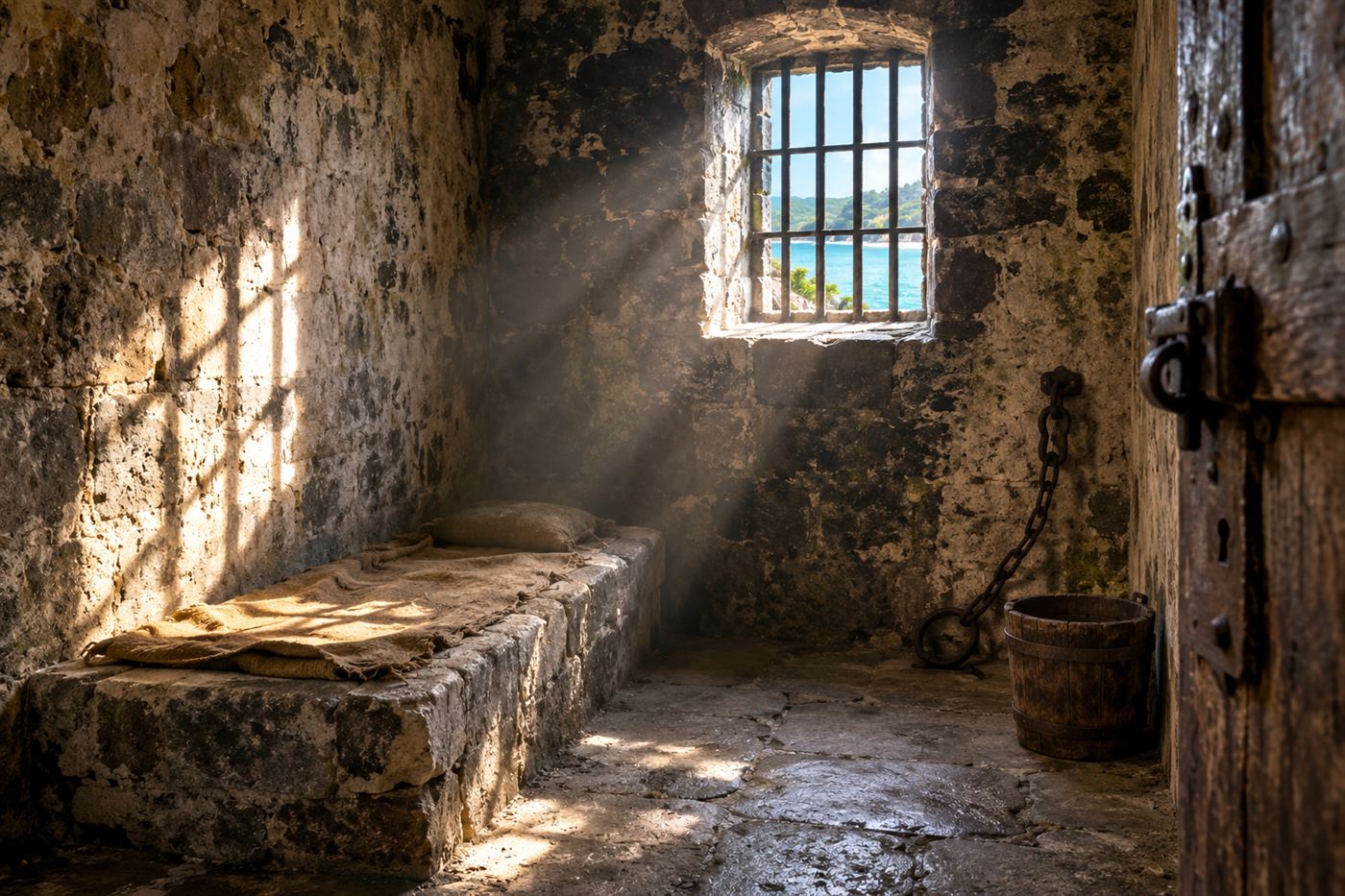
His cell was a small stone room below ground level, more of a dungeon than a cell, with a single door and a ventilation opening roughly 15 centimeters across near the top of the wall.
On the morning of May 8, 1902, a guard had just brought Cyparis his breakfast.
The guard left.
The pyroclastic surge from Mount Pelée arrived at Saint-Pierre a few minutes later.
Hot gas and ash came through the ventilation hole in Cyparis's cell.
He was burned on his hands, his legs, and his back.
He did not die.
He spent four days in his cell before rescuers, who arrived from Fort-de-France after seeing the smoke from Mount Pelée, heard him calling out and dug him free of the debris that had fallen against his cell door.
The rescuers found the city of Saint-Pierre essentially gone.
Thirty thousand people had been in the city when the Mount Pelée eruption occurred.
Cyparis and a handful of people on the absolute periphery of the city were the only survivors.
He was taken to a hospital in Fort-de-France, treated for his burns, and, once it became clear that he was the man who had survived the destruction of Saint-Pierre from inside a jail cell, he was pardoned by the governor of Martinique.
Why the French authorities did not evacuate Saint-Pierre before the Mount Pelée eruption of 1902
The Mount Pelée eruption did not happen without warning.
The volcano had been showing increasing activity for weeks.
In late April 1902, fumaroles near the summit had opened and were emitting sulfurous gas.
On April 25, heavy ash falls were reported in Saint-Pierre.
A lahar on May 5 killed at least 30 people and destroyed infrastructure south of the city.
A scientific commission sent to inspect the volcano reported on May 7, the day before the eruption, that there was no immediate danger and that Saint-Pierre was safe.
The governor of Martinique, Louis Mouttet, reinforced that message and made public statements reassuring residents that they should remain.
There is evidence, documented by historians after the fact, that the French colonial administration's decision to suppress evacuation was influenced at least in part by the upcoming legislative elections scheduled for May 11.
Moving the population of Saint-Pierre would have disrupted the election and the city's role as the island's main voting center.
Governor Mouttet and his wife were in Saint-Pierre on the morning of May 8, 1902.
Both died in the Mount Pelée eruption.
The scientific commission that had declared the city safe was also in the city.
All of them died.
The nearest volcanologist with relevant expertise, Professor Angelo Heilprin of the United States, arrived in Martinique after the eruption and was among the first scientists to study a pyroclastic surge in detail.
The lessons of the Mount Pelée eruption changed how volcanologists understood and communicated volcanic hazard, and the term "nuée ardente" (glowing cloud) entered the scientific vocabulary to describe the phenomenon that destroyed Saint-Pierre.
How Louis Cyparis went from prison cell to Barnum and Bailey's circus
After his recovery, Louis Cyparis became famous.
He was the man who had survived the destruction of a city of thirty thousand people.
The story of a jailed man saved by the very cell that was supposed to confine him struck people in 1902 as one of the most extraordinary pieces of luck in living memory.
In 1903, Barnum and Bailey's circus hired Cyparis to appear in their traveling show.
A replica of his prison cell was built and included in the circus exhibition.
Cyparis appeared as the sole survivor of the Mount Pelée eruption, the man who lived through the destruction of an entire city.
He traveled with the circus for several years, performing across the United States and Europe.
He was billed under various names including "Ludger Sylbaris" and "Samson."
The burns he had suffered in the Mount Pelée eruption had left visible scars, which became part of his exhibit.
He retired to Martinique and died there in 1929.
His cell, or a structure believed to be the remains of it, is one of the surviving landmarks at the ruins of Saint-Pierre, which can still be visited today.

The honest catch
The story of Louis Cyparis is often told as a straightforward tale of extraordinary luck, and that framing is not wrong.
But the fuller history of the Mount Pelée eruption is more complicated in ways that matter.
The failure to evacuate Saint-Pierre is sometimes presented as simple incompetence, but the political dimension of the decision, the upcoming elections and the administration's interest in keeping the population in place, makes it something closer to Aberfan, where officials also failed to act on visible warnings for reasons that had nothing to do with geology.
The scientific commission's reassurance was not simply wrong: the commission lacked the tools and the framework to predict a pyroclastic surge, because the concept had not been formally defined.
The Mount Pelée eruption itself provided the observational data that would allow future volcanologists to recognize and name this type of event.
Cyparis was not the only survivor of the catastrophe.
A young man named Leon Compere-Leandre, who lived on the edge of the city, survived with severe burns and gave one of the few firsthand accounts of what the pyroclastic surge felt like from ground level.
Several people aboard ships in the harbor survived by diving overboard.
The "only survivor" framing that Barnum and Bailey used was commercially useful but not precisely accurate.
Cyparis was the only survivor inside the city proper, which is the remarkable part of his story, but other people on the fringes of Saint-Pierre lived through the Mount Pelée eruption.
The ruins of Saint-Pierre, often called the Pompeii of the Caribbean, can still be visited.
The city was partially rebuilt after the Mount Pelée eruption, but it never recovered its pre-eruption status.
Fort-de-France replaced it as Martinique's main city.
Mount Pelée is still an active volcano.
It last erupted significantly in 1932.
About 100,000 people live within the potential impact zone of a future pyroclastic surge from Mount Pelée today.
In 1902, one man survived a volcanic eruption that killed thirty thousand people because he was in a stone cell that happened to be strong enough to hold the heat at bay for four minutes. The city's political leadership chose not to evacuate because there was an election in three days. Would you have left if the government told you the volcano was safe?
More from Watts & Wild
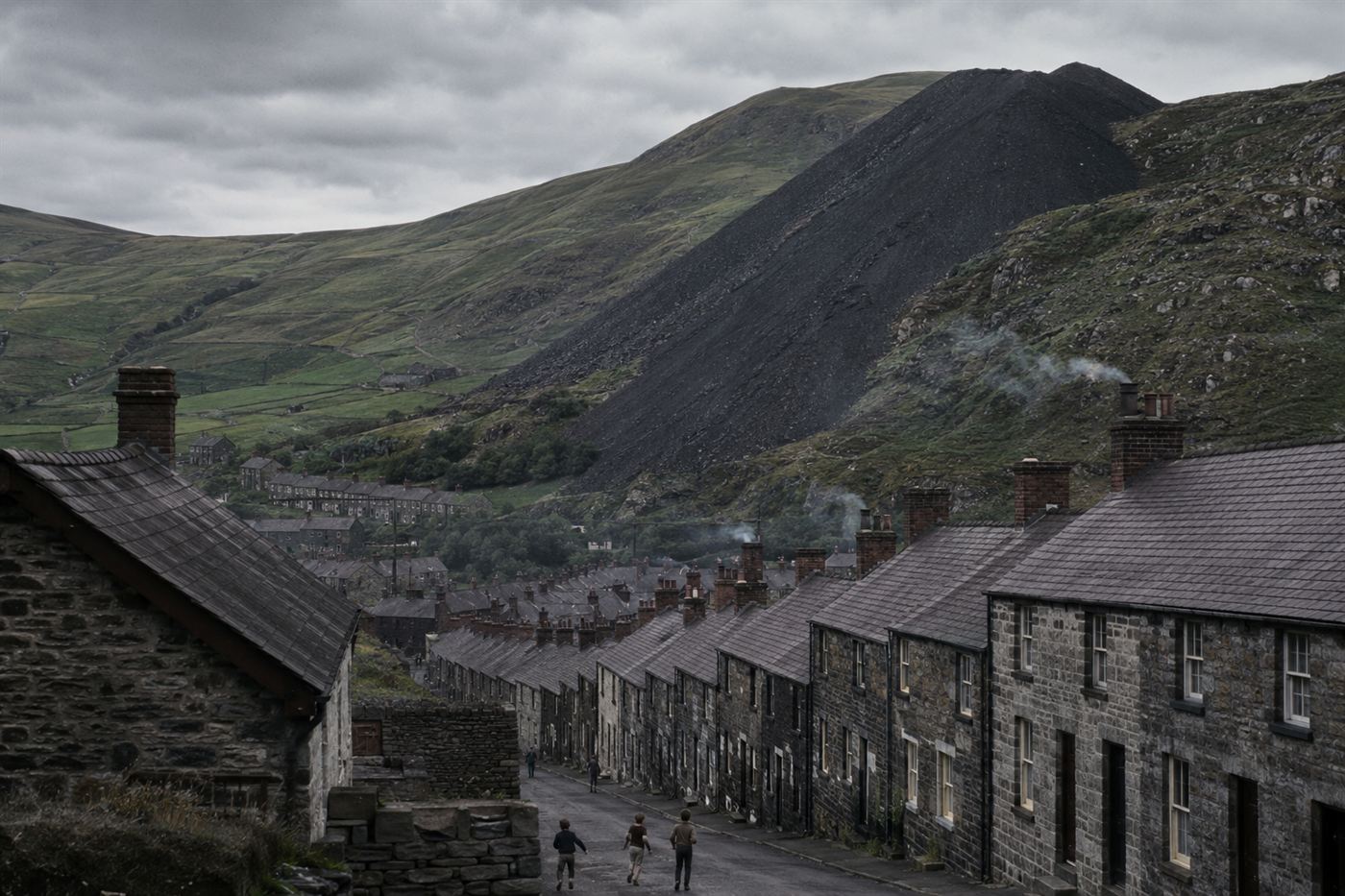 Residents of Aberfan warned for years that the coal tip above their village would kill someone. When it buried a school in 1966, the warning had been there for years. Nobody who gave the order to ignore it went to prison.
 In 1518, dozens of people in Strasbourg could not stop dancing and nobody could explain it. Some danced for days. Some died.
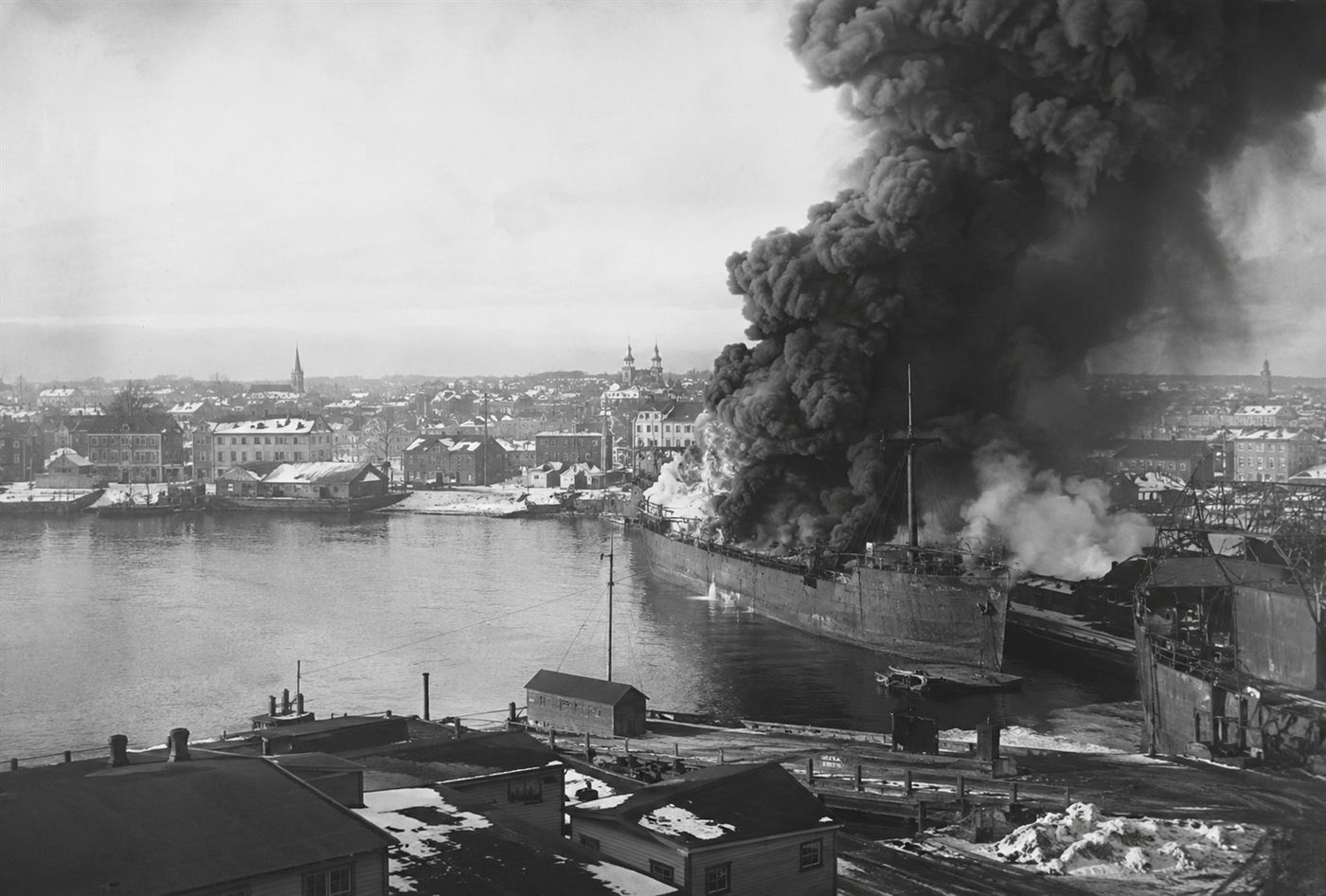 In 1917 a munitions ship caught fire in Halifax Harbour and a telegraph dispatcher stayed at his key to warn a passenger train. The explosion that killed him was the largest man-made blast the world had ever seen.
 One engineer invented leaded gasoline and CFCs, two of the most harmful substances in history, and remained confident he had done the world a service until he died.