An Icelandic town that lived off the planet's free heat had to flee when the ground tore open, and now engineers fight the lava with 14 kilometres of earth walls
For centuries the Reykjanes peninsula sat quiet, and the town of Grindavik lived comfortably beside the volcanic heat that powers half of Iceland. Then, in late 2023, the ground began to crack, the town emptied overnight, and the same fire that warmed people's homes started trying to bury them.
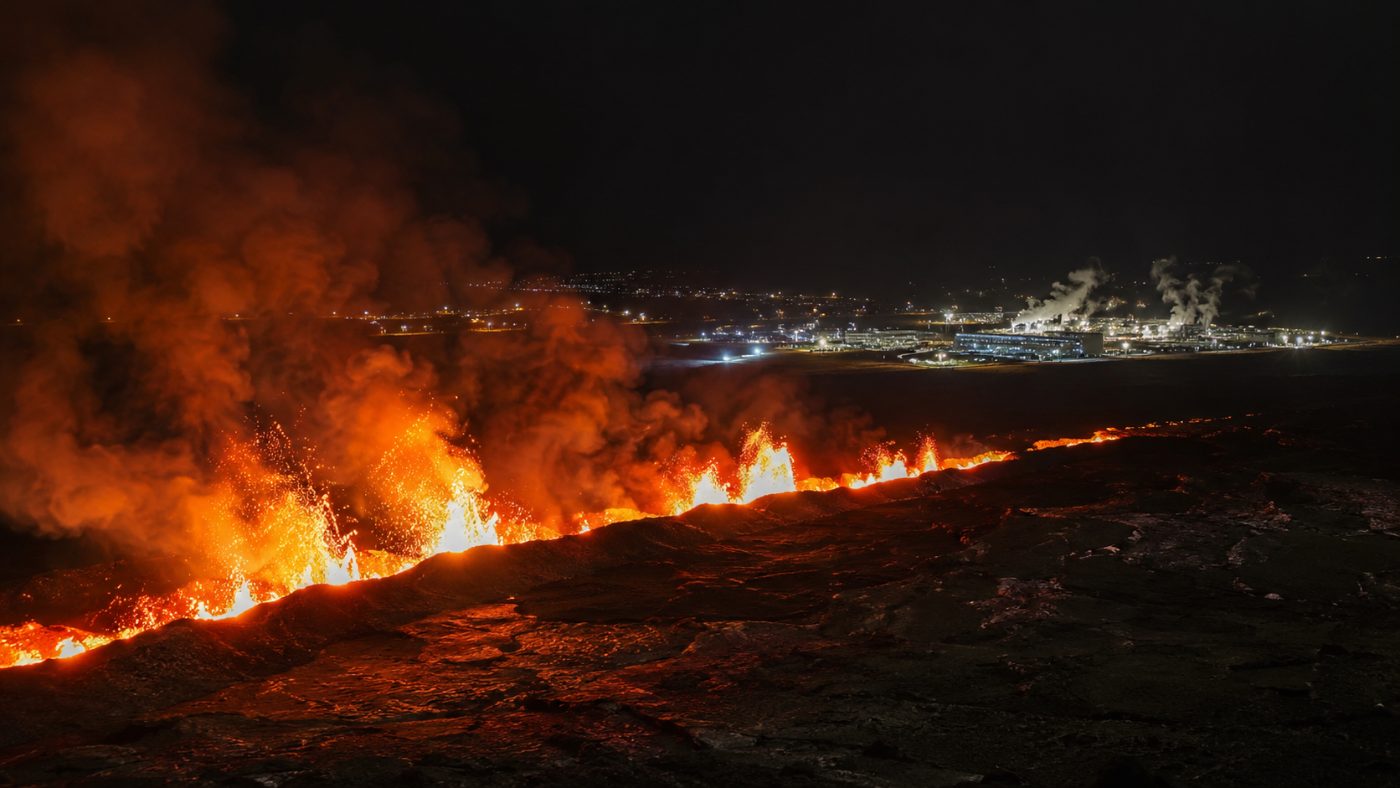
A fissure opens on the Reykjanes peninsula, the volcanic system that both heats and threatens the region. Illustration: Watts & Wild.
On the night of November 10, 2023, the 3,790 people of Grindavik were ordered out of their homes and told not to come back. Beneath their fishing town on the south-west tip of Iceland, a river of molten rock was forcing its way up through the crust, and the streets themselves were splitting open. They grabbed what they could and left in the dark, long before the Grindavik lava barriers existed to hold the fire back. Most of them have still not gone home.
What makes the story so cruel is what Grindavik lived on. Right beside the town stands Svartsengi, a geothermal power station that taps the very same volcanic heat to supply electricity and hot water to most of the Reykjanes peninsula. The peninsula had slept for some 800 years. Then, as Wikipedia records, the Sundhnukur eruption series began on December 18, 2023, and the ground has torn open again and again ever since.
The town the volcano emptied
The first sign was not lava but cracks. As magma pushed up into a long crack in the crust beneath Grindavik, the land buckled, and fissures ripped through roads, gardens and house foundations. When the eruptions came, the early ones opened just outside town, but on January 14, 2024 one broke through the defences at the edge of Grindavik and burned three houses to the ground.
Today Grindavik is a town in name more than in fact. Of nearly 3,800 residents, the number actually living there has fallen to around a hundred. The Icelandic government set up a public company, Thorkatla, to buy out the homes of anyone who wanted to leave, and it has purchased more than 950 of them, over 90 percent of the town, for tens of billions of kronur, giving the former owners three years to decide whether they ever want to come back.
The Grindavik lava barriers against a river of fire
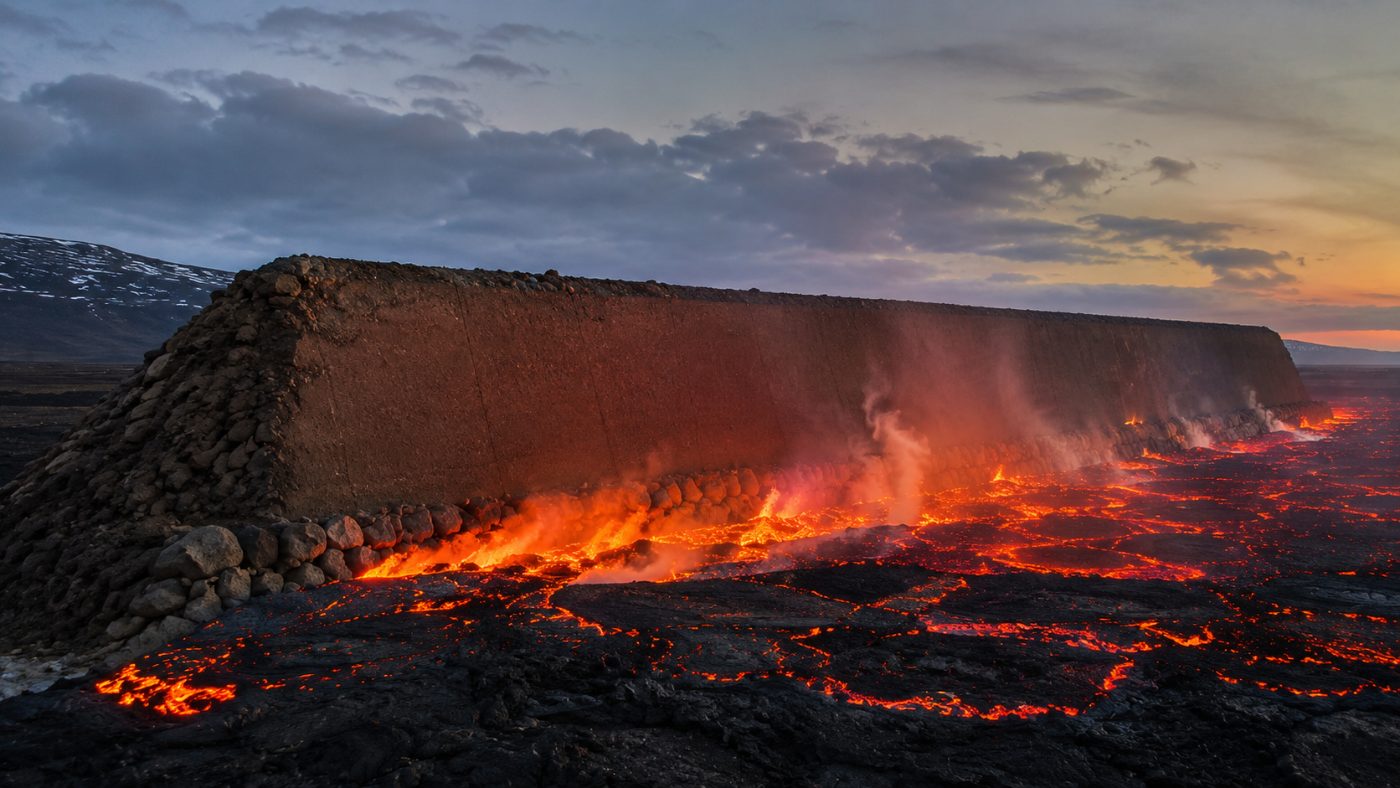
You cannot switch off a volcano, but you can try to steer it, and that is what Iceland chose to do. Crews brought in fleets of diggers and began piling up enormous barriers of earth and rock around the things they could not afford to lose: the town, the Blue Lagoon spa, and above all the Svartsengi plant. By late 2024 these walls ran for roughly 14 kilometres and rose as high as 25 metres.
The principle is simple and the execution is not. Lava is a fluid, so a high enough berm in the right place can channel a glowing flow away from a building and into empty ground. It does not always hold. As CNN reported during the May 2024 eruption, lava reached and in places spilled over the defensive walls, forcing engineers to race back and build them higher between eruptions. It is less a finished wall than a permanent construction site against the Earth.
When the heat went out
The cruel irony turned real on February 8, 2024. That day a lava flow cut straight across the hot-water pipeline running out of Svartsengi, and in the depth of an Icelandic winter the heating went off for the town of Keflavik and the area around the international airport. A region that had built its whole comfort on free, endless volcanic heat suddenly learned how thin that lifeline was.
The Svartsengi plant itself has been kept alive behind its wall, increasingly run from a distance with its staff pulled back for safety, pumping heat to the peninsula even as the lava laps at its defences. Keeping the power station running has become its own quiet feat of engineering, a machine working on top of an active volcano because too many homes depend on it to let it stop.
The honest catch: you cannot really beat a volcano
It would be easy to tell this as a triumph of engineering over nature, and that would be a lie. The barriers protect specific targets and buy precious time, but they do not stop the eruptions, and they can be overtopped, as the burned houses inside the defences proved. Grindavik was formally reopened to the public in October 2024, yet almost nobody moved back, because living on top of a rift that keeps splitting is a bet most people will not make.
The deeper problem is that nobody can say when it ends. The land around Svartsengi keeps swelling and sinking as magma refills the chamber below, and scientists warn this cycle of inflation and eruption could carry on for years, perhaps decades. The walls are a holding action against a process with no announced end. All Iceland can do is keep watching the ground, keep the diggers ready, and keep the heat flowing for as long as the volcano allows.
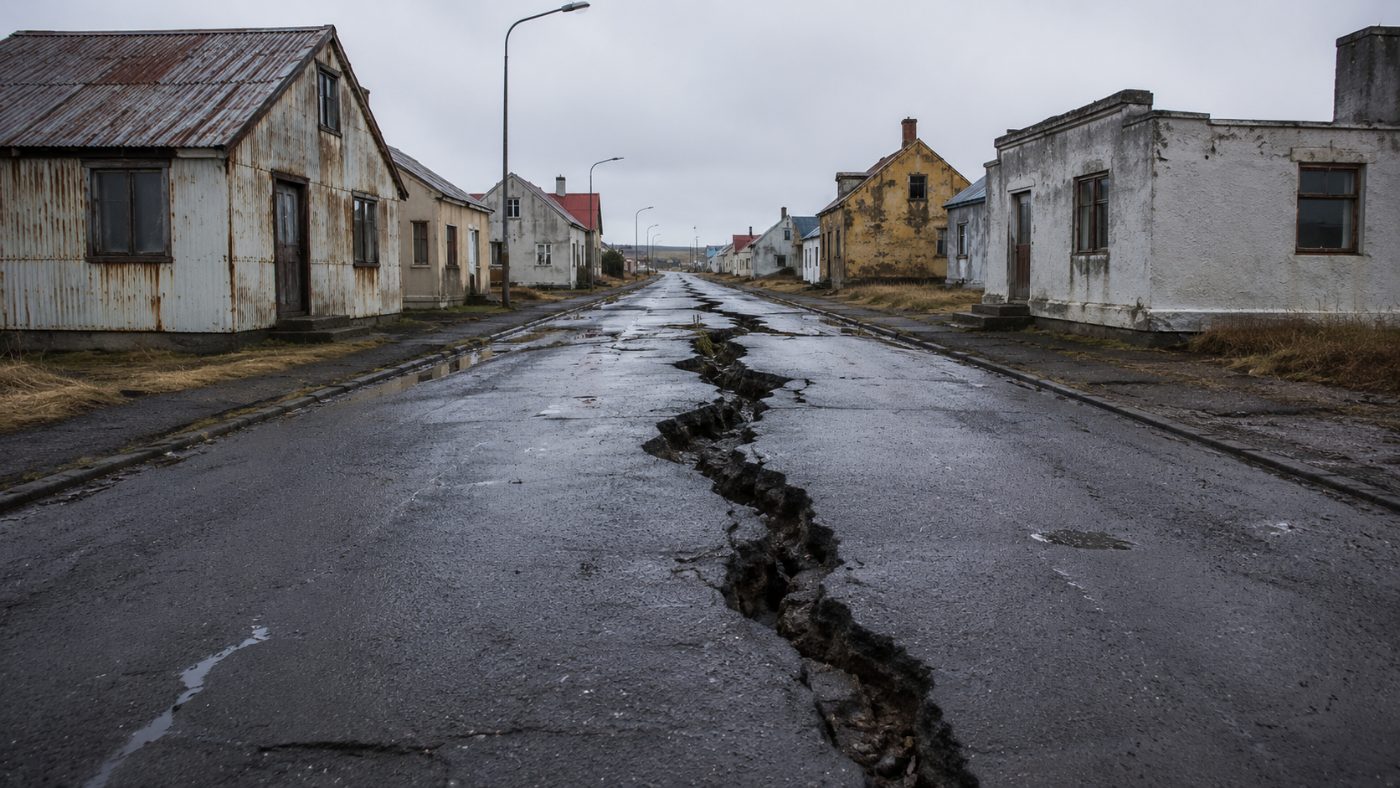
Grindavik is the sharpest reminder of a bargain Iceland has lived with for a thousand years: the same forces that heat your home for free can also take it away in a night. If the very thing that powered your town turned on it, would you take the buyout and leave for good, or wait behind the walls for the ground to settle? Tell us what you think in the comments.
Related reading: Fervo's Cape Station in Utah is on track to send its first 100 MW of 24/7 geothermal power to the grid in late 2026, scaling to 500 MW by 2028.