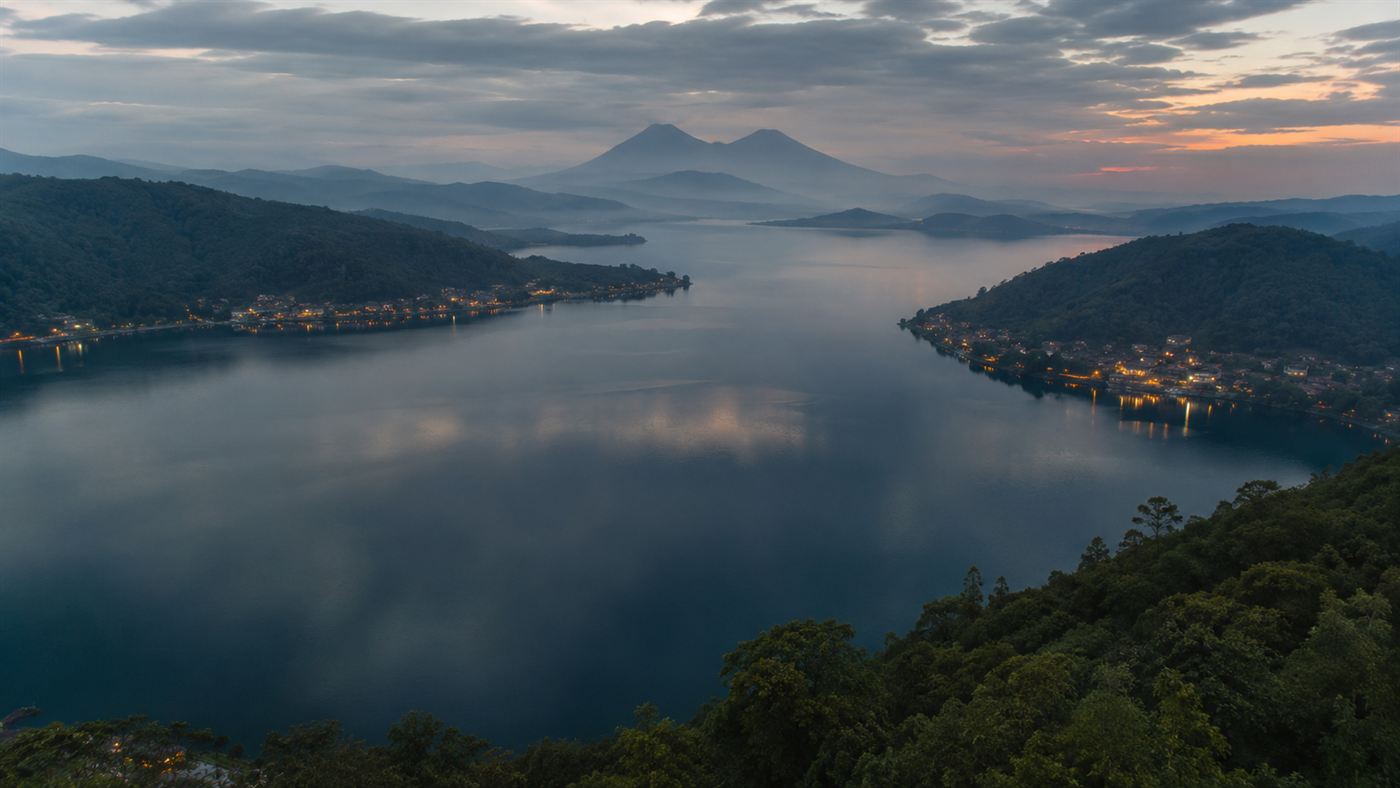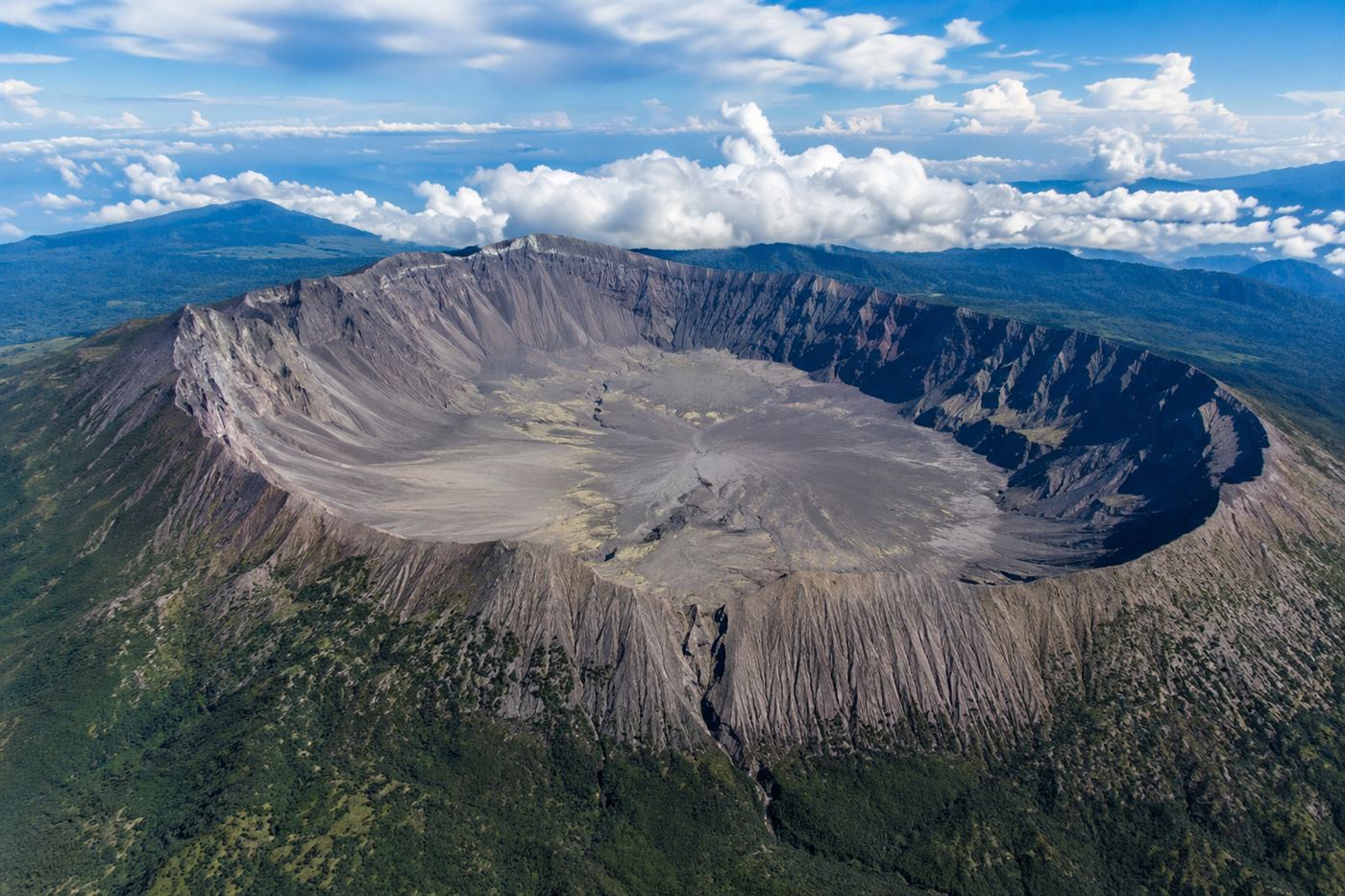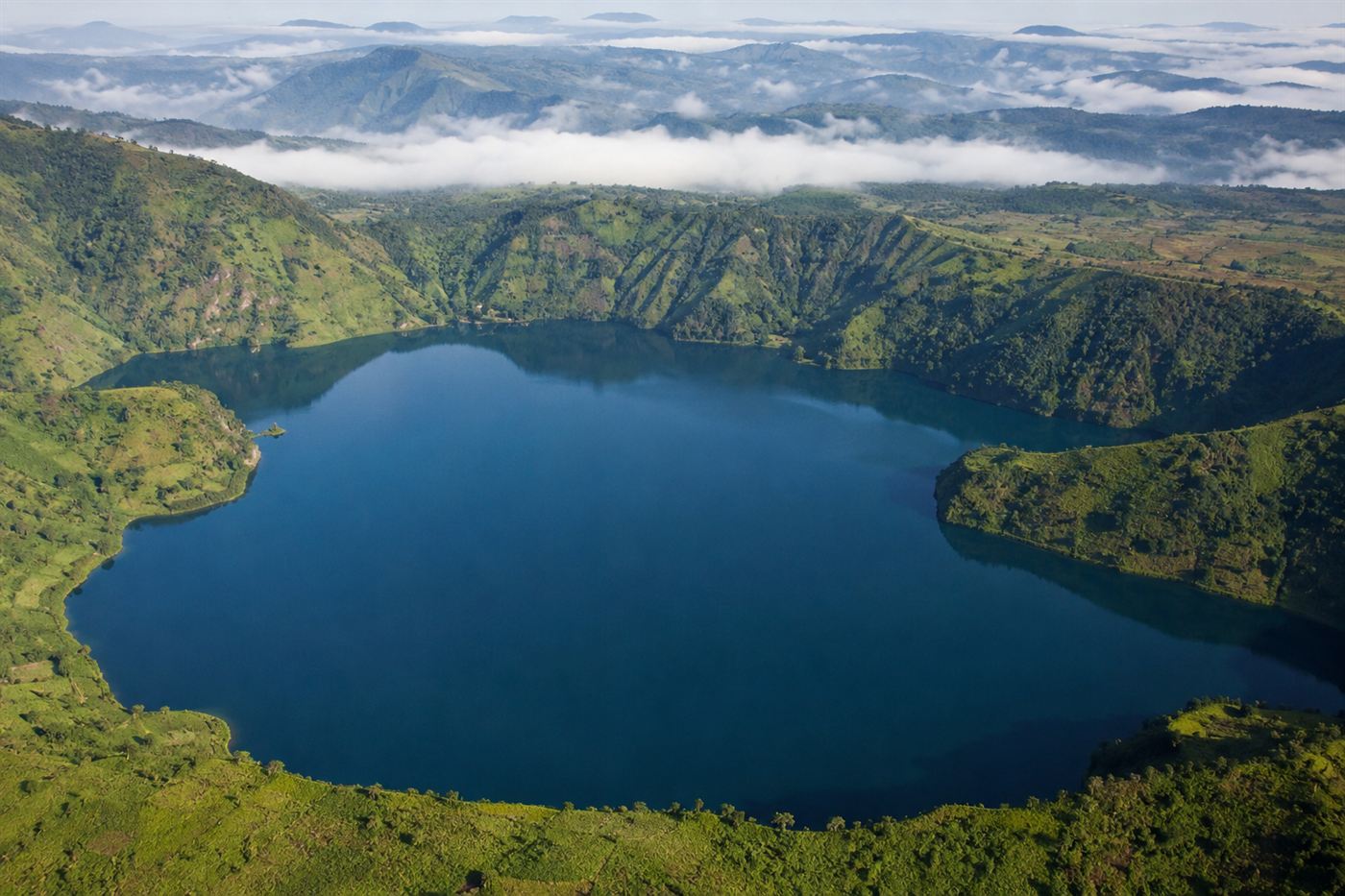
The Lake Nyos disaster unfolded at a place few people had ever heard of. Lake Nyos sits in the Oku Volcanic Field in the highlands of northwestern Cameroon, about 315 kilometres north of Yaoundé. It is a deep crater lake, formed in the caldera of an ancient volcano whose magma chambers still release carbon dioxide through cracks in the lake bed. For most of its history, that gas dissolved into the cold, high-pressure water near the bottom without incident. In the summer of 1986, that balance ended.
On the night of August 21, 1986, something at the bottom of Lake Nyos disturbed the deep, gas-saturated water. Water from the depths, supersaturated with dissolved carbon dioxide under immense pressure, suddenly rose. As it moved upward and the pressure dropped, the CO2 came out of solution all at once, the way a shaken bottle releases gas when the cap is loosened. In seconds, Lake Nyos belched more than a cubic kilometre of carbon dioxide into the night air.
Lake Nyos is a volcanic crater lake in northwestern Cameroon. On August 21, 1986, a limnic eruption released more than a cubic kilometre of carbon dioxide from its depths. The CO2 cloud, denser than air, flowed down into surrounding valleys at close to 50 miles per hour and suffocated 1,746 people and 3,500 livestock before dawn.
What caused Lake Nyos to release carbon dioxide in 1986?
Lake Nyos sits above an active volcanic hotspot.
For decades, magmatic venting at the lake bed had pumped carbon dioxide into the deepest water, where cold temperatures and high pressure kept it dissolved and stable.
The lake was stratified, with cold, gas-rich water at the bottom and warmer water above, the two layers rarely mixing.
Scientists call this type of lake meromictic.
That stratification was the locked lid on the situation.
According to research published after the Lake Nyos disaster, the probable trigger on August 21, 1986, was a small landslide or a localised volcanic tremor on the lake floor.
As deep water rose, the pressure that kept the carbon dioxide dissolved dropped.
The CO2 came out of solution in a chain reaction, driving more gas-laden water upward, which released more gas, in a process that accelerated until the entire deep layer had erupted at once.
The phenomenon is called a limnic eruption, from the Greek word for lake.
It had never been observed on this scale before.
A limnic eruption produces no heat, no lava, no flame, and no visible warning of any kind.
The lake simply exhaled.
The carbon dioxide that poured out of Lake Nyos was colourless, odourless at most concentrations, and heavier than air.
It flowed downhill, following the contours of the valleys below the lake like water.
What did the carbon dioxide cloud do to the villages below Lake Nyos?
The CO2 cloud rolled down from Lake Nyos through the valleys at an estimated 45 to 80 kilometres per hour.
Carbon dioxide has no smell and no colour.
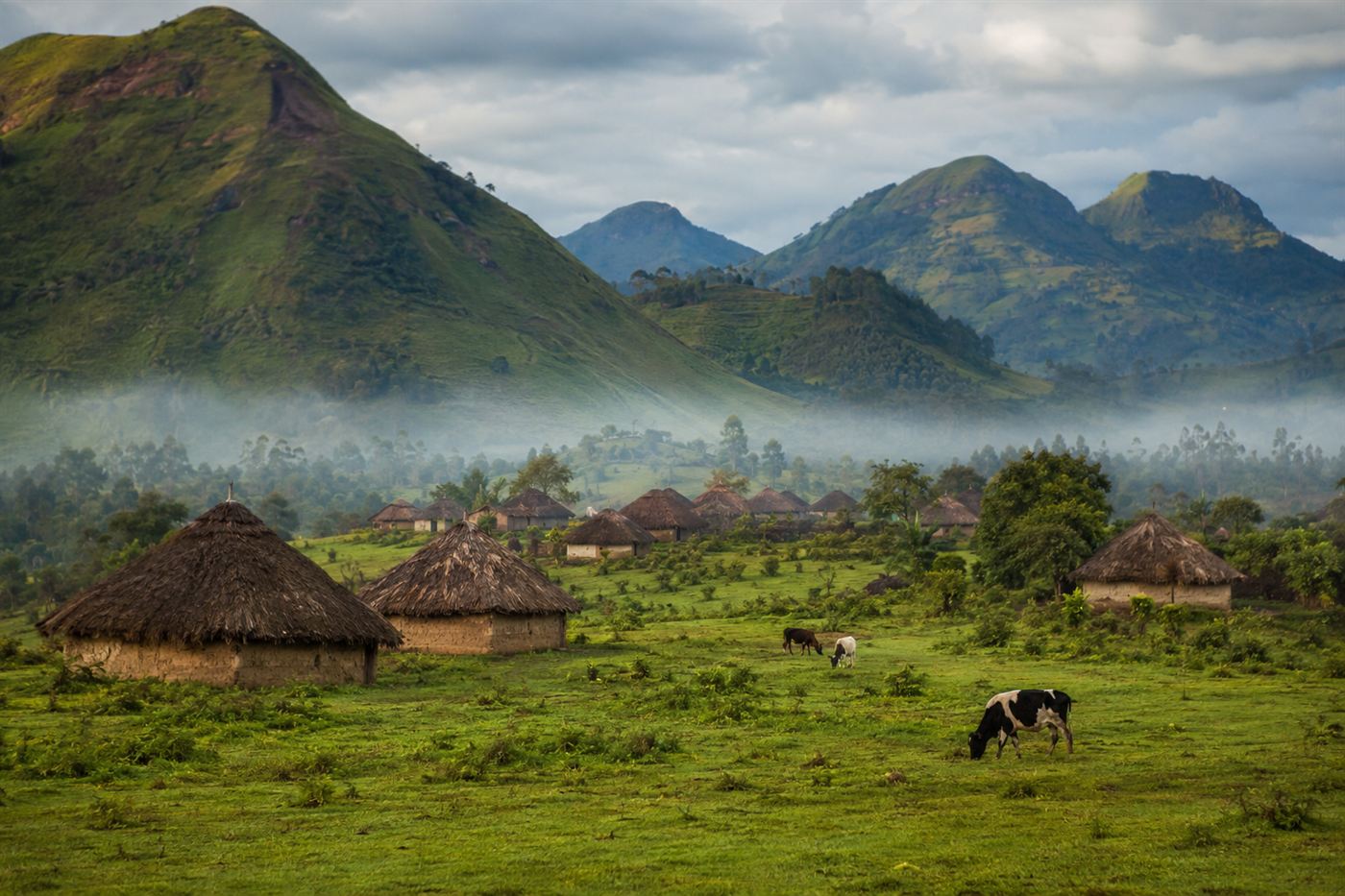
The people sleeping in the villages of Nyos, Kam, Cha, and Subum in northwestern Cameroon had no warning.
At concentrations above roughly fifteen percent of the air, carbon dioxide displaces enough oxygen to cause unconsciousness within seconds.
The cloud that rolled down from Lake Nyos was far above that threshold.
The villages closest to the lake, Nyos and Cha, lost nearly their entire populations.
Of approximately 800 people in the village of Nyos, fewer than 30 survived.
In the fields and tracks between villages, cattle, goats, dogs, and birds were found dead where they stood.
There were no injured.
At these concentrations of carbon dioxide, you either survived by being above the cloud or you did not.
A Cameroonian soldier who arrived the following morning described driving through the valley past dead cattle on both sides of the road and then through completely silent villages with bodies in the houses, in the yards, and on the paths.
Nothing moved.
The CO2 cloud from Lake Nyos killed 1,746 people and 3,500 livestock before it dispersed.
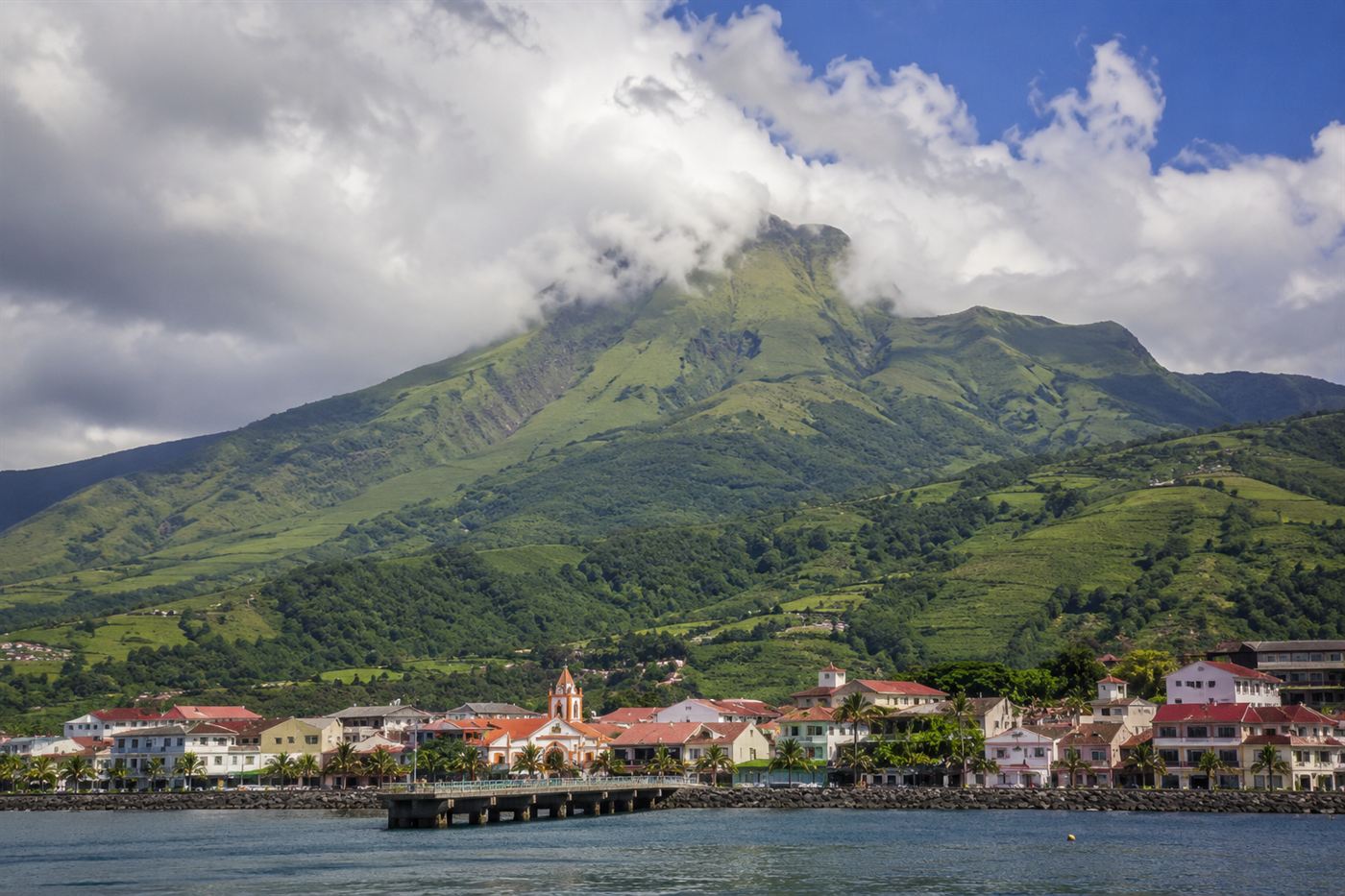
It also mirrored the silent destruction that invisible volcanic clouds had brought in other settings, like the pyroclastic surge that killed 30,000 people at Saint-Pierre, Martinique, in 1902, though that disaster came with heat and light and a roar that people heard coming.
Lake Nyos offered nothing visible at all.
Who survived the Lake Nyos disaster and what did they find?
Joseph Nkwain was one of the few survivors in the hardest-hit zone near Lake Nyos.
He woke during the night feeling a warm sensation and smelling something like gunpowder, likely hydrogen sulphide mixed into the gas release.
He tried to stand and fell.
When he regained consciousness the following morning, his family and all his neighbours were dead.
He was among fewer than thirty people to survive in the village of Nyos itself.
Survivors in outlying areas described waking to find livestock dead overnight and family members collapsed around them.
There was no sign of struggle or pain in any of the bodies, because asphyxiation from carbon dioxide at high concentration causes unconsciousness before any sensation of suffocation.
The same silent mechanism had killed thousands in Bhopal just two years earlier, when a different industrial gas crept through sleeping neighbourhoods in India, though that disaster was the result of human negligence, where Lake Nyos was geology acting alone.
Cameroonian authorities declared the area around Lake Nyos a disaster zone.
Relief workers faced mass graves impossible to dig in time: 1,746 dead across multiple remote highland villages, with continuing fear of another limnic eruption, meant that many of the dead were buried in communal pits or left in their homes.
The survivors were relocated to government shelters and, eventually, to resettlement sites.
Many have never been allowed to return.
The land around Lake Nyos remained under a displacement order for years.
Some survivors returned anyway, illegally, because they had nowhere else to go and because their farms were there.
Had Cameroon seen a limnic eruption before Lake Nyos?
Two years before the Lake Nyos disaster, on August 15, 1984, a smaller lake in Cameroon had done the same thing.
Lake Monoun, about 95 kilometres from Lake Nyos, also sits above volcanic venting in the same Oku Volcanic Field.
Its limnic eruption killed 37 people.
The Cameroonian government initially attributed the deaths to a chemical truck accident.
Some officials suggested a terrorist attack.
The idea that a lake could erupt in carbon dioxide was not part of any known disaster framework at the time.
A team of scientists, including geologist Haraldur Sigurdsson, investigated Lake Monoun and correctly identified what had happened: a degassing event driven by CO2 supersaturation at the lake's bottom.
Their findings were published in scientific literature but did not reach policymakers in time.
There were no monitoring systems installed on Lake Nyos after Lake Monoun.
There was no evacuation plan.
The 37 deaths at Lake Monoun were treated as unusual and local.
When Lake Nyos erupted two years later, killing forty-seven times as many people, the world discovered that limnic eruption was a predictable hazard of crater lakes above volcanic systems, and it had been sitting unaddressed in Cameroon for years.
Lake Monoun is, in retrospect, the warning that Lake Nyos validated.
How are scientists trying to prevent another Lake Nyos disaster?
The solution to a limnic eruption is, in principle, straightforward: remove the carbon dioxide before it can accumulate to dangerous levels.
A team led by French scientist Michel Halbwachs installed the first degassing pipe at Lake Nyos in 1990, four years after the disaster.
The principle is simple.
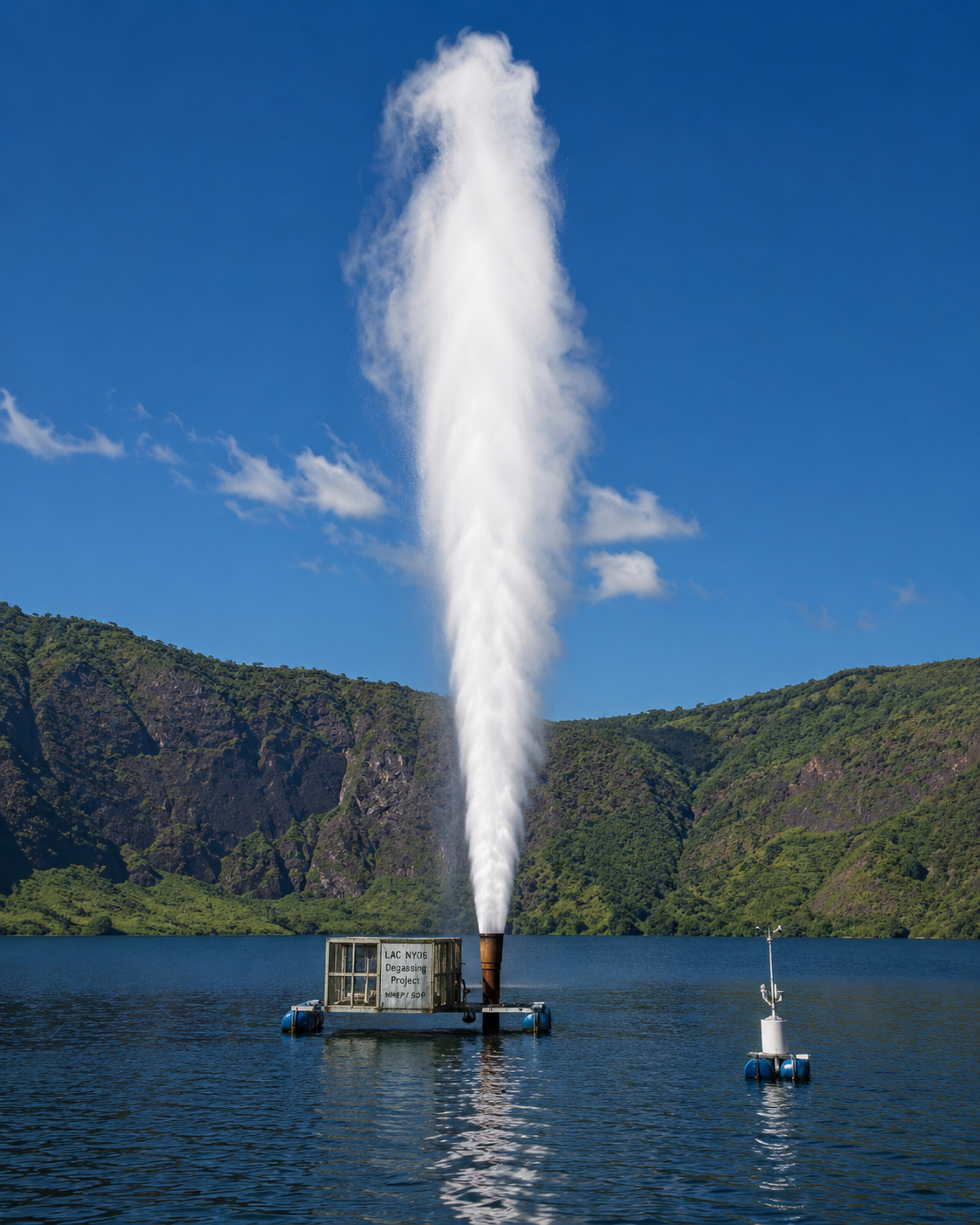
A degassing pipe runs from the lake surface down into the gas-saturated deep water.
The high pressure at depth drives the water up through the pipe.
As it rises and the pressure drops, the dissolved carbon dioxide comes out of solution and is released at the surface as a harmless plume of gas and water, rather than in a catastrophic eruption.
The first degassing pipe worked.
A thirty-metre fountain of water and carbon dioxide rose from the surface of Lake Nyos, the gas dispersing safely into the atmosphere above.
A second degassing pipe was added in 2001.
By 2011, three more had been installed, and by 2020, six degassing pipes were operating at Lake Nyos, collectively removing more CO2 each year than the volcanic venting adds to the lake's bottom.
CO2 concentrations at depth have been falling, slowly but measurably, year by year.
Lake Monoun also received degassing infrastructure in 2003.
The same approach is being studied for Lake Kivu on the Congo-Rwanda border, which holds approximately 300 times more dissolved gas than Lake Nyos and sits next to roughly two million people.
Rwanda has taken a different approach to Kivu, extracting the methane and carbon dioxide to generate electricity, currently about 26 megawatts, while simultaneously reducing the eruption risk.
The honest catch
The degassing pipes at Lake Nyos are working, but slowly.
At current rates, it will take decades to bring carbon dioxide concentrations down to safe levels throughout the entire water column.
Maintenance of the degassing pipes depends on international funding that has not always been consistent.
A lapse in maintenance could allow CO2 to accumulate again, and the lake has no early-warning monitoring system capable of alerting downstream villages before a limnic eruption begins.
The people who lived in the valley below Lake Nyos before 1986 have still not been allowed to return to their original villages.
Some returned illegally because they have no legal title to land anywhere else.
The Cameroonian government has been slow to formalise resettlement rights or compensate families who lost everything in a single night.
And Lake Nyos is not the most dangerous lake in the system.
Lake Kivu, on the Congo-Rwanda border, contains roughly 300 times the dissolved CO2 of Lake Nyos along with 60 cubic kilometres of dissolved methane.
A limnic eruption there, triggered by activity from nearby Mount Nyiragongo, could suffocate millions.
The Chernobyl exclusion zone shows that natural systems can recover from large-scale disaster, but only once the hazard has been removed.
At Lake Kivu, the hazard has not been removed.
Rwanda's methane extraction programme is a start, but Kivu holds far more dissolved gas than any current degassing rate can safely drain.
The world learned what a limnic eruption could do in 1984 at Lake Monoun.
It learned again, at scale, in 1986 at Lake Nyos.
The next lesson, if it comes, may not be in a remote valley with 1,746 people.
It may be on a populated lakeshore with two million.
Sources
The carbon dioxide is still down there, slowly being drawn out through six pipes. What do you think the world owes the survivors who never went home?