A drill in Iceland hit magma by accident, and the steam that roared back was the hottest ever tapped
In 2009 a drilling rig at Krafla in Iceland was hunting for hot water when it punched into a pocket of magma two kilometres down. Rather than a catastrophe, the Krafla magma well handed engineers the most powerful geothermal steam ever recorded, and a wild new idea about drilling into volcanoes on purpose.
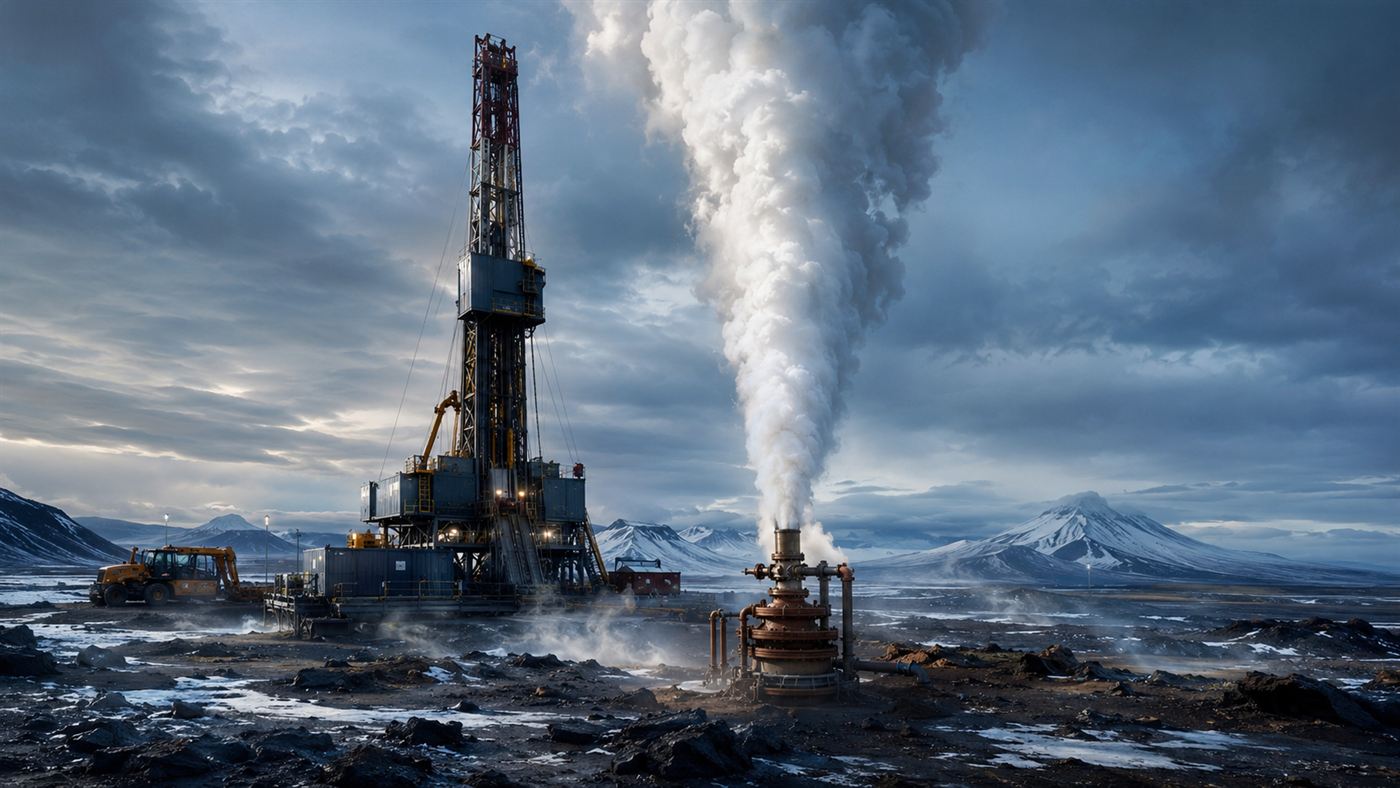
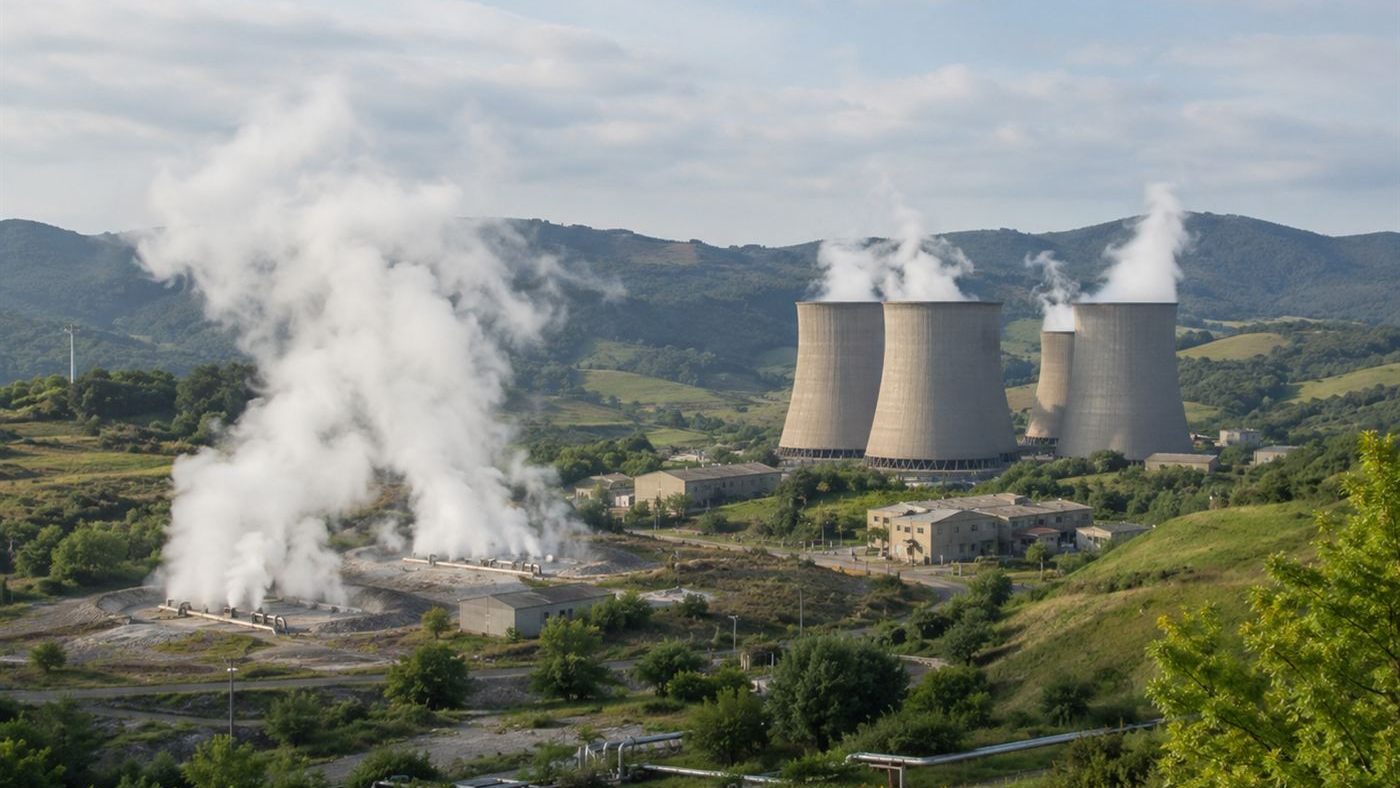
The Krafla well sent up a roaring plume of superheated steam. Illustration: Watts & Wild.
Most of the time, when a drill bites into something it was not expecting, the day ends badly.
At a volcano in the north of Iceland, the surprise turned out to be the best thing that could have happened.
What happened at the Krafla magma well? In 2009, a deep borehole at Krafla in Iceland accidentally drilled straight into a chamber of magma about two kilometres underground. The molten rock superheated the well to around 450 degrees Celsius, producing the hottest and most powerful geothermal steam ever recorded from a borehole.
How the Krafla magma well found molten rock
The Iceland Deep Drilling Project set out to reach deep, super-hot geothermal fluid that could power far stronger wells than usual.
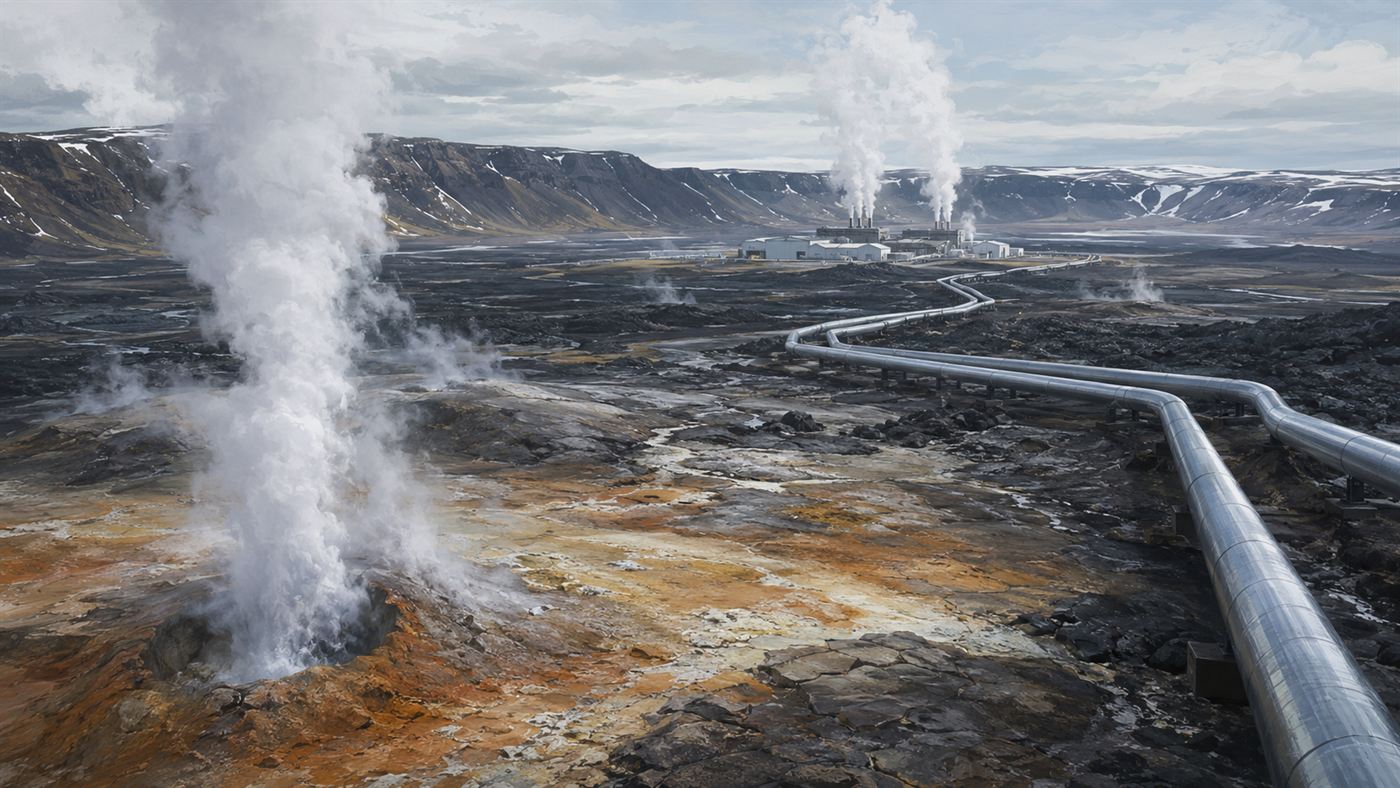
Its first borehole was sunk at Krafla, a volcanic system in the northeast of Iceland that already hosts a working geothermal power station.
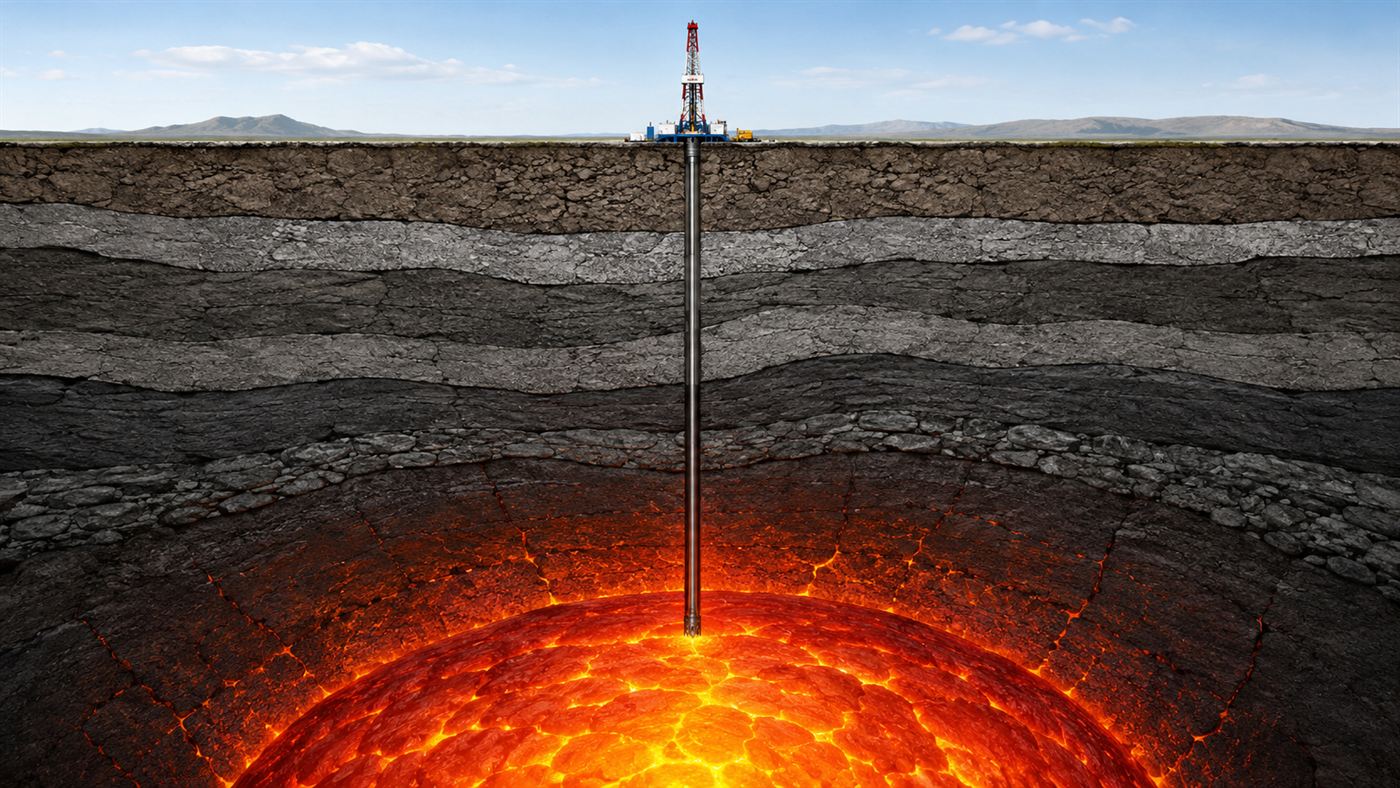
At around two kilometres down, the drill suddenly stopped making the progress the engineers expected.
It had run into a pocket of magma, molten rock at roughly 900 degrees Celsius, far shallower than anyone had planned for.
Instead of writing the well off, the team decided to see what this accidental brush with the planet's furnace could do.
Why hitting molten rock was good news
The rock around that molten pocket was blisteringly hot, and that heat is exactly what a geothermal plant wants.
The well produced superheated steam at about 450 degrees Celsius, the hottest geothermal steam ever measured from a borehole.
That single well was judged capable of generating roughly ten times the power of a normal geothermal well on the same field.
Hotter, higher-pressure steam carries far more energy, so one such well could in theory do the work of a small cluster of ordinary ones.
For an island that already runs largely on geothermal and hydro power, that was a tantalising glimpse of a much bigger prize.
What magma actually is
Drillers usually treat molten rock as the one thing to stay well clear of.
Magma is molten or partly molten rock stored beneath the surface, the same material that erupts from a volcano as lava.
It sits far deeper than most boreholes ever reach, which is why striking it at two kilometres was such a shock.
Getting so close to that heat is what makes the steam so ferociously energetic, and so difficult to handle.
The trick is to borrow the warmth radiating from the melt without letting the molten rock wreck the well.
Drilling into a volcano on purpose
The accident was so promising that scientists now want to repeat it deliberately.
A project called the Krafla Magma Testbed plans to drill back into the same molten pocket, this time by design.
The goal is twofold, to study such a chamber directly for the first time and to test whether that near-molten heat can be turned into reliable power.
Sensors lowered toward the molten rock could also transform how we forecast eruptions, reading a volcano from the inside rather than the surface.
If it works, the same heat that makes a volcano dangerous could quietly become one of the cleanest power sources on Earth.
The honest catch
It is worth holding the excitement at arm's length for a moment.
The original well never settled into steady service, because the superheated steam was fiercely corrosive and chewed at the equipment until the well was eventually shut and plugged.
Deliberately drilling into magma has never been done, and the testbed is still a future experiment rather than a working power plant.
Hitting the melt the first time was luck, and doing it safely and repeatably is the entire engineering challenge.
Stripped of the hype, what remains is genuinely exciting, a chance to tap the heat of a volcano at its source, if the materials and the nerve can be found.
Krafla is a reminder that the line between hazard and resource is often just a question of engineering.
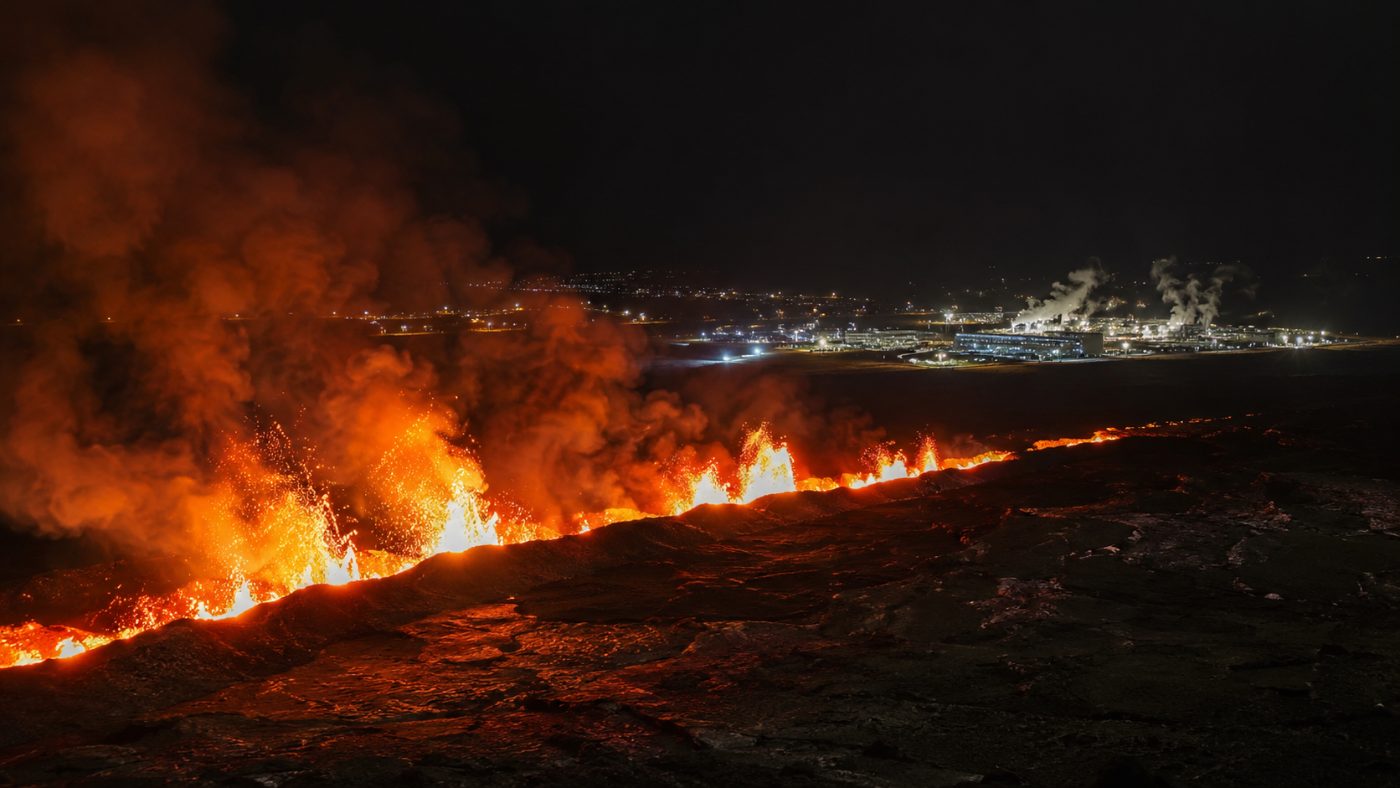
It belongs with the other places where people have learned to live alongside a restless Earth, from the Icelandic town holding back lava with walls to the new wells coaxing power from hot dry rock.
If a drill can stumble into magma and come back with the hottest steam on record, should we be racing to plug straight into the heat of a volcano, or is some heat best left where it is? Tell us in the comments.