A perfectly seaworthy ship was found drifting in the Atlantic in 1872 with its cargo intact and all ten people aboard gone without a trace
She was sailing along quite happily, under sail, in no danger of sinking, with months of food in her stores and a valuable cargo untouched in her hold. The only thing wrong with the Mary Celeste was that there was nobody on her. Her captain, his wife, their baby daughter and the crew had simply vanished, and more than 150 years later we still do not know why.
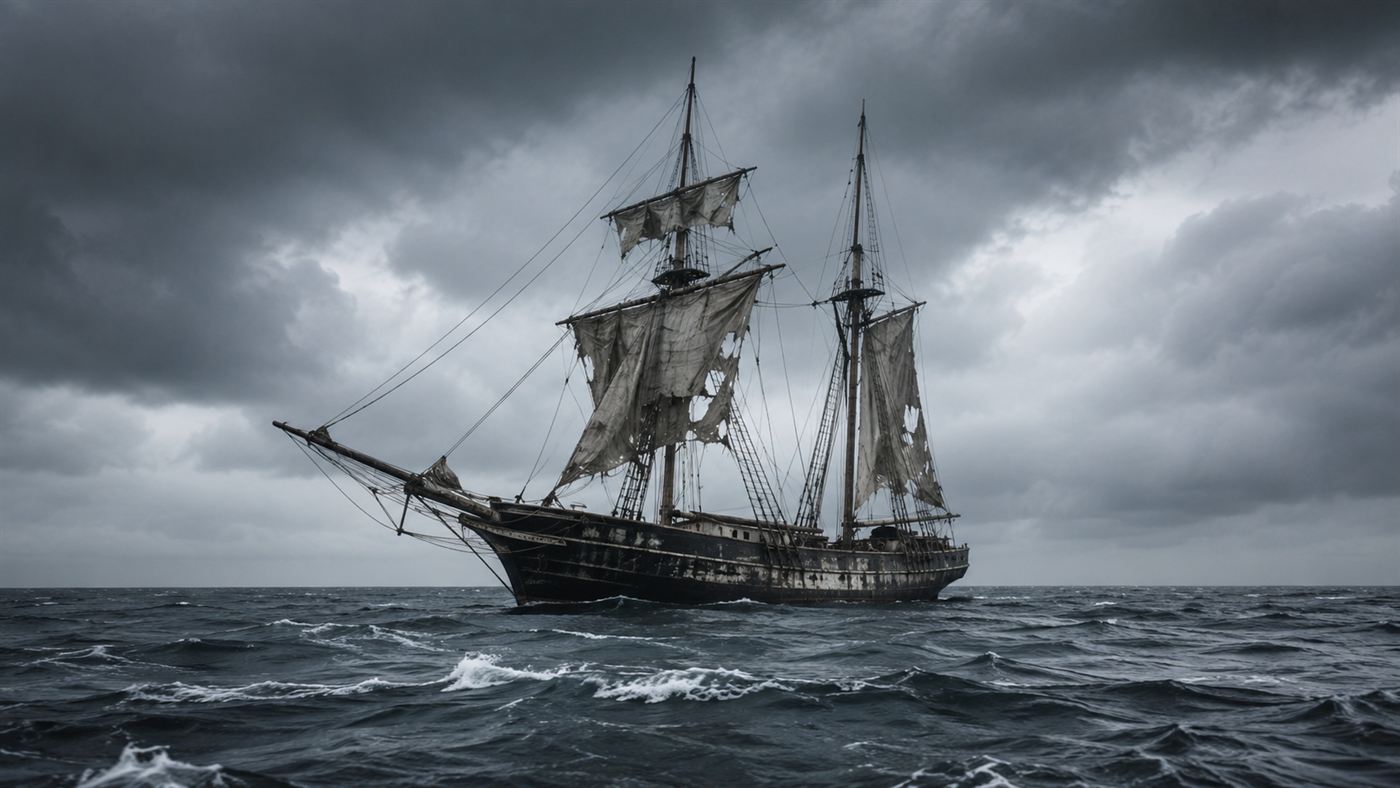
The Mary Celeste, found sailing the Atlantic with no one aboard. Illustration: Watts & Wild.
The ship had left New York on 7 November 1872, bound for Genoa with around 1,700 barrels of industrial alcohol. In command was Benjamin Briggs, a steady, experienced and famously sober captain, who had brought along his wife Sarah and their two-year-old daughter Sophia, plus a crew of seven. Ten people in all set out across the winter Atlantic.
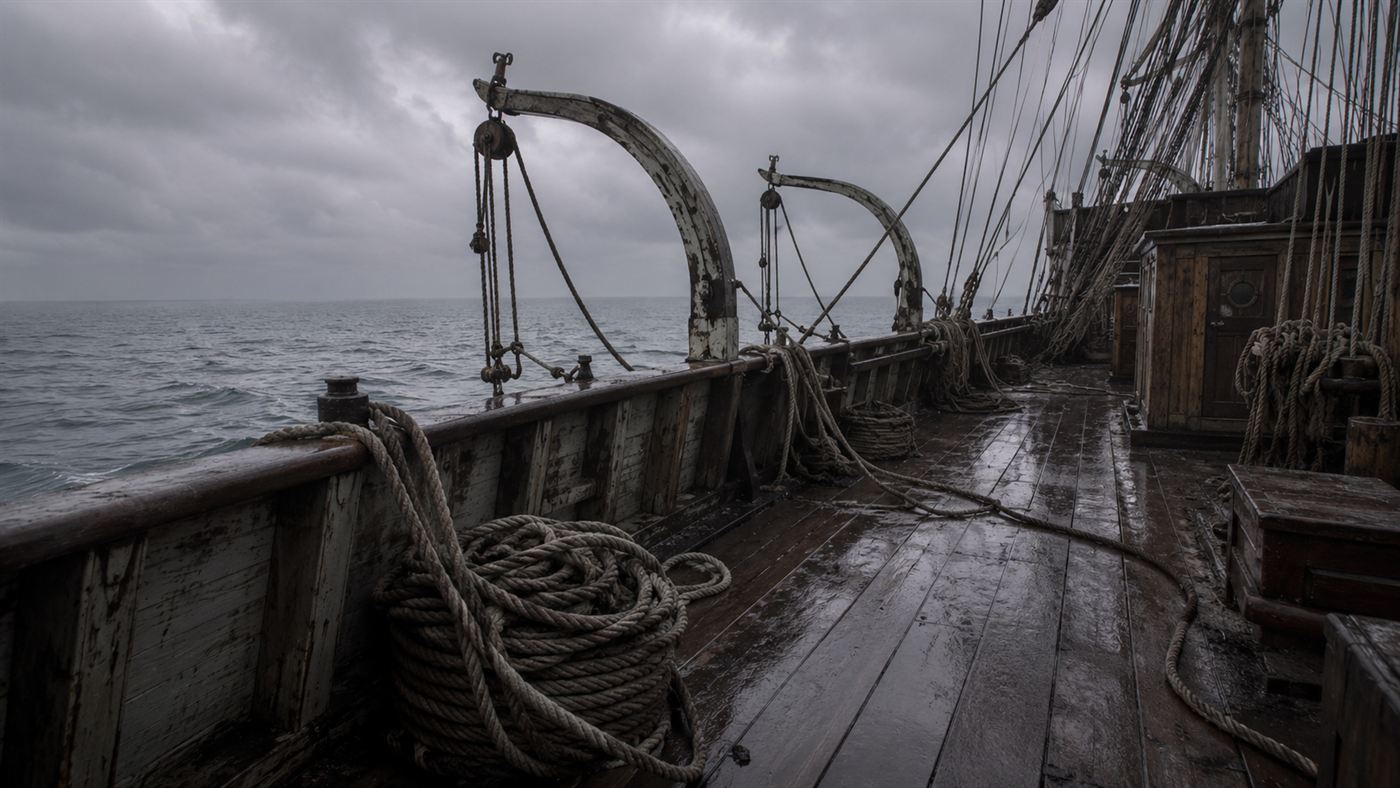
Nearly a month later, on 4 December, another ship called the Dei Gratia spotted her drifting strangely some 400 miles off the Azores. When a boarding party climbed aboard, they found a riddle. The Mary Celeste was wet and untidy but entirely seaworthy, still carrying full sail in places. The cargo was almost all there, the crew's pipes and personal things lay where they had been left, and there was no sign of violence. There was just no one alive or dead to be found.
What the boarders found on the Mary Celeste
The details only deepened the puzzle. The last entry in the ship's log was dated 25 November, more than a week before she was found, and it recorded nothing alarming. There was plenty of drinking water and food. Most tellingly, the single lifeboat was gone, and it looked as though it had been launched on purpose rather than torn away, with a rope left trailing from the ship.
That one clue reframes everything. People do not lower a lifeboat from a sound ship for no reason. As Smithsonian magazine has laid out, whatever happened, the ten aboard chose to get off a vessel that was in no obvious danger of sinking, and then never made it back.
The wild theories, and the likely truth
Over the years the empty ship attracted every story imaginable: a giant squid plucking the crew off one by one, pirates, mutiny, a sea monster, a freak waterspout, even ghosts. As History.com recounts, a salvage court in Gibraltar went the other way and darkly suspected insurance fraud or murder, though it could prove nothing. None of these hold up well against a ship found neat, valuable and undamaged.
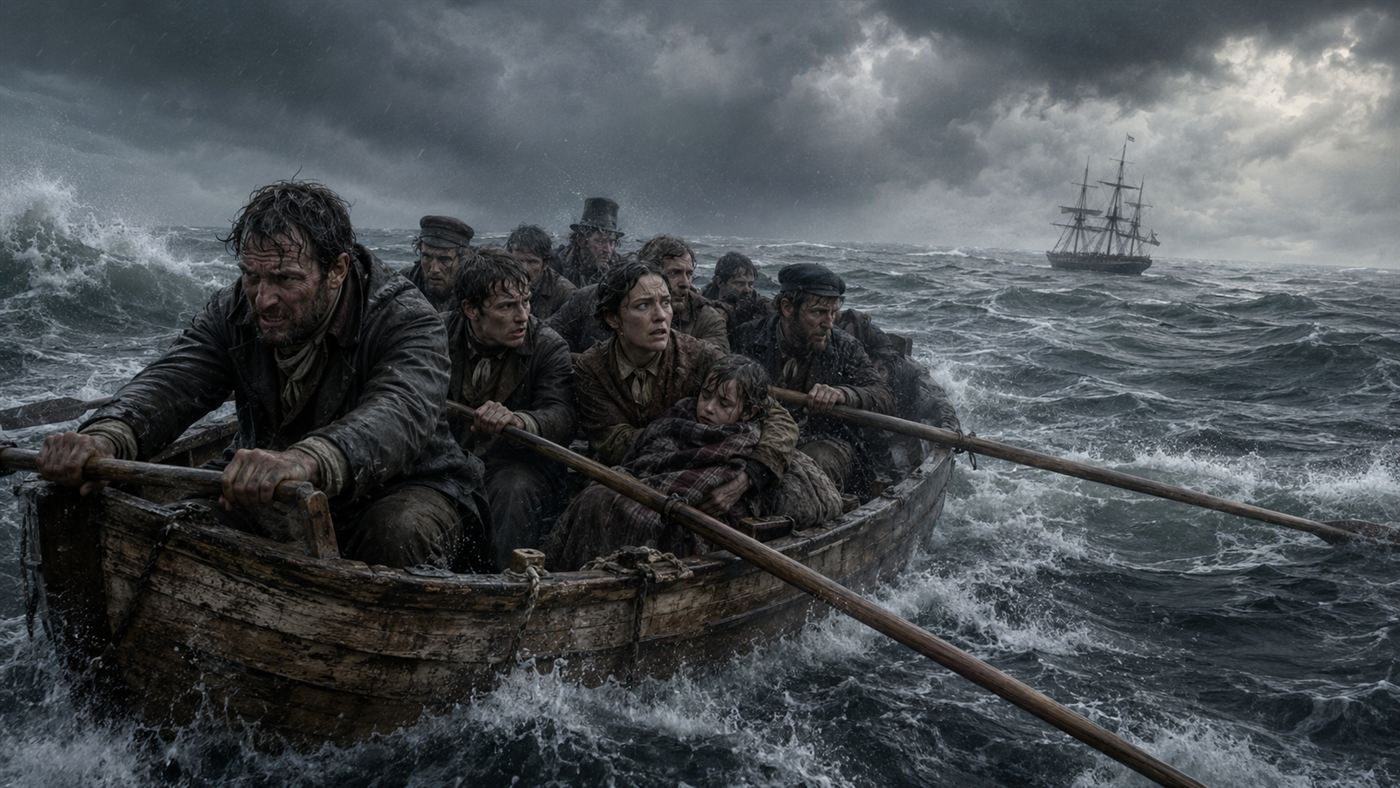
The explanation most experts now favour is quieter and sadder. Several of the alcohol barrels had leaked, and a sudden noise or a venting of fumes may have convinced Briggs that his cargo was about to explode. Faced with that, a careful captain might do exactly what the evidence suggests: bundle everyone into the lifeboat, tie it to the ship with a long rope, and wait at a safe distance for the danger to pass. If that rope then broke, or the wind filled the sails and carried the ship away faster than a rowing boat could follow, the ten of them would have been left adrift in the open Atlantic with no way back.
What happened to the crew of the Mary Celeste?
The truthful answer is that no one knows, because not one of the ten was ever found. The best reconstruction is that they abandoned ship in a moment of fear, expecting to reboard, and were then separated from their own vessel and lost at sea. It is not a satisfying ending, but it fits what was actually on the ship far better than any monster or mutiny does.
The honest catch
A lot of what people "remember" about the Mary Celeste never happened. The famous images of meals still warm on the table, a half-drunk cup of tea, a pipe still smoking, come not from any record but from a short story Arthur Conan Doyle published in 1884, twelve years after the event. He even spelled the ship's name wrong, as the "Marie Celeste," and that misspelling and his invented details stuck so hard that they are now part of the legend. The real ship was strange enough without them: seaworthy, abandoned, its people gone. The honest position is simply that we have a very good guess and no proof, and that the most haunting thing about the Mary Celeste is not a sea monster but the ordinary human panic that probably emptied her. Some true stories of the sea need no invention at all, like the schoolteacher who really did ride a barrel over Niagara Falls and live.
A sound ship, a vanished family and crew, and a legend mostly invented after the fact. Do you buy the panicked-lifeboat explanation for the Mary Celeste, or does the empty ship still keep its secret for you? Tell us what you think in the comments.
Related reading: Another vanishing the sea never explained, the three lighthouse keepers who disappeared in 1900, or D.B. Cooper, the hijacker who parachuted into a storm in 1971 and was never seen again.
More from Watts & Wild
 The Himalayan lake full of skeletons
 The lighthouse keepers who vanished in 1900
 The man who survived an iron bar through his brain
 The 1908 blast that flattened a Siberian forest
 The impossible lighthouse on a drowning reef
 Krakatoa made the loudest sound in history
 The stewardess who survived all three doomed liners