A 63-year-old schoolteacher, broke and afraid of the poorhouse, climbed into a padded barrel and went over Niagara Falls to get rich, and Annie Edson Taylor became the first to survive it
Annie Edson Taylor was a widowed schoolteacher staring down poverty when she hit on a wild plan to save herself: ride a barrel over Niagara Falls. On her 63rd birthday in 1901 she did it and lived, the first person ever to survive the plunge. The fortune never came.
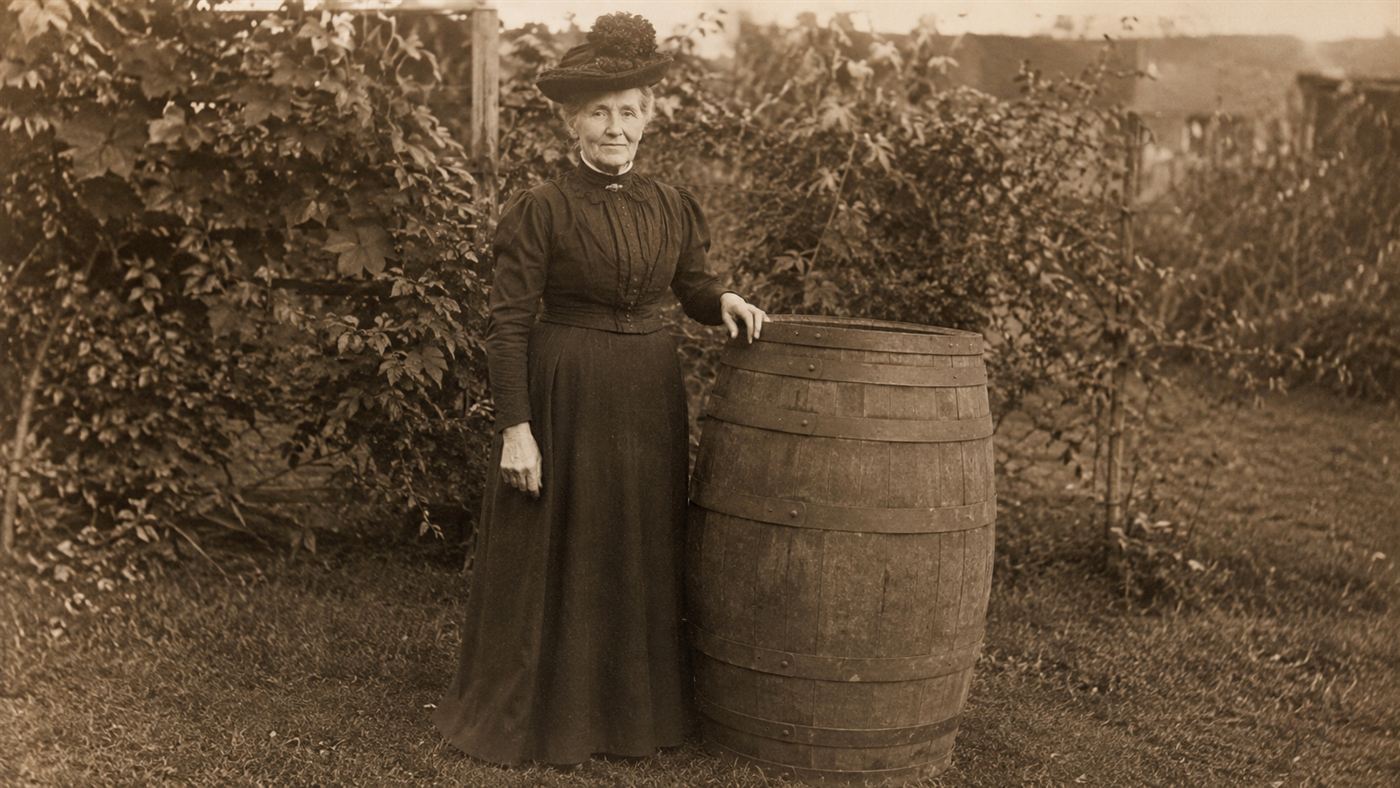
Annie Edson Taylor with the oak barrel that carried her over Niagara Falls. Illustration: Watts & Wild.
Annie Edson Taylor did not look like a daredevil. In 1901 she was a 63-year-old widow and former schoolteacher, proper and genteel, who had drifted between teaching posts across America and now faced old age with almost no money. Terrified of ending her days in the poorhouse, she settled on a desperate way out: she would do something no human being had ever survived, and then sell tickets to the story.
The plan was to go over Niagara Falls in a barrel. As Atlas Obscura has told it, she essentially treated the stunt as a retirement plan. On October 24, 1901, her 63rd birthday, she was sealed into a custom oak-and-iron barrel lined with a mattress and cushions, and set adrift in the river above the Horseshoe Falls. Minutes later she went over the brink, dropping into the violence below.
Who was Annie Edson Taylor? Annie Edson Taylor was an American schoolteacher who, on her 63rd birthday in 1901, became the first person to survive going over Niagara Falls in a barrel. She did it hoping for fame and fortune to escape poverty, but never made money from it and died penniless in 1921.
Why Annie Edson Taylor went over Niagara Falls
Taylor's life had been a long series of near-misses with stability. Widowed young after her husband died, she trained as a teacher and spent decades moving from town to town looking for steady work, never finding lasting security. By her sixties the money had nearly run out, and the prospect of the poorhouse, a real and frightening place in 1901, loomed in front of her. She wanted a fortune fast, and she had no fortune to invest in getting one, only herself.
Niagara was already a magnet for daredevils, men who walked tightropes over the gorge and swam its rapids for paying crowds. Annie Edson Taylor reasoned that the ultimate stunt, the one nobody had dared, would draw the biggest paydays of all. She was so worried that her age would put off promoters and audiences that she shaved years off it, telling the world she was younger than the 63 she actually was.
The barrel, and the cat that tested it
The vessel she trusted her life to was purpose-built: a barrel about a metre and a half tall, made of oak staves bound with iron hoops, padded inside with a mattress and cushions and fitted with a harness to hold her in place. To keep it from being crushed, an assistant pumped compressed air into it through a small hole, which was then plugged. It looked less like a boat than a coffin, which is roughly what most people expected it to become.
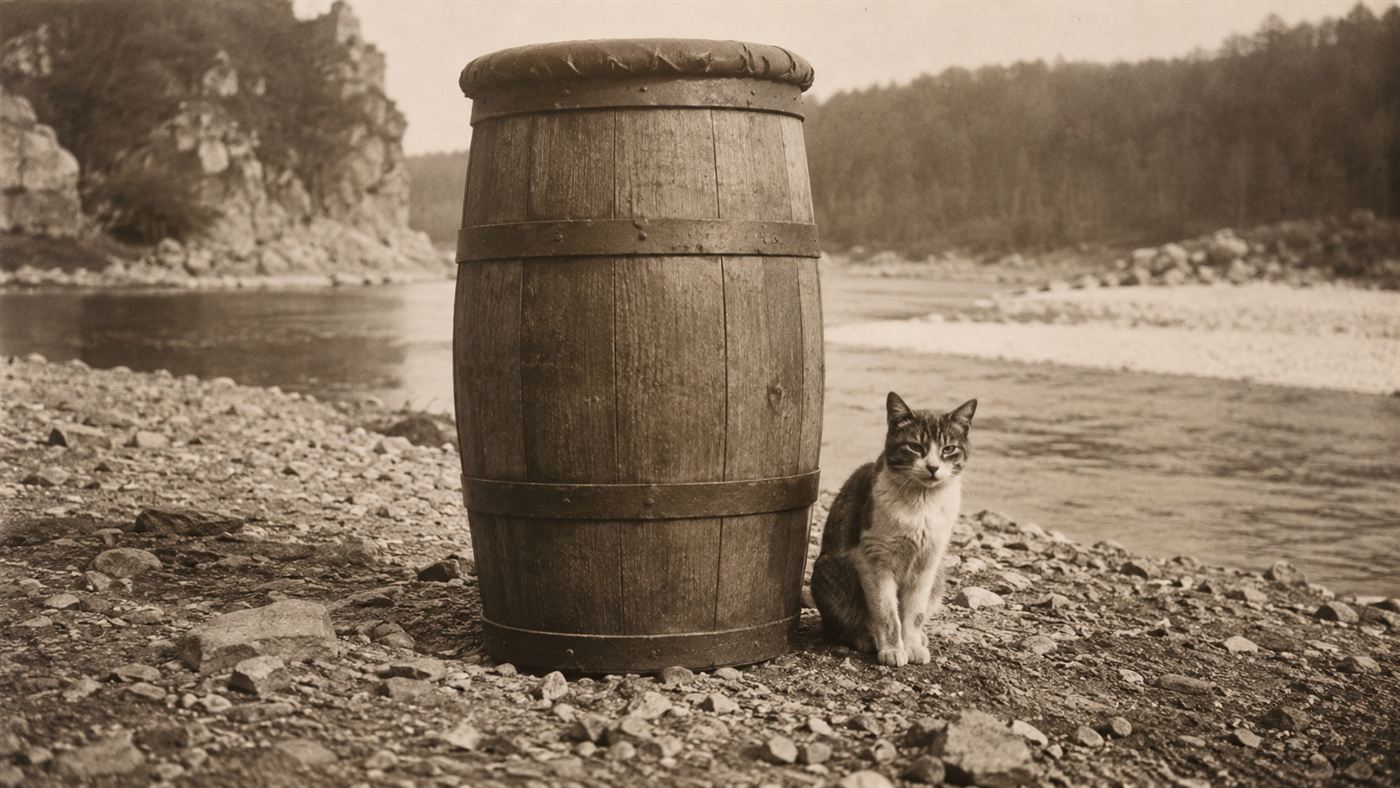
Two days before her own attempt, the team ran a test that has become the strangest footnote of the whole affair. They put a domestic cat inside the barrel and sent it over the Horseshoe Falls. Despite a rumor that the animal was killed, the cat came through alive, and was photographed afterward sitting with Taylor, a small cut on its head. If a cat could survive the drop, Taylor decided, so could she.
What happened when she went over?
On the day, a small boat towed the sealed barrel out into the current and cut it loose. It bobbed downstream, picked up speed in the rapids, and tipped over the edge of the Horseshoe Falls, plunging roughly 50 metres into the foaming basin. The crowd on the banks lost sight of it in the spray, with no way to know whether the woman inside was alive or dead.
About 17 minutes later, rescuers reached the battered barrel, pried it open, and found Taylor conscious, soaked and shaken but alive, with nothing worse than a gash on her head. She had done the impossible. Her own verdict, often quoted afterward, was blunt: she said she would sooner walk up to a cannon's mouth than ever go over the falls again, and that no one else should try it either.
Fame, fortune, and the manager who stole the barrel
Here is where the story curdles. Taylor had survived for the money, and the money never came. The public that thrilled to reckless young showmen was oddly unmoved by a dignified elderly schoolmistress, and her lectures drew thin, polite crowds rather than fortunes. She simply was not the swaggering daredevil the posters promised, and audiences felt slightly cheated by the gentle reality.
Then it got worse. Her manager, Frank Russell, ran off with the one thing that actually drew a crowd, the famous barrel itself, and Taylor burned through much of her small savings hiring private detectives to chase it down. The single asset her gamble had produced was stolen, and with it went any real chance of cashing in on the most dangerous thing she would ever do.

She died penniless
Taylor spent her last two decades scratching out a living in the shadow of the falls she had conquered. She posed for photographs with tourists at a little souvenir stand, dabbled in the stock market, and at various points worked as a clairvoyant and offered what she called magnetic therapeutic treatments to locals. None of it added up to the comfortable retirement she had risked her life for.
She died in 1921, aged 82, with no money to her name; her funeral was paid for by public donations, and she was buried among other Niagara stunt performers. Annie Edson Taylor had bet everything on a single, spectacular act of courage, won the bet against the falls, and still lost the war against poverty that had driven her into the barrel in the first place.
The honest catch
It is worth resisting the urge to make this a tidy fable. Taylor's stunt was genuinely reckless, and the fact that she lived owes a good deal to luck; over the following decades several people who tried to copy or outdo her died in the attempt, which is exactly why she begged others not to. Hers is a survival story, but it sits at the front of a long line of tragedies.
Some of the details, too, come filtered through her own showmanship and a century of retelling, including her shifting claims about her age and the precise drama of the ride. What is solid is the core of it: a frightened, broke schoolteacher chose the most dangerous gamble imaginable, became the first person to ride Niagara and live, and was rewarded with a famous name and an empty purse.
A broke schoolteacher of 63 did the one thing nobody had survived, rode Niagara Falls in a barrel and lived, and still died with nothing. Was Annie Edson Taylor brave, foolish, or simply out of options? Tell us what you think in the comments.
Related reading: The ghost ship found sailing the Atlantic with everything in place and no one aboard.