Before Porsche meant roaring engines, a 24-year-old built an electric car with motors in its wheels and then the world's first hybrid
The name Porsche now means a snarling petrol engine behind your shoulders. But the very first car the young Ferdinand Porsche made his name with, the Lohner-Porsche of 1900, was silent, electric, and decades ahead of its time, with the motors hidden inside the wheels and no gearbox at all.
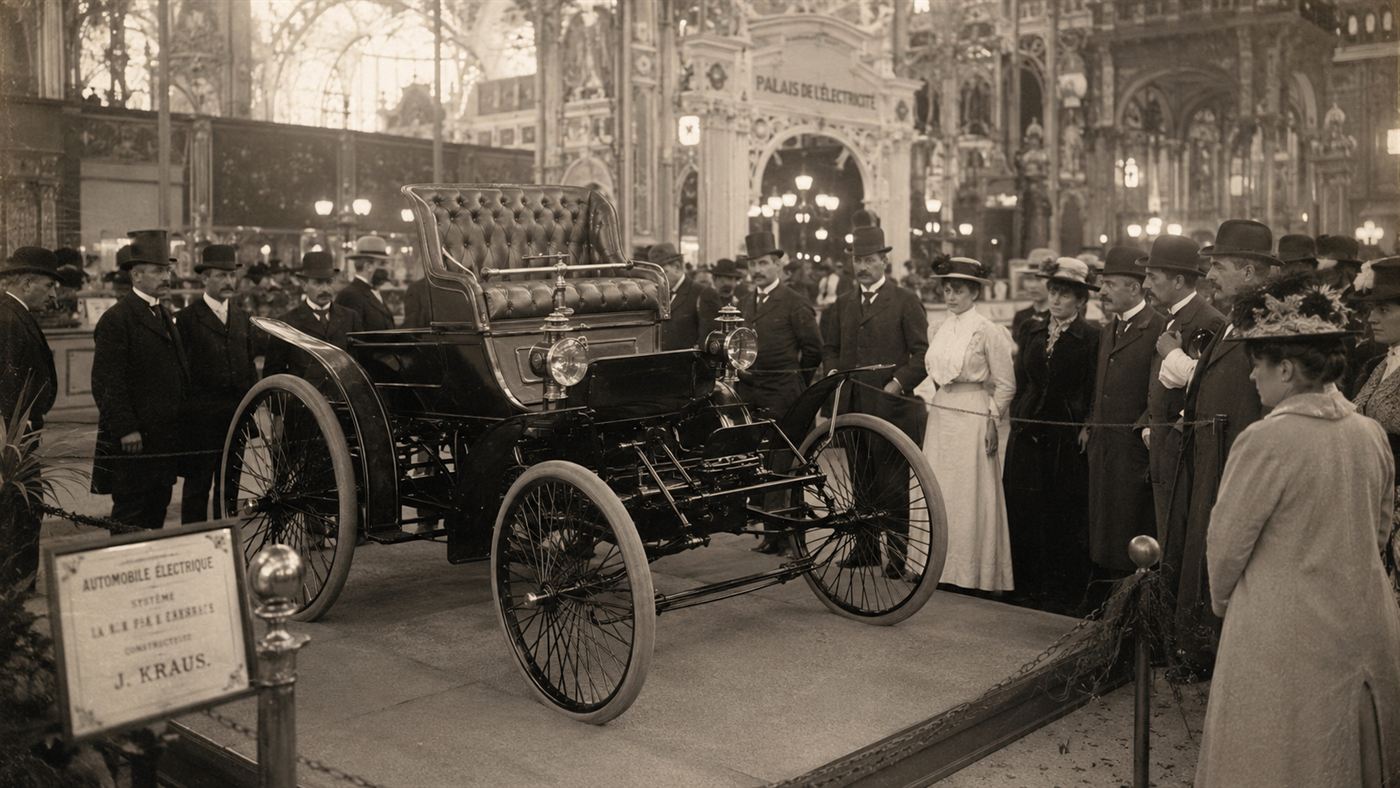
The Lohner-Porsche electric car at the 1900 Paris World's Fair. Illustration: Watts & Wild.
On 14 April 1900 the Paris World's Fair opened its Palace of Electricity, and among the marvels was a horseless carriage from the Viennese coachbuilder Jakob Lohner. Its young technical chief, Ferdinand Porsche, then in his mid-twenties, had solved the problem of how to drive a car without a complicated tangle of belts and chains. He simply put the electric motors where the power was needed, inside the front wheels themselves.
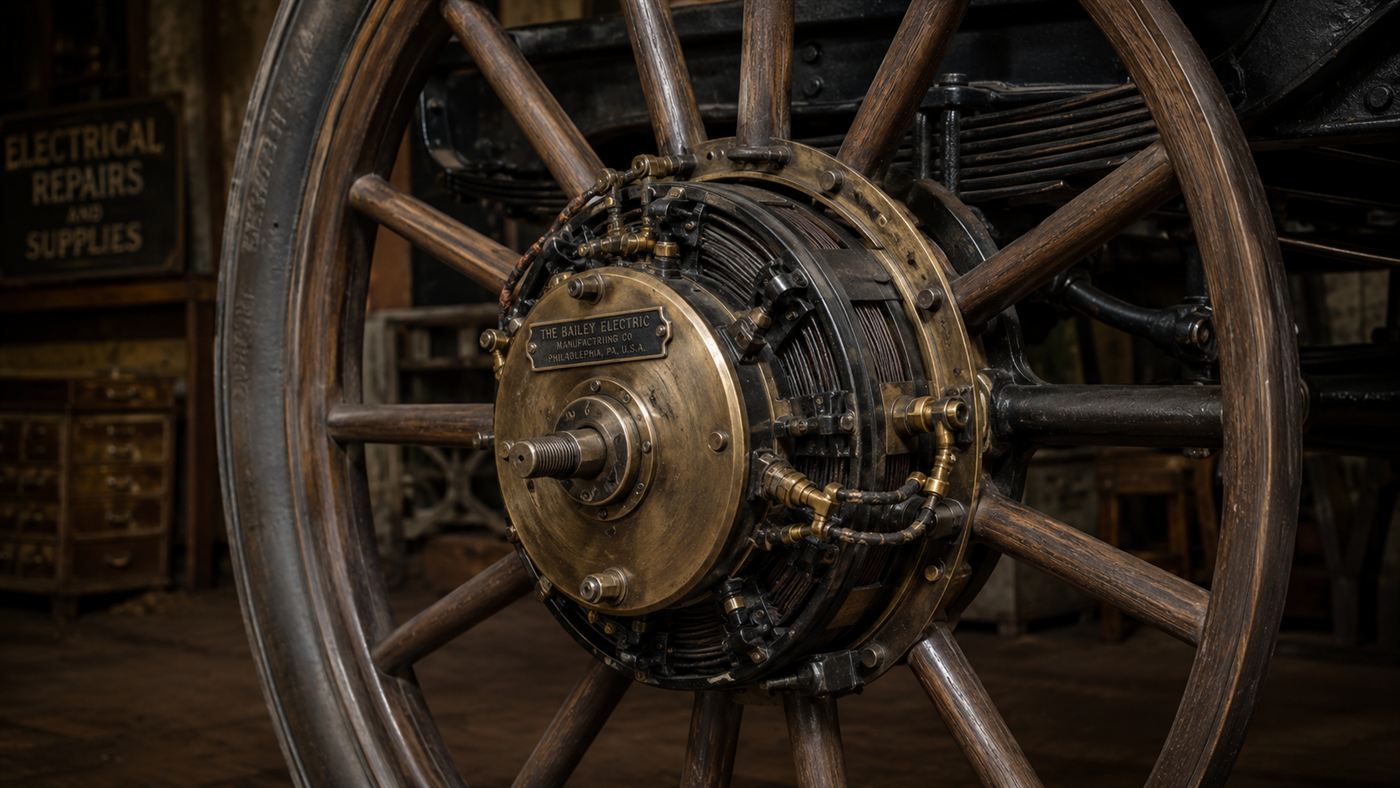
These wheel-hub motors meant the Lohner-Porsche had no transmission, no driveshaft, almost nothing to go wrong between the energy and the road. Each motor produced a modest couple of horsepower and the car topped out around 35 kilometres an hour, but it could brake on all four wheels at once, which in 1900 was close to witchcraft.
How the Lohner-Porsche put the motor in the wheel
The idea was elegant to the point of being obvious, once someone had thought of it. A normal car spends a lot of effort carrying power from a central engine out to the wheels. Porsche skipped the journey entirely. A racing version took the trick further, with a motor in each of the four wheels, making it arguably the first all-wheel-drive car in history, and Porsche drove it himself.
It was clever, but it was also heavy. The motors in the wheels were dead weight bouncing over every bump, and the real anchor was the battery. The lead-acid pack needed to feed them weighed close to two tonnes, and there was nowhere to charge it, because the world had no charging network and would not have one for a century.
When the batteries failed, Porsche invented the hybrid
Faced with a battery that was too heavy and too quick to run flat, Porsche did something genuinely radical. He bolted a small petrol engine onto the car, not to turn the wheels, but to spin a generator that made electricity on the move. The wheels stayed electric; the petrol engine was just a power station riding along.
He called it the Semper Vivus, Latin for "always alive," and it is widely credited as the first functional hybrid car in the world. The refined production version, the Mixte, followed in 1901. It is exactly the logic behind a modern range-extender electric car, worked out in a Vienna workshop more than a hundred and twenty years ago.
Was the first Porsche really electric?
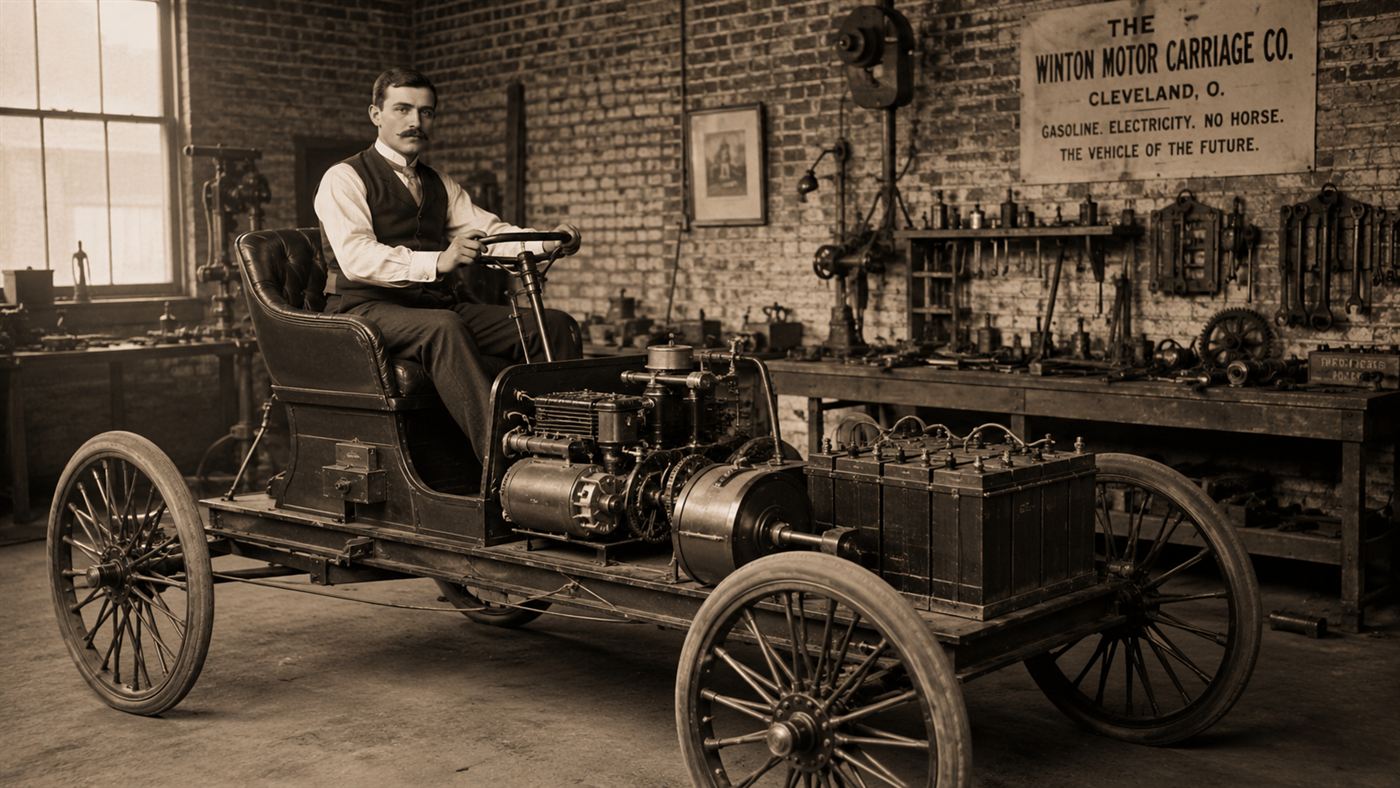
It was. The design that first made Ferdinand Porsche famous was not a sports car but a battery-electric carriage with motors in its wheels, and his follow-up was a petrol-electric hybrid. About three hundred vehicles were built on the Lohner-Porsche system, including a fleet of forty for the Vienna fire brigade and a handful of taxis. The man whose name now sits on combustion icons began at the opposite end of the technology.
The idea that came back from the Moon
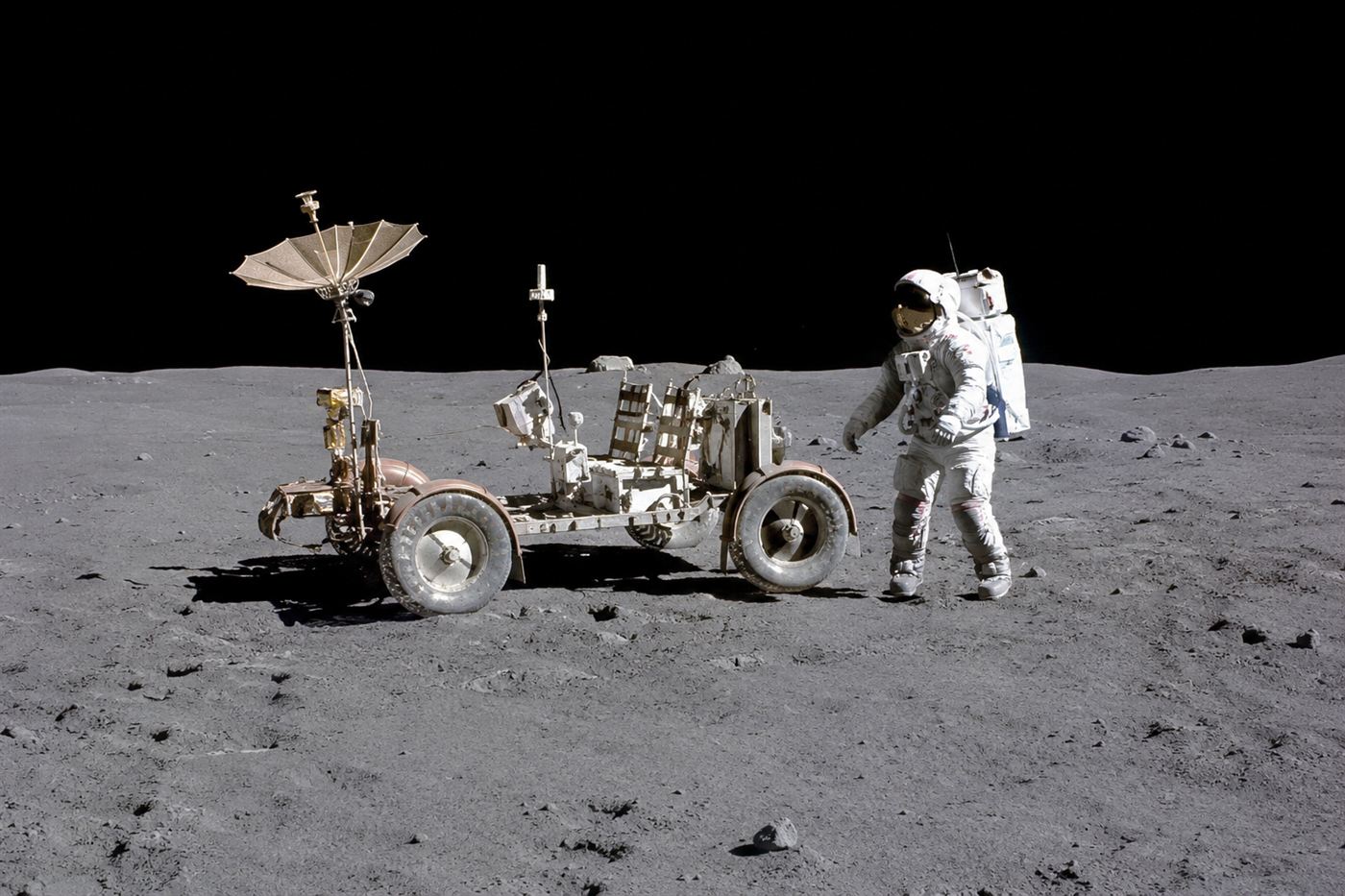
The wheel-hub motor did not conquer the roads. It was too heavy and too far ahead of its batteries, and the petrol engine soon swept the field. But the concept never quite died, and it returned in one of the unlikeliest places imaginable. As Porsche's own history of the design notes, the lunar rovers that drove across the Moon on the Apollo missions used electric motors built into each wheel, the same basic idea Porsche had sketched in 1900.
The honest catch
A few of the superlatives need trimming. "First hybrid" and "first hub-motor car" are titles other inventors have a claim to as well, the Belgian engineer Henri Pieper among them, since several people were circling the same ideas at the turn of the century. The Lohner-Porsche was also, for all its brilliance, a commercial dead end in its own time: too heavy, too thirsty for charge, and quickly buried by cheap petrol cars. As the broader record of the vehicle shows, it was a glimpse of a future the technology could not yet deliver. And the later life of Ferdinand Porsche, tangled up with the Nazi war machine, is a far darker story than this bright beginning. What stands is the engineering: in 1900 a young man built an electric car, then a hybrid, and we are only now catching up.
A 24-year-old put the motors in the wheels in 1900 and then invented the hybrid to feed them, and the car world spent a century circling back to both ideas. Does it change how you see Porsche to know it started silent and electric? Tell us what you think in the comments.
Related reading: The same wheel-hub idea drove the electric buggies astronauts left behind on the Moon.
More from Watts & Wild
 The 1974 hybrid the EPA refused
 The first electric vehicle, built in 1881
 The 1888 battery submarine the navy buried
 The electric car NASA left on the Moon
 The first car past 100 km/h was electric
 New York's battery-swapping cabs of 1899
 Detroit Electric and the first electric car age
 Edison and Westinghouse's war of currents