A Spanish officer built a battery-powered submarine in 1888 that sank a cruiser in trials, and his own navy buried the project out of spite
Long before diesel-electric boats prowled the world's oceans, a Spanish naval officer named Isaac Peral slipped beneath the water in a cigar of steel run entirely on batteries. The Peral submarine stalked a warship in mock attacks and was never spotted, and then the navy that owned it quietly killed it off.
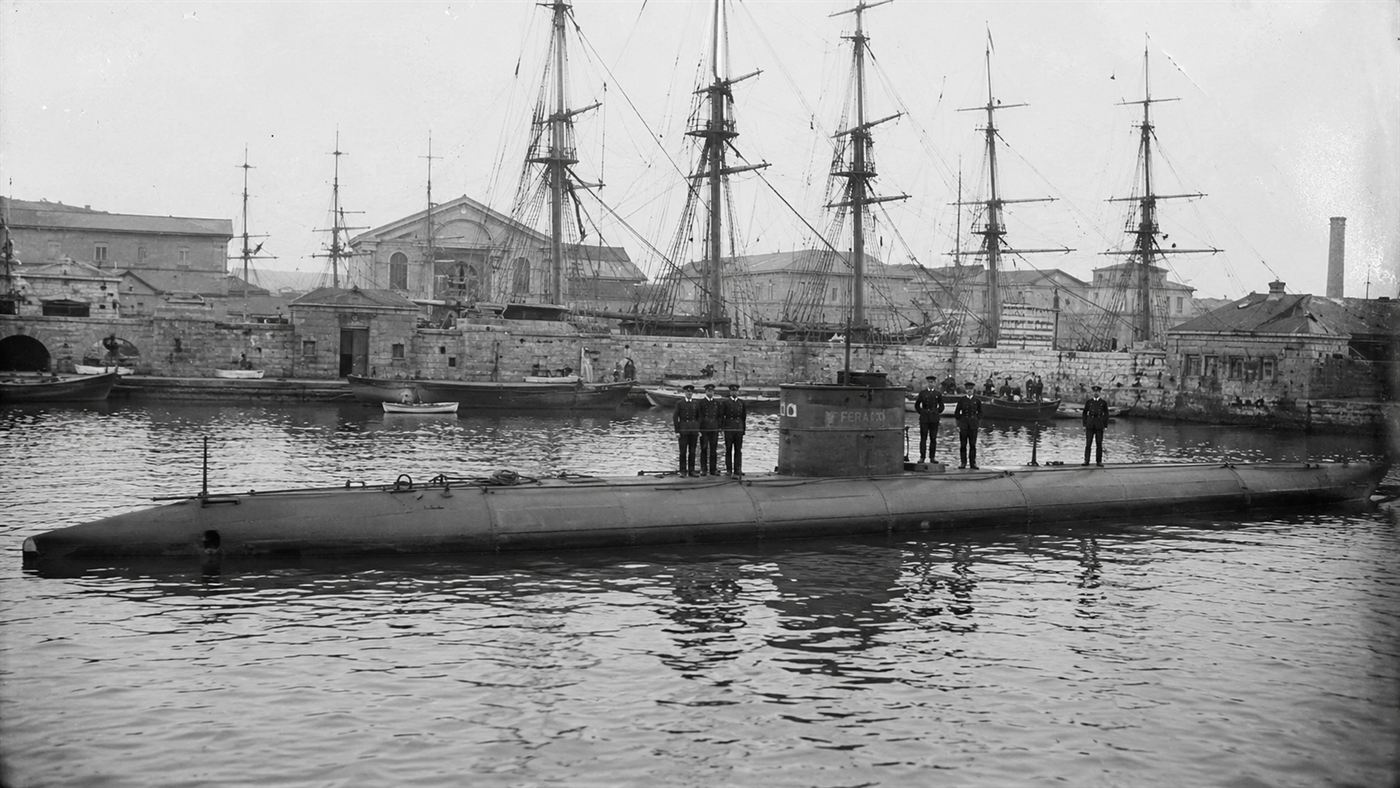
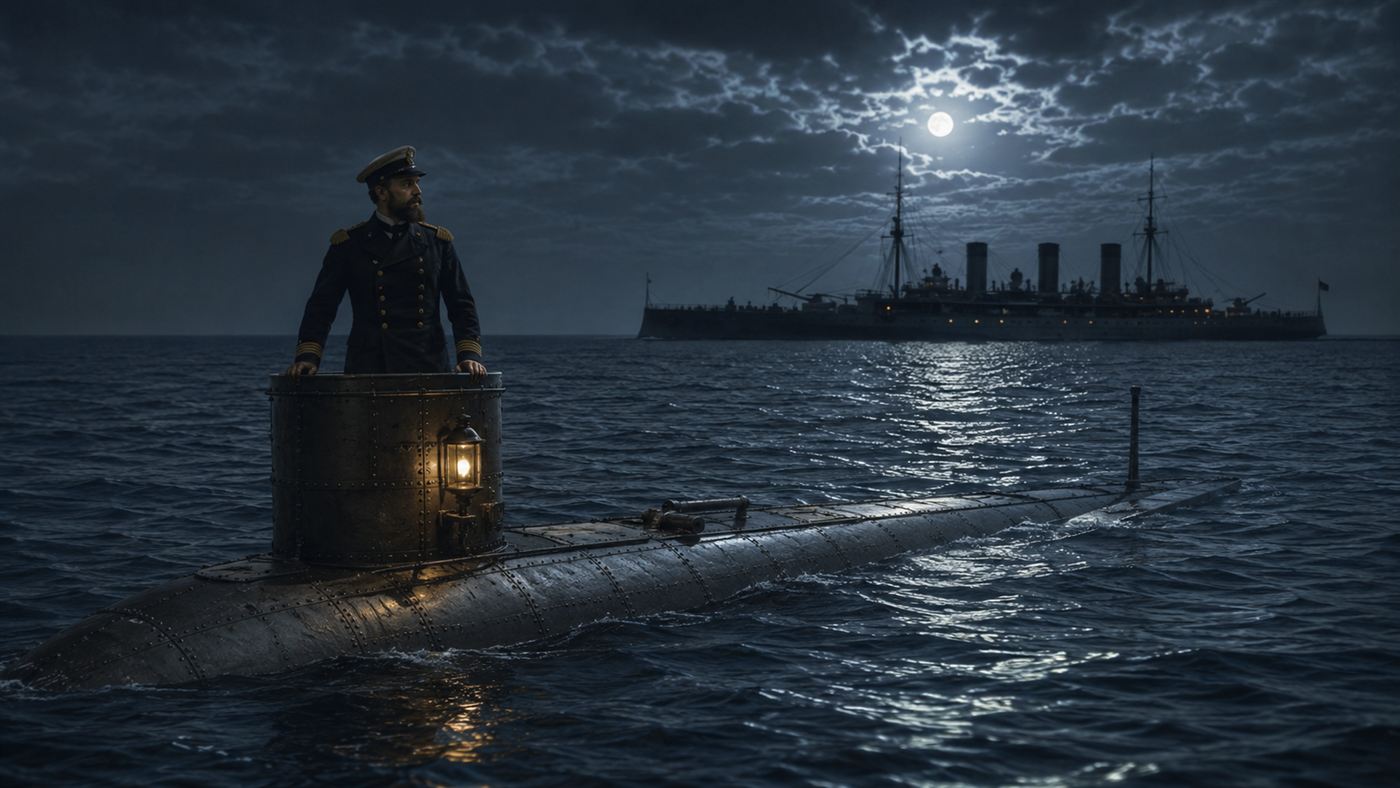
The Peral, launched in 1888, ran silently on 613 electric batteries. Illustration: Watts & Wild.
The boat was launched on 8 September 1888 at a naval arsenal near Cádiz. It was about twenty-two metres of welded steel shaped like a fat cigar, and inside it was something genuinely new: not a steam boiler or an air engine, but two electric motors fed by a bank of 613 rechargeable lead-acid batteries. With no fire and no exhaust, it could run beneath the surface in near silence.
Peral packed it with ideas that would not become standard for decades. It had a periscope to see while submerged, a system to scrub and refresh the crew's air, a torpedo tube for firing Whitehead torpedoes, and, cleverest of all, an automatic device that held the boat level at a chosen depth instead of porpoising up and down. In 1888 this was closer to science fiction than to warship.
What the Peral submarine could actually do
The trials, which ran through 1889 and 1890, were a sensation. The boat dived, held its depth, and fired a torpedo while submerged. As Marine Insight recounts, in June 1890 Peral took the submarine out and made simulated attacks on the cruiser Cristóbal Colón, by day and again by night, slipping in close enough to "sink" it without ever being seen.
For a crew sitting inside a fragile metal tube under the sea, this was extraordinary, and the Spanish public knew it. Peral became a national hero, cheered in the streets, his submarine the pride of the country. It looked like the start of a new age of naval warfare, with Spain in the lead.
How the navy killed the Peral submarine
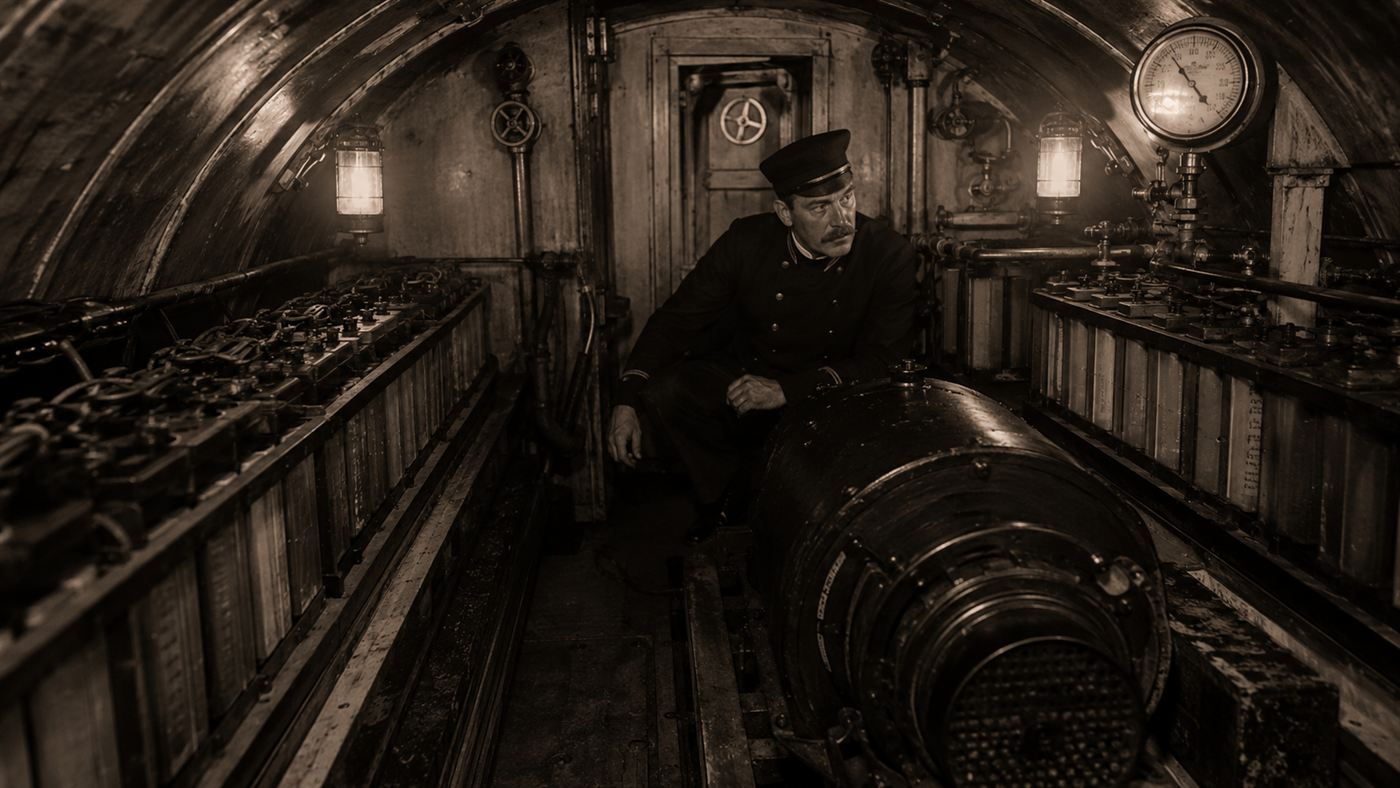
And then it stopped. Behind the public triumph, Peral had made enemies among senior officers and politicians who resented the upstart and his celebrity. A navy board reviewed the boat and concluded that it had "defrauded its conceived expectations" and served no useful purpose, and in November 1890 a government decree shut down Spanish submarine development altogether.
Peral was crushed. Convinced he had been betrayed by jealousy and bureaucracy rather than by any failure of his machine, he resigned his commission in 1891 and went into private electrical business. He died in 1895, only forty-three years old, sick and largely unrecognised, his submarine left to rust.
The vindication Isaac Peral never saw
History was not kind to the men who buried him. Within a generation, submarines running on exactly his principle, electric motors and batteries for the silent underwater dash, became one of the most feared weapons on Earth. As the US Naval Institute has recorded, an American commodore later remarked that if Spain had fielded Peral's boats in the war of 1898, his blockade could not have held.
Spain eventually made its peace with the man it had spurned. The original submarine was preserved and now sits on display in Cartagena, and in 2023 the navy commissioned a brand-new attack submarine named, fittingly, the Isaac Peral. The officer who died feeling like a failure turned out to have been right about almost everything.
What powered the Peral submarine?
Electricity alone. Two thirty-horsepower electric motors drew on a bank of 613 lead-acid batteries to drive the propeller, which is why the boat could move underwater without the smoke, heat or noise of a combustion engine. The catch, and it was a real one, was that the batteries held only so much charge, limiting how far and how fast it could go before needing to surface and recharge.
The honest catch
The story is usually told as pure martyrdom, a genius destroyed by small men, and there is a lot of truth in that. But it is not the whole picture. The batteries of 1890 genuinely did limit the boat's range and speed, and some of the doubts about whether it could be a practical weapon were fair rather than spiteful. Peral himself was proud and prickly, which did not help his cause. And the proud claim that this was the world's "first" electric or military submarine has an asterisk: the French navy's electric Gymnote was launched a few months earlier the same year. None of that erases what Peral built. It just means the real lesson is less about one betrayed hero and more about how often a good idea arrives before the world, and the batteries, are ready for it.
A battery-powered submarine stalked a cruiser unseen in 1888, and the navy that owned it threw the idea away. Was the Peral submarine ahead of its time or simply ahead of its batteries? Tell us what you think in the comments.
Related reading: Another electric idea born too early, the 1900 Porsche that hid its motors in its wheels.