The first electric vehicle was a tricycle built in Paris in 1881, years before the petrol car, by an inventor who died forgotten in a pauper's grave
We talk about electric cars as if they are the future. They are also the past. The first electric vehicle ever driven on a road was a battery-powered tricycle that hummed along a Paris street in 1881, four years before anyone built a car that ran on petrol. The man who made it was a genius, and almost nobody remembers his name.
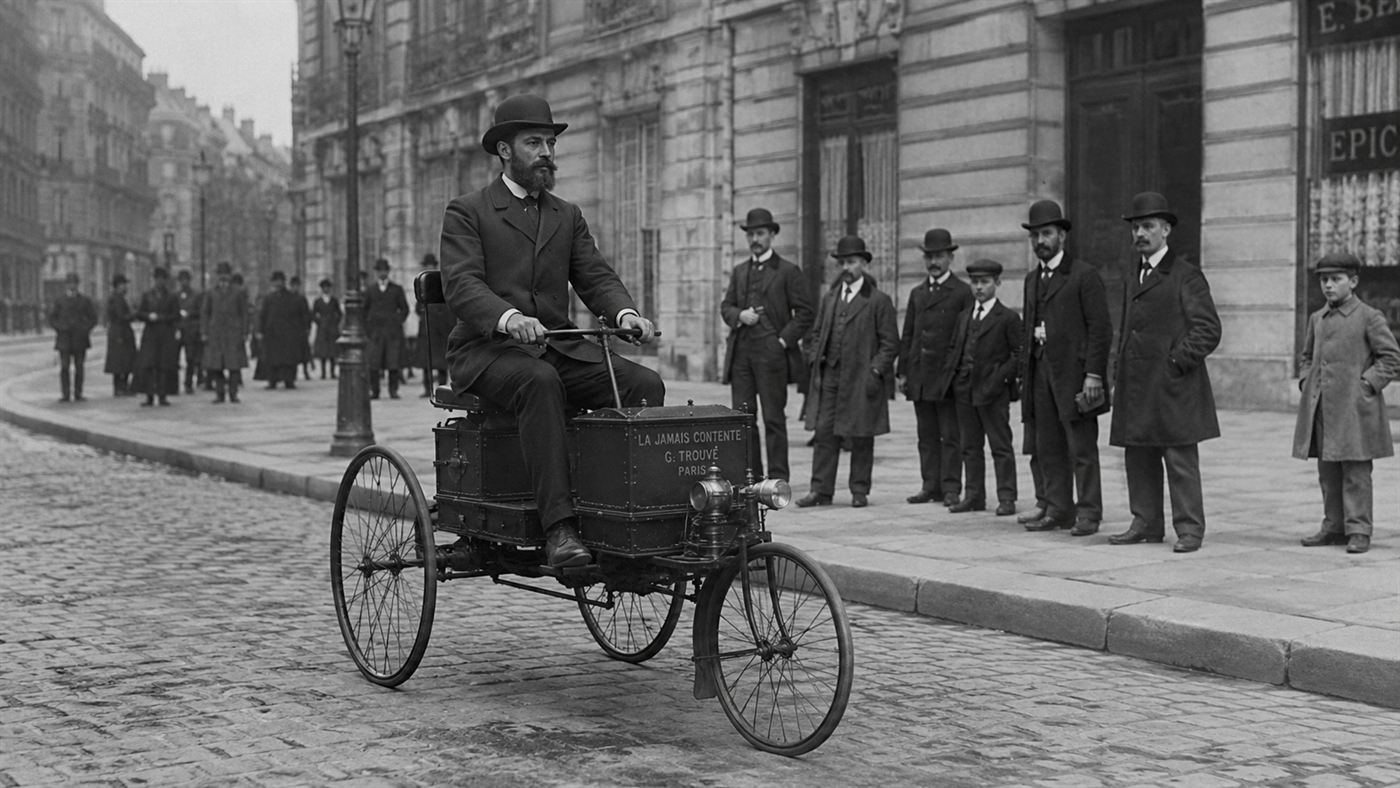
Gustave Trouve's electric tricycle, the first electric vehicle, on the streets of Paris. Illustration: Watts & Wild.
His name was Gustave Trouvé, a French electrical engineer who ran a workshop in the heart of Paris and spent his life turning electricity into an astonishing range of gadgets. In 1880 he took a small electric motor, improved its efficiency, and married it to one of the new rechargeable batteries that had only just been invented. Then he looked for something to put it in.
What he chose was an ordinary English tricycle. He bolted his motor and battery to it, and on 19 April 1881 he rode the contraption down the Rue Valois in central Paris under its own electric power. It was not fast and it did not go far, but it worked, and it is now widely recognised as the first electric road vehicle in history.
Why the first electric vehicle beat the petrol car
The timing is the part that surprises people. We tend to assume the petrol engine came first and electric cars are a modern reaction to it, but it is the other way around. Trouvé's electric tricycle ran in 1881. As Guinness World Records recognises, this was the first electric road vehicle, and the petrol-powered machine usually called the first car, Karl Benz's Patent-Motorwagen, did not appear until 1885 or 1886.
For a brief moment, then, the future of the automobile was wide open, and electricity was in the lead. The reason the petrol engine eventually won had little to do with which came first and everything to do with the limits of the batteries of the day, which were heavy and ran flat quickly, the same problem that would dog electric cars for the next hundred years.
The man who also invented the outboard motor
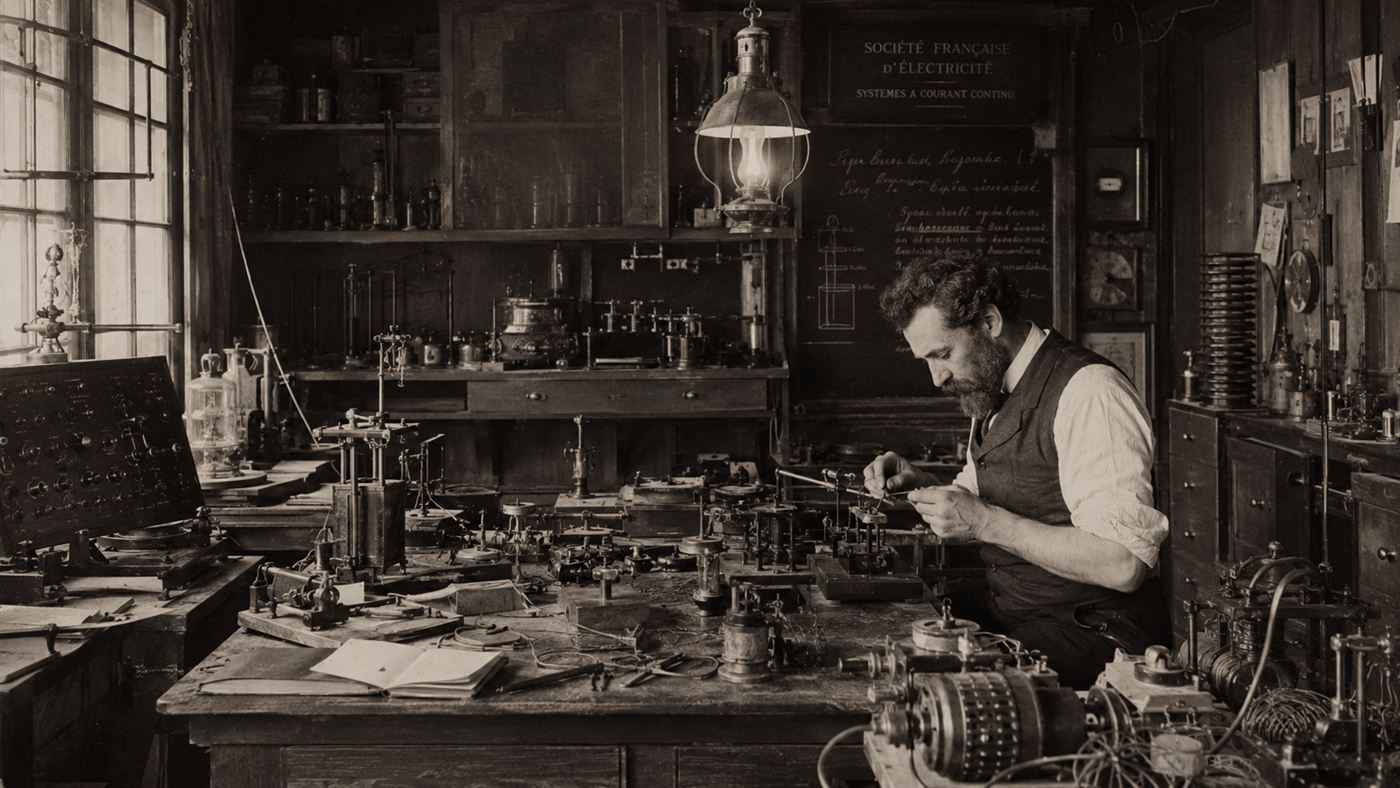
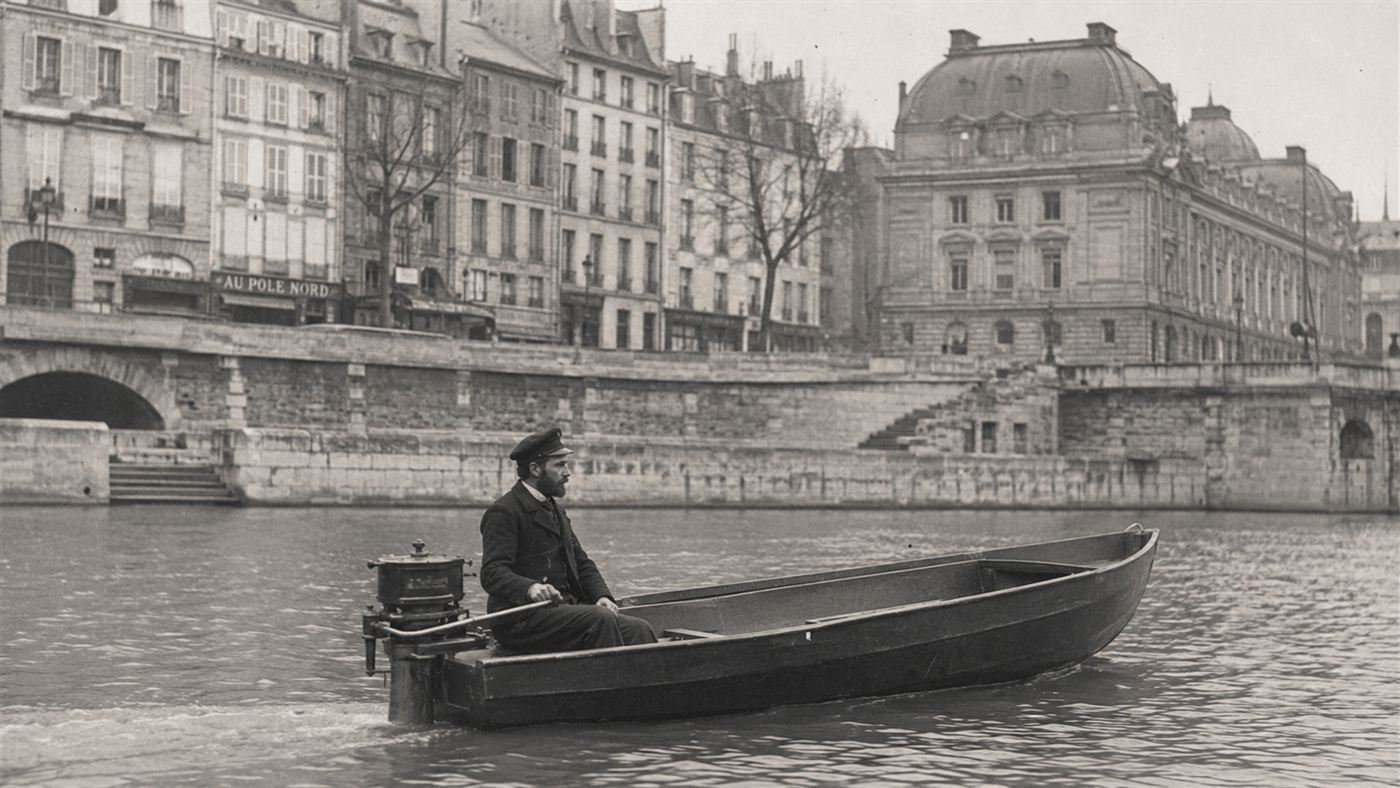
The tricycle was not even Trouvé's only world first that spring. Within weeks he had taken the same battery-and-motor idea and fitted it to a boat. To carry the motor easily between his workshop and the nearby Seine, he made it detachable and portable, hanging it off the back of the hull, and in doing so he essentially invented the outboard motor. On 26 May 1881 his little electric boat puttered up and down the river.
And that was just two of his inventions. Over his career Trouvé patented some seventy-five devices across wildly different fields, from a medical probe to locate bullets inside wounds, to an early endoscope, to electric jewellery that lit up and fluttered on the Paris stage. He was part engineer, part showman, endlessly inventive.
What was the first electric vehicle worth to him?
Heartbreakingly little, in the end. Trouvé never became rich or famous like Thomas Edison, and he could not even secure a patent on the tricycle itself because not all of its parts were his own. He died in 1902 from an infection after cutting himself, and his story then took a final cruel turn. As The Connexion has recounted, when the lease on his grave ran out and was not renewed, his remains were tipped into a common pauper's grave, and decades later a fire destroyed most of his surviving papers.
The honest catch
The word "first" always needs care. People had played with electric movement before Trouvé, with model carriages and electric locomotives back in the 1830s and 1840s, but those ran on disposable cells or on rails or were only models. What makes Trouvé's tricycle stand out, and earns it the title, is that it was a practical road vehicle running on a rechargeable battery, the recipe every electric car since has followed. His claim to the outboard motor has a similar asterisk, since the petrol outboard most people picture came later from other hands. None of that diminishes the strange truth at the centre of the story: more than 140 years ago a forgotten Parisian built the first electric vehicle and the first electric boat in the space of a month, and we are only now circling back to the future he sketched out and then was buried, anonymously, beneath.
The electric car is not a twenty-first-century idea; it is a nineteenth-century one we mislaid. Does it change how you see today's EVs to know the first electric vehicle beat the petrol car, and its inventor died in a pauper's grave? Tell us what you think in the comments.
Related reading: Two decades later another forgotten electric idea, the 1900 Porsche that hid its motors in its wheels.