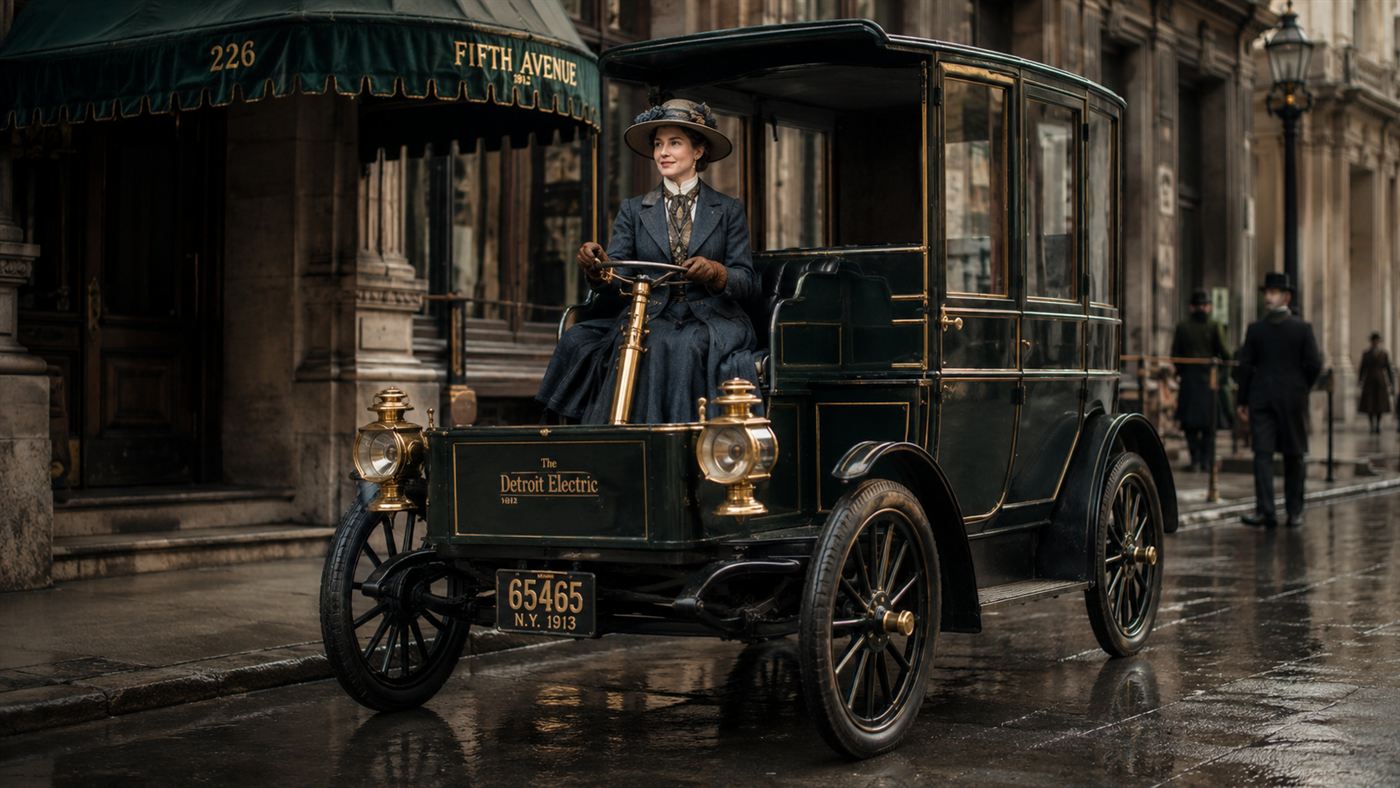
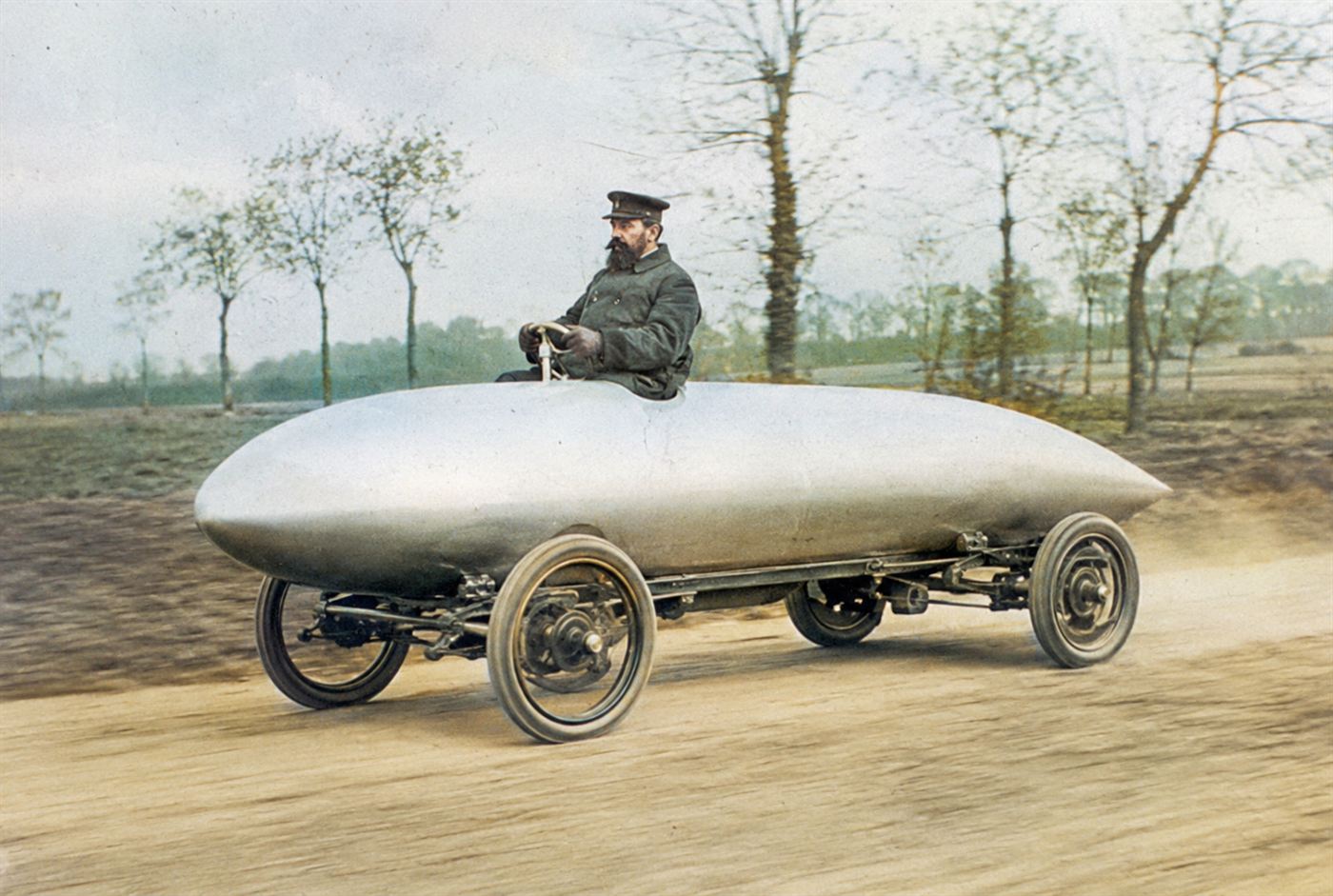
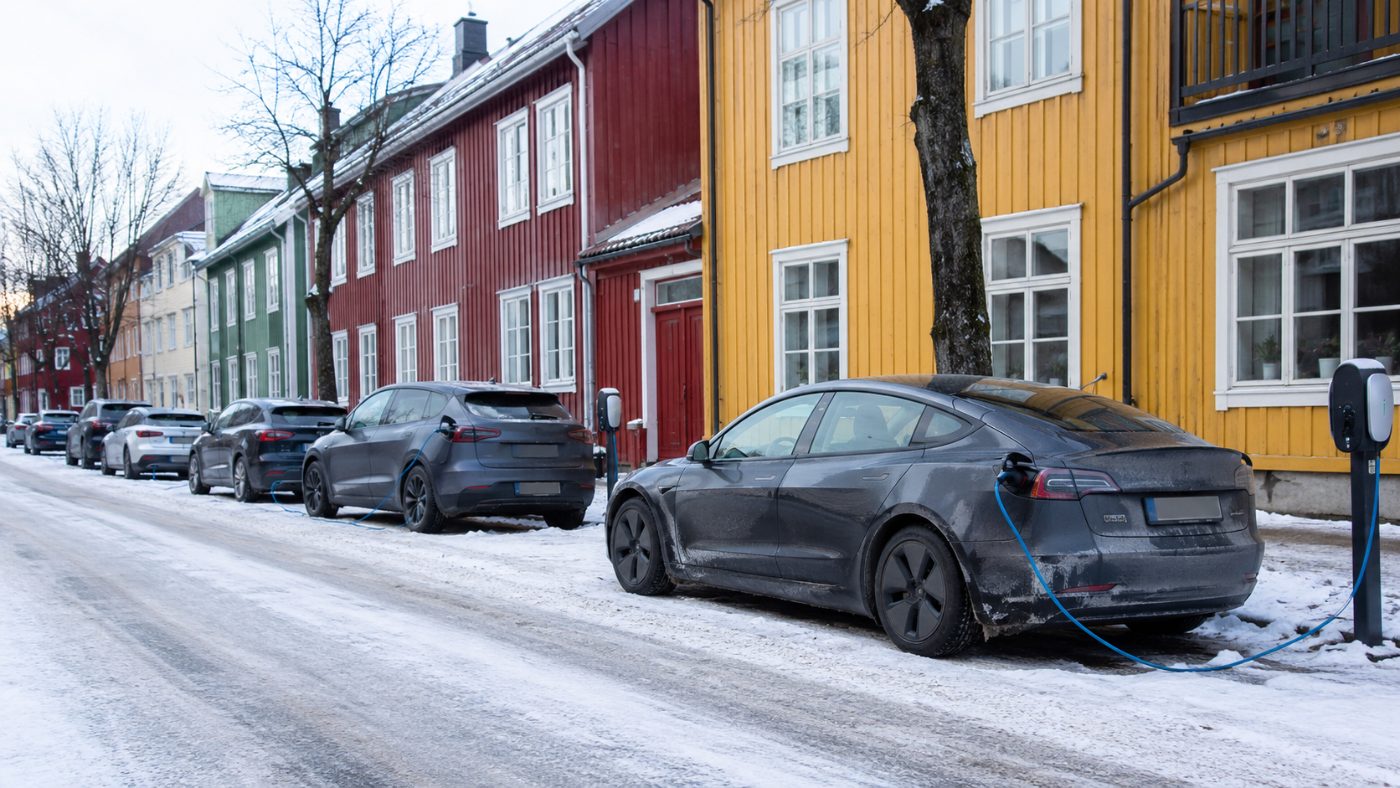
In 1899 most of New York's taxis were electric, and a crane swapped their half-ton batteries for fresh ones in three minutes
Before the smell of petrol took over the city, New York hailed a different kind of cab. At the turn of the twentieth century the streets hummed with quiet, clean electric taxis, and when one ran low a crane in a converted skating rink yanked out its 1,250-pound battery and dropped in a charged one faster than you could read a newspaper.
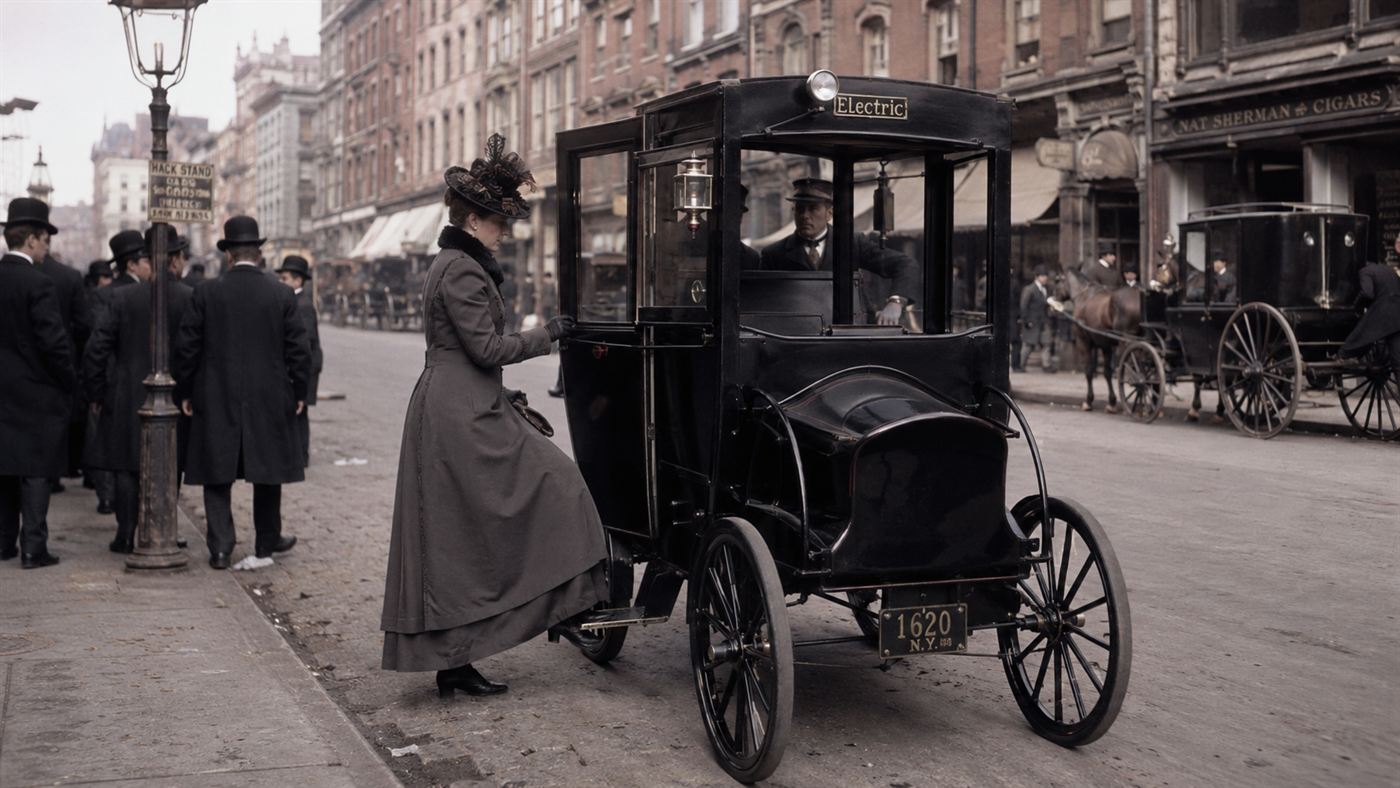
An electric Hansom cab on a New York street in 1899, when most of the city's taxis ran on batteries. Illustration: Watts & Wild.
The story starts in Philadelphia in 1894, where a mechanical engineer named Henry Morris and a chemist named Pedro Salom built a boxy electric carriage they called the Electrobat. It was slow and heavy, but it was clean, quiet, and easy to drive, with none of the hand-cranking and backfiring of an early petrol engine. They saw a business in it, and the business was electric taxis.
In March 1897 their company put its first twelve electric cabs on the streets of New York. As National Geographic has recounted, the cabs carried about a thousand passengers in their first month, and the fleet grew fast, from a dozen vehicles to more than a hundred by 1899. For a few short years, much of the city's cab trade was electric.
The battery swap that ran on a crane
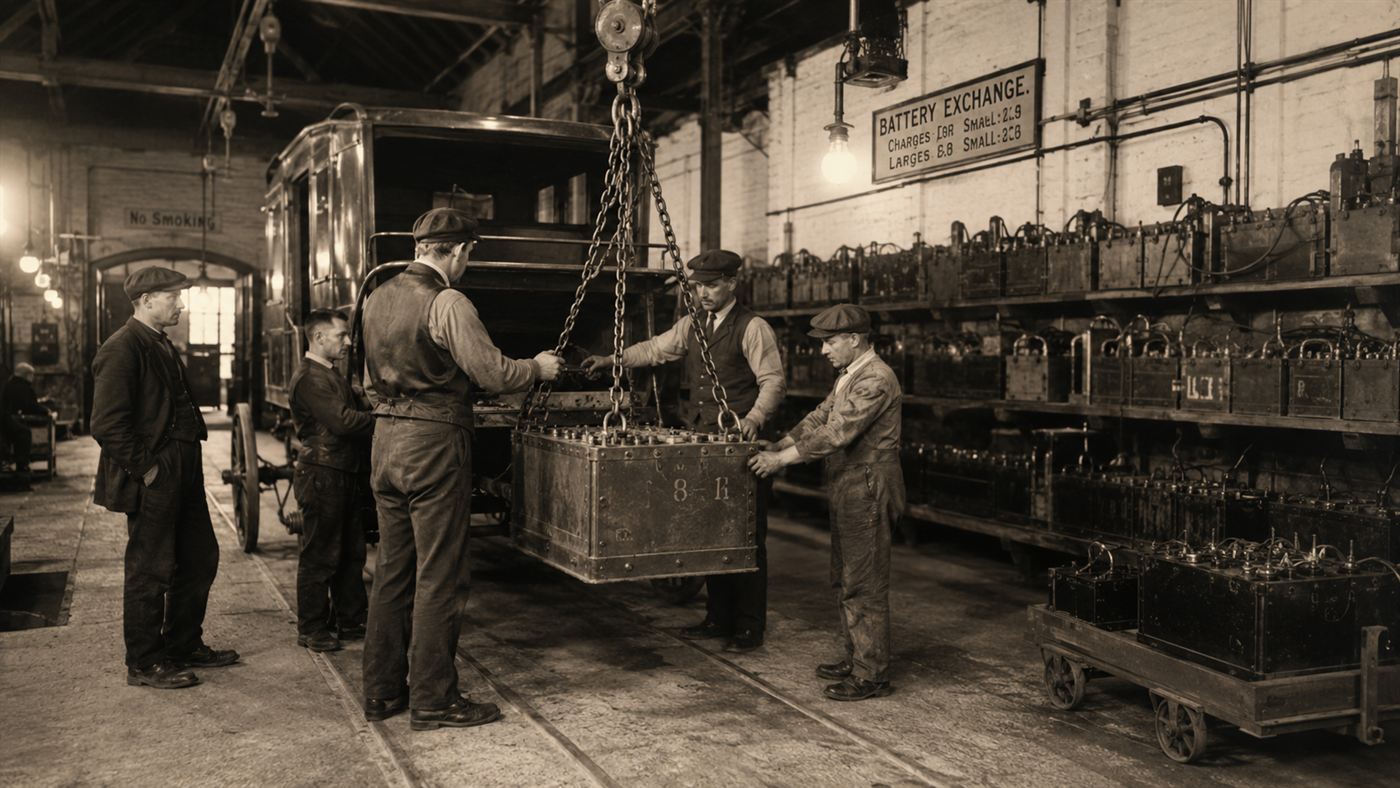
The clever part was not the cab but the depot. A discharged lead-acid battery the size of a steamer trunk could not be recharged on the street in any useful time, so Morris and Salom did not try. They built a service station inside a former ice-skating rink on Broadway and turned battery changing into a piece of industrial choreography.
A cab would roll in, hydraulics and an overhead crane would lift its spent 1,250-pound battery clear of the chassis, and a fresh one would drop into place. As Hagerty has described the operation, the whole swap took about three minutes. It was, in everything but name, the battery-swapping model that companies are spending fortunes to reinvent today, running on the streets of Manhattan before the Wright brothers had left the ground.
When electric taxis were the normal choice
It is easy to assume electric cars are a modern idea bolted onto an old industry, but in 1900 they were simply one of three ordinary options, and a popular one. Roughly four in ten American cars ran on steam, two in ten on petrol, and nearly four in ten on batteries. In New York specifically, the great majority of cabs were electric.
Drivers liked them because they started at the turn of a key, made no noise, and threw out no fumes in a city already choking on horse manure. The downside was the same one we still wrestle with: limited range, long charging, and a heavy, expensive battery. The swap depot was an elegant answer to exactly that problem.
The first speeder and the first death
These quiet little cabs also wrote two strange entries in the record books. In May 1899 a cab driver named Jacob German was arrested for tearing down Lexington Avenue at a reckless 12 miles an hour, making him the first person in America ever booked for speeding, and he was driving an electric taxi.
Months later the same technology marked a darker first. On a September evening a real-estate broker named Henry Bliss stepped off a streetcar on the Upper West Side and was struck and killed by an electric cab, the first person in the United States to die in a road accident involving a car. The age of the automobile arrived with both its thrills and its toll already attached.

How the Lead Cab Trust killed it
What finished the electric cab was not really the petrol engine. In 1899 a syndicate of Gilded Age financiers bought the company, renamed it the Electric Vehicle Company, and tried to roll out a coast-to-coast monopoly of electric cabs. The press mocked it as the "Lead Cab Trust," a pun on the lead in its batteries and the greed of its backers.
The trust overreached, manipulated its own stock, and bled money, and it made enemies by buying up a vague patent and demanding royalties from every petrol carmaker in the country, a fight a young Henry Ford eventually won in court. As Hagerty notes in its history of the cabs, the company collapsed around 1907, its end hastened by a fire that destroyed some 300 of its taxis in one night. The clean electric fleet did not lose a fair fight so much as it was looted from the inside.
The honest catch
It is tempting to read this as a clean technology murdered in its cradle, and it is partly that, but only partly. Even without the financial skulduggery, the early electric car had real weaknesses that a fraud-free company would still have faced: short range, slow charging, and a battery that cost a fortune and weighed half a ton. The arrival of cheap mass-produced Fords and the electric starter, which removed petrol's worst annoyance in 1912, would have squeezed electric cabs hard regardless. The swap depots were genuinely ahead of their time, but the chemistry underneath them was not yet good enough to win.
A clean, quiet, battery-swapping electric cab fleet ran New York in 1900 and then vanished for a hundred years. Does it change how you see today's electric cars to know the idea is older than the petrol engine's victory? Tell us what you think in the comments.
Related reading: A decade later, Detroit Electric sold elegant battery cars to a generation of well-to-do drivers before petrol won out.