Dutch students won three solar races, then built the world's first production solar car that charges itself from the sun, only to watch it unravel weeks after the first deliveries
A group of engineering students from Eindhoven kept winning the world's toughest solar race, so in 2016 they set out to do what no carmaker had managed: sell an ordinary-looking car that charges itself from the sky. They built it, the most aerodynamic car ever made, and then almost everything went wrong.
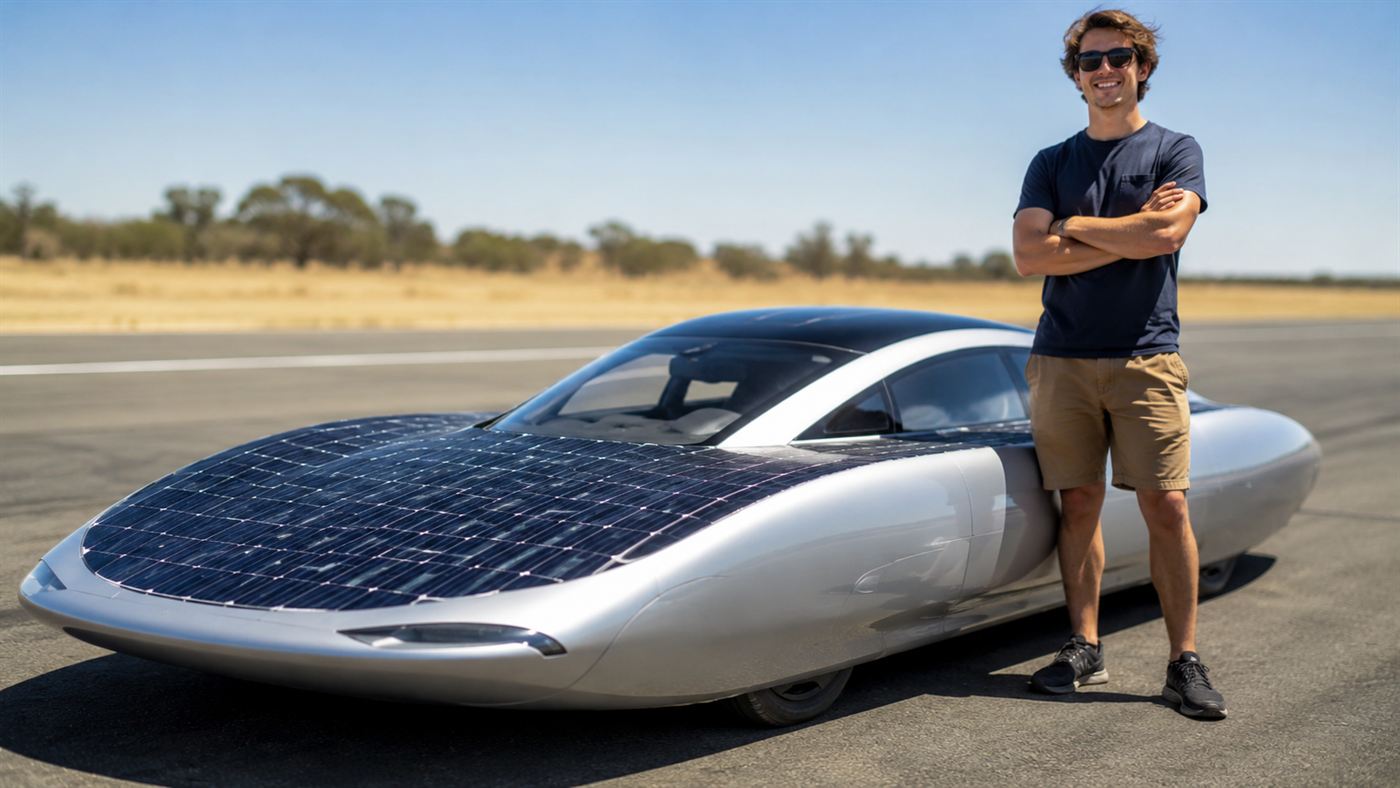
A production car with a roof of solar cells, built to top itself up from the sun. Illustration: Watts & Wild.
For a few weeks at the end of 2022, you could actually buy a car that ran partly on sunshine. It was long, low and impossibly slippery, its roof and bonnet paved with solar cells, and on a bright day it could pull enough power from the sky to add tens of kilometres of range without ever seeing a plug. It was the Lightyear solar car, officially the Lightyear 0, and its makers billed it as the world's first production solar car.
The company behind it had an almost fairy-tale beginning. As the car's history records, Lightyear was founded in 2016 by engineering students from Eindhoven who had won the World Solar Challenge, a 3,000-kilometre solar race across Australia, in 2013, 2015 and 2017. Their wager was that the trick they had used to win a race in the desert could be turned into a car you could actually own. By early 2023 that wager had very nearly destroyed them.
From a race in the outback to a road car
The World Solar Challenge is one of the strangest contests in motorsport.
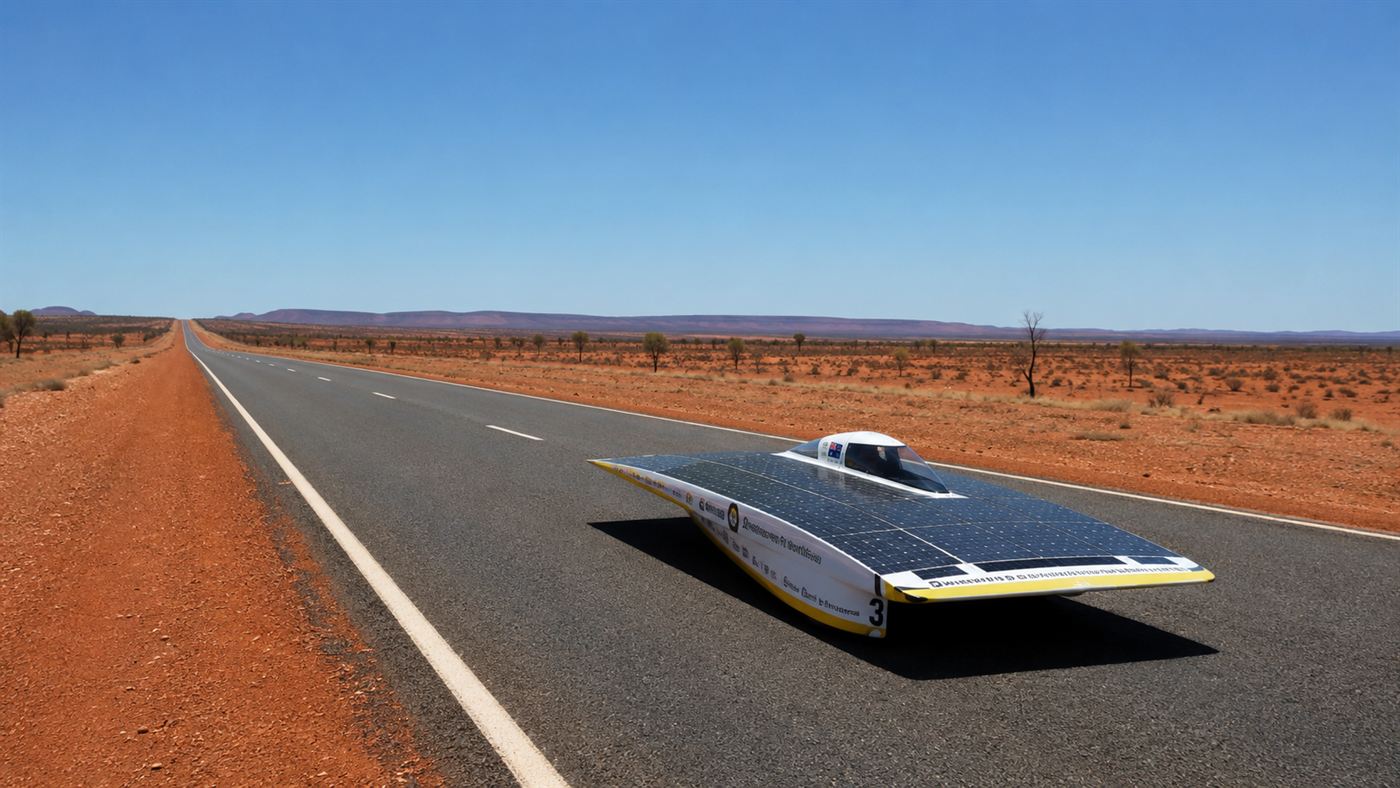
Teams drive featherweight, solar-skinned machines the length of Australia on nothing but the power of the sun, and for years the students of Solar Team Eindhoven kept winning its family-car class.
Their entries carried passengers and luggage rather than a single prone driver, which made them feel less like science fair projects and more like a preview of the road.
In 2016 a group of them, led by Lex Hoefsloot, decided to stop racing and start a company.
Lightyear existed to chase one seductive idea, that a car could be made efficient enough for the sun to do real work.
The most slippery car ever built
To make sunlight count, the engineers became obsessed with efficiency.
A few square metres of solar cells produce only a trickle of power, so the only way to turn that trickle into useful range is to build a car that wastes almost nothing.
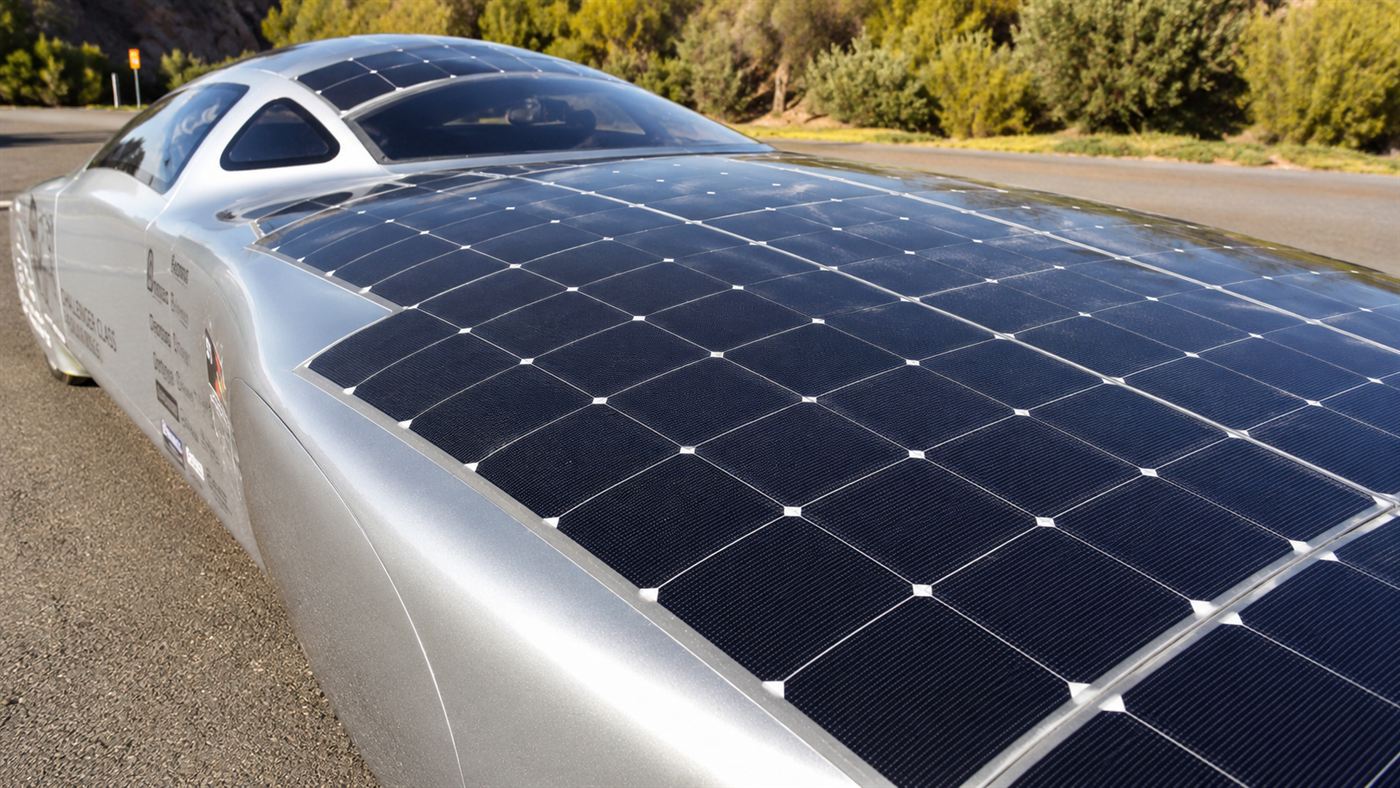
The Lightyear 0 ended up with a drag coefficient of just 0.175, the lowest of any production car ever measured, its body honed until the air slid off it.
Five square metres of solar cells, 782 of them, wrapped the roof, bonnet and tailgate, and on a sunny day they could add up to 70 kilometres of range on their own.
Four motors built into the wheels drove it, and its official range stretched to 625 kilometres.
The Lightyear solar car on sale for a few weeks, then gone
In June 2022 Lightyear pulled the covers off the finished car. As Dezeen reported, it was launched as the world's first production-ready solar-powered car.
Production was handed to Valmet Automotive in Finland, the contract builder behind some Mercedes and Porsche models, at a planned rate of about one car a week.
The first Lightyear 0s were delivered in December 2022.
Then, in January 2023, it all came apart: on the 23rd the company said it would drop the 0 to focus on a cheaper model, and four days later its production arm filed for bankruptcy. It is a fate that haunts car designers turned founders, none more painfully than Henrik Fisker, who went bankrupt building electric cars not once but twice.
A car that had taken six years and a quarter of a million euros apiece to build had been on sale for a matter of weeks.
The dream that ate the company
The plan after the crash was to come back with something the world might actually buy.
Lightyear restructured and pinned everything on the Lightyear 2, a mass-market solar car promised at around 40,000 dollars with a long waiting list behind it.
But the money and the engineering never lined up.
By January 2024, as Electrek reported, Lightyear had shelved its own solar cars entirely, replaced its founding chief executive, and reinvented itself as a supplier, selling solar roofs for other carmakers' electric vehicles instead.
The company that set out to build the solar car had given up building cars at all.
The honest catch
It is tempting to read Lightyear as a simple tragedy, but the truth is more useful than that.
The stubborn fact is that a car roof is a very small power station: even an excellent one adds only tens of kilometres on a good day, and nothing at all in a garage or under heavy cloud.
For most drivers, who park near a socket and cover modest distances, it is far cheaper to charge a normal electric car overnight than to buy a quarter-million-euro machine to harvest sunshine.
A solar skin makes the most sense in sunny places, on vehicles that sit outside in the light all day, which is a real but narrow niche.
Lightyear's bet was never that solar was useless, only that it could carry a whole car, and that was the part that did not pay.
And yet the idea refuses to die.
The very solar cells Lightyear could not sell as a car are now being fitted to other companies' vehicles, and rivals such as Aptera in the United States are still chasing the sun-fed car, so the dream has outlived the company that chased it hardest. It is the latest in a long line of electric vehicles that may have arrived before their moment, stretching back to mocked flops like the Sinclair C5, Britain's tiny electric trike.
Would you pay extra for a car that quietly tops itself up in the sun, or would you rather just plug in and forget about it? Tell us what you think in the comments.
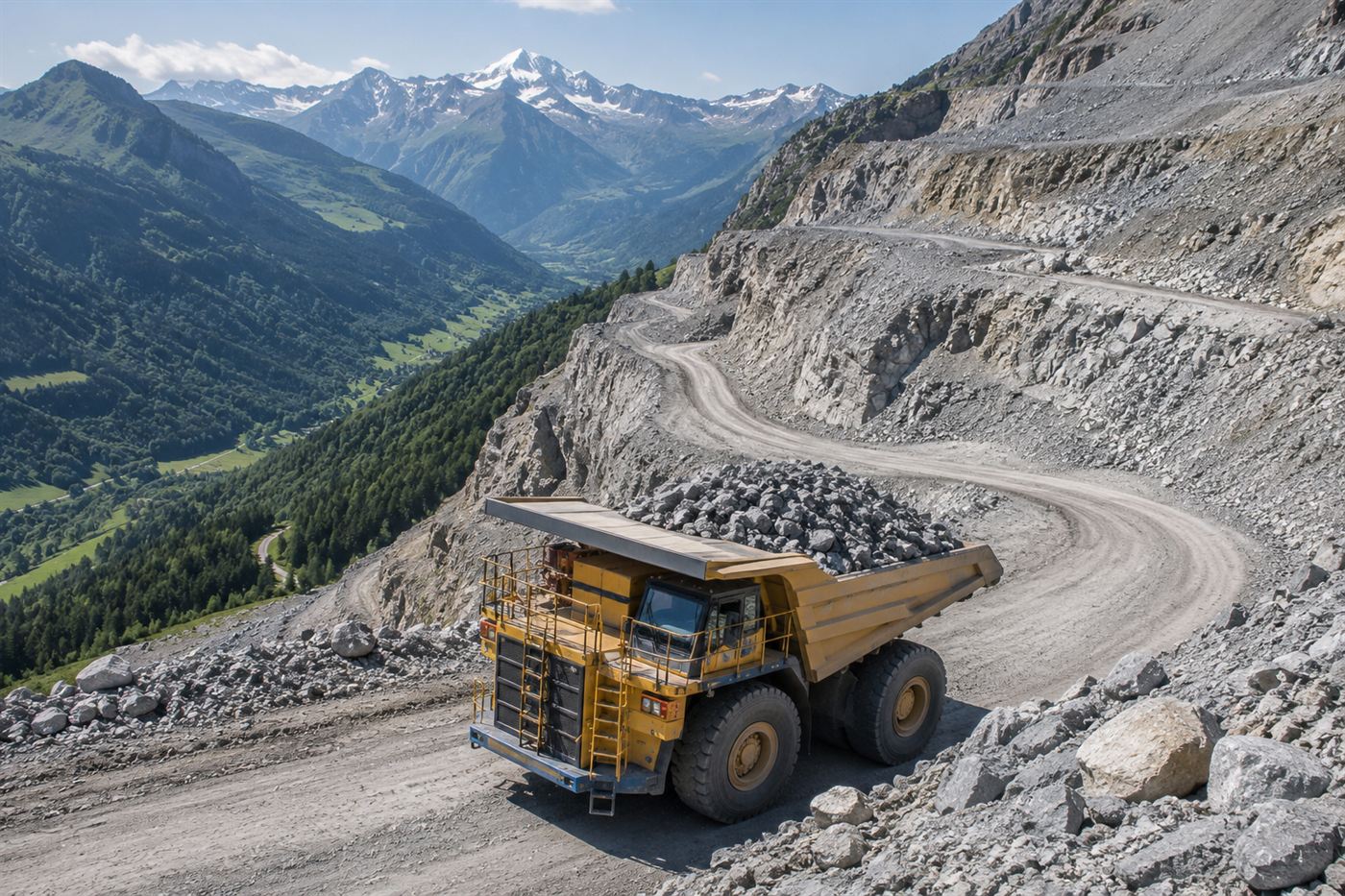
Related reading: The world's biggest electric vehicle never plugs in at all, a 110-tonne mining truck that charges itself on the way down the mountain, or the Fisker Karma, the beautiful electric car undone by a bankrupt battery maker and a hurricane.
See also: the solar plane that flew around the world on sunlight alone.

Maria Heloisa Barbosa Borges covers energy, heavy industry and the natural world for Watts & Wild, with an eye for the people caught where engineering meets the wild.