Germany put the world on the first hydrogen passenger trains and hailed them as the end of diesel, now the operator of its first hydrogen line is switching back to batteries
Hydrogen trains in Germany were supposed to be the clean, quiet future of the railway, and the country got there first. Just a few years after switching on the world's first all-hydrogen line in 2022, the state that led the way is quietly going back to battery-electric trains, because the green option turned out to cost too much.
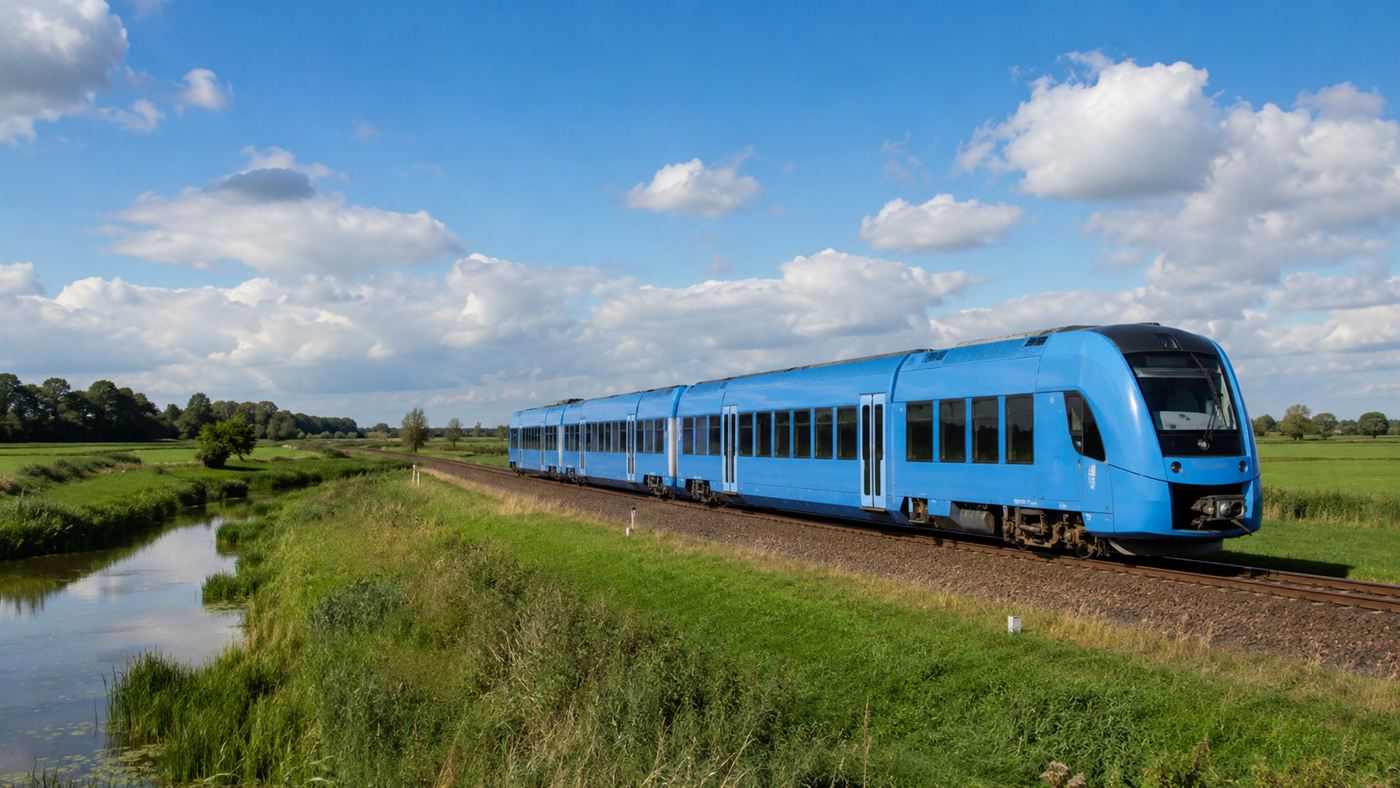
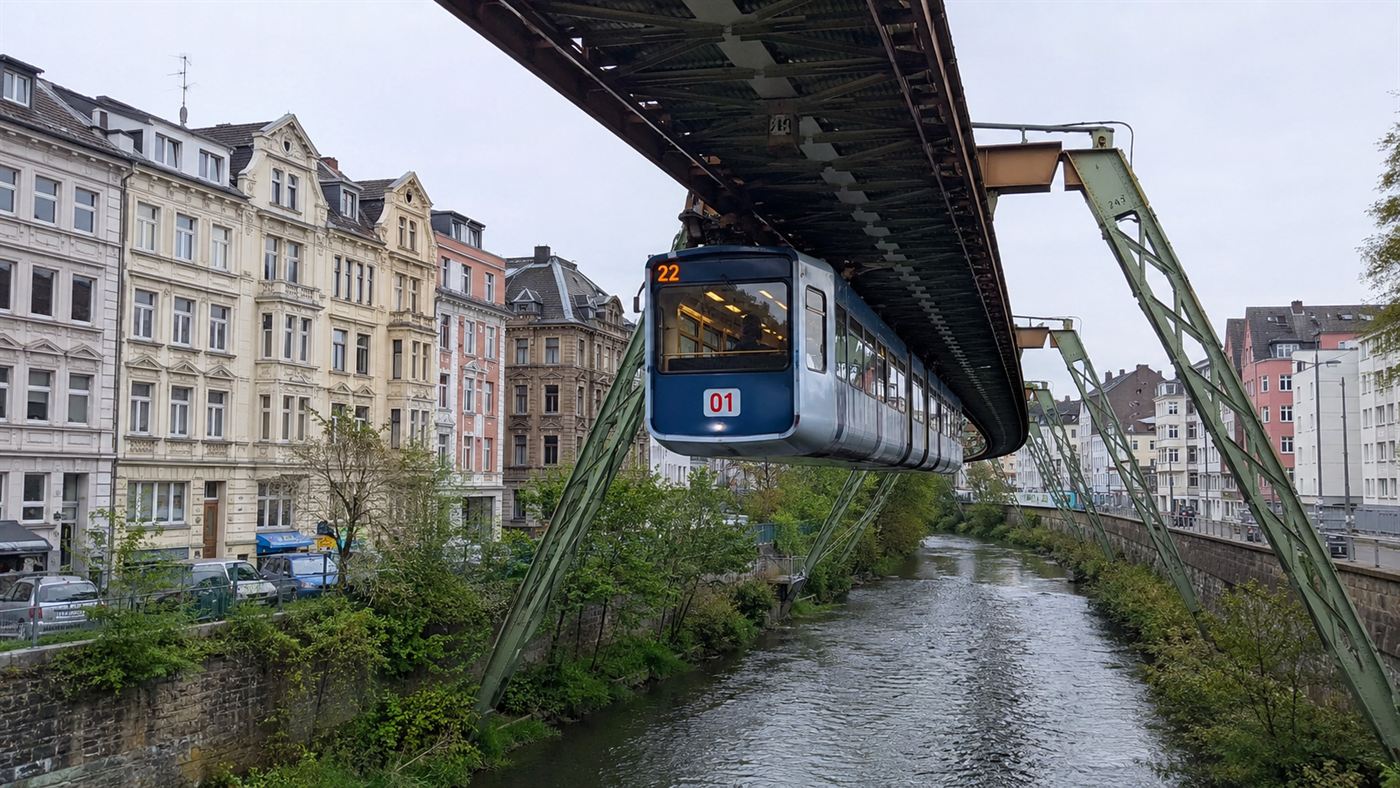
Germany's Coradia iLint was the world's first hydrogen passenger train, and the country has already started to move past it. Illustration: Watts & Wild.
Hydrogen trains looked like the perfect ending to a dirty story. For a century the rural branch lines of northern Germany ran on diesel, rattling and fuming through the marshes. Then in 2022 they were replaced by sleek blue trains that hummed along giving off nothing but water vapor, the first fleet of its kind anywhere in the world.
It was a genuine world first, and it made headlines everywhere. So it came as a jolt when, not long after, the same regional operator said it would not buy another hydrogen train and would order battery-electric trains instead. By late 2024 most of those celebrated machines had been pulled from service.
A hydrogen train carries fuel cells that turn that gas into electricity on board, giving off only water. Germany's Lower Saxony ran the world's first all-hydrogen passenger line from 2022 with 14 of them. Its operator has since decided that future trains will be battery-electric, which are cheaper to run, after concluding hydrogen simply cost too much.
How did Germany end up first with a hydrogen train?
The machine at the center of all this is the Alstom Coradia iLint, the world's first hydrogen passenger train.
It looks like an ordinary regional train, but instead of a diesel engine it carries pressurized tanks on the roof and fuel cells that combine that gas with oxygen to make electricity, leaving only water behind.
After test runs from 2018, a fleet of 14 Coradia iLint trains took over a whole regional network in Lower Saxony in 2022, the first line on Earth to run entirely on the gas.
It replaced the diesel trains that had worked those marshy branch lines for generations, and the world took notice.
Here at last was a way to clean up the thousands of rural routes that have no overhead electric wires, the lines that diesel had always owned.
For a moment, the hydrogen train looked like the obvious answer for every un-electrified railway in the world.
Why hydrogen trains in Germany lost to batteries
Then the operator did the math, and the romance wore off fast.
LNVG, the public transport authority for Lower Saxony that had ordered the famous fleet, announced that it would buy no more hydrogen trains.
Instead it plans to bring in 102 battery-electric trains from 2029, and it was blunt about the reason, saying the battery models are simply cheaper to operate.
The same operator that had wowed the world with the first hydrogen line had decided the technology did not pay, the kind of hard turn that also caught the solar-car startup Lightyear, which went from celebrated breakthrough to collapse in months.
By late 2024, most of the 14 hydrogen trains were sitting idle, sidelined by a mix of cost and reliability troubles.
It was a quiet, awkward end for a fleet that had been a poster child for green transport only two years earlier.
The catch hiding inside a hydrogen train
The problem was never that the hydrogen train did not work, because it did.
The problem is the energy bill, and it starts with simple physics.
To run a fuel cell on clean hydrogen you first make the gas with electricity, then compress it, store it, and convert it back to electricity on the train, and you lose energy at every step.
A battery-electric train just stores the electricity and uses it, so studies have found batteries beat hydrogen handily on both cost and efficiency.
Roughly speaking a battery train uses about 70 to 80 percent of the energy that goes into it, while the fuel-cell route can end up nearer 25 to 35 percent.
On top of that, fuel-cell multiple units can run up to around 35 percent more expensive to buy, run and maintain, and their fuel cells need replacing every few years.
There was even an industry shudder when engine maker Cummins sold off its fuel cell business after hundreds of millions of dollars in losses, including the unit that built the stacks for the Coradia iLint.
Batteries, wires, and the 500 diesel lines
None of this means trains go back to diesel, quite the opposite.
A modern battery-electric train charges from the overhead wires where they exist, then runs on its battery across the gaps that were never electrified.
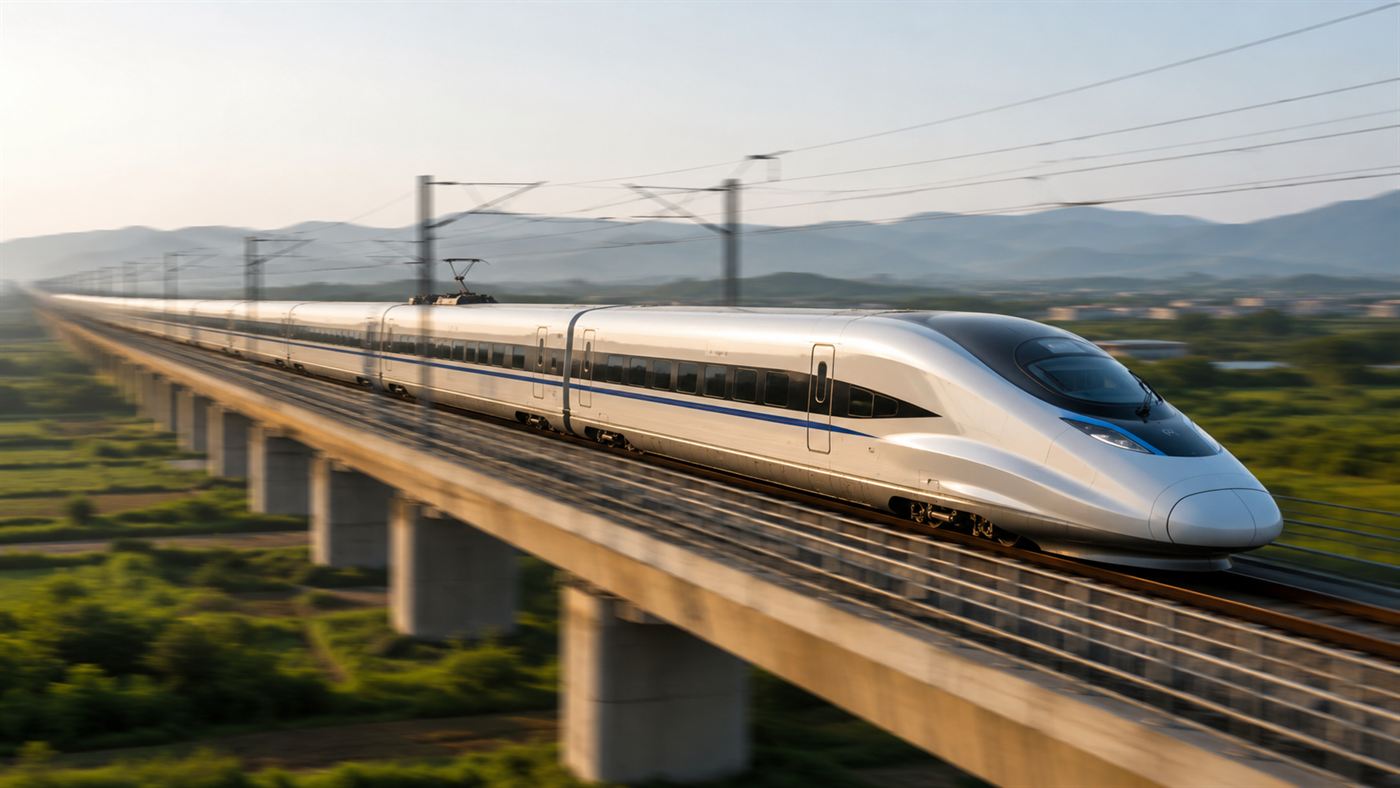
That covers most of the roughly 500 routes in Germany still worked by diesel, the same lines the fuel cell was meant to rescue, the unglamorous cousins of glamour projects like China's 450 kilometer per hour CR450, the fastest train in the world.
Where a line is long, remote and completely wireless, the gas can still make sense, because dragging a giant battery everywhere has limits too.
But for the everyday regional railway, the battery has quietly won the argument on price.
Germany pulls back, India doubles down
Here is the twist on top of the twist.
Just as the country that invented the hydrogen train is backing away, another is sprinting toward it.
India has built what it calls the longest and most powerful hydrogen train in the world, a 10-coach set for the Jind to Sonipat line in Haryana.
Its two power cars produce a combined 2,400 kilowatts and can carry up to 2,600 passengers, fed by green hydrogen from a dedicated plant.
It is several times the size of the modest German originals, a national showpiece rather than a quiet branch-line workhorse.
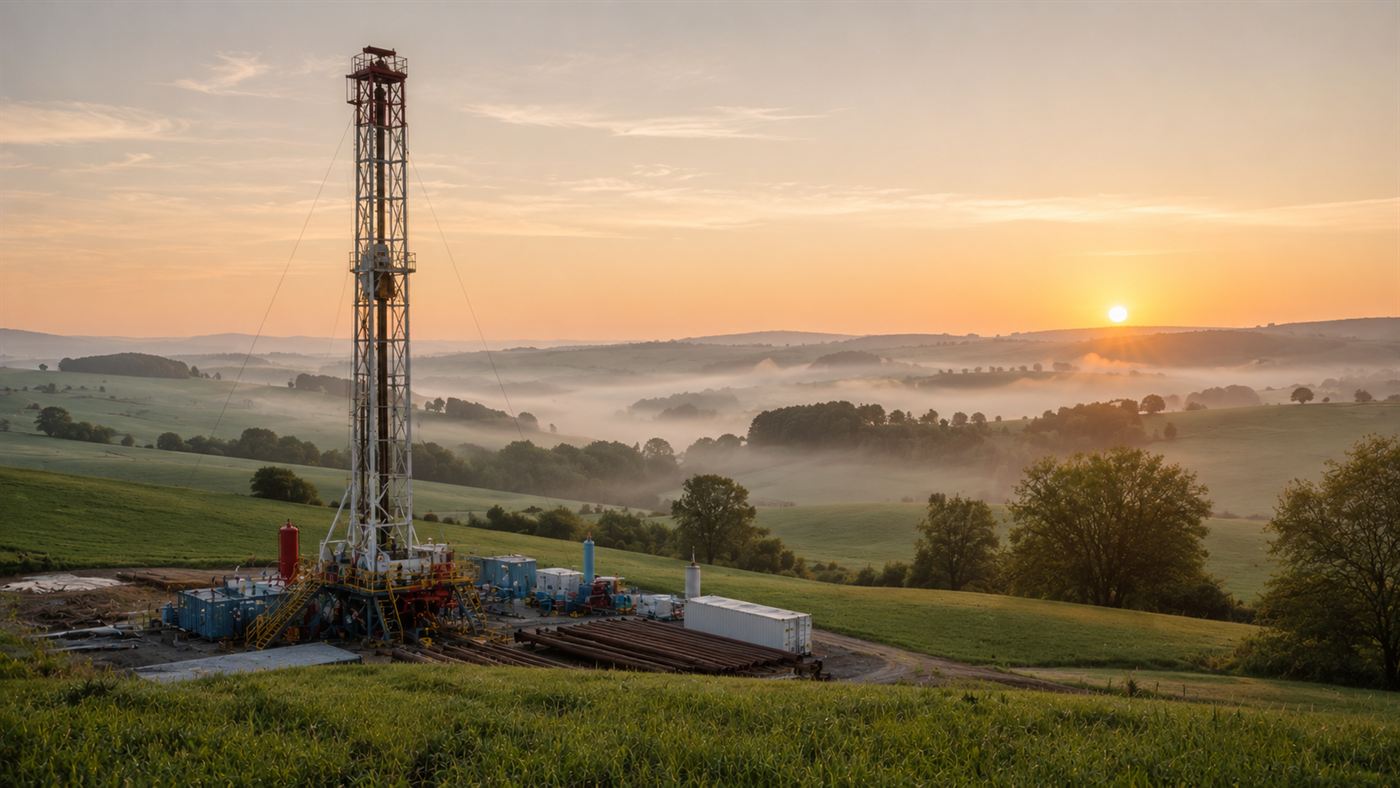
The hydrogen train, in other words, has not died, it has changed countries, the same restless way the hunt for clean fuel keeps moving on to natural hydrogen buried in the ground.
The honest catch
It would be easy to read Germany's retreat as proof that hydrogen trains were a mistake, and that is too simple.
The Coradia iLint did exactly what it promised, hauling passengers for years with water as its only exhaust.
Lower Saxony's decision was about money and efficiency on short regional hops, not about the technology failing in some basic way.
On long, isolated routes with no wires, and in industries like steel where there is no battery substitute, clean hydrogen still has a real job, as Sweden is betting with its hydrogen-powered green steel plant.
The lesson is narrower and more useful than hype or backlash, that the right green tool depends entirely on the route in front of you.
Sometimes that tool is a fuel cell, and more often, it turns out, it is a battery and a length of wire.
Germany gambled that hydrogen would be the clean heir to the diesel branch line, ran the experiment in public, and then followed the numbers somewhere cheaper.
That is not a failure so much as a country doing the homework the rest of the world can now read.
When the cleanest headline option also turns out to be the most expensive, should a railway chase the bold bet or quietly take the cheaper, more efficient one? Tell us in the comments.