A plane as wide as a jumbo jet but as light as a car flew around the world on sunlight alone, and Solar Impulse did it without burning a single drop of fuel
It had the wingspan of a jumbo jet and weighed about as much as a car. Between 2015 and 2016, Solar Impulse 2 became the first aircraft to circle the planet on nothing but sunshine, flying through the night on stored solar power, with two Swiss pilots taking turns in its single seat.
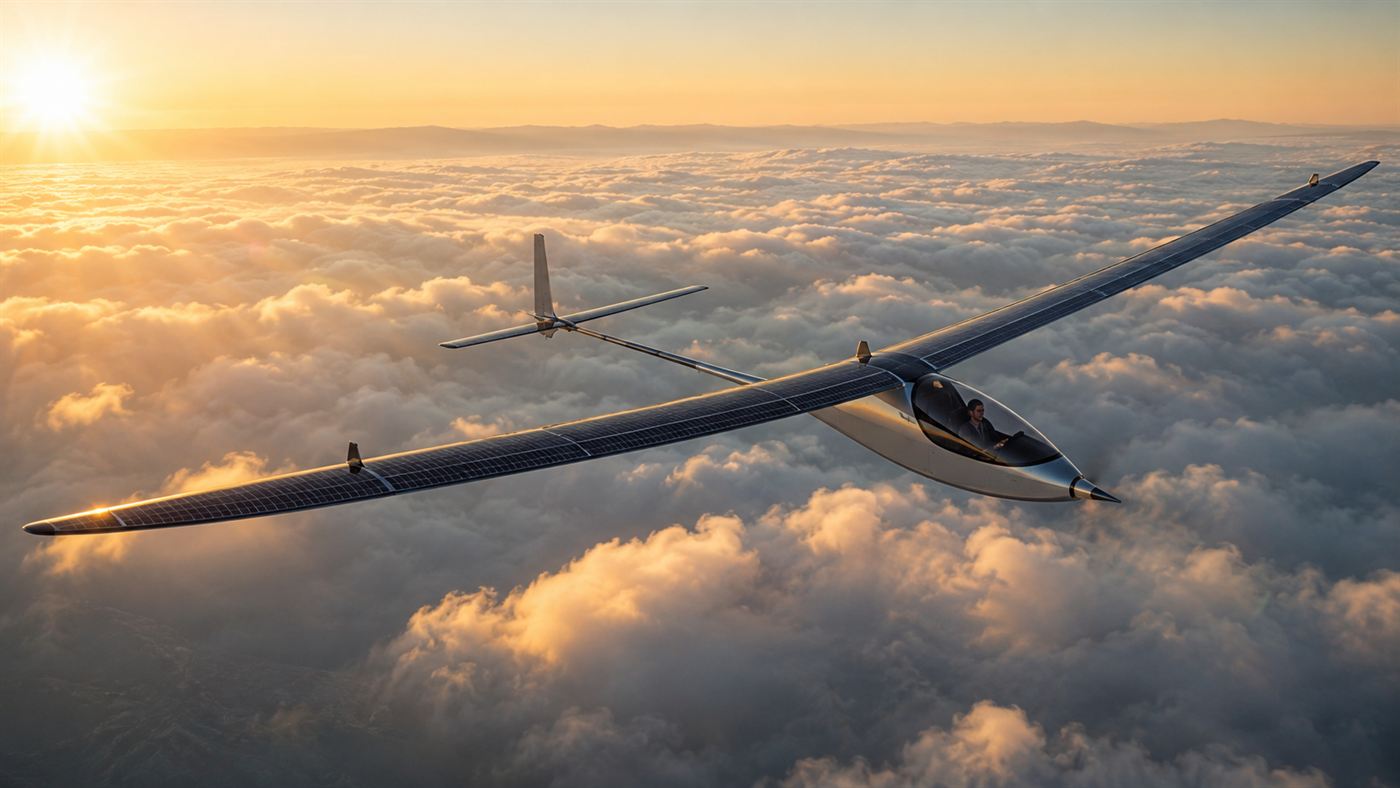
A wing wider than a 747, carrying a single pilot and 17,000 solar cells. Illustration: Watts & Wild.
Solar Impulse is the airplane that did something aviation long called impossible: the flight of Solar Impulse around the world ran on nothing but sunlight, without a drop of fuel. On July 26, 2016, the spindly, sun-powered craft touched down in Abu Dhabi to close a 40,000-kilometer loop, and as CNBC reported, it became the first aircraft to circumnavigate the globe on solar power alone.
The feat took two Swiss pilots, Bertrand Piccard and André Borschberg, who flew the single-seat solar plane in turns across 17 legs starting in March 2015. By day the wing's solar cells drank sunlight and charged the batteries; by night the plane glided on that stored power until the sun came up. No airliner has ever had to think that way, because no airliner runs on the sun.
How did Solar Impulse fly at night? During the day its roughly 17,000 solar cells charged onboard batteries while the plane climbed to about 8,500 metres. After sunset it slowly descended and ran on the stored energy until dawn, when the cycle began again, which let it stay aloft for days without fuel.
How did Solar Impulse fly around the world on sunlight?
The aircraft is a flying contradiction.
Its wing stretches about 72 metres, wider than a Boeing 747, yet the whole machine weighs only around 2,300 kilograms, about the same as a large car.
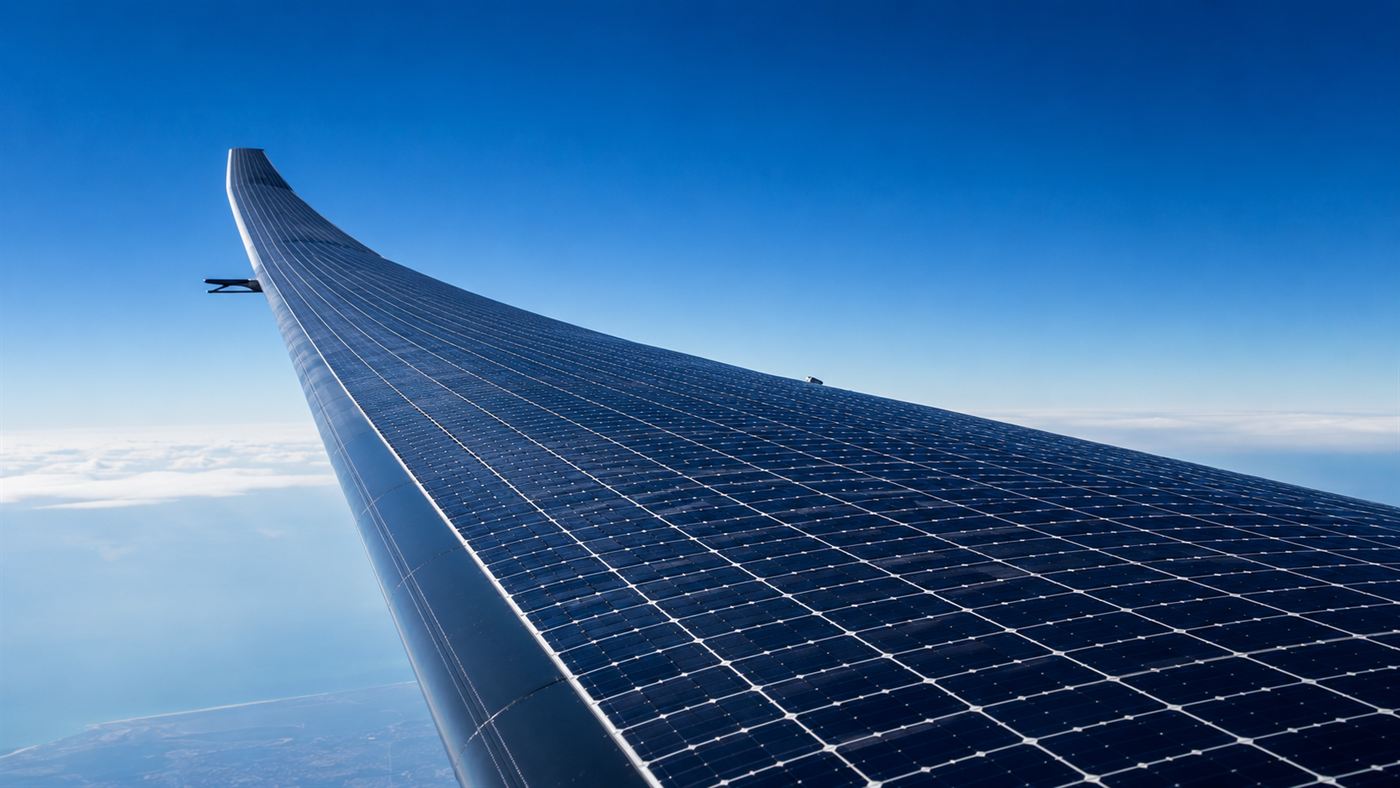
That wing is paved with 17,248 solar cells that feed four electric motors and charge a bank of batteries tucked into the engine pods.
The design only works because everything else is sacrificed to lightness, from the carbon-fiber frame to the unheated, unpressurized cockpit.
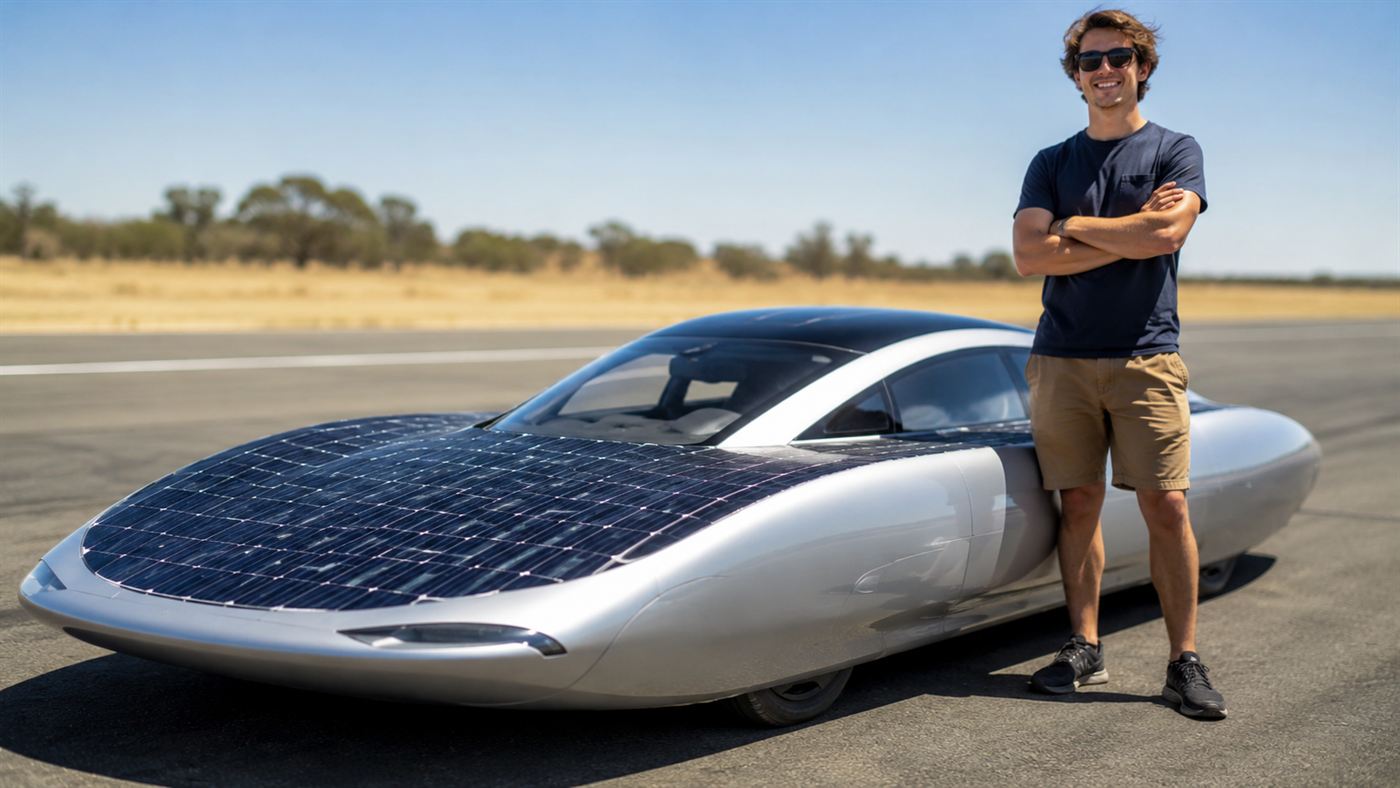
It is the airborne cousin of the solar car that tried to pull off the same trick on the road, and it ran into the same hard ceiling of how much energy sunlight can deliver.
The payoff is that, handled carefully, a solar plane can in principle fly forever, charging by day and sipping from its batteries by night.
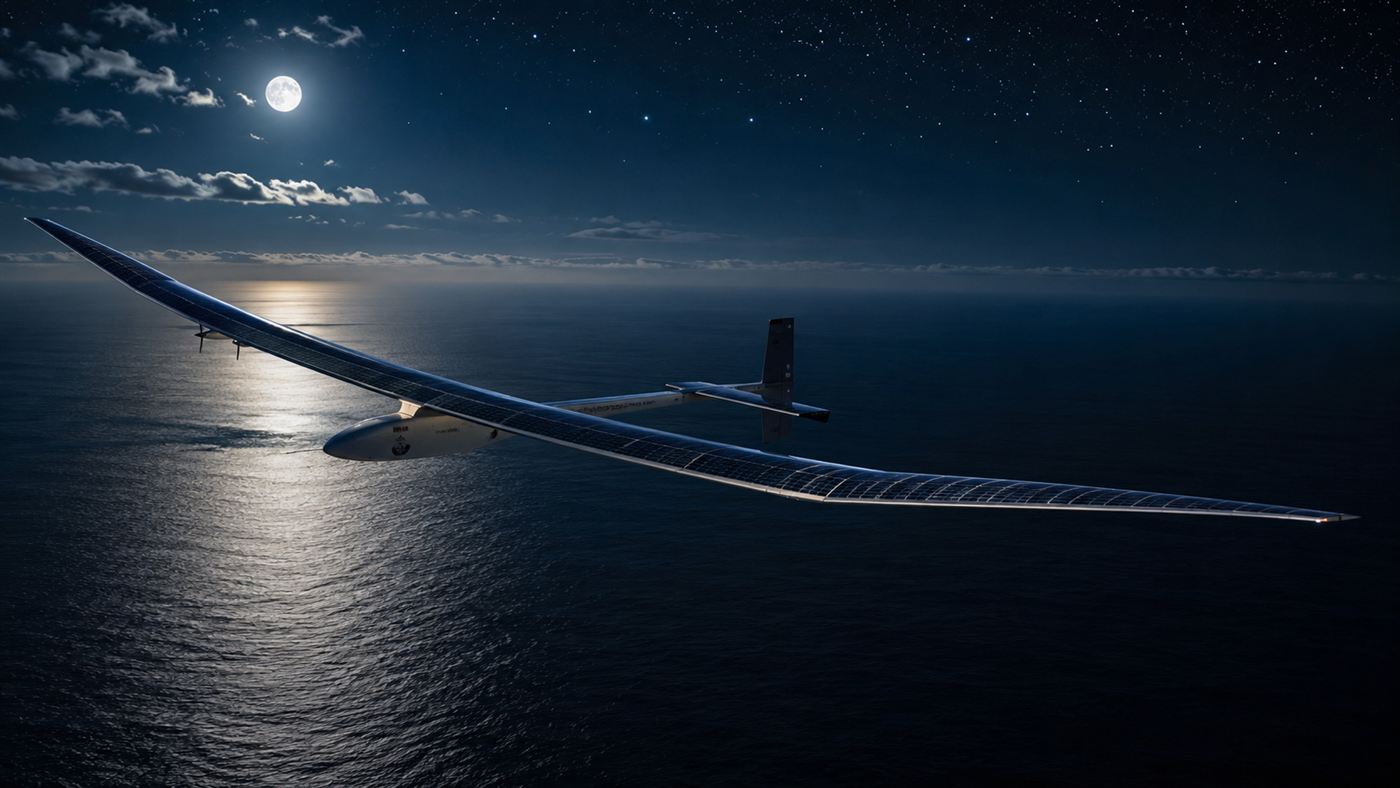
Five days alone over the Pacific
The hardest leg almost did not get a witness.
In July 2015 André Borschberg flew Solar Impulse alone from Japan to Hawaii, staying airborne for five days and five nights without landing.
That single hop lasted about 118 hours and set a record for the longest solo flight ever made, in any aircraft.
There was no room to lie down, so he slept in twenty-minute snatches and did yoga in the seat to stay alert over an empty ocean.
It was as much a test of a human being as of a solar plane, the kind of endurance that earned the two pilots a spot among National Geographic's Adventurers of the Year.
A family that explores the extremes
Bertrand Piccard did not come to this out of nowhere.
He is a psychiatrist and balloonist who, in 1999, made the first nonstop balloon flight around the world.
His grandfather, Auguste Piccard, rode a balloon into the stratosphere in 1931, and his father, Jacques Piccard, descended to the deepest point in the ocean in 1960.
Three generations of one family have now touched the edge of the sky, the bottom of the sea, and a lap of the planet on sunlight, which is a strange and wonderful kind of inheritance.
Why fly a plane that cannot carry passengers?
Solar Impulse was never meant to replace the jet.
It was built as a flying argument, a way to prove that clean technology could do something most people thought was absurd.
If the sun could push a piloted plane around the world, Bertrand Piccard argued, then it could surely run the far easier machines we use on the ground.
That message, more than the aircraft, was the point, and it fed the Solar Impulse Foundation's campaign to gather a thousand clean, profitable solutions for cutting emissions. It carried on a tradition begun by featherlight pioneers like Paul MacCready, whose pedal and solar craft proved clean flight was possible.
The honest catch
For all its romance, Solar Impulse is a one-off that bumps into physics.
It carries a single person, crawls along at an average of roughly 75 kilometres an hour, and its vast, delicate wing is at the mercy of the weather.
On the Pacific crossing its batteries overheated, and the damage grounded the plane in Hawaii for about nine months until it could be repaired.
Sunlight simply does not pack enough energy per square metre to haul hundreds of passengers, so no descendant of this solar plane will ever be an airliner, any more than today's electric air taxis will cross an ocean.
Piccard has since announced Climate Impulse, a plane powered by green hydrogen that he hopes to fly nonstop around the world later this decade, a sign he reads the limits of solar flight as clearly as anyone.
Solar Impulse will never be the solar plane that takes you on holiday. The more practical breakthrough came later and smaller, with the first electric aircraft certified to fly, a humble training plane.
But it did something arguably harder, which was to take a wild idea, fly it around the world in silence on sunlight, and make a million people believe clean machines are possible.
Was a fuel-free flight around the world worth it as a statement, or should that effort have gone into machines we can actually scale? Tell us in the comments.