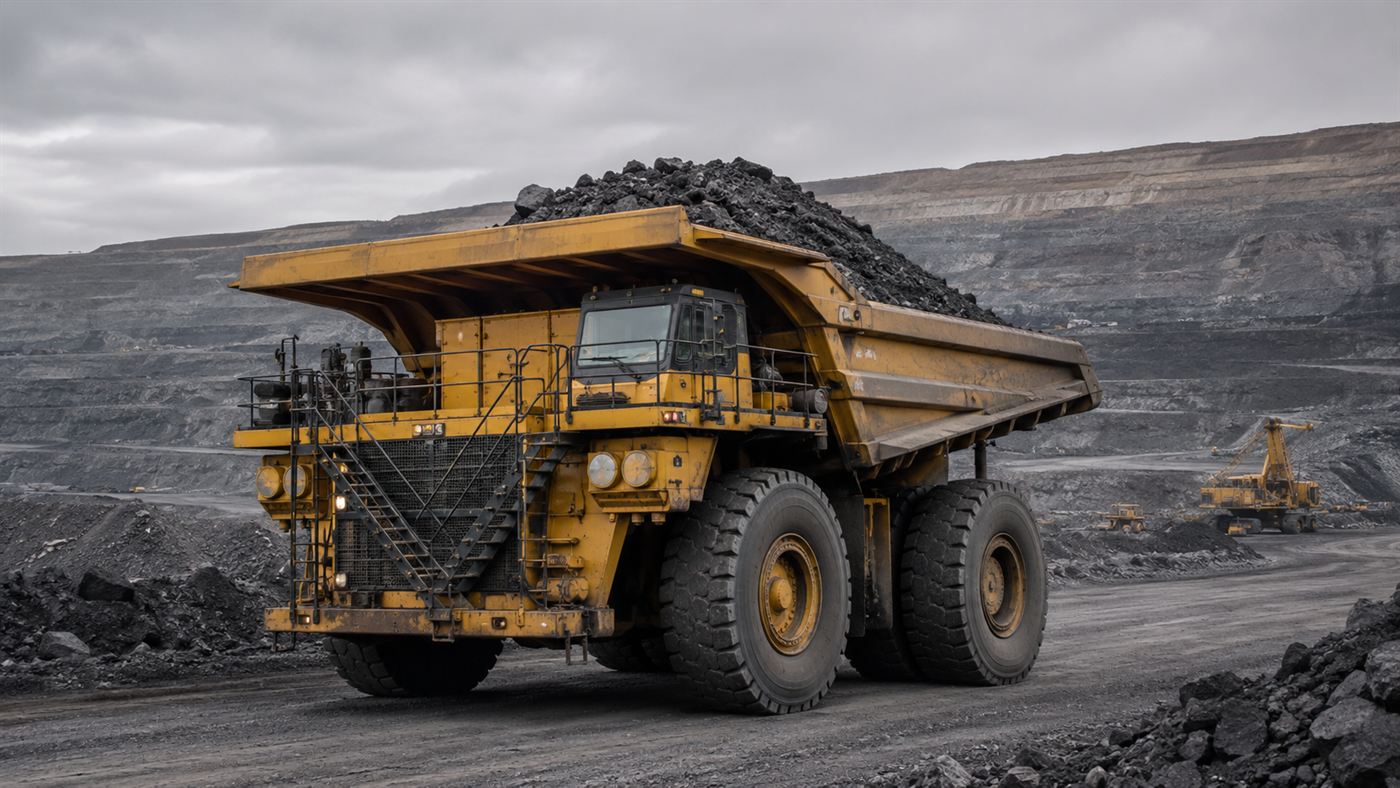
The world's largest electric vehicle is a 110 ton mining truck in Switzerland that never has to be plugged in, because hauling rock downhill all day makes more power than it burns climbing back up
Every electric car you have ever seen has the same weakness: sooner or later it has to stop and drink from the grid. High in the hills above Biel, Switzerland, there is one giant exception. A 110 ton electric dump truck has been working a quarry for years, and in all that time it has never once been charged from an outlet. It makes its own electricity, and it makes more than it needs.
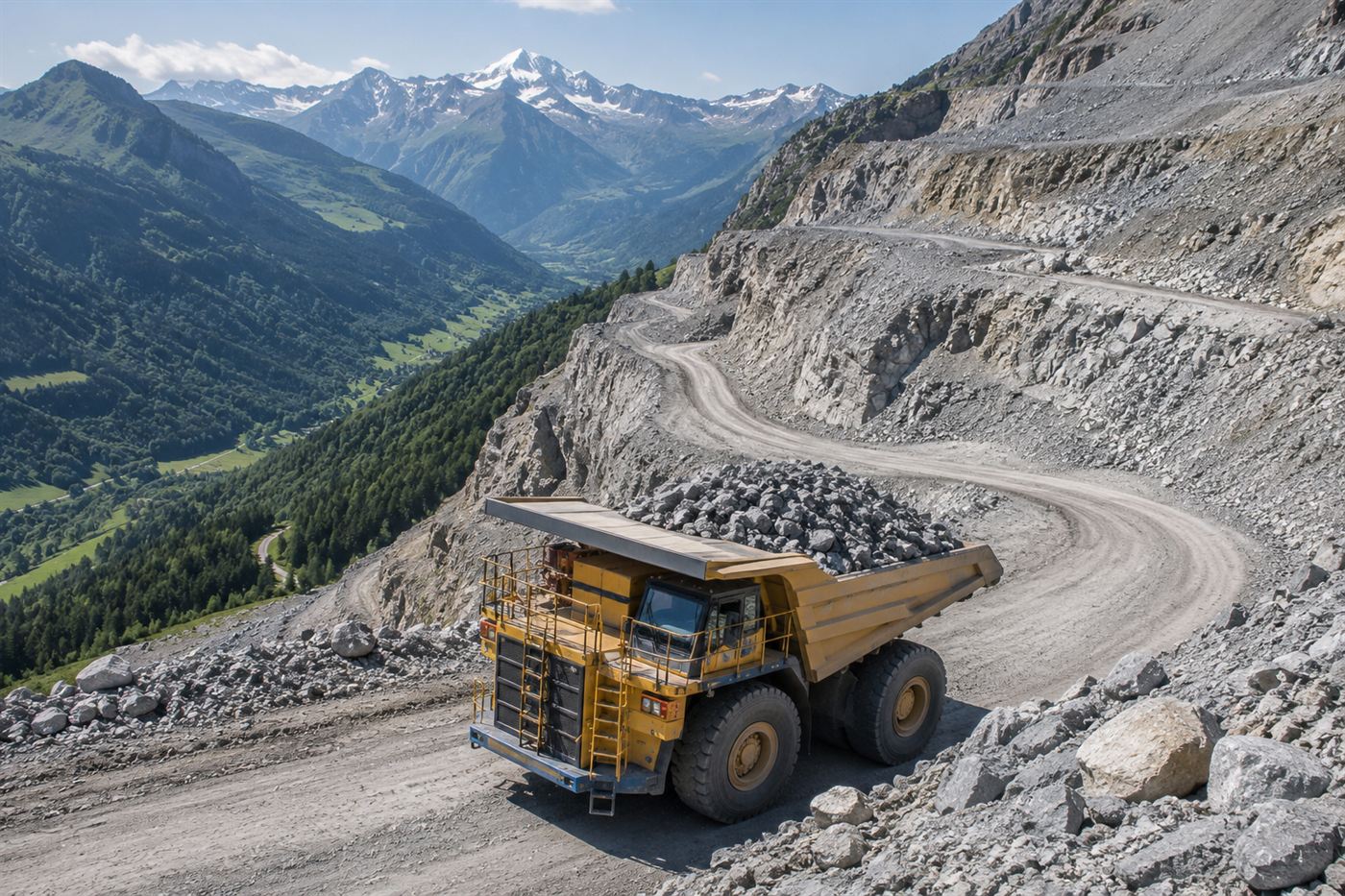
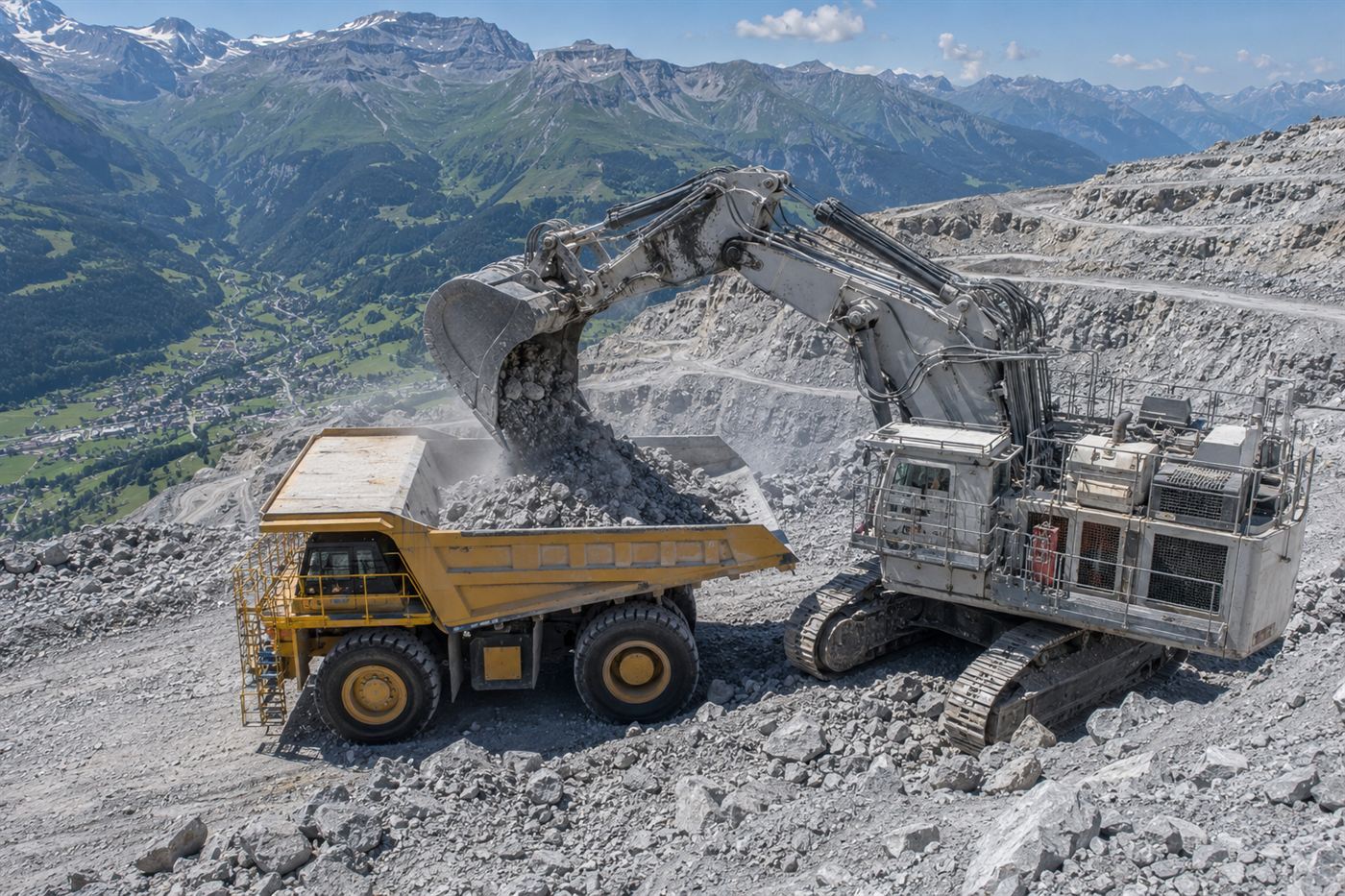
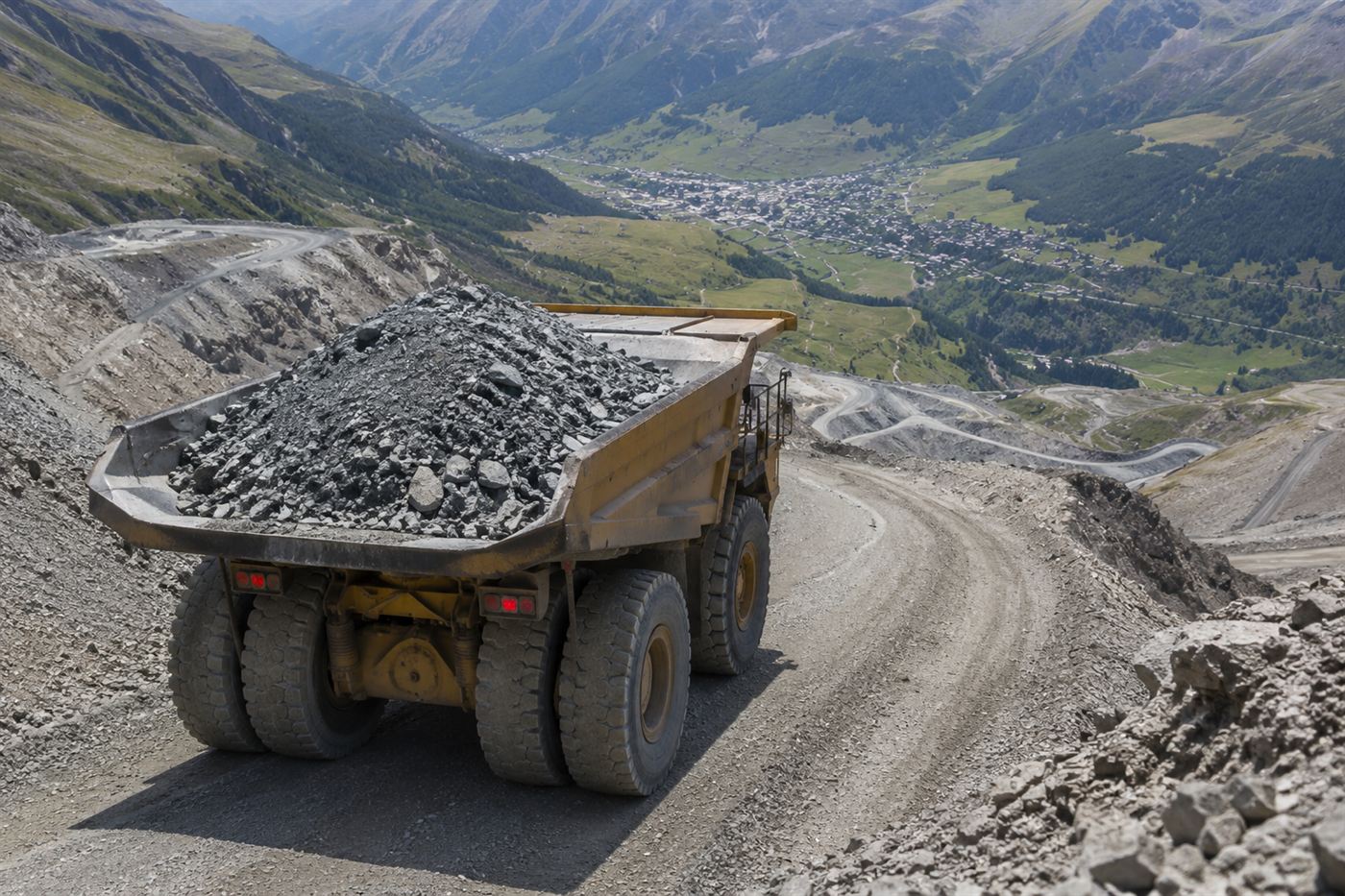
The eDumper hauls 65 tons of rock downhill, and brakes the whole way. Illustration: Watts & Wild.
It is called the eDumper, and it started life as an ordinary diesel monster, a Komatsu mining truck of the kind that spends its life burning fuel by the barrel. The Swiss engineering firm eMining tore out the engine and rebuilt it as the biggest battery-powered vehicle on the planet, a self-charging electric truck that refills itself on the way down. Then they pointed it at a hill and let physics do something most electric vehicles can only dream of.
The trick is not really a trick at all. It is just a quarry that happens to sit above the cement plant it feeds, and a truck clever enough to fall in the right direction.
A truck that runs the wrong way round
Think about how a normal vehicle uses energy. You spend fuel getting up to speed and climbing hills, and you waste most of it as heat in the brakes every time you slow down. An electric vehicle claws a little of that back with regenerative braking, turning the motors into generators when you lift off. For a city car the gain is modest, because a city car is light and does not spend its day rolling down a mountain. Electrifying heavier long-haul trucks is harder, which is why some engineers want to power them from the road itself, on an eHighway of overhead wires.
The eDumper is the opposite of a city car in every way that matters. Its whole job is to carry crushed limestone and marl down from the quarry to the works below. It climbs the slope empty, weighing around 45 tons, then is loaded with 65 tons of rock at the top and sent back down. The heavy trip is always the downhill one, and on the way down the truck is braking almost the entire time. Every one of those braking moments is the motors running backwards, pouring current into the battery.
How a truck charges itself
Here is the part that sounds like a perpetual motion scam but is nothing of the sort. Going up empty costs the truck a certain amount of energy. Coming down with more than double the weight, gravity gives back more than that climb ever took, and the regenerative system is big enough to catch the surplus instead of wasting it as brake heat. As Green Car Reports explained when the truck first made headlines, that downhill harvest more than refills whatever the eDumper spent climbing back up the 13 percent grade, so the battery ends each loop fuller than it started.
The energy is not coming from nowhere, which is the key to understanding why this is real engineering and not a physics fairy tale. It comes from height. The rock sitting at the top of that quarry holds gravitational potential energy, put there over millions of years of geology, and the truck is simply a very large machine for cashing that energy in on the way down. The eDumper is less an electric vehicle than a mountain slowly discharging itself, one truckload at a time.
The numbers that make it work
Under the dumper sits a battery of about 600 kilowatt-hours, roughly the capacity of six long-range Teslas stacked into one machine, and weighing somewhere around four and a half tons on its own. That is a preposterous amount of battery for a road car and exactly the right amount for a vehicle that needs to swallow a mountain's worth of braking energy without ever filling up.
The daily routine is where it adds up. The eDumper runs that loop roughly 20 times a day, and according to its makers it finishes each day with around 200 kilowatt-hours of surplus electricity it never asked the grid for. As Mining Weekly reported, eMining found the truck performing even better than expected in real service, netting on the order of 77 megawatt-hours of extra energy across a year. The diesel truck it replaced would have burned tens of thousands of litres of fuel to do the same work, and eMining estimates the swap avoids up to 196 tons of carbon dioxide annually.
Why it never needs the grid
Put all of that together and you get the headline that sounds too good to be true. The largest electric vehicle in the world has no charging schedule, no cable, no overnight stop at a depot plug. As ZME Science put it, the world's biggest EV fully recharges itself, and in fact ends most days with power to spare. In principle that surplus could even be fed back to run other equipment at the site, the truck quietly becoming a power station that also moves rock.
It is a strange inversion of everything that makes range anxiety a thing. Drivers of electric cars plan their lives around the next charger. This three-storey machine simply goes to work, and the work is what keeps it charged.
The honest catch
Before anyone declares the end of charging stations, it is worth being clear about why this works, because the reasons are also its limits. The eDumper is energy positive for one specific reason: it almost always travels loaded downhill and empty uphill. Flip that geography, a quarry at the bottom of a valley hauling rock up to a plant on a ridge, and the very same truck would drain its battery fast and need charging like anything else. This is not a self-powering machine you can drop anywhere. It is a self-powering machine for one particular shape of hill.
It is also a single, purpose-built vehicle rather than a fleet you can order from a catalogue, and the giant battery that makes the magic possible carries its own manufacturing footprint of mining and emissions before it ever saves a gram of carbon. None of that erases the achievement. It just means the right way to read the eDumper is not as free energy, but as a near-perfect match between a machine and the exact job it was built to do.
Why a self-charging electric truck matters more than it looks
Heavy mining vehicles are some of the thirstiest diesel burners on Earth, and they have long been treated as too big, too remote and too hard-working to electrify. The eDumper is a standing argument against that excuse. It shows that the biggest, dirtiest classes of machine can not only go electric but, in the right setting, run cleaner than carbon-neutral and actually generate power.
There are quarries, mines and hillside haul roads all over the world with the same downhill-loaded geometry, and every one of them is a place this idea could work. The world's largest electric vehicle is not a concept car or a billionaire's toy. It is a working truck in a Swiss quarry, doing an honest day's labour and ending each shift with more energy than it began, which might be the most quietly radical thing an electric vehicle can do.
A 110 ton truck climbs a Swiss hill empty, falls back down it loaded, and somehow ends the day with electricity to spare. Is the self-charging eDumper a glimpse of how we electrify heavy industry, or just a lucky accident of one perfectly shaped hill? Tell us what you think in the comments.
Related reading: BYD's new megawatt platform charges an EV with about 400 km of range in just 5 minutes at a record 1,000 kW, roughly as fast as a petrol fill-up. See also the Tesla Semi, which finally reached real volume production in 2026.