The same sphere of plutonium killed two scientists a year apart, each by a slip of the hand, and the men who built it called it the demon core
The demon core was a 6.2-kilogram ball of plutonium built to be the heart of a third atomic bomb. The war ended before it could be dropped, so it stayed in a Los Alamos lab, where in two separate accidents it killed the physicists who dared to get too close.
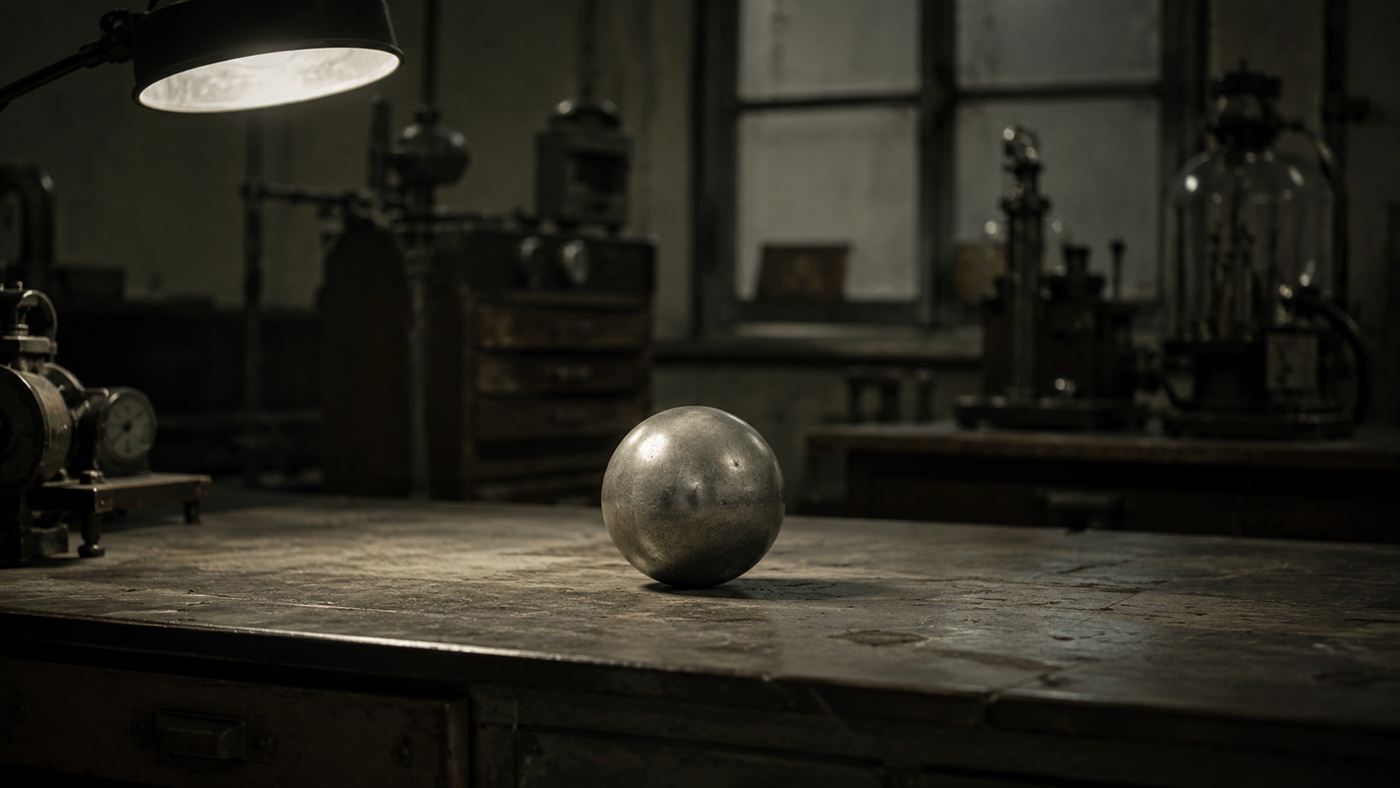
A sphere of plutonium the size of a grapefruit, machined for a bomb that was never dropped. Illustration: Watts & Wild.
The demon core never made it to a target. It was a 6.2-kilogram sphere of plutonium, machined in 1945 to sit at the center of the third atomic bomb the United States was ready to drop on Japan. Japan surrendered first, and the finished plutonium core was left in the laboratories at Los Alamos, New Mexico, waiting for a war that was suddenly over. It was the grim far end of a road that had begun three years earlier with Enrico Fermi's Chicago Pile-1, the first nuclear reactor.
What it found instead were the scientists themselves. Over the next nine months the same fist-sized ball of metal killed two of them in almost identical accidents, each set off by a tiny slip of the hand. As Atlas Obscura has documented, the men who handled it had a darker phrase for the work they were doing: they called it tickling the dragon's tail.
What was the demon core? It was a 6.2-kilogram sphere of plutonium made at Los Alamos in 1945 as the core of a planned third atomic bomb. After Japan surrendered it was used for research instead, and two criticality accidents involving it, in 1945 and 1946, killed the physicists Harry Daghlian and Louis Slotin.
What is a criticality accident?
To understand the demon core you have to understand what almost happened to it, again and again. A lump of plutonium sits quietly until enough neutrons start splitting enough atoms to sustain a chain reaction, the state called criticality. Pack the metal tightly, or surround it with a material that bounces escaping neutrons back inside, and you can tip a safe sphere over that edge in an instant.
When that happens outside a reactor or a bomb, the result is a criticality accident. It is not an explosion. It is a single savage pulse of neutron and gamma radiation, often announced by a blue flash as the air itself ionizes and a wave of heat on the skin. The core does not even look different afterward. The damage is done entirely to the people standing next to it, in less than a second.
Harry Daghlian and the dropped brick
The first man the core killed was Harry Daghlian, a 24-year-old physicist, working alone late on the night of August 21, 1945. He was stacking bricks of tungsten carbide around the sphere, building a wall of neutron reflector to see how close he could push it toward criticality. As he moved one last brick over the assembly, it slipped from his fingers and fell straight onto the core.
For an instant the sphere went supercritical and a blue flash filled the room. Daghlian knocked the brick away with his bare hand, ending the reaction, but the dose was already in him: around 510 rad, well past what a body can survive. He fell into a coma and died 25 days later, the first person ever killed by a criticality accident. The same quiet sphere went back into its case, waiting.
Louis Slotin and the screwdriver
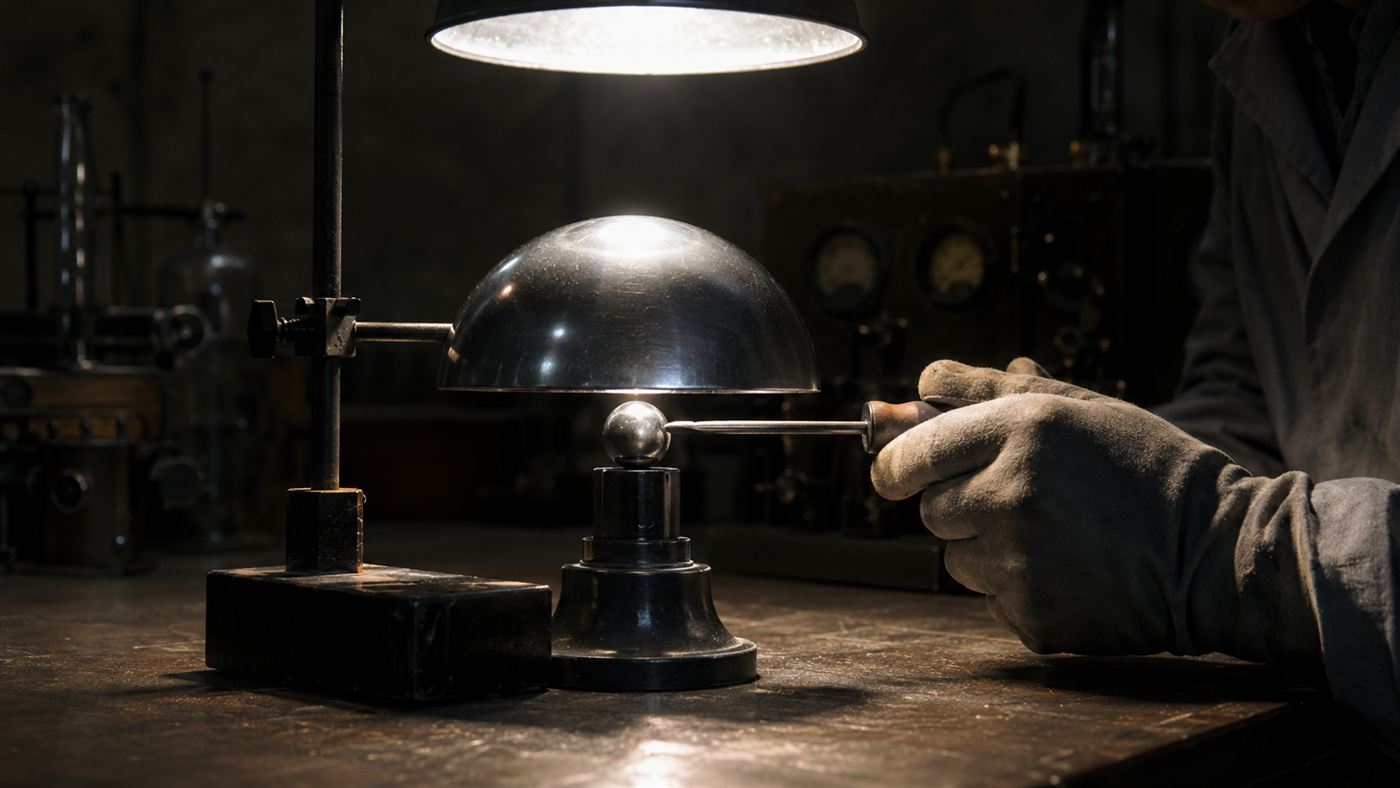
Nine months later, on May 21, 1946, the second accident played out almost like a sequel. Louis Slotin, a Canadian physicist who had armed the Trinity test device, was demonstrating a criticality experiment to colleagues. He lowered a dome of beryllium, another neutron reflector, over the core, and kept a sliver of air open between them using nothing but the blade of a screwdriver. It was a shortcut the lab's own experts had warned was reckless.
The screwdriver slipped. The dome dropped flush onto the sphere, the core went supercritical, and the room lit with the same blue flash and a pulse of heat. Louis Slotin flung the dome off with his hand within a second, taking the worst of the radiation himself and shielding the seven other people in the room. He absorbed roughly 1,000 rad, knew almost at once that he was a dead man, and died nine days later. The men around him, the ones he had shielded, mostly survived.
Why did they call it the demon core?
It was only after Slotin that the sphere got its name. A single object had now killed two careful, brilliant men in two separate accidents, both by the smallest of slips, and the staff at Los Alamos started calling it the demon core. The eeriness was not supernatural so much as statistical: the odds of the same core claiming two lives that way felt like something out of a ghost story rather than a physics lab.
There was a bleak irony underneath the nickname. The sphere had been forged to end thousands of lives in a single morning over a Japanese city. Robbed of that purpose by the surrender, it seemed to turn inward, killing the very people who had made it. The demon core had been the third bomb, and in a sense it still went off, just slowly, and only on its makers.
What changed after the demon core
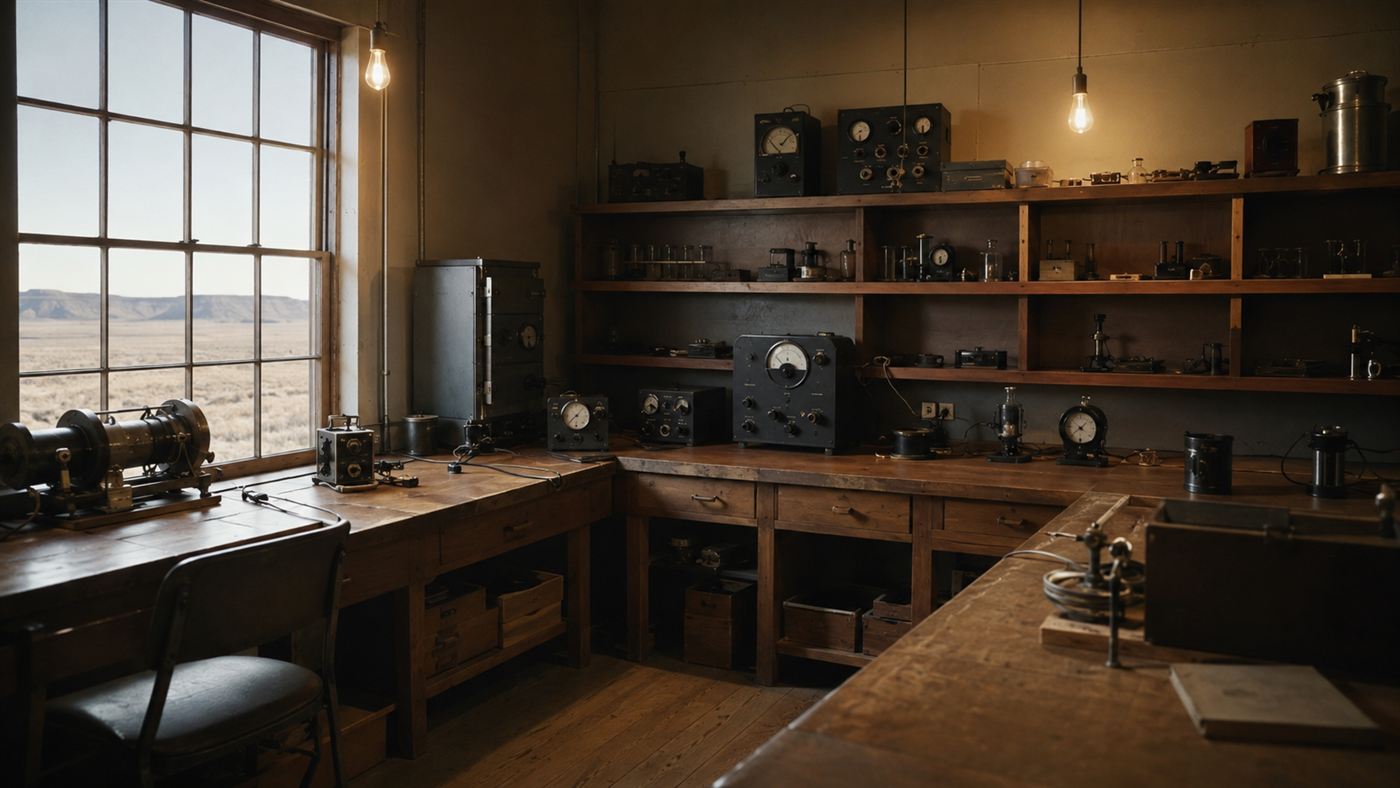
Slotin's death finally forced the change that should have come a year earlier. Hands-on criticality experiments at Los Alamos were banned, and from then on the dangerous assemblies were done by remote control, with scientists watching from behind shielding a quarter of a mile away. The era of standing over a live plutonium core with a screwdriver was over.
The core itself outlived both men only briefly. With the safety rules rewritten and its reputation ruined, the plutonium was melted down and recycled into the stockpile, blended into new cores for later weapons tests. The demon core stopped existing as a single object, which means the metal that killed Daghlian and Slotin is, atom for atom, still out there somewhere in the history of the American arsenal.
The honest catch
It is worth separating the legend from the physics, because the demon core attracts myth like few objects in science. Nothing about the sphere was cursed or unlucky. Both deaths came from the same human source: brilliant people in a hurry, taking hands-on risks with a material that punishes a single misjudgment instantly and without appeal. The core was not evil. The procedures were simply unforgivable.
Some of the vivid details, the exact words spoken, the precise choreography of Slotin's save, have been polished by retelling over eight decades, and the dose figures are estimates reconstructed after the fact. What is not in doubt is the core lesson the accidents burned into nuclear science: that with fissile material, the gap between routine and fatal can be the width of a screwdriver blade.
A grapefruit-sized ball of metal built to end a war it never reached instead killed two of the men who made it, each in a single blue flash. Would you have stood in that room, holding a reflector over a live core with a screwdriver? Tell us what you think in the comments.
Related reading: The factory women told to lick radium paint off their brushes, and the lawsuit that rewrote workers' rights, or the Goiânia accident, where a glowing blue source killed families who had no idea what it was, or Castle Bravo, the H-bomb test that went nearly three times too big.