His screen said five nuclear missiles were inbound, and he chose to call it a glitch
Just after midnight on a September night in 1983, deep in a bunker outside Moscow, a wall of screens lit up with the worst news in human history: the United States had launched its nuclear missiles. The officer on duty had minutes to decide whether to believe the computer. Stanislav Petrov decided it was lying, and the fact that you are reading this may be the result.
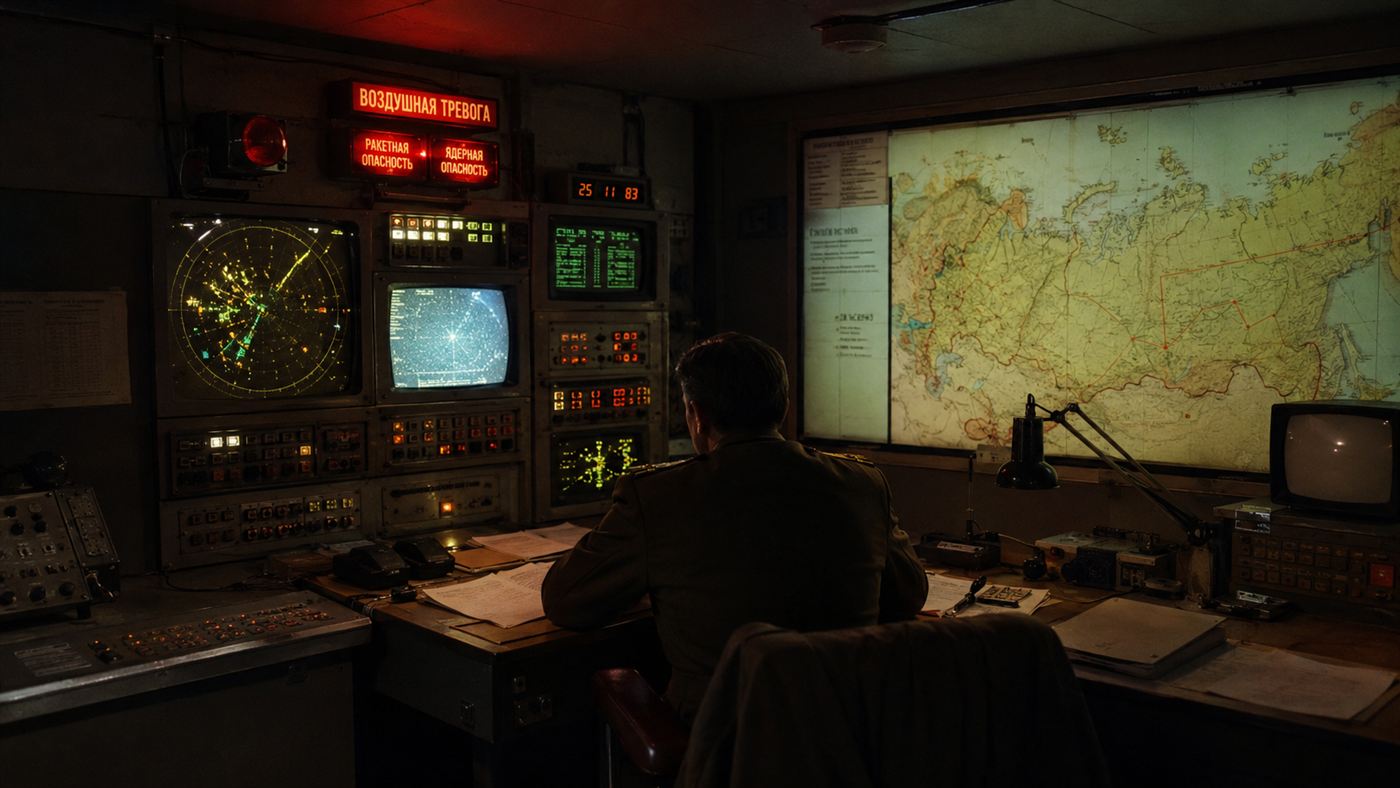
One man, one screen full of red, and a few minutes to decide whether the warning was real. Illustration: Watts & Wild.
The Cold War had a hundred ways to end the world by accident, and in the autumn of 1983 it came as close as it ever did. The man who stood between a computer error and a nuclear exchange was Stanislav Petrov, a lieutenant colonel who happened to be on shift at exactly the wrong, or the right, moment. He was not a general or a politician. He was an engineer watching a machine, and he chose to trust himself over it.
What makes the story so unsettling is how ordinary the setting was. No dramatic standoff, no red telephone, just one tired officer, a blaring alarm, and a decision that could not be taken back.
The night the screen said war
It was 26 September 1983, only weeks after the Soviets had shot down a Korean airliner and nerves on both sides were stretched thin. Petrov was overseeing Oko, the early-warning satellite network built to spot American missile launches the instant they happened. Shortly after midnight the system screamed that a missile had been fired from the United States, then a second, until it was reporting five inbound nuclear weapons.
Protocol was brutally simple: a launch detection was to be passed straight up the chain, where it could trigger a full retaliatory strike before the incoming missiles landed. The screens flashed the highest level of confidence. Sirens sounded. Everyone in the bunker turned to the man whose job was to make the call.
Why Stanislav Petrov trusted his gut over the computer
Petrov hesitated, and his hesitation was reasoned, not random. A genuine American first strike, he reasoned, would come as hundreds of missiles at once, an overwhelming wave meant to wipe out any chance of a Soviet reply, not a feeble handful of five. Five missiles made no military sense. It looked far more like a system inventing a threat than an enemy starting a war.
He also knew the satellite network was new and not fully trusted, and the ground-based radars that should have seen missiles climbing over the horizon were showing nothing. So Petrov picked up the phone and reported a system malfunction, telling his superiors it was a false alarm, even as the screens insisted otherwise. For the next agonising minutes he waited to find out if he had just let his country be destroyed.
Sunlight mistaken for missiles
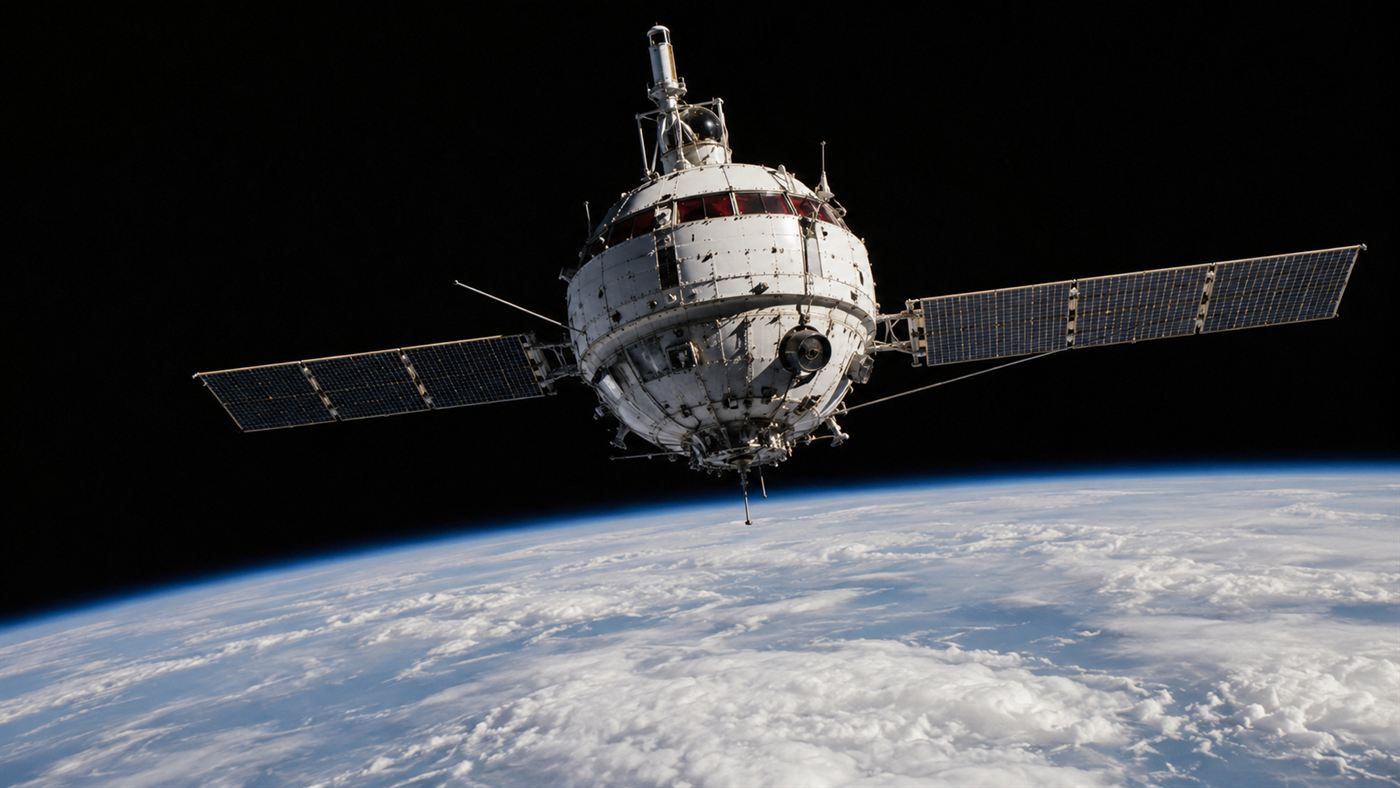
No missiles came, because there were none. The cause was eventually traced to something almost poetic in how harmless it was. Sunlight glinting off the tops of high-altitude clouds had lined up perfectly with the satellites' looping orbit, and the infrared sensors read those bright flashes as the fire of launching missiles.
It was a freak alignment of the sun, the weather and the orbit, the kind of coincidence that should never matter and very nearly ended civilisation. Engineers later corrected it by checking each warning against a separate satellite in a different orbit, so a single trick of the light could not speak for the whole system. The flaw was fixable. The point is that a machine had been completely, confidently wrong, and only a human doubt had caught it.
The reward was a reprimand
You might expect a man who refused to start a nuclear war to be decorated. Instead, the incident was an embarrassment, because it exposed how badly the prized early-warning system had failed. Petrov was not honoured but questioned hard and quietly sidelined, his career stalled, the whole episode buried as a state secret for years.
The world only learned his name in the late 1990s, when a former Soviet commander wrote about that night. Late in life Petrov finally received international awards and a measure of fame, though he always shrugged off the title of hero. He died in 2017, and the news of his death did not even reach the wider world until months later, a quiet end for a man who may have done more than anyone to keep the lights on.
Did Stanislav Petrov really prevent nuclear war?
Honesty matters here, because the legend has grown taller than the facts. Petrov did not have his finger on any button, and even a reported attack would have passed through more checks before the Soviet leadership ordered a launch. He was one link in a long chain, not a lone gunslinger saving the planet.
But he was the link where a dangerous false alarm could have turned into a real report of war, and he refused to let it. At a moment of maximum fear, with a machine shouting at him to act, he stayed calm and chose doubt. Whether or not it was the single decision that saved the world, it was exactly the decision the world needed.
A machine was certain, a man was not, and the man was right. If a computer told you the world was ending and every rule said to act, would you have the nerve to call it a glitch the way Stanislav Petrov did? Tell us what you think in the comments.
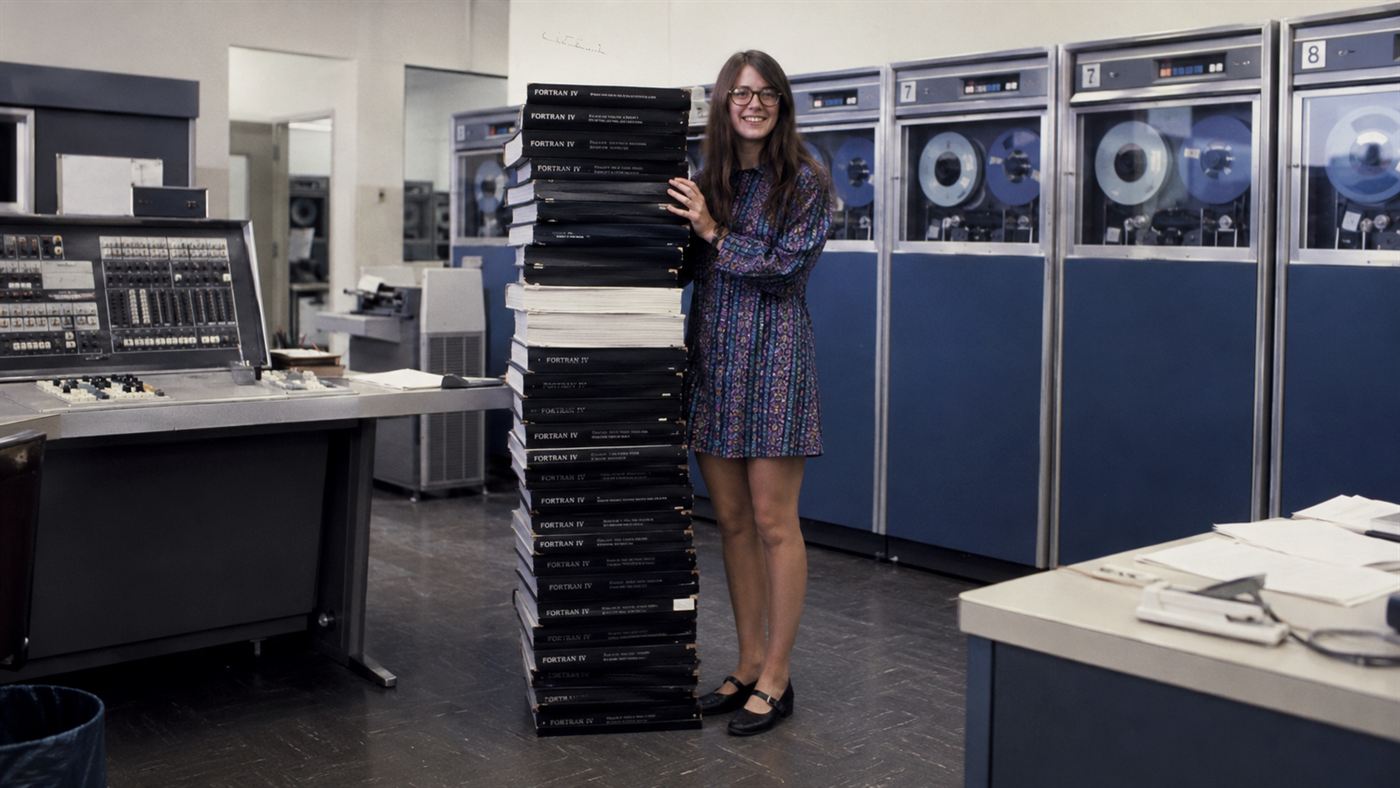
Related reading: Margaret Hamilton and the Apollo software that was built to fail gracefully when the computer was overwhelmed.