In 1942 a refugee physicist, Enrico Fermi, lit the first self-sustaining nuclear chain reaction inside a squash court under a Chicago football stadium, a crude pile of graphite and uranium called Chicago Pile-1 that quietly opened the atomic age
On a freezing December afternoon in 1942, a small group of scientists crowded onto a balcony inside an old squash court at the University of Chicago and watched a counter click faster and faster. The machine below them, Chicago Pile-1, was about to become the first nuclear reactor ever to come alive.
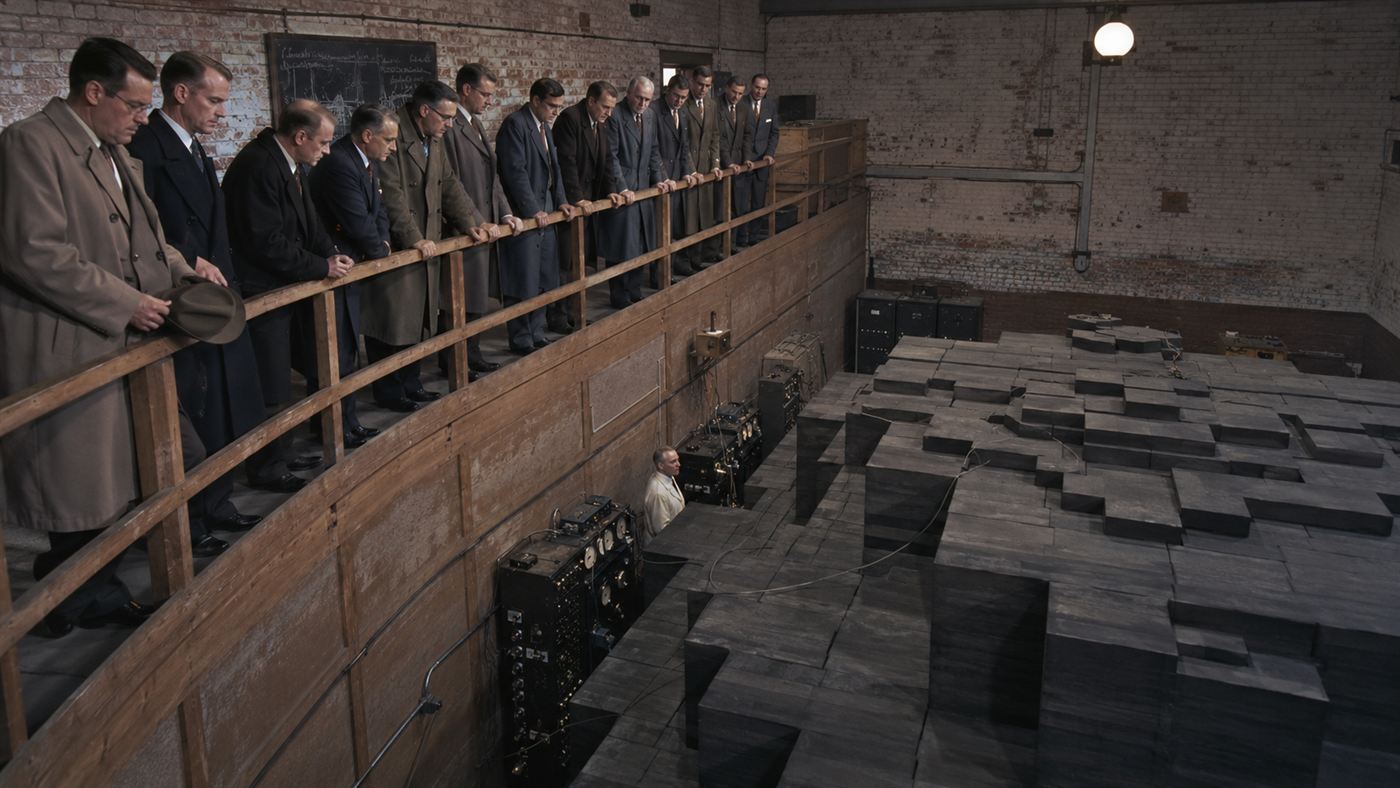
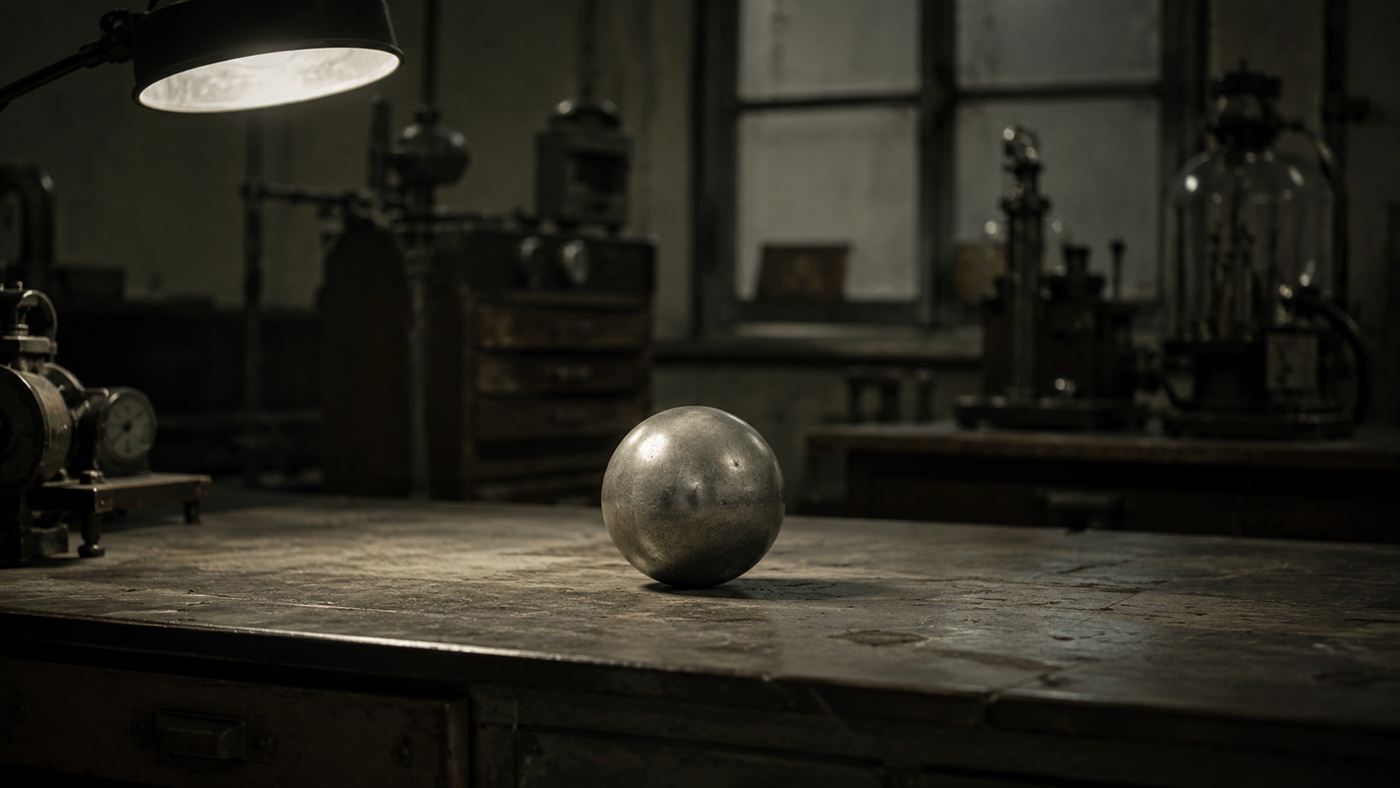
The atomic age began quietly, on a balcony above a black pile of graphite, watched by a few dozen people. Illustration: Watts & Wild.
Chicago Pile-1 does not look like the birthplace of an era. It was a lumpy mound of black bricks stacked in a converted squash court beneath the west grandstand of Stagg Field, the university's old football stadium, in the middle of one of America's biggest cities. Yet on December 2, 1942, in that cramped room, a team led by the Italian physicist Enrico Fermi did something no one had done before: they started a controlled nuclear fire and kept it burning.
The achievement was the first self-sustaining nuclear chain reaction, the moment humans learned to release the energy locked inside the atom on purpose and hold it steady. Everything that followed, every power plant and every warhead, traces back to that afternoon. As History notes, Fermi's pile reached its critical moment in the late afternoon, and the world changed without a sound.
Chicago Pile-1 was the first nuclear reactor ever built. On December 2, 1942, a team led by Enrico Fermi used it to produce the first controlled, self-sustaining nuclear chain reaction, inside a squash court under the stands of Stagg Field at the University of Chicago, as a key step in the Manhattan Project.
An idea born in a London street
The thinking behind Chicago Pile-1 began nearly a decade earlier and an ocean away. In 1933 the Hungarian physicist Leo Szilard, waiting at a London traffic light, imagined a reaction in which splitting atoms release neutrons that split more atoms, a cascade that feeds itself. It was a terrifying and beautiful idea, and once fission was discovered in 1938 it stopped being theory and started being a race.
That race became the Manhattan Project, the secret American program to build an atomic bomb before Nazi Germany could. Before anyone could make a weapon, though, they had to prove a chain reaction could be controlled rather than left to run away. Proving it fell to Enrico Fermi, a Nobel laureate who had fled fascist Italy in 1938 and brought his genius for both theory and hands-on experiment to the United States.
Building the first nuclear reactor by hand
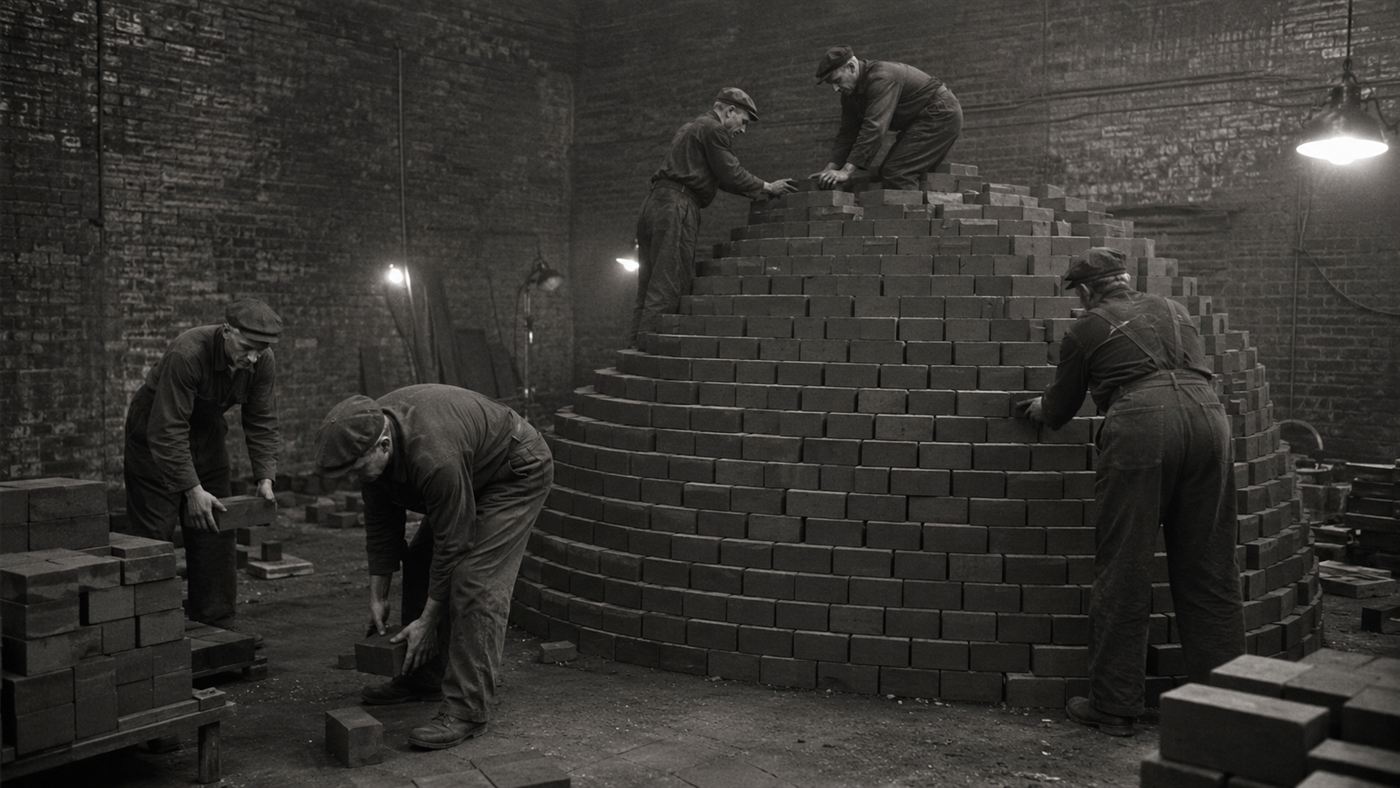
What Fermi's team built was astonishingly low-tech for something so momentous. The first nuclear reactor was a flattened sphere of roughly 45,000 graphite blocks, machined and stacked by hand, salted through with lumps of uranium metal and uranium oxide. The graphite slowed the neutrons just enough to keep the reaction going, and as Argonne National Laboratory describes, long rods of cadmium-coated steel, slid in and out by hand, soaked up neutrons to throttle it up or down.
There was no shielding, no containment, and no cooling. Workers spent weeks pressing the pile together in the cold of the squash court, racing the Manhattan Project's deadline, their faces black with graphite dust, with no real certainty about exactly when it would reach the tipping point. The whole apparatus that launched nuclear power sat exposed in a room, a stack of bricks that nobody from the street outside knew existed.
The afternoon Chicago Pile-1 woke up
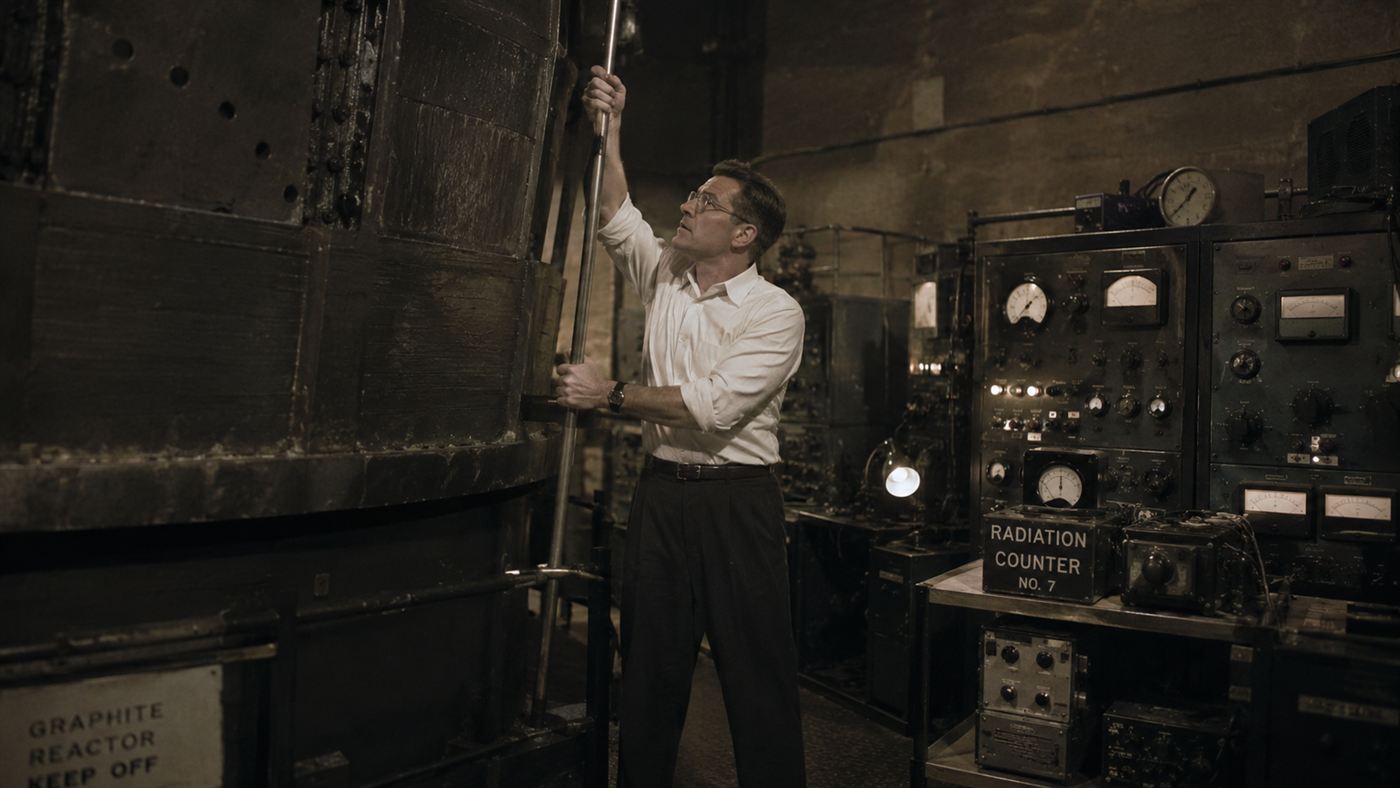
On the morning of December 2, around 49 people gathered in the cold court. Fermi directed an operator, George Weil, to pull the last control rod out a few inches at a time, and with each move the neutron counters clattered louder, climbing toward the point where the reaction would sustain itself. Fermi, calm and exact, read his slide rule and called out the next step.
For safety, Enrico Fermi had improvised what the team grimly called the suicide squad. Three young scientists stood on top of the pile holding buckets of cadmium solution, ready to drench the reactor if the nuclear chain reaction escaped its rods, while another man stood by with an axe to cut a rope and let an emergency rod drop in. At 3:25 in the afternoon the counters settled into a steady roar, and Fermi let the reaction run for about 28 minutes before ordering the rods back in. The pile had reached a power of barely half a watt, not enough to light a bulb, and it had changed history.
The coded message and a quiet dread
The success was so secret it could only be reported in code. Arthur Compton, who ran the project's Chicago lab, phoned the official in Washington and said, "The Italian navigator has landed in the New World." The reply came back: "How were the natives?" "Very friendly," Compton answered, in an exchange recorded by AtomicArchive. The navigator was Fermi, and the new world was the atomic one. Someone produced a bottle of Chianti, and the team drank a toast from paper cups in silence.
Not everyone felt only triumph. Leo Szilard, whose idea had started it all, lingered after the others left, shook Fermi's hand, and told him he thought the day would go down as a black day in the history of mankind. He was celebrating the proof of his own theory and dreading what the Manhattan Project would do with it, both at once. That double feeling has shadowed nuclear power ever since.
The honest catch
It is easy to tell this as a pure tale of genius, and the genius was real, but the recklessness was real too. Running the first nuclear reactor with no containment in a populated city would be unthinkable today, and the safety plan came down to control rods, buckets, and an axe. Fermi's calculations were good enough that it worked, yet a serious miscalculation in downtown Chicago does not bear thinking about.
There is also no separating the science from its purpose. Chicago Pile-1 was a step toward a weapon, and within three years the Manhattan Project turned that knowledge into bombs that flattened two cities. The same mastery of the atom now provides about a tenth of the world's electricity without burning carbon, which is the genuine promise on the other side of the ledger. The pile itself was soon dismantled and rebuilt at a quiet forest site outside the city, but the choice it forced open, between the atom as power and the atom as bomb, has never closed.
The atomic age began with a pile of bricks, a slide rule, and a man with an axe, watched by a few dozen people who knew it could go either way. Was a controlled chain reaction in the middle of a city brave science or terrifying luck, and would we ever allow it now? Tell us in the comments.
Related reading: The plutonium sphere that killed two scientists in two separate accidents, both from a slip of the hand, or EBR-1, the reactor that turned the chain reaction into the world's first nuclear electricity.