The factory told the Radium Girls that licking their paintbrushes was safe, but the men who handled the same radium upstairs wore lead aprons and used tongs to avoid touching it
In 1917, the US Radium Corporation hired young women in Orange, New Jersey, to paint watch dials with radium-based luminous paint. The Radium Girls were dial painters trained to point their brushes between their lips. The men who processed raw radium on the floor above wore lead protection. By the time these women understood what was killing them, most were too sick to stand in court.
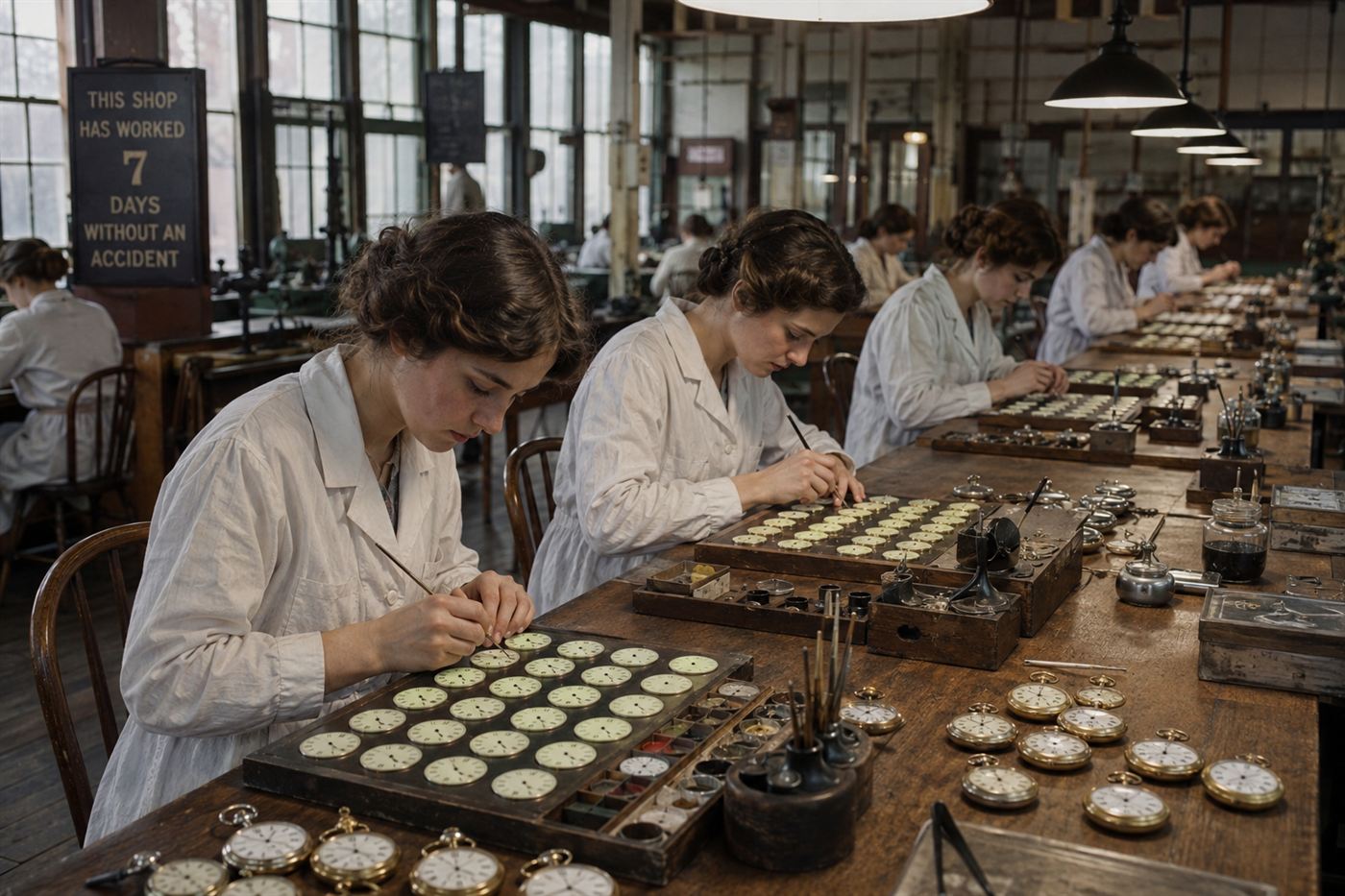
The US Radium Corporation in Orange, New Jersey employed hundreds of young women to paint luminous watch dials with a radium-based paint called Undark. The technique their supervisors taught them, pointing the brush with the lips, dipping in paint, applying to the dial face, deposited radium in their bodies with every stroke. Illustration: Watts & Wild.
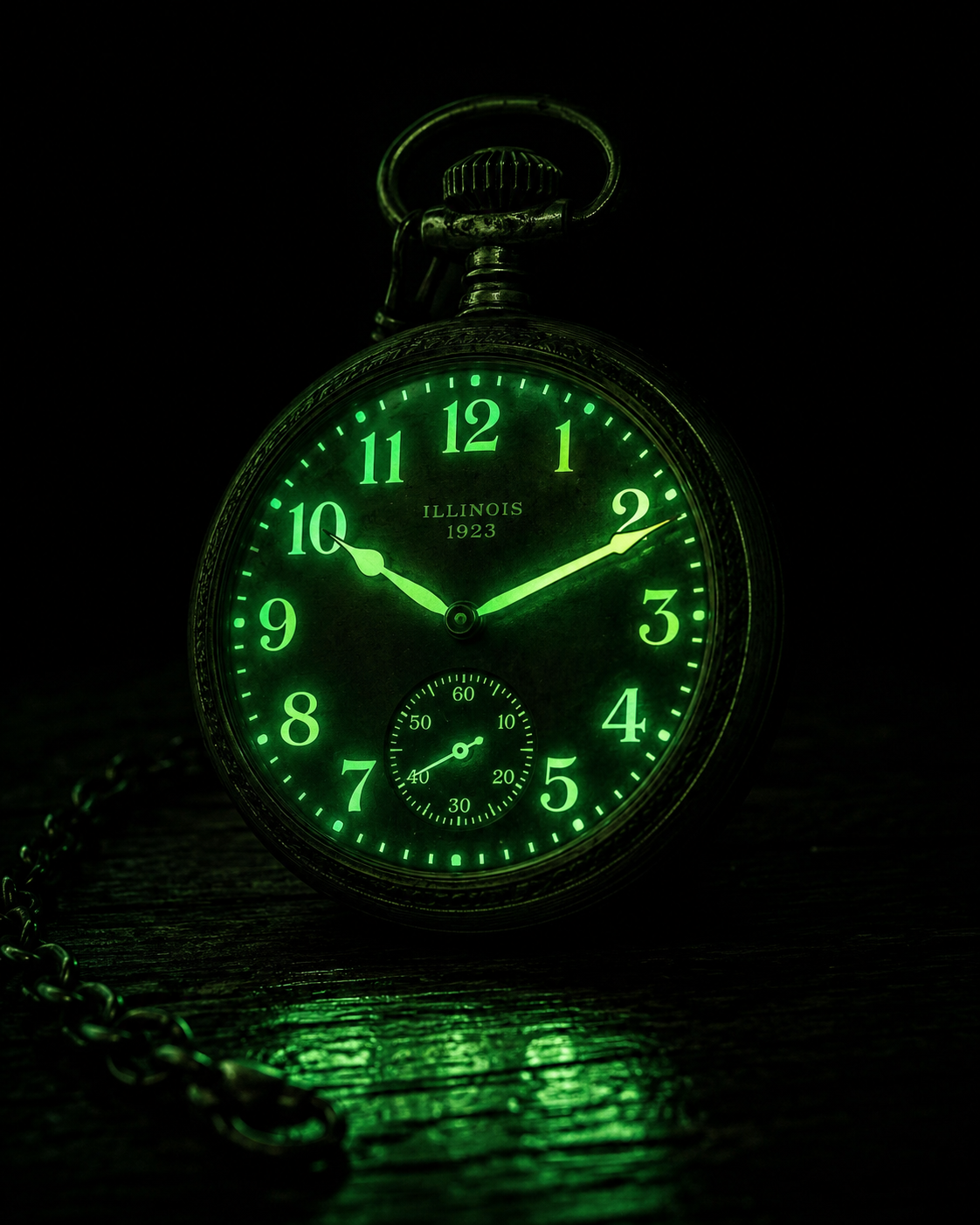
The Radium Girls painted watch dials in a factory that glowed at night. They applied a radium-based luminous paint called Undark by pointing their brushes between their lips, dipping them into the paint, and brushing the numbers onto the watch dial. Their supervisors taught them the technique. Some of the women painted their nails, their teeth, and their faces with the leftover paint to amuse their families, because in the dark they shone. They called themselves ghost girls, and they thought it was funny.
The men who handled raw radium on the floor above them wore lead aprons and used tongs to avoid skin contact. The women downstairs were told that the radium was perfectly harmless. By the mid-1920s their teeth were falling out, their jaws were dissolving from within, their spines were fracturing from ordinary movement, and their bodies were riddled with tumors caused by radium poisoning. The US Radium Corporation’s response was to hire a physician who declared them healthy and to suggest that the dying women were suffering from syphilis.
The Radium Girls were dial painters at the US Radium Corporation in Orange, New Jersey, who developed radium poisoning from ingesting radium while painting luminous watch dials between 1917 and the late 1920s. A parallel group of workers suffered the same fate at the Radium Dial Company in Ottawa, Illinois. Their legal battles established the discovery rule: the principle that a worker’s right to sue begins when they discover the harm, not when the exposure occurs. That principle is the foundation of American occupational disease law. The question of who controls a person's body and its profits echoes in the story of Henrietta Lacks, whose cells were taken without consent.
Why the Radium Girls dial painters were hired to paint radium watch dials
Radium had been isolated by Marie Curie in 1898, and in the early twentieth century it carried a near-mystical reputation for health.
Radium toothpaste, radium chocolate, radium water, and radium facial cream were marketed across the United States and Europe on the premise that radioactivity was energising.
Military demand for luminous watches accelerated sharply when the United States entered the First World War in 1917.
Soldiers in the trenches needed to read their watches in the dark, and a watch dial painted with Undark would glow for years without any power source.
Young women were hired as dial painters because their small, steady hands could do precise detail work, and because fine manual labor of this kind was consistently assigned to women as a matter of industrial custom.
The dial painters were also paid by the piece: the faster they worked, the more they earned.
The lip-dip-paint technique made the brushes point perfectly every time, which meant neater watch dials and faster work.
No one told the women what radium did to the human body.
When they asked, they were told it was perfectly safe.
The US Radium Corporation knew differently, because the men who processed raw radium upstairs wore lead protection and used tongs.
That precaution was not taken from excessive caution.
It was taken because the company understood the danger and chose who to tell about it.
How did the Radium Girls discover what the radium was doing to them?
The first visible signs were dental.
A dial painter named Mollie Maggia developed jaw pain in 1921.
Her dentist extracted a tooth, then more teeth, and eventually found that her jawbone had softened so severely that he could press his finger through it.
She died in September 1922.
Her death certificate gave the cause as syphilis, a diagnosis provided by Dr. Frederick Flinn, a physician retained by the US Radium Corporation.
Syphilis was a diagnosis that carried severe social stigma and that the women had no easy way to dispute.
It also moved the cause of death away from anything connected to the factory floor.
By 1924, researchers at Harvard had established that radium dust was hazardous, and that information was available to anyone in the industry who looked for it.
Grace Fryer, a former telephone switchboard operator who had become a dial painter in 1917, began losing teeth in 1922.
Her jaw began to deteriorate from radium poisoning.
Her spine fractured.
By the mid-1920s Grace Fryer could not hold her arms above her head long enough to have a photograph taken for court proceedings.
What happened when Grace Fryer tried to sue the US Radium Corporation?
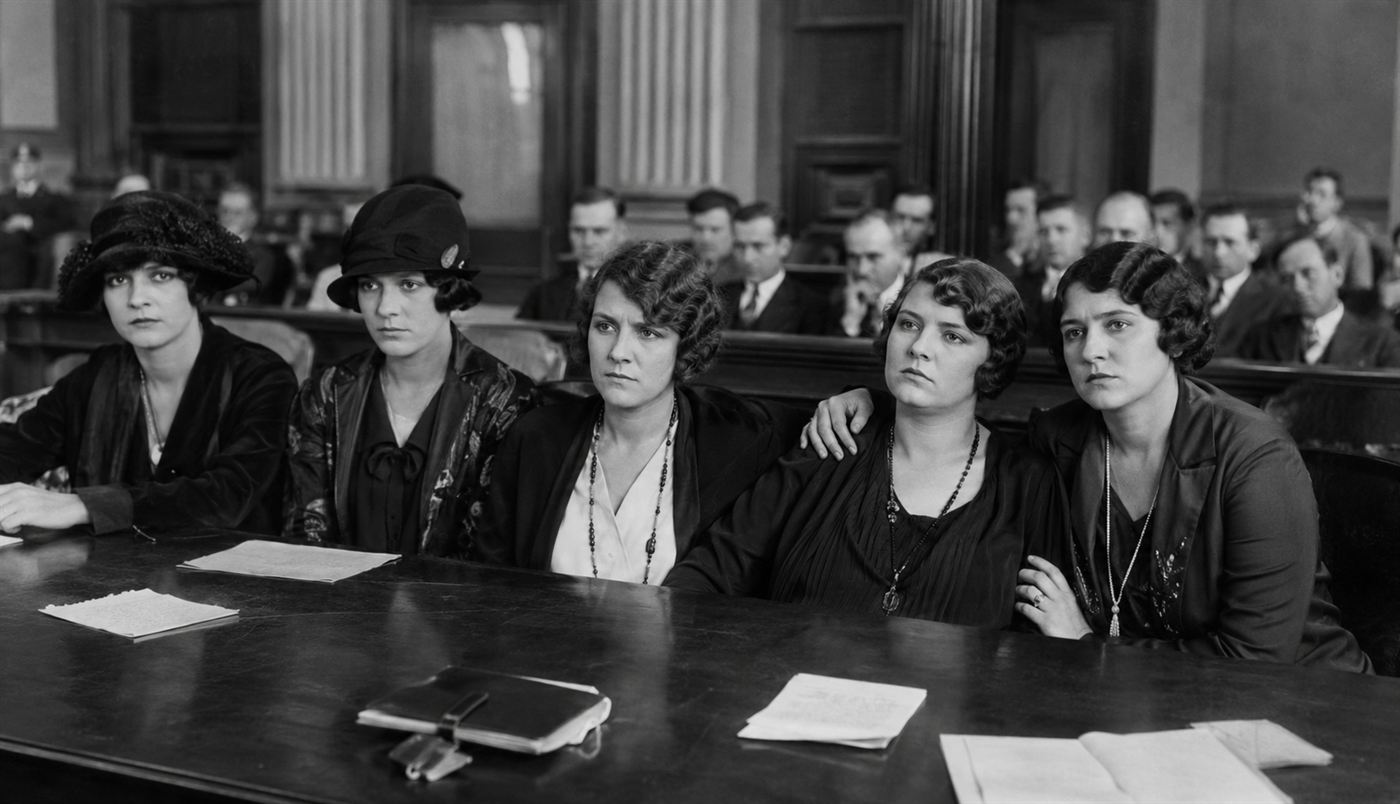
Grace Fryer decided to sue the US Radium Corporation in 1927.
She spent almost two years unable to find a lawyer willing to take the case before Raymond Berry agreed to represent her.
Four other women joined the suit: Edna Hussman, Quinta McDonald, Katherine Schaub, and Irene Rudolph.
Together they became known as the five Radium Girls.
The case attracted national newspaper coverage.
Journalists who attended hearings described women who had to be helped into their seats and who could not raise their hands to be sworn in without assistance.
The US Radium Corporation’s legal strategy was to delay proceedings long enough for the statute of limitations to expire or for the plaintiffs to die.
The public attention made that delay strategy increasingly untenable.
In October 1928, the US Radium Corporation agreed to a settlement: each woman received $10,000, a pension of $600 per year for the rest of her life, and all future medical expenses covered.
Most of the Radium Girls were already too sick to benefit from the settlement for long.
Grace Fryer died in 1933, five years after the settlement, collecting five years of the pension she had been promised.
Katherine Schaub died in 1933.
Irene Rudolph had died in 1927, before the settlement was reached, and her estate received nothing.
Who was Catherine Donohue, and what did she do in Ottawa, Illinois?
While Grace Fryer’s case was being fought in New Jersey, the same story was unfolding at the Radium Dial Company in Ottawa, Illinois.
The company had hired dial painters using identical techniques from 1922 onward, and the women had been told the same reassurances about radium safety.
Catherine Wolfe Donohue had worked as a dial painter at the Ottawa factory and by 1938 was dying from radium poisoning.
Her hip had deteriorated.
Her jaw was crumbling.
In July 1938, Donohue gave testimony to the Illinois Industrial Commission.
She was carried into the hearing room on a stretcher.
She gave her evidence lying down.
She died in October 1938, weeks after the hearing concluded.
This became the legal principle known as the discovery rule.
The discovery rule held that the limitation clock began not when a worker was exposed to a hazard, but when the worker discovered or reasonably should have discovered that they had been harmed by it.
Catherine Donohue had to die to establish that right for everyone who came after her.
What did the Radium Girls’ legal victories actually change?
Before the Radium Girls sued, American workers had almost no effective legal path for diseases caused by chronic industrial exposure.
The standard limitation period, running from the date of exposure rather than the date of discovery, meant that by the time most occupational diseases became apparent, the window to sue had already closed.
The New Jersey and Illinois cases together forced courts to reinterpret when the clock started.
The discovery rule that came out of the dial painters’ cases was later applied to asbestos cases, benzene poisoning cases, and every other occupational disease where the harm accumulates invisibly over years.
The cases also drew public attention to the complete absence of federal standards for occupational chemical exposure.
They contributed to the political pressure that culminated in the Occupational Safety and Health Act of 1970, which established OSHA and created the first comprehensive federal framework for workplace safety of the kind that might have protected the Aberfan village, where the National Coal Board in Wales also ignored warnings about an industrial hazard until 116 children died.
Physicists working on the Manhattan Project later cited the Radium Girls cases when designing safety protocols for plutonium workers.
The dial painters of Orange and Ottawa had inadvertently established many of the baseline assumptions about safe radiation exposure that still govern radiation worker protection today.
The honest catch
The Radium Girls won, and the discovery rule they established has protected millions of workers since.
But for the women themselves, the victory came far too late.
No executive at the US Radium Corporation was ever charged with a criminal offence.
The company continued to operate for years after the 1928 settlement.
In Ottawa, the Radium Dial Company simply renamed itself Standard Products and continued hiring dial painters through the 1930s, using the same techniques.
The town of Ottawa still lives with the consequences.
The former Radium Dial Company site became a federal Superfund site in 1990.
Soil testing in the homes of former dial painters, where the women had carried radium home on their clothes and hair, found levels above federal safety limits decades after the factory closed.
Several houses were demolished and their contaminated soil was removed.
The bodies of the Radium Girls buried in Orange and Ottawa remain radioactive.
Scientific exhumations have confirmed that radium poisoning is still detectable in their bones more than eighty years after their deaths.
The US Radium Corporation’s co-founder and managing chemist, Sabin Arnold von Sochocki, also developed radium poisoning and died in 1928, the same year as the New Jersey settlement.
He had worked with radium for years with no more protection than the women on the factory floor below him.
The knowledge that would have protected everyone was available to the company’s management and was withheld from the workers because the workers were cheaper to replace than the company’s production method was to redesign.
For more stories of what industry knew and who was told, see our Curiosities section.
The US Radium Corporation put lead shielding on the floor above the dial painters and taught the dial painters to put radium in their mouths. The women who fought back in 1928 did so knowing they were running out of time, because the company’s own physician had just spent years telling them there was nothing wrong. Grace Fryer spent two years looking for a lawyer before anyone would help her. What does that tell you about who the legal system was designed to protect?
Tell us in the comments.
Also see: In Wales in 1966, the National Coal Board received written warnings for years that the coal tips above Aberfan were dangerous. When one collapsed onto a school and killed 116 children, no one was prosecuted. See also Clair Patterson, who dated the Earth and then fought for decades to get lead out of the air.
More from Watts & Wild
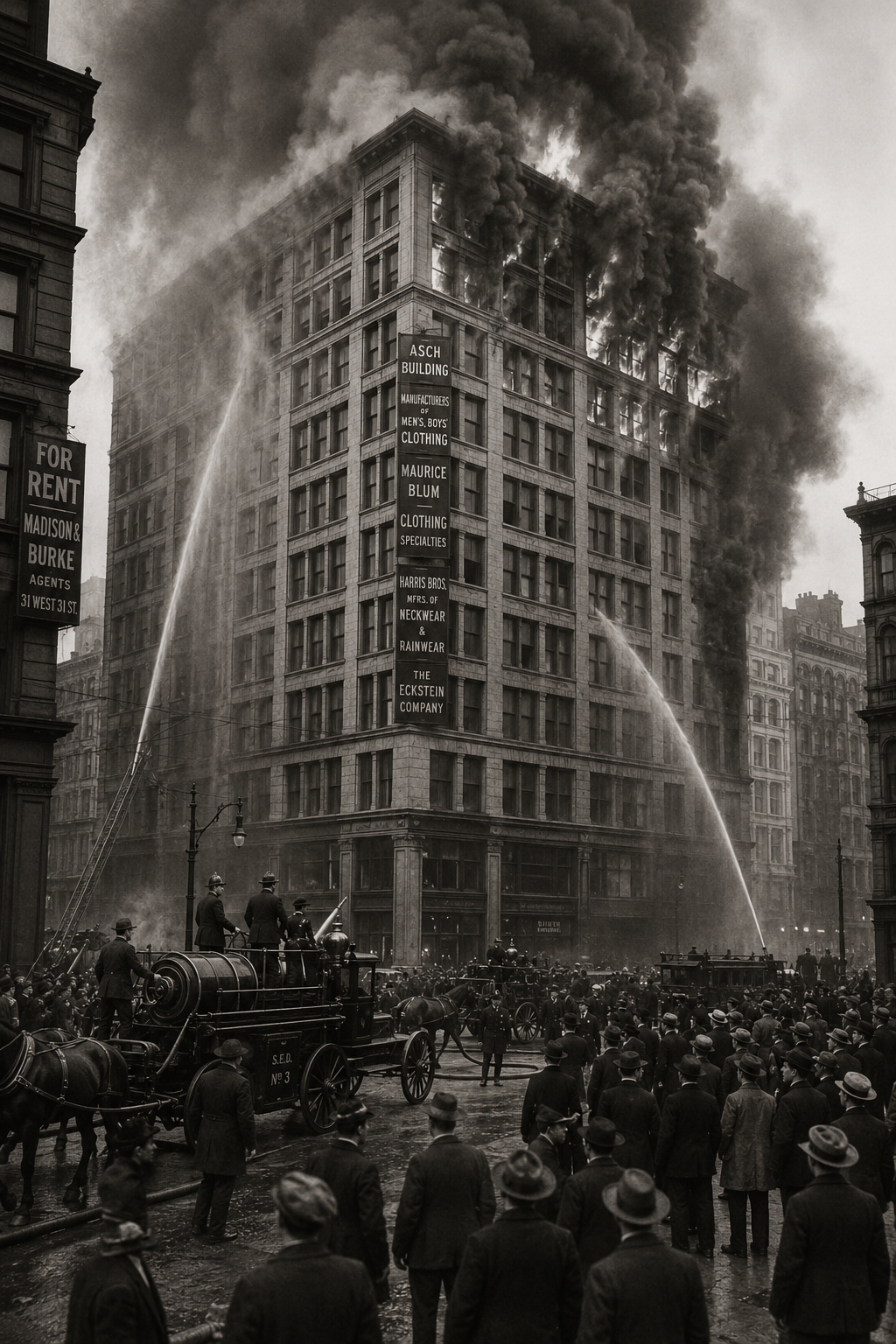 In 1911 a New York garment factory fire killed 146 workers in eighteen minutes. The owners were acquitted, collected more from insurance than they lost, and were fined twenty dollars for locking another door two years later.
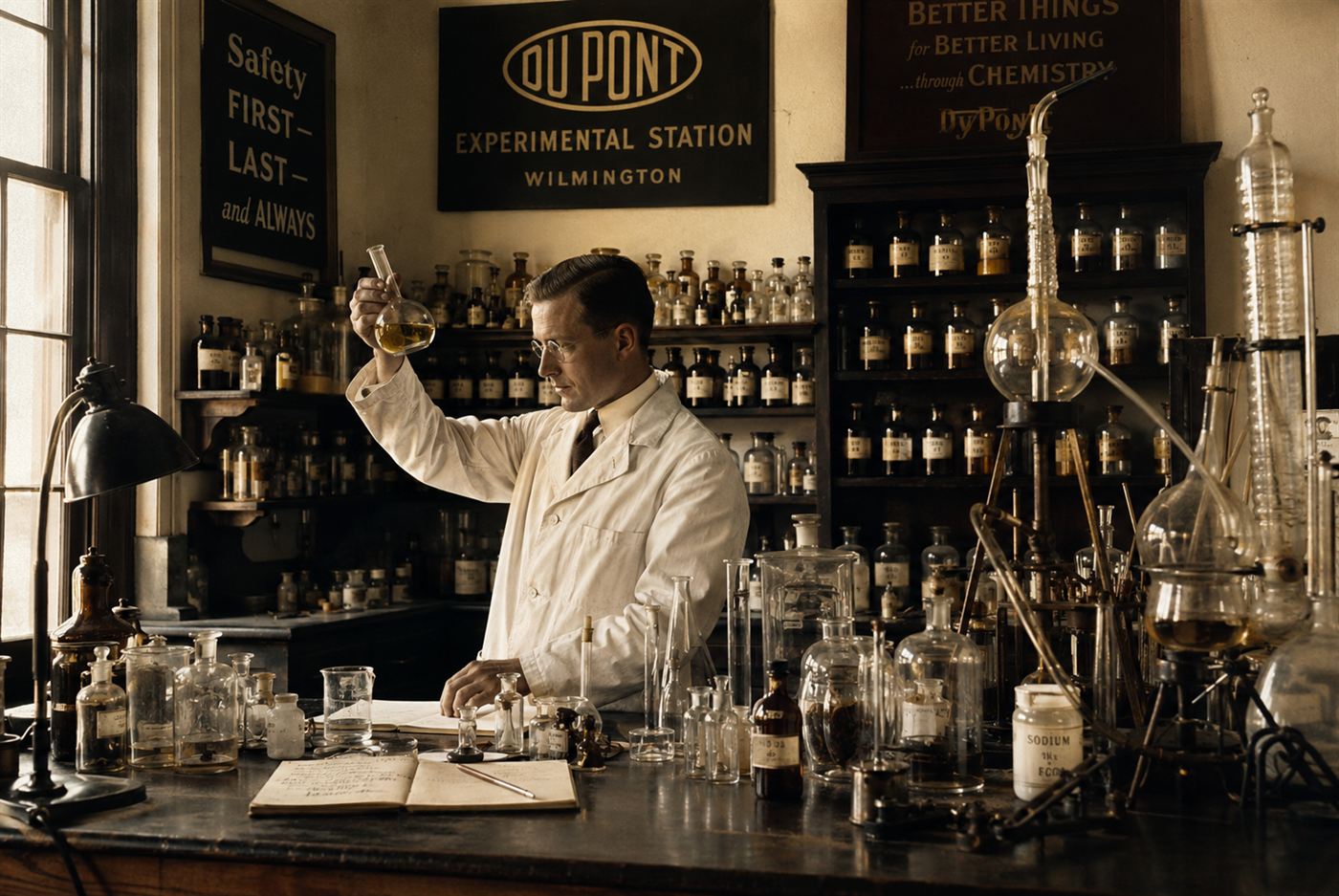 Thomas Midgley invented leaded gasoline and the aerosols that destroyed the ozone layer. Chemistry honored him for both. He was killed in 1944 by the rope-and-pulley system he built to get himself out of bed.
 The National Coal Board knew about the unstable tips above Aberfan for years. When one buried a school in 1966 and killed 116 children, it paid a fine equivalent to a week of operating costs.
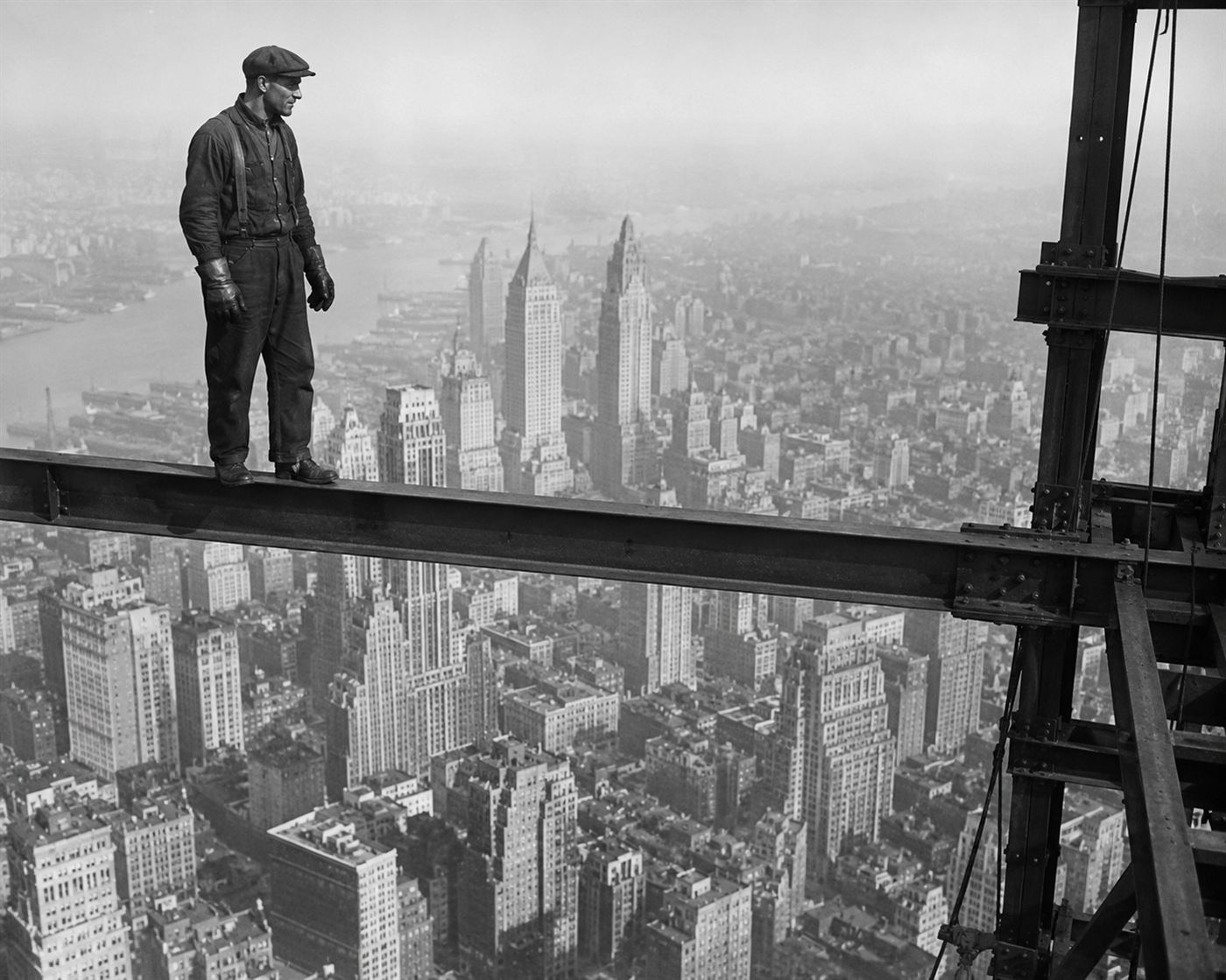 The Mohawk men who built the New York skyline lost 33 from a single community in a bridge collapse in 1907. The myth that they felt no fear in the high steel is something they have always rejected.
 A Victorian engineer doubled his sewer diameters because he knew London would only let him dig once. The system ran for 160 years, outlasting the city that built it.