A thousand years ago the biggest city in North America stood across the river from modern St. Louis, and Cahokia was larger than London before its people walked away and let it vanish from memory
Nine hundred years ago, a city bigger than London rose on the Mississippi floodplain in what is now Illinois, crowned by a hand-piled pyramid taller than a ten-story building. Almost no one who lives nearby today has heard of it. By 1350 its people were gone, and we still argue about why.
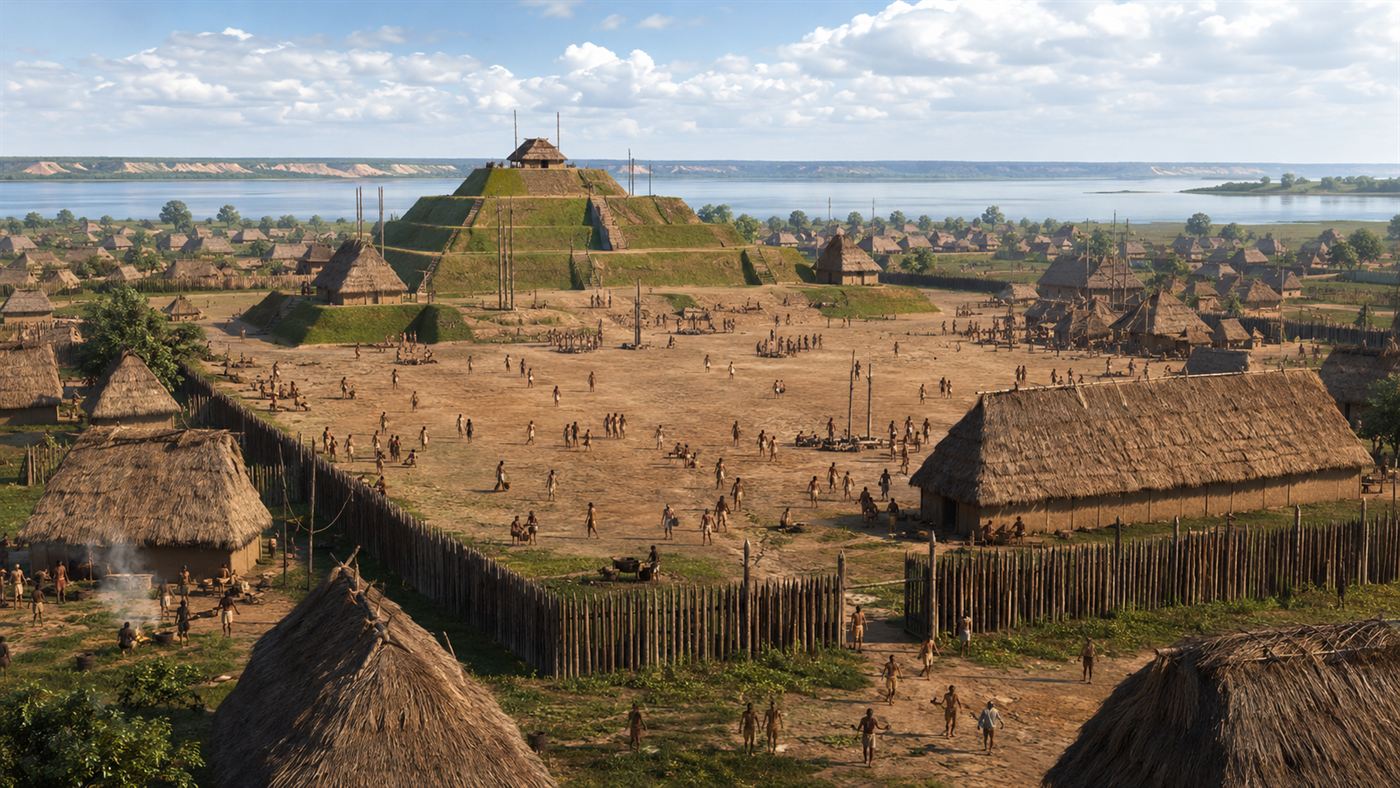
Cahokia at its height around 1100, with the great plaza and Monks Mound at its center. Illustration: Watts & Wild.
Drive fifteen minutes east from the Gateway Arch in St. Louis, past the strip malls and the interstate, and you reach a set of grassy hills that most people speed by without a glance. They are not hills. They are the remains of Cahokia, the largest city that ever existed in North America before Europeans arrived, and for a stretch of the Middle Ages it was bigger than the London of its day.
This is the part that stops people cold. As Britannica notes, at its peak around 1100 the city held as many as 20,000 people and covered about six square miles, a scale that European settlers, arriving centuries later to find only mounds, refused to believe Native people could have built. The city was already a ruin by the time the first Europeans laid eyes on the continent, and the story of what happened to it has never been fully solved.
The short version: Cahokia was a sprawling Native American city on the Mississippi, near modern St. Louis, that peaked around 1100 with up to 20,000 residents and roughly 120 mounds. It was larger than London at the time. Its people abandoned it by about 1350, and while there are many theories, no one knows for certain why they left.
How big was Cahokia?
The numbers are hard to square with the empty fields you see today. At its height this was a planned metropolis of thousands of homes, plazas, ceremonial grounds and a ring of towering earthen mounds, with a population somewhere between 15,000 and 20,000. For comparison, no city in what became the United States would match that size again until Philadelphia in the late 1700s, more than 600 years later.
Around this core spread farms of corn, a densely settled river valley, and a trade network that pulled in copper from the Great Lakes and seashells from the Gulf of Mexico. This was not a village that got lucky. It was a genuine pre-Columbian city, with suburbs, satellite towns and an organized society capable of feeding tens of thousands of people in one place.
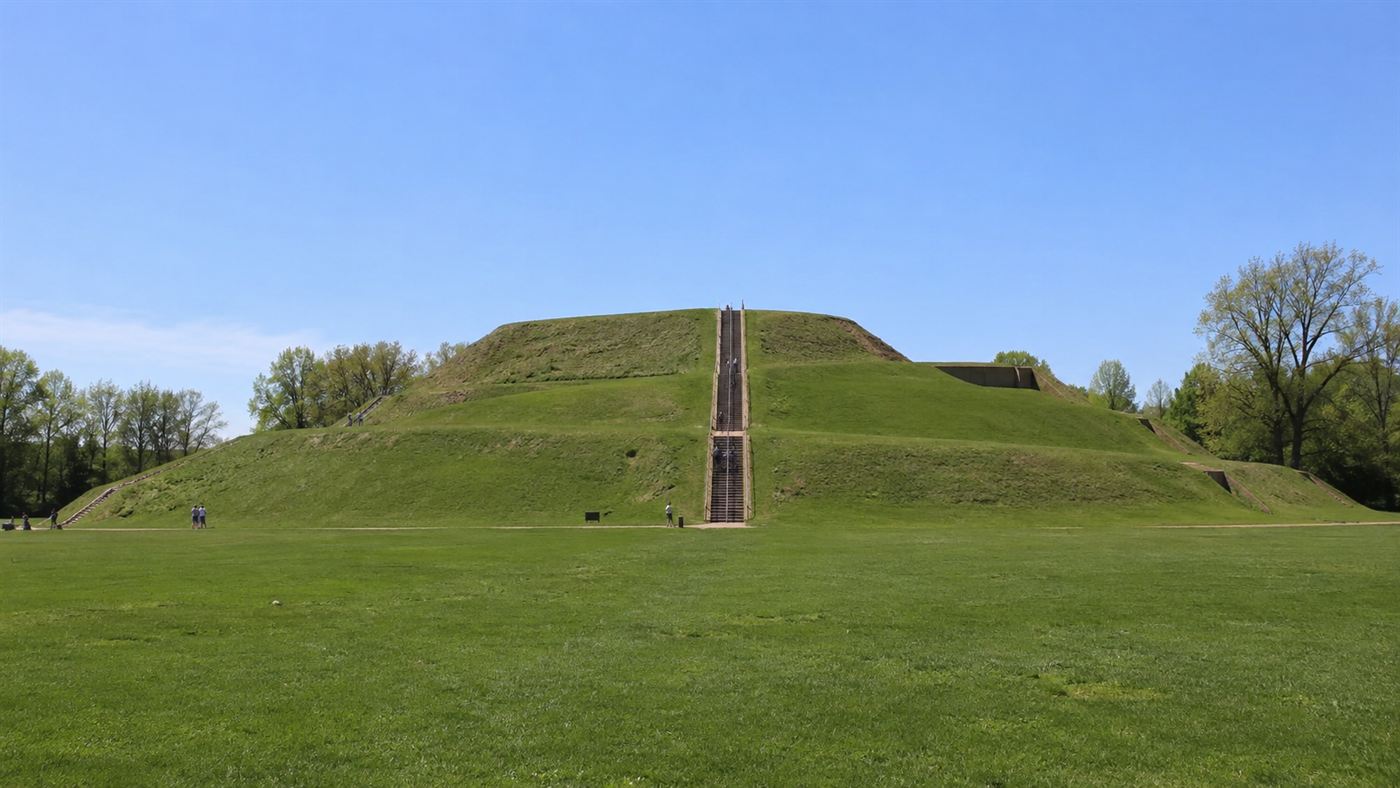
Monks Mound: a pyramid made of earth
The heart of the city was a single staggering structure. Monks Mound rises about a hundred feet in a series of broad terraces and spreads across roughly fifteen acres at its base, which makes it the largest earthwork in the Americas and one of the biggest ancient monuments north of Mexico. A great building, probably the ruler's, once stood on its flattened summit, looking out over the whole city.
What makes Monks Mound almost unbelievable is how it was built. There were no draft animals and no wheels here. Every one of its millions of cubic feet of earth was dug with hand tools and carried up in woven baskets on people's backs, an estimated fourteen to twenty million basket-loads. The earthen mounds at Cahokia were not piled at random either, but laid out on a deliberate plan aligned to the sky.
Who built Cahokia, and what was Woodhenge?
The builders belonged to what archaeologists call the Mississippian culture, a farming society that spread across the American Southeast and Midwest and raised mound cities up and down the river valleys. They left no writing, so we do not know what they called themselves or their city. The name Cahokia comes from a different, later tribe that lived in the area when the French arrived, long after the metropolis had emptied.
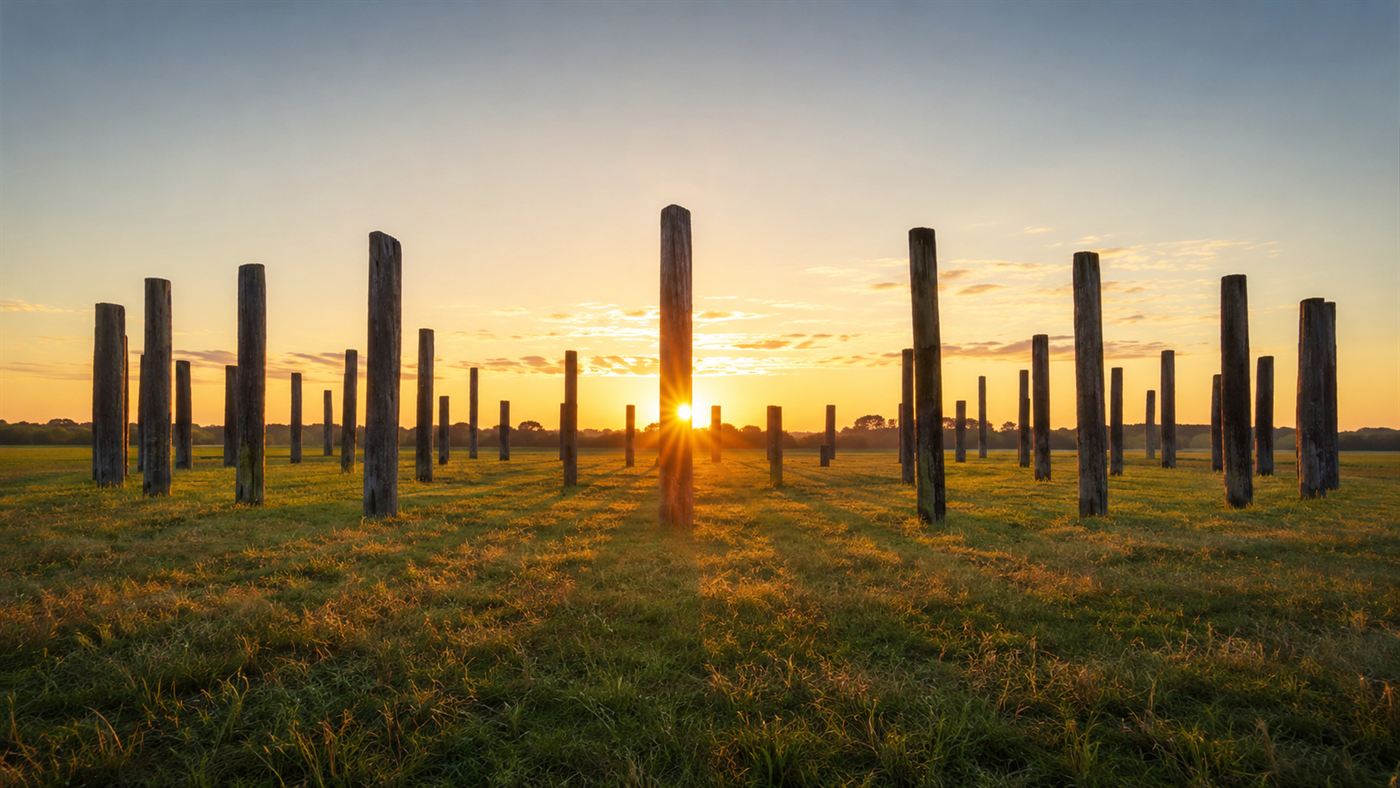
They were sharp astronomers. Just west of Monks Mound, archaeologists found the postholes of a huge circle of red cedar poles now called Woodhenge, a solar calendar that marked the equinoxes and solstices as the sun rose in line with the posts. It is a reminder that the people of this Mississippian culture were tracking the heavens with precision while building one of the ancient world's great cities out of mud and muscle.
Why did Cahokia collapse?
This is the question that keeps drawing archaeologists back. Beginning in the 1200s the city started to unravel, and by around 1350 it was essentially empty, its people scattered into smaller communities across the region. Because they left no records, every explanation is pieced together from soil, bones, pollen and postholes.
The list of suspects is long: a shifting climate, prolonged drought, catastrophic flooding of the river bottoms, deforestation, disease, warfare, or the slow fracturing of the political and religious system that had held so many people together. Most likely it was some tangle of several at once. What is striking is that a society this large could dissolve so completely that its own descendants' neighbors would later deny it had ever existed.
The ecocide theory that fell apart
For years the tidy explanation was self-destruction. A theory from the 1990s held that the Cahokians cut down too many trees for fuel and construction, triggering erosion and repeated floods that made the site unlivable, a cautionary tale of a civilization wrecking its own environment. It was popular precisely because it fit a modern moral.
Then the evidence stopped cooperating. As NPR reported, a 2021 study by archaeologist Caitlin Rankin found no sign in the ground of the flooding that theory required. Digging into the sediment around a mound, her team saw stable soil where the ecocide story predicted layers of flood debris. The lesson was less that we solved the mystery and more that a satisfying story had been standing in for evidence.
The honest catch
It is tempting to file Cahokia under vanished civilizations and eerie disappearances, but that framing does the place a quiet disservice. The people did not evaporate. They dispersed into other communities, and their descendants are alive today among the tribes of the region, including nations that trace their heritage to these mound builders. Calling it a mysterious disappearance erases the living cultures that carried on.
It is also worth being honest that debunking the deforestation story did not replace it with an answer. We know more about what probably did not happen than about what did, and the true reason the largest pre-Columbian city in North America emptied out remains genuinely open. Cahokia is less a solved riddle than a reminder of how much of this continent's deep history is still buried a few feet under the grass.
A city of twenty thousand people, crowned by a pyramid of earth, once stood where interstates now run, and most of the country has never heard its name. Why do you think a place this important faded so completely from the story America tells about itself? Tell us what you think in the comments.
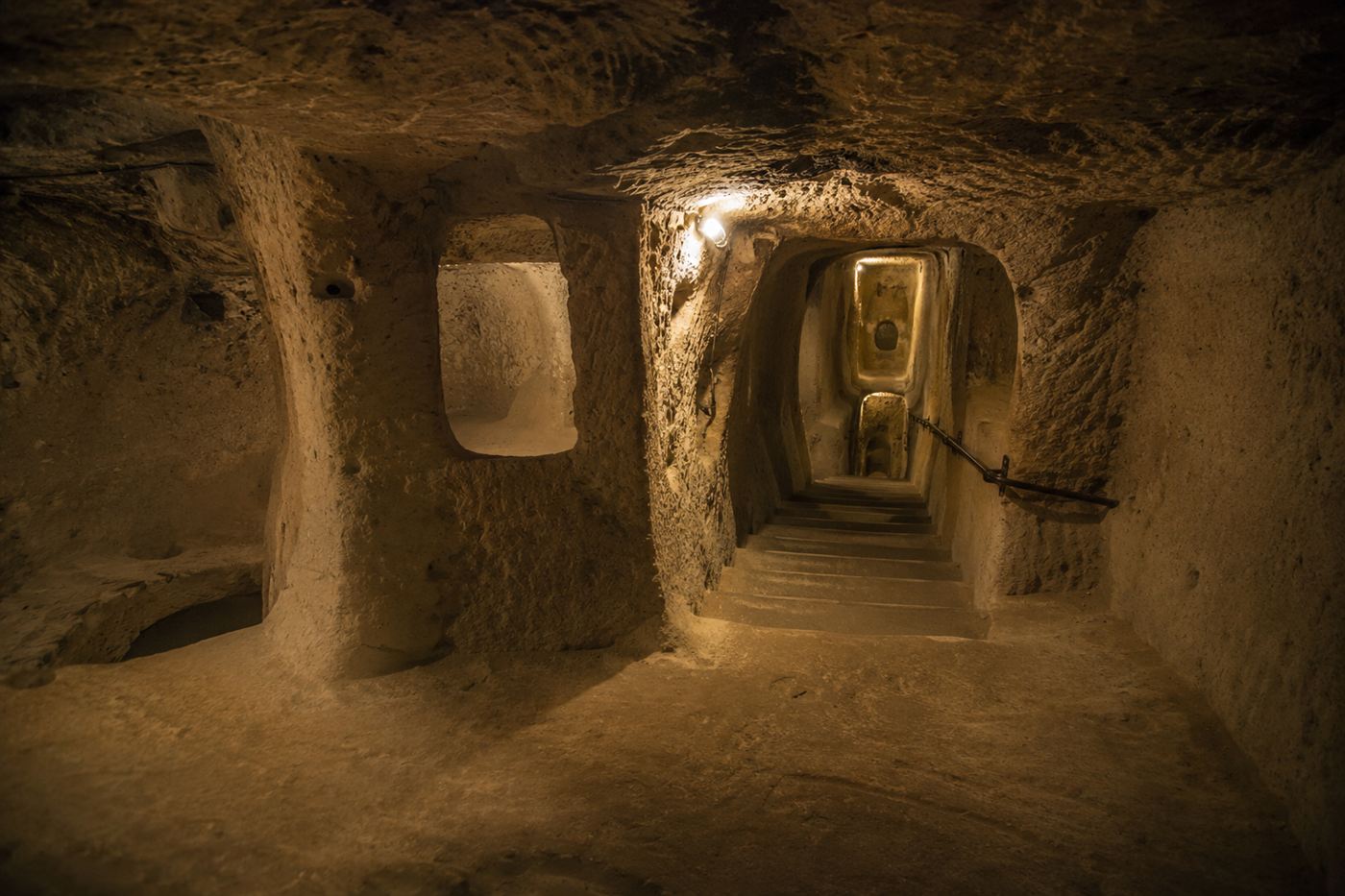
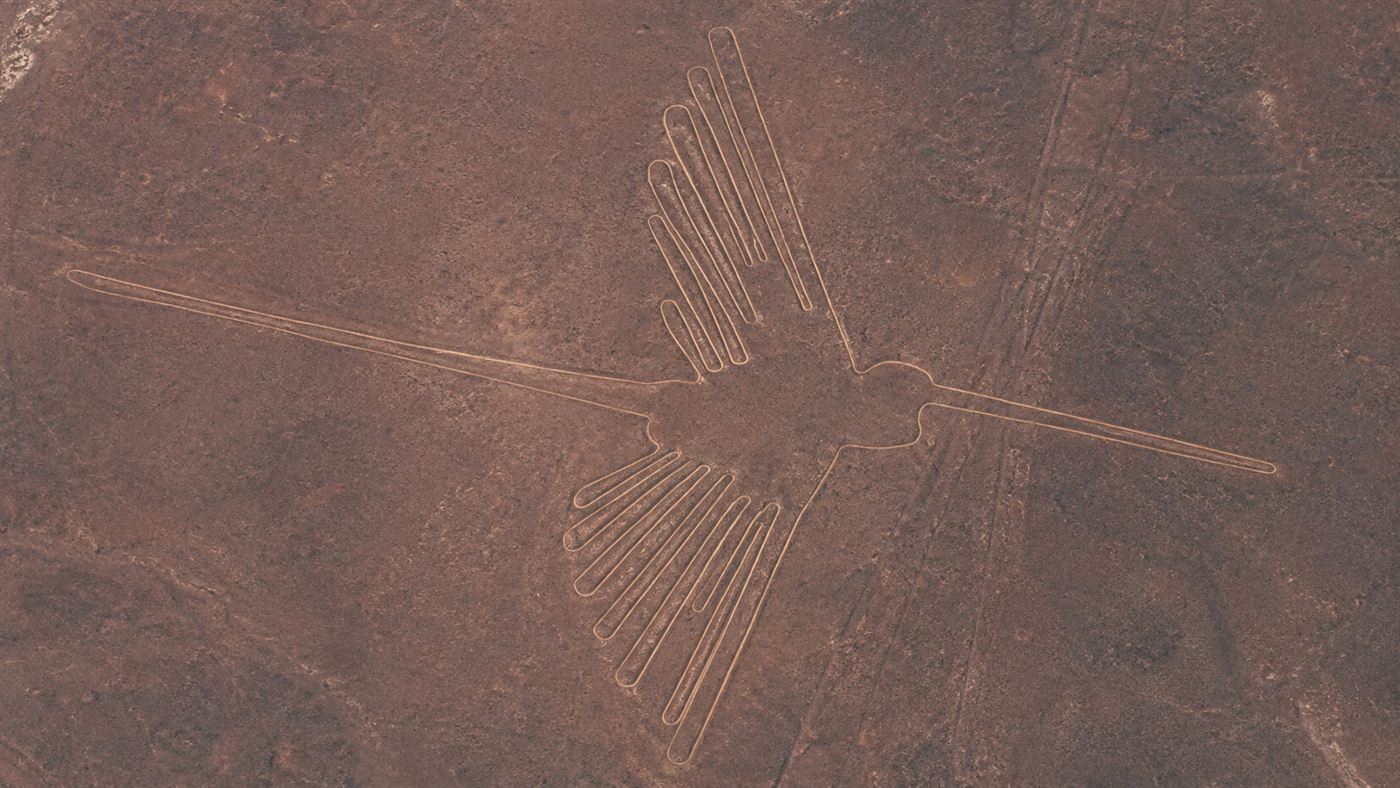
Related reading: how the people of Derinkuyu carved an entire city underground, and how the Nazca lines were scratched across a desert to be seen from the sky. See also Ohio's Serpent Mound, the giant snake of earth whose age still baffles archaeologists, and the Roanoke Colony, the English settlers who vanished into the American coast. See also Chaco Canyon, whose people are wrongly said to have disappeared, and Minanbé, the intact Maya city found untouched in the Mexican jungle in 2026.