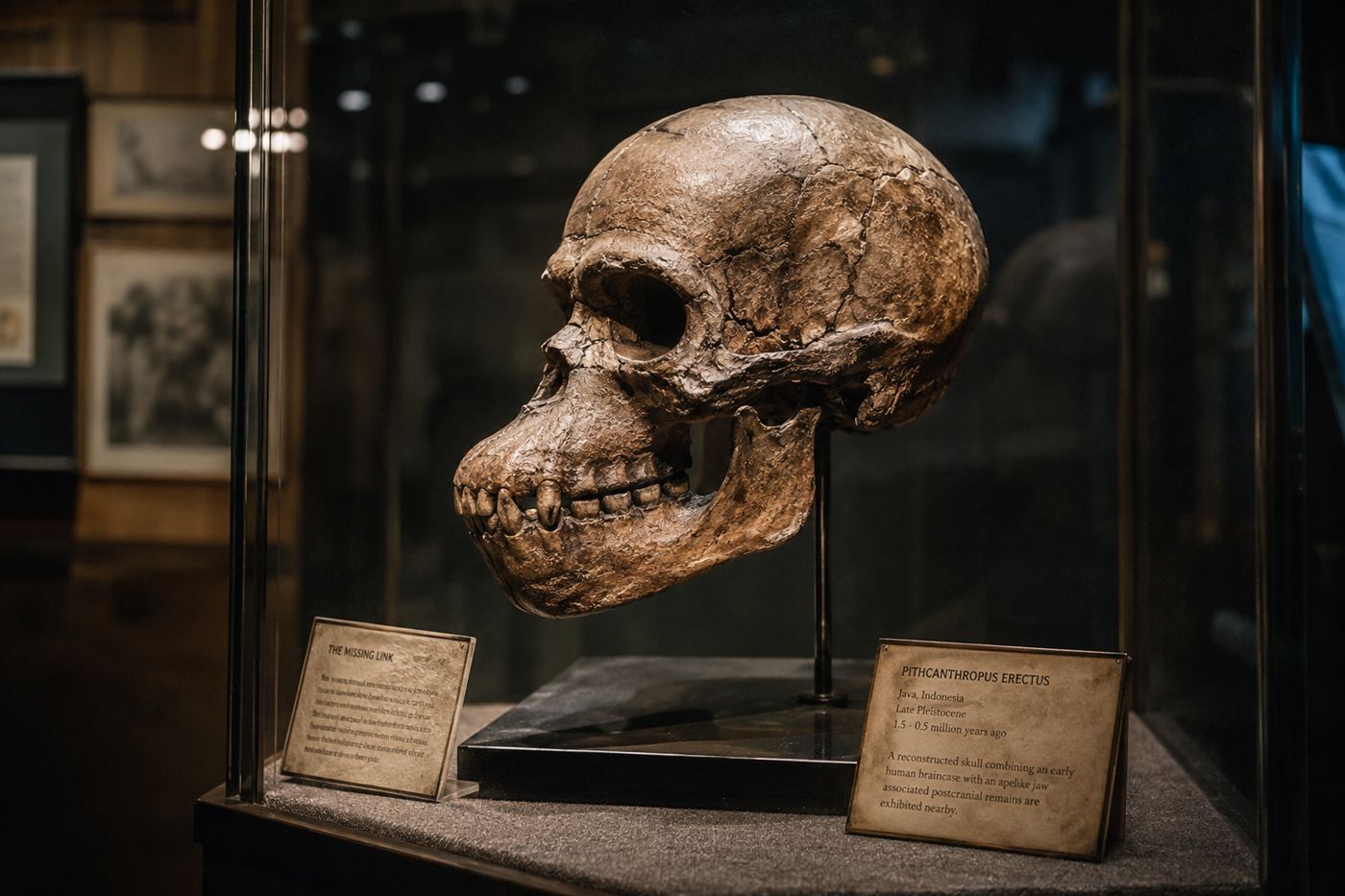
The Nazca Lines are giant 2,000-year-old drawings carved into a Peruvian desert that you can only truly see from the sky, and nobody is quite sure why they exist
Scratched into the floor of one of the driest deserts on Earth are hundreds of enormous drawings: a hummingbird the length of a football pitch, a monkey, a spider, and arrow-straight lines running for kilometres. They were made around 2,000 years ago by people who could never have seen them whole, because the only place to take them in is the air, which they could not reach.
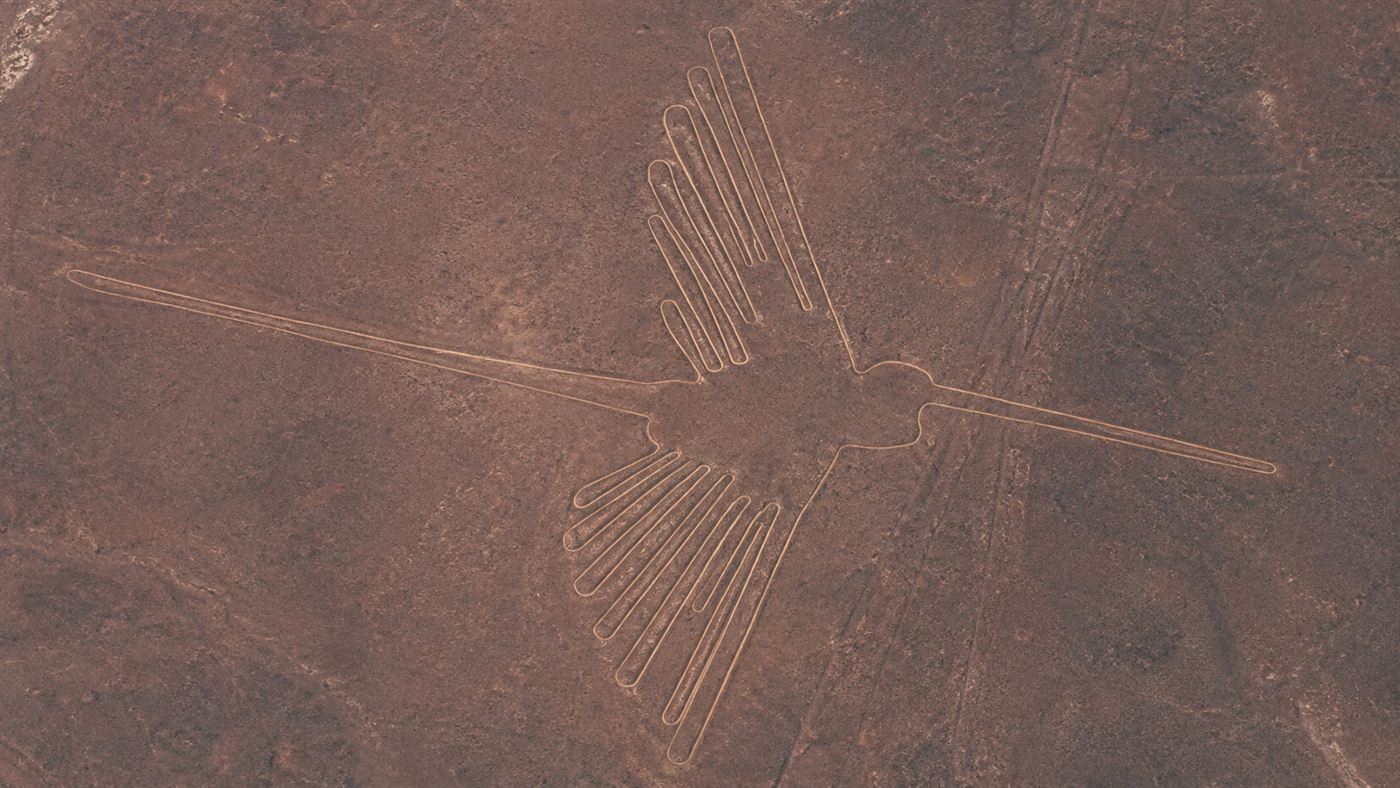
The Nazca hummingbird, drawn as a single continuous line across the desert. Illustration: Watts & Wild.
The Nazca Lines are one of the world's great open-air enigmas, a place where a vanished culture left an enormous, deliberate message across the landscape and then died out before they could tell us what it meant. They are beautiful, baffling, and just mysterious enough that, almost inevitably, people have tried to explain them with aliens. The truth is more grounded, but no less remarkable.
The first surprise is how simple they were to make.
What are the Nazca Lines?
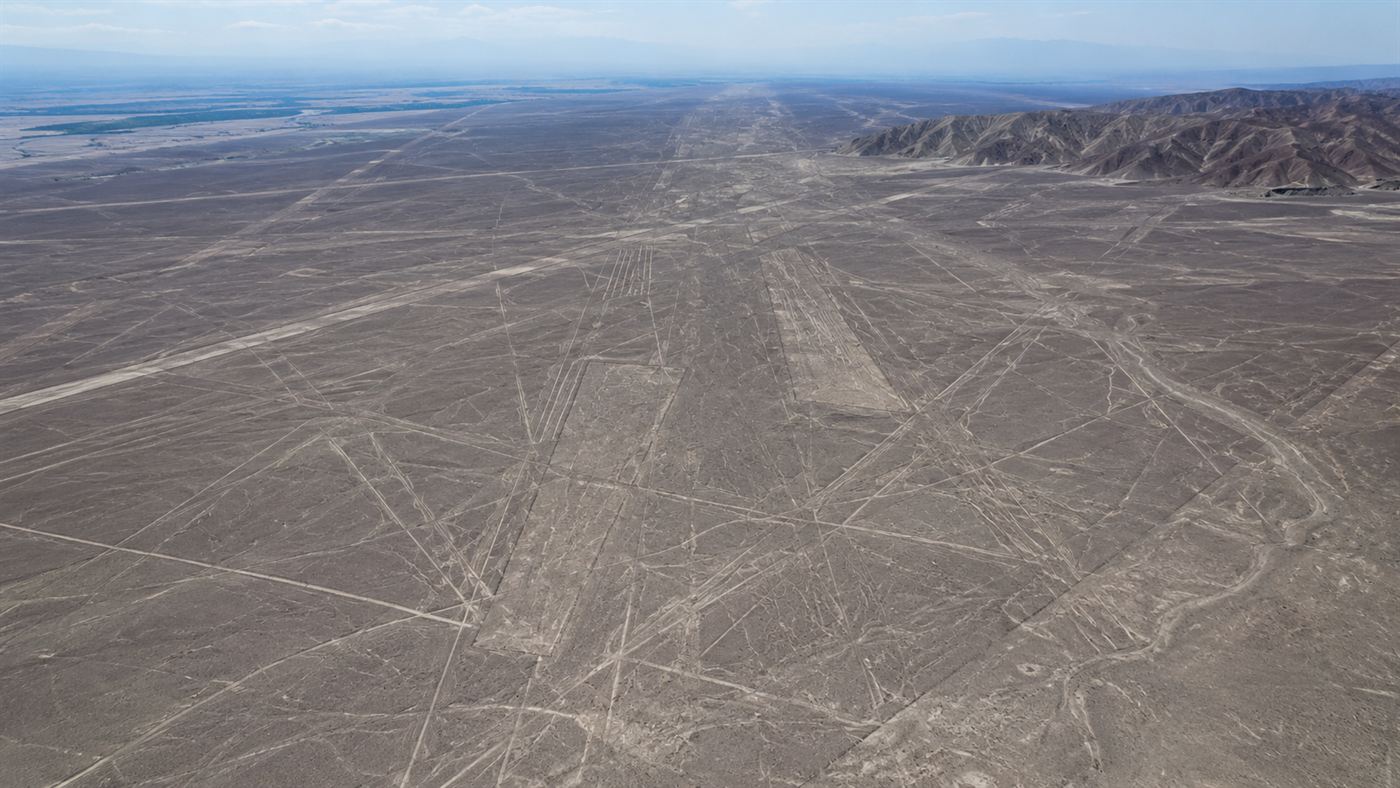
The lines lie in the Nazca Desert of southern Peru, and were created by the Nazca culture, which flourished from roughly 2,000 years ago. There are hundreds of them, falling into two broad types. There are the geometric designs, dead-straight lines and large trapezoids and triangles, some running for several kilometres across the plain. And there are the famous biomorphs: vast, stylised figures of living things, including a hummingbird, a monkey with a curled tail, a spider, a condor, and a strange humanoid sometimes nicknamed "the astronaut."
What makes them feel impossible is their scale. Many of the figures are so large, a hundred metres or more across, that from the ground they dissolve into meaningless scratches; you can only recognise them as pictures from high above. For centuries they sat there, essentially invisible, until aircraft in the twentieth century revealed the giant menagerie hiding in plain sight.
How do you draw something only the sky can see?
This is where the supposed mystery quietly collapses, in the best possible way. The Nazca Lines were not carved or dug deep; they are surface drawings. The desert floor is covered in dark, reddish-brown stones coated with iron oxides, and just beneath lies pale, yellowish ground. To make a line, all you had to do was rake away the dark stones to expose the light earth underneath, drawing in negative, like scratching a picture into a layer of soot.
And you do not need to fly to draw something huge, only to plan it. Experiments have shown that with nothing more than wooden stakes, lengths of rope and a small scale drawing to copy from, a team on the ground could lay out these enormous, accurate figures perfectly well. The Nazca did not need a god's-eye view to create the lines; they only needed geometry, patience and a very stable desert. The same brutal dryness that makes the region so hostile is exactly why the drawings have survived, almost untouched, for two thousand years with barely any rain or wind to erase them.
So why did they make them?
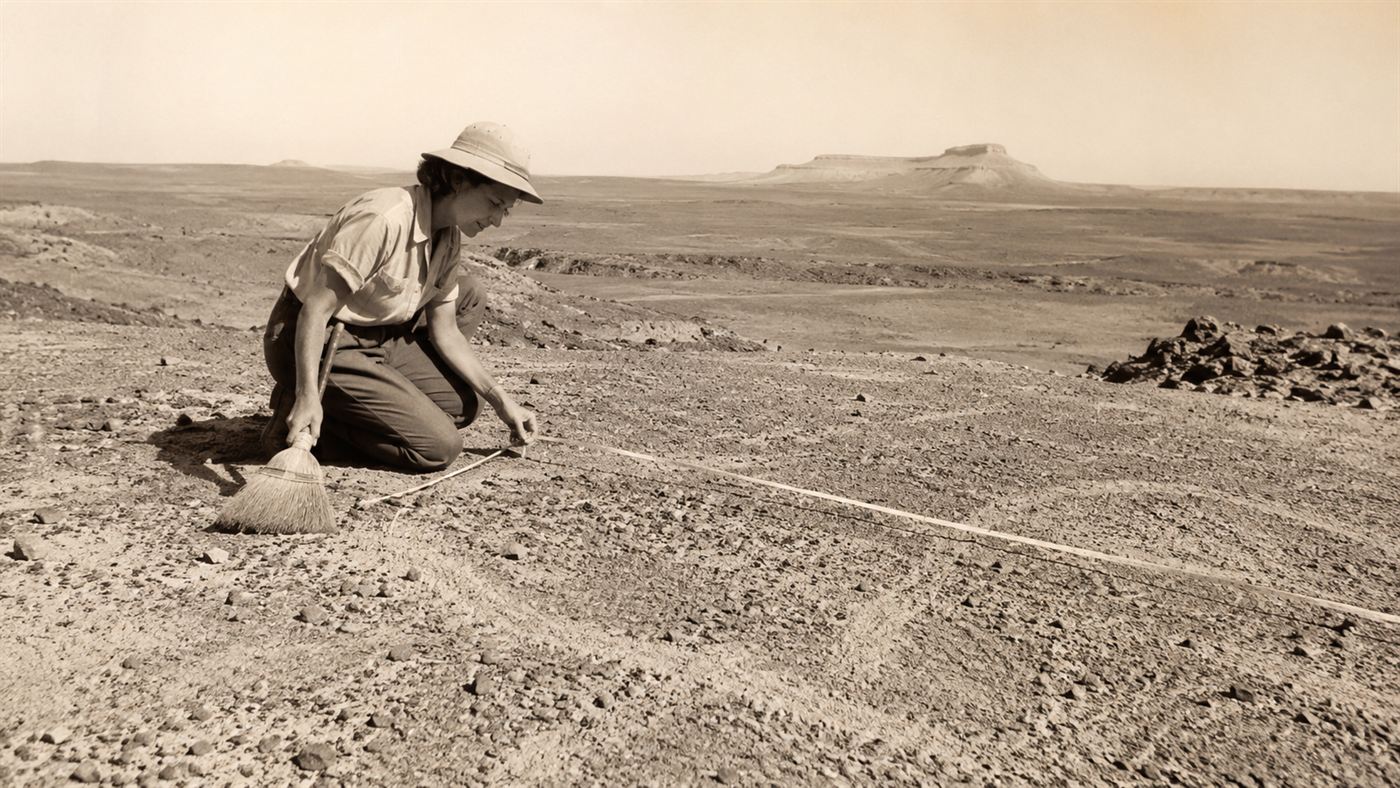
Here is the part we genuinely do not know for certain. The "how" is solved; the "why" is still argued over. One famous idea, championed by the German mathematician Maria Reiche, who devoted her life to the lines, was that they formed a giant astronomical calendar, with certain lines aligning to the sun and stars to mark the solstices and seasons.
The theory that holds most sway among archaeologists today is about water. In a desert this merciless, water is everything, and many researchers believe the lines and figures were sacred pathways, walked in rituals that begged the gods for rain and fertility, with some lines pointing toward underground water sources. The idea fits the culture: the animals depicted, like hummingbirds and monkeys, are linked to water and fertility in Nazca imagery, and they match the designs painted on Nazca pottery. The lines, in this view, were not pictures to be looked at, but prayers to be performed on foot.
Did aliens build the Nazca Lines?
No, and it is worth saying so plainly. The notion, popularised in the 1960s, that the straight lines are ancient runways or landing strips for alien spacecraft is pure fantasy, and it does a real disservice to the people who actually made them. The "runways" are drawn on soft, stony ground that could never bear an aircraft, the figures clearly match Nazca art and culture, and Maria Reiche herself spent years patiently debunking the alien claims.
The alien theory survives not because of any evidence, but because some people find it easier to believe in visitors from space than to credit an indigenous American civilisation with the intelligence, organisation and artistry the lines obviously required. The real story, of a sophisticated desert people coordinating vast communal artworks, is far more impressive than little green men with a runway problem.
The honest catch
The mystery is real, but it is a mystery of meaning, not of method. We can say with confidence how the lines were made and roughly when; what we cannot fully recover is the precise web of belief inside the heads of the people who made them, because the Nazca left no writing. The likely answer is that there was no single purpose at all: the lines probably served religion, astronomy, water-divining and community identity all at once, built and rebuilt over centuries.
And the story is still growing. In 2024, researchers using artificial intelligence to scan aerial images discovered more than 300 previously unknown Nazca figures, of cats, parrots, killer whales and even severed heads, nearly doubling the count of known animal geoglyphs. Far from being a finished puzzle, the desert is still handing us new pieces, and each one strengthens the picture of a culture obsessed with marking its world.
Why the Nazca Lines still matter
The Nazca Lines are a humbling reminder that "we cannot explain how ancient people did this" almost always means "we have not bothered to imagine how clever they were." Strip away the science-fiction, and what remains is more moving: a community in a hostile desert, pouring generations of effort into enormous acts of devotion they would only ever see in fragments.
That is the real wonder of the place. The Nazca made art for the gods, the sky and the future, not for their own eyes, and two thousand years later we are the ones finally floating above the desert to look down and receive it. The message got through. We are still working out what it says.
An ancient people drew a hundred-metre hummingbird they could never see whole, and we still argue over why. Does it bother you that some mysteries, like exactly what the Nazca Lines meant, may never be fully solved? Tell us what you think in the comments.
Related reading: For another ancient achievement that seems impossible until you look closely, see the geared Greek computer pulled from a shipwreck. See also how a city bigger than London once stood in Illinois and then vanished.