Picher, Oklahoma mined the lead that won two world wars, then poisoned a third of its children and paid every resident to leave before the town vanished for good
For half a century, Picher, Oklahoma was one of the busiest mining towns in America, digging up the lead and zinc that filled the world's bullets. Then it turned out the whole town was sitting on poison. Today Picher is barely there at all, a few empty streets in the shadow of gray mountains of toxic waste, its people bought out and scattered.
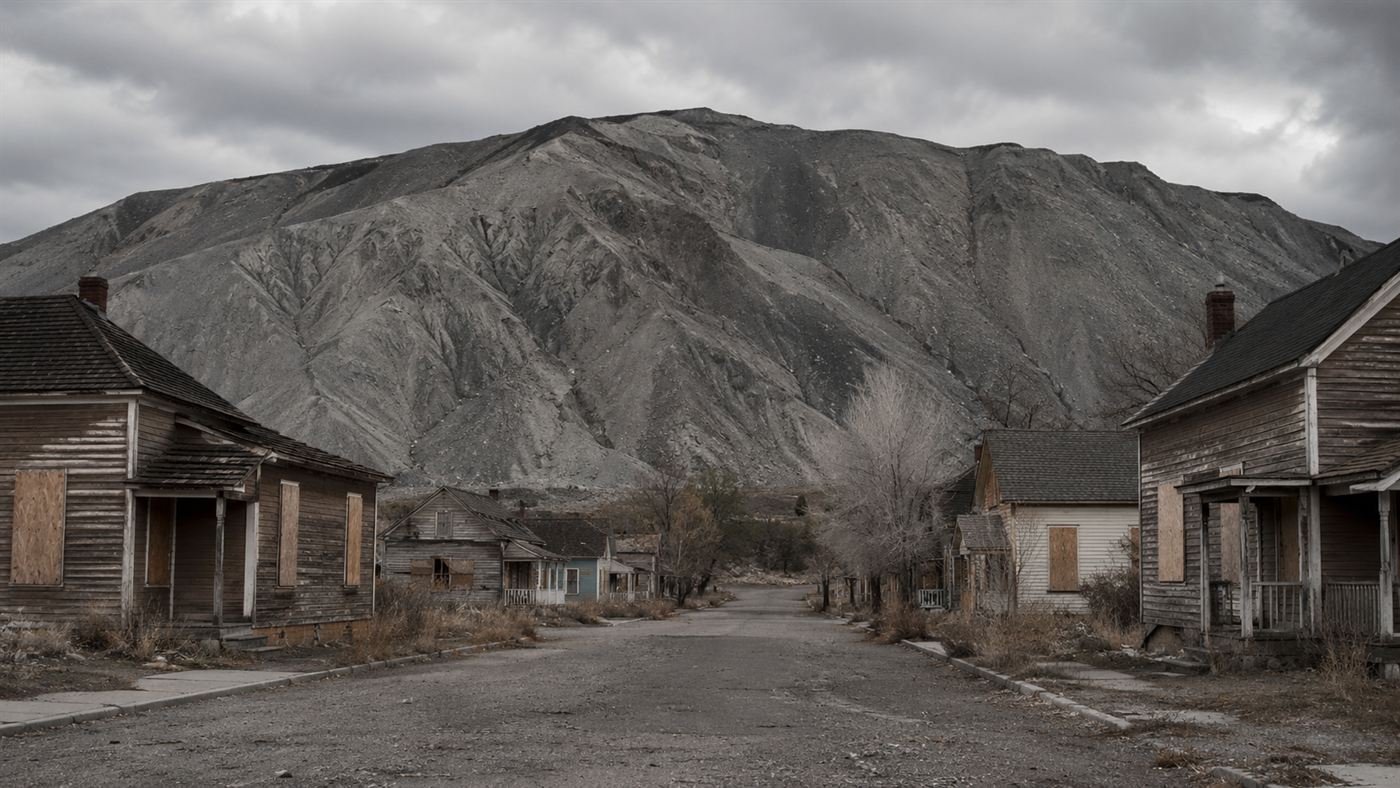
Mountains of toxic chat still loom over the emptied streets of Picher, Oklahoma. Illustration: Watts & Wild.
Picher, Oklahoma is the kind of place that sounds invented, an entire American town that the government decided could not safely exist and quietly erased. But it was real, and for decades it was thriving. At its peak it held some 20,000 people, a proud, hard-working town at the center of the Tri-State Mining District, where the ore came out of the ground by the trainload.
As the town's history records, the mines around Picher produced enormous quantities of the lead and zinc that armed the United States through both world wars, a huge share of the metal in the bullets and shells of the twentieth century. The town paid for that with something nobody put on the ledger at the time: its own ground, its own water, and eventually its own children.
The short version: Picher, Oklahoma was a lead and zinc boomtown that armed two world wars. Mining left 178 million tons of toxic waste called chat piled across the town, poisoning a third of its children. The mines began collapsing underfoot, the government bought everyone out, and a 2008 tornado finished it. Picher is now an unincorporated ghost town.
How Picher, Oklahoma armed a nation's bullets
Picher was born from a strike of lead and zinc ore in the early 1900s, and it grew fast and rough, the way boomtowns do. For the first half of the century it was one of the most productive lead and zinc fields on Earth, and the work was a point of real pride. Families sent fathers and sons underground, and the town's fortunes rose and fell with the price of metal.
When mining finally stopped in 1967, the companies packed up and left, and they left the waste behind. That waste was the whole problem, and it was everywhere, because no one in 1967 was required to clean up after a mine. The town was simply handed the bill, in a currency it would take decades to understand.
What is chat, and why did it poison Picher?
The waste has a plain name: chat. It is the crushed rock left over once the valuable metal has been separated out, and around Picher it was staggering in quantity. Roughly 178 million tons of chat piled up into some 30 gray hills, a few of them hundreds of feet tall, looming over the streets like a mountain range made of poison. The chat piles were laced with lead, zinc, and cadmium.
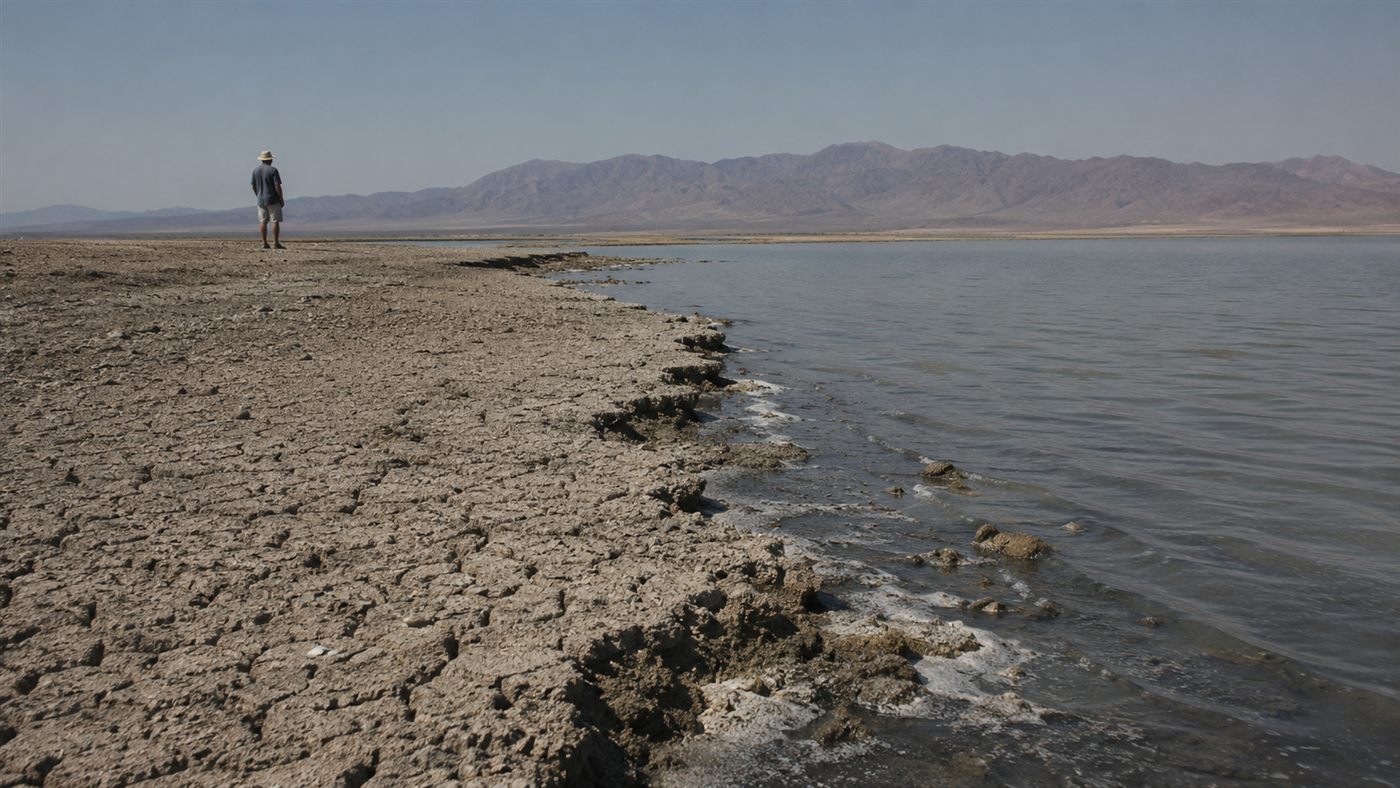
The cruelest part is that the chat looked harmless, like coarse gray sand. So people used it. They spread it on driveways and roads, poured it into sandboxes, and let their kids ride bikes and ATVs over the towering piles, kicking up clouds of metal dust. Generations of Picher children grew up breathing and swallowing it, absorbing a heavy metal that does its worst damage to the developing brain. A whole community had unknowingly turned its own backyard into a slow poison, a grimmer cousin of the toxic dust now blowing off California's shrinking Salton Sea.
A third of the children
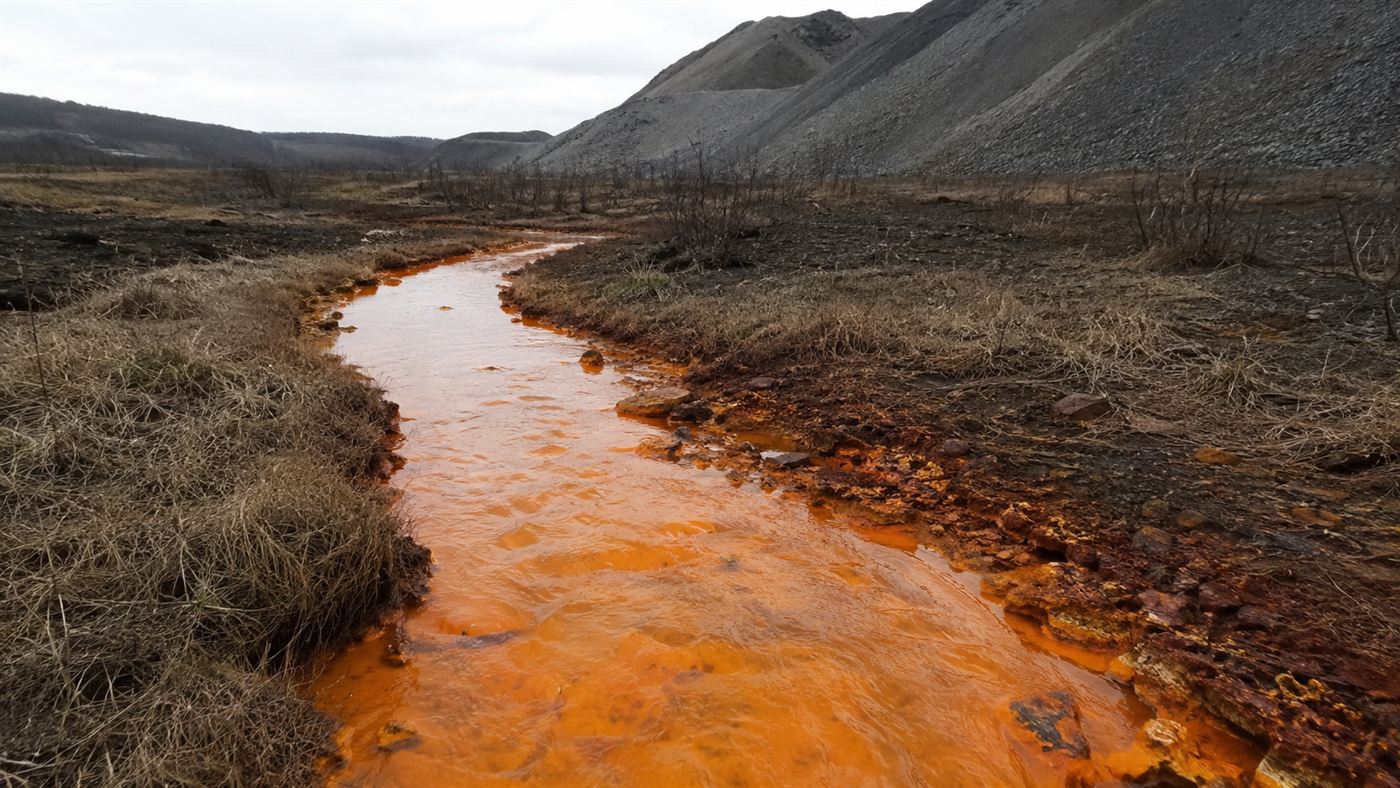
The reckoning arrived in hard numbers. The area was declared the Tar Creek Superfund site in 1983, one of the most contaminated places in the country, and the creek itself ran a sickly orange with acid mine drainage. Then a 1994 study by the Indian Health Service delivered the gut punch: about 34 percent of Picher's children were suffering from lead poisoning, a rate that can mean permanent damage to learning, behavior, and IQ.
That is the number that should have ended any argument. Lead poisoning in a third of a town's children is not a statistic you clean up around, and the Tar Creek designation set decades of study and remediation in motion. But lead poisoning is invisible and slow, and for years Picher kept living on top of the chat while officials debated what could possibly be done with a town that was itself the hazard. The Superfund site label marked the danger without solving it.
The ground itself began to give way
As if the poison were not enough, Picher was also sinking. All that ore had been dug out from directly beneath the town, leaving a honeycomb of old tunnels and rooms underground. Over time those workings started to collapse, opening sinkholes and threatening to swallow streets and houses whole. A study in the mid-2000s concluded that much of Picher sat over ground at serious risk of caving in.
Between the lead and the looming collapse, the case for saving Picher fell apart. The federal government offered a voluntary buyout, agreeing to purchase homes and businesses so families could leave for good. Slowly, house by house, the town began to empty, its population draining away as the checks were signed and the moving trucks pulled out.
The tornado and the last man out
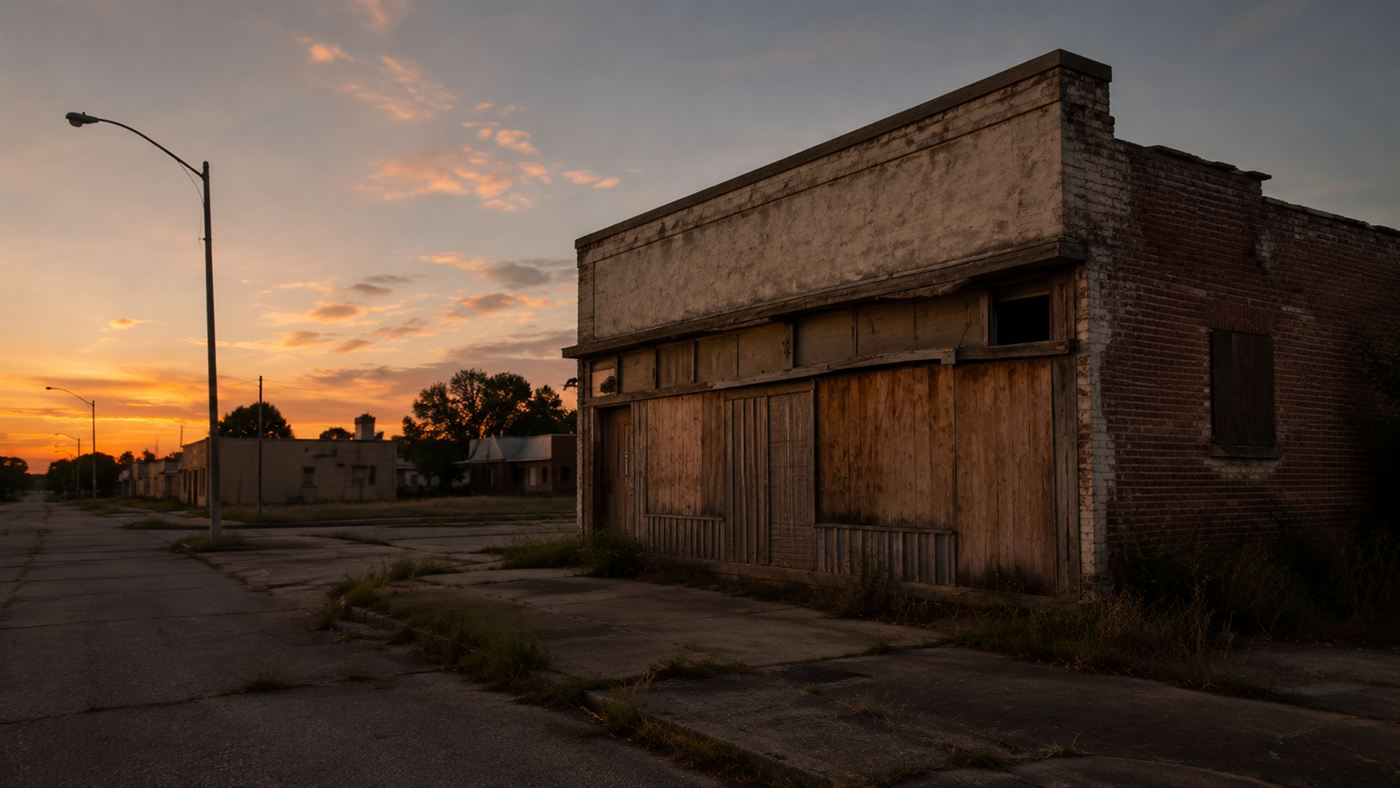
The end came in a hurry. On May 10, 2008, a violent EF4 tornado tore straight through the dying town, killing eight people, injuring around 150, and flattening block after block of the homes that were left. For a place already being dismantled, it was a final blow. As NBC News reported on the holdouts who lingered afterward, by 2009 the buyout was essentially complete and Picher was all but gone, its charter later dissolved entirely.
But not everyone left at once, and the town's stubborn heart had a name. Gary Linderman ran the Ole Miners Pharmacy, and he refused to close it as long as anyone in Picher still needed their prescriptions filled. He vowed to be the last one out, staying to serve the handful of aging holdouts who could not or would not go. He kept that promise, remaining until he died in 2015. A town built to arm a nation ended its life as one man keeping a pharmacy open for the neighbors who had nowhere else to turn.
The honest catch
It is comforting to think of Picher as a problem that was solved, a hazard cleaned up and closed out. It was not. The chat is still there, tens of millions of tons of it, and full remediation of the Tar Creek site is still estimated to be decades away. Some of the chat was even sold and hauled off as cheap construction aggregate over the years, quietly carrying Picher's lead into roadbeds and lots far beyond the town.
And the buyout, for all it accomplished, was not a clean happy ending either. It was voluntary, but for many residents it felt like being priced and pushed out of the only home they had known, their community dissolved by the same government that had let the poison sit for generations. Picher is a warning wearing the disguise of a ghost story: the true cost of a century of mining did not vanish when the town did. It just went quiet, and it is still down there.
A town that helped arm two world wars ended up poisoning its own children and being paid to disappear, leaving only poison hills and one pharmacist's promise. When a place is this contaminated, is a buyout that erases the whole town the right answer, or does something important die with it? Tell us what you think in the comments.
Related reading: The Pennsylvania town condemned by an underground coal fire that has burned for more than 60 years. See also Times Beach, the Missouri town the government bought out and erased over dioxin in its roads.
More from Watts & Wild
More in Curiosities →

Maria covers heavy industry, mega-builds, and the natural world where energy and engineering meet the people who live with them, for Watts & Wild.