Prospectors found the richest copper ever discovered on an Alaskan peak, and Kennecott built a town and a 196-mile railroad across glaciers to reach it, then abandoned it in a single day when the ore ran out
In 1900 two prospectors stumbled onto a green mountainside in the wilds of Alaska that turned out to be the richest copper strike in history. Getting it out would take one of the boldest engineering gambles of the age. Getting rid of Kennecott, when the ore finally ran dry, took a single train.
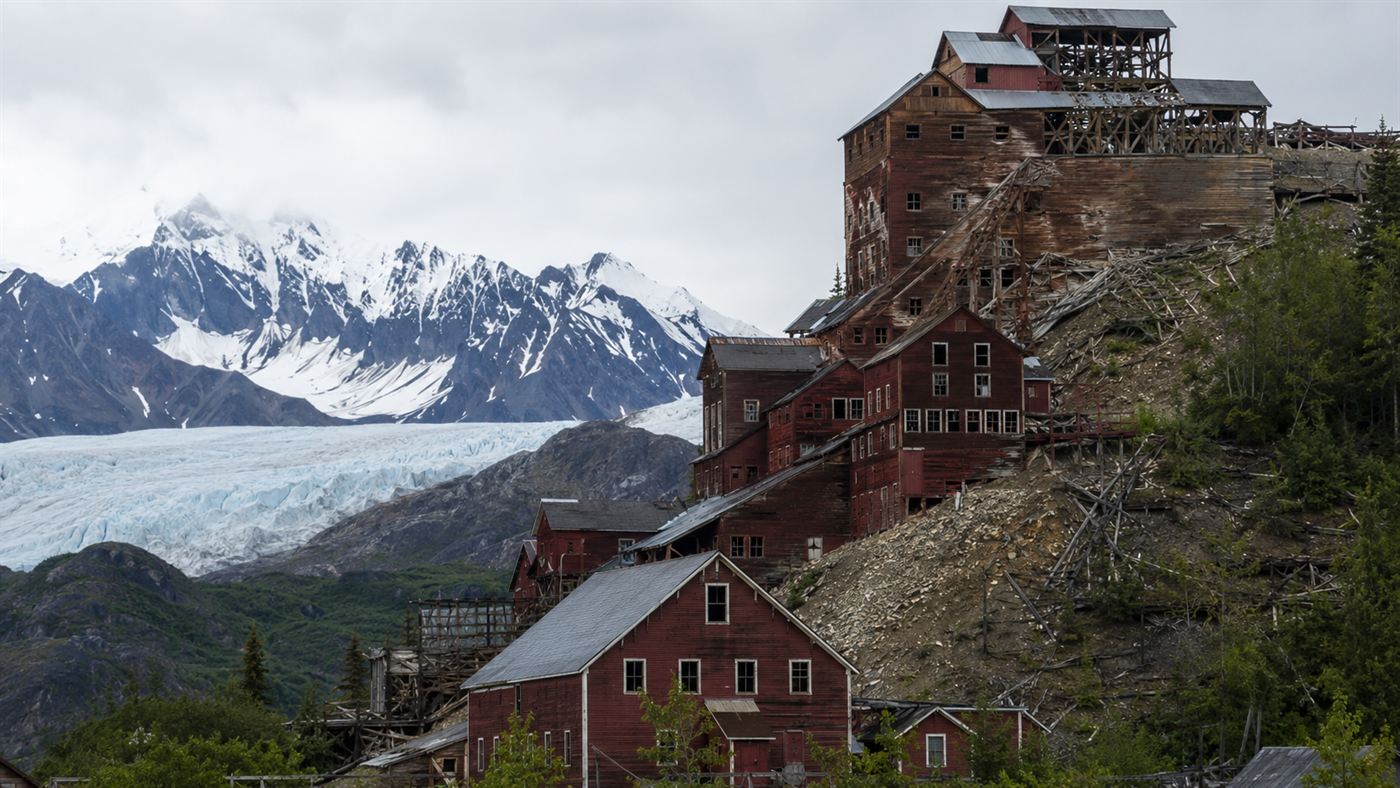
The 14-story concentration mill at Kennecott still stands against the glacier that helped make it famous. Illustration: Watts & Wild.
Kennecott is one of the strangest sights in Alaska: a cluster of blood-red wooden buildings, a mill fourteen stories tall, clinging to a mountainside beside a glacier where almost nothing else has stood for a century. It looks like a stage set someone forgot to strike. In a way, that is exactly what it is, the leftovers of the richest copper strike anyone has ever found, walked away from and left to the cold.
The story starts in the summer of 1900, when prospectors Jack Smith and Clarence Warren spotted a patch of green high on a ridge and assumed it was grass for their horses. As the National Park Service records, the green was not grass but a spectacular exposure of copper ore, some of it running up to 70 percent pure. It was the beginning of a boomtown that would make fortunes, run flat out for twenty-seven years, and then vanish almost overnight.
The short version: Kennecott sat on the purest copper ore ever discovered in a remote corner of Alaska. A syndicate backed by the Guggenheims and J.P. Morgan spent a fortune building a mine, a giant mill and a 196-mile railroad to reach it, pulled more than 200 million dollars in copper out of the mountain, and then abandoned the whole town when the ore ran out in 1938.
How rich was the copper at Kennecott?
To understand why anyone would build a railroad across glaciers to reach this spot, you have to grasp how absurd the ore was. A profitable modern copper mine might work rock that is one or two percent copper. The best of the Kennecott ore, from the Bonanza and Jumbo claims, ran to seventy percent, a figure so high that early assayers assumed the samples were salted. It was less like mining and more like quarrying solid metal out of the mountainside.
The numbers that followed matched the ore. Between 1911 and 1938 the mines produced more than 200 million dollars in copper, well over a billion pounds of it, from a handful of ore bodies with names like Bonanza, Jumbo and Mother Lode. For a couple of decades this one green mountain in Alaska was among the most valuable pieces of ground in the United States, and the men who controlled it knew it.
Building a railroad to nowhere
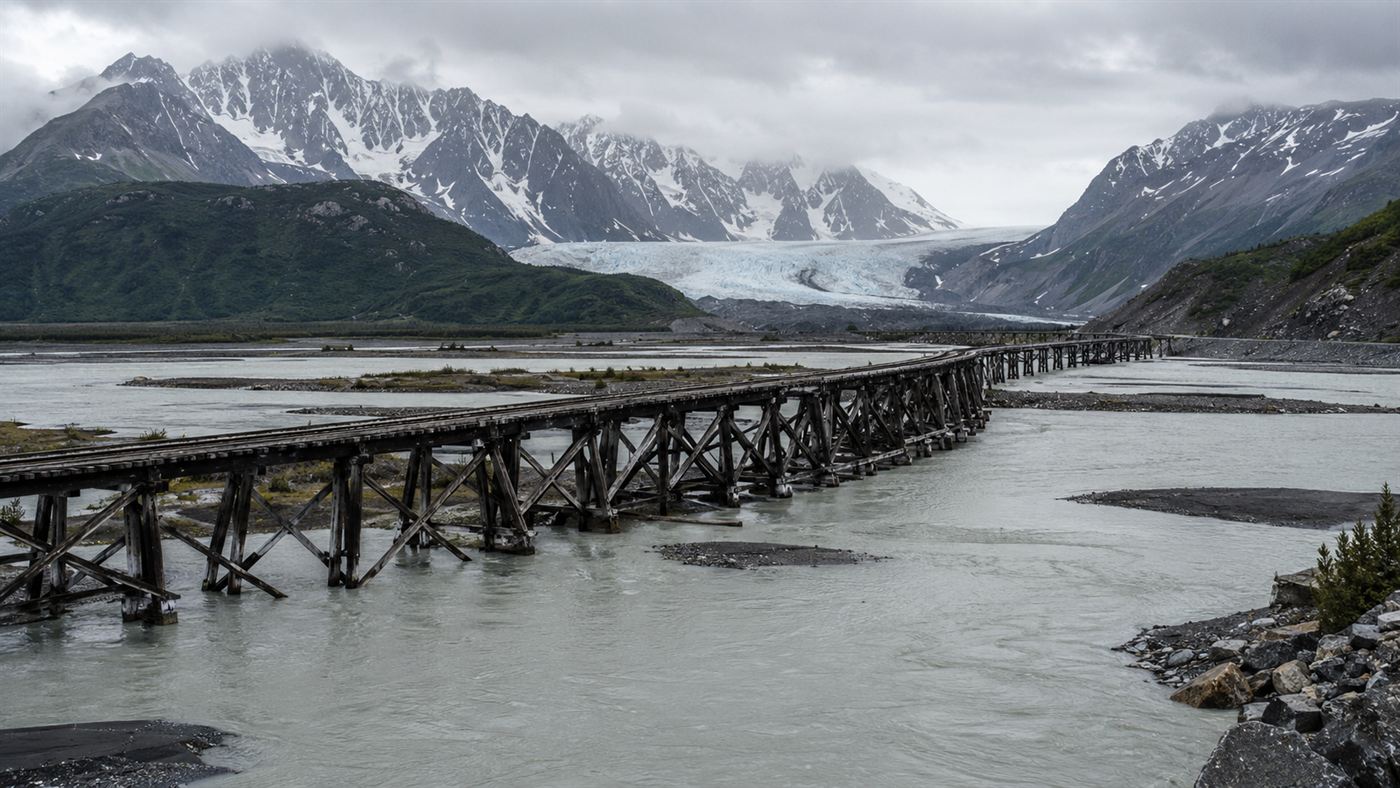
The catch was that the richest copper on Earth sat in one of the least reachable places on it. To move the ore, the syndicate built the Copper River and Northwestern Railway, 196 miles of track from the mine down to the port of Cordova, threading canyons and crossing the snouts of active glaciers. Skeptics said the initials CR&NW really stood for "Can't Run and Never Will."
It ran. Between 1905 and 1911 the backers, an "Alaska Syndicate" led by the Guggenheim family and J.P. Morgan, sank around 25 million dollars into the mine, the mill and that improbable Copper River railway, with a young mining engineer named Stephen Birch turning the original claims into an industrial machine. When the first train of ore rolled down to the coast in 1911, one of the boldest bets in American mining had paid off.
The mill that ran day and night
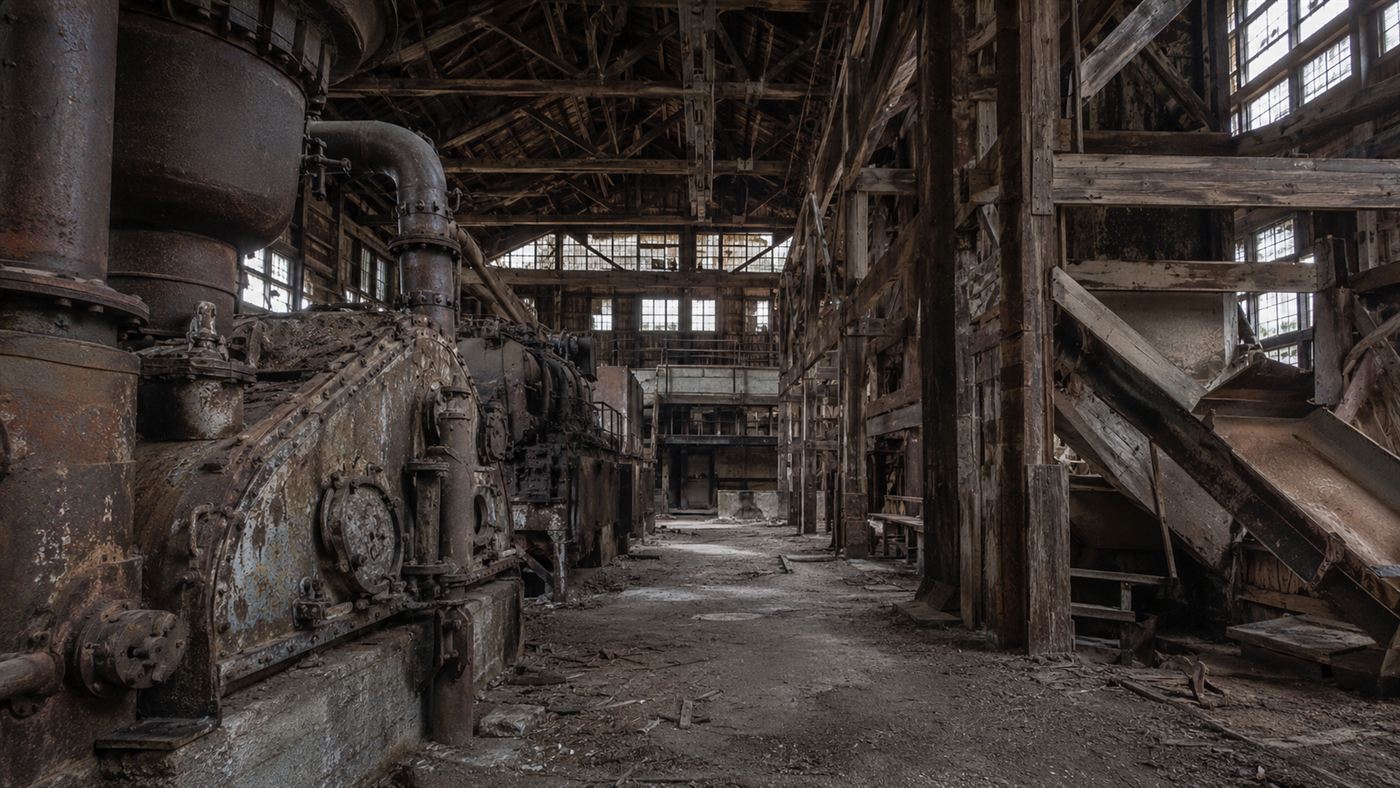
At the mine, ore came down from the peaks on aerial trams and fed the great mill, a fourteen-story wooden building where crushers and shaking tables separated copper from waste rock around the clock. Around it grew a full company town, complete with a hospital, a school, a general store, tennis courts and a dairy, an outpost of early-twentieth-century America dropped into the subarctic.
Life there was comfortable by frontier standards and rigidly controlled by the company. Kennecott was the managers' and workers' world, dry and orderly, while the nearby settlement of McCarthy grew up as its rowdy opposite, supplying the saloons and other pleasures the company would not. Together they were a small, humming civilization built entirely on the promise that the copper would keep coming.
Why did Kennecott become a ghost town?
It did not. A company geologist had warned as early as 1925 that the best ore was in sight of running out, and by the early 1930s the richest veins were largely gone. With copper prices weak and the mountain nearly emptied of its treasure, there was no reason to keep a remote Alaskan operation running. The decision came down to leave.
The last train pulled out of Kennecott on November 10, 1938, and with no road in or out, the place became a ghost town almost at once. For decades afterward it sat nearly untouched, too far away to loot easily and too big to haul off, slowly weathering beside its glacier while the wider world forgot it was there.
Frozen in time inside Wrangell-St. Elias
What saved Kennecott was its own remoteness. The buildings that would have been demolished or redeveloped anywhere accessible simply stood, and today they sit inside Wrangell-St. Elias National Park and Preserve, the largest national park in the United States, bigger than nine of the fifty states. The mill and mine were named a National Historic Landmark in 1986.
In 1998 the National Park Service acquired much of the site and began the delicate work of stabilizing the leaning mill and cleaning up a century of industrial mess, rather than restoring it to look new. Visitors now hike the same ground the ore trains once ran, and the ghost town has quietly become one of the most striking historic places in Alaska, precisely because it was left alone.
The honest catch
The romance of Kennecott can run away with the facts, so it is worth slowing down. The favorite legend, that everyone fled so fast they left coffee cups on the table and bread in the oven, is mostly that, a legend. The shutdown was expected and reasonably orderly, and while the town emptied quickly, the tidy image of instant panic says more about how we like our ghost stories than about what happened.
There is a harder truth underneath, too. Almost all of that 200 million dollars in copper wealth flowed out to investors far away, not to Alaska, and the operation left behind contamination that the public is still paying to clean up on land that had belonged to the Ahtna people long before any prospector called it green. Kennecott is a monument to audacious engineering and to how the spoils of a boom rarely stay where the digging happens.
A mountain of almost pure copper built a town, a railroad and a fortune in the Alaskan wilderness, then was abandoned the moment it stopped paying. Would you rather see a place like this restored to its glory days, or left exactly as the miners abandoned it? Tell us what you think in the comments.
Related reading: how an open pit in Utah became a copper mine so vast you can see it from space, and how the transcontinental railroad was clawed across the American West by the workers history nearly forgot.