Archaeologists cut five kilometres through the jungle and found a Maya city no looter had ever touched
In 2026 a team of archaeologists hacked their way through kilometres of rainforest in southern Mexico and walked into a place that had been waiting, silent, for more than a thousand years. A whole ancient city, its pyramid still standing, its carved stones still in place, swallowed whole and kept for a thousand years by the forest that hid it.
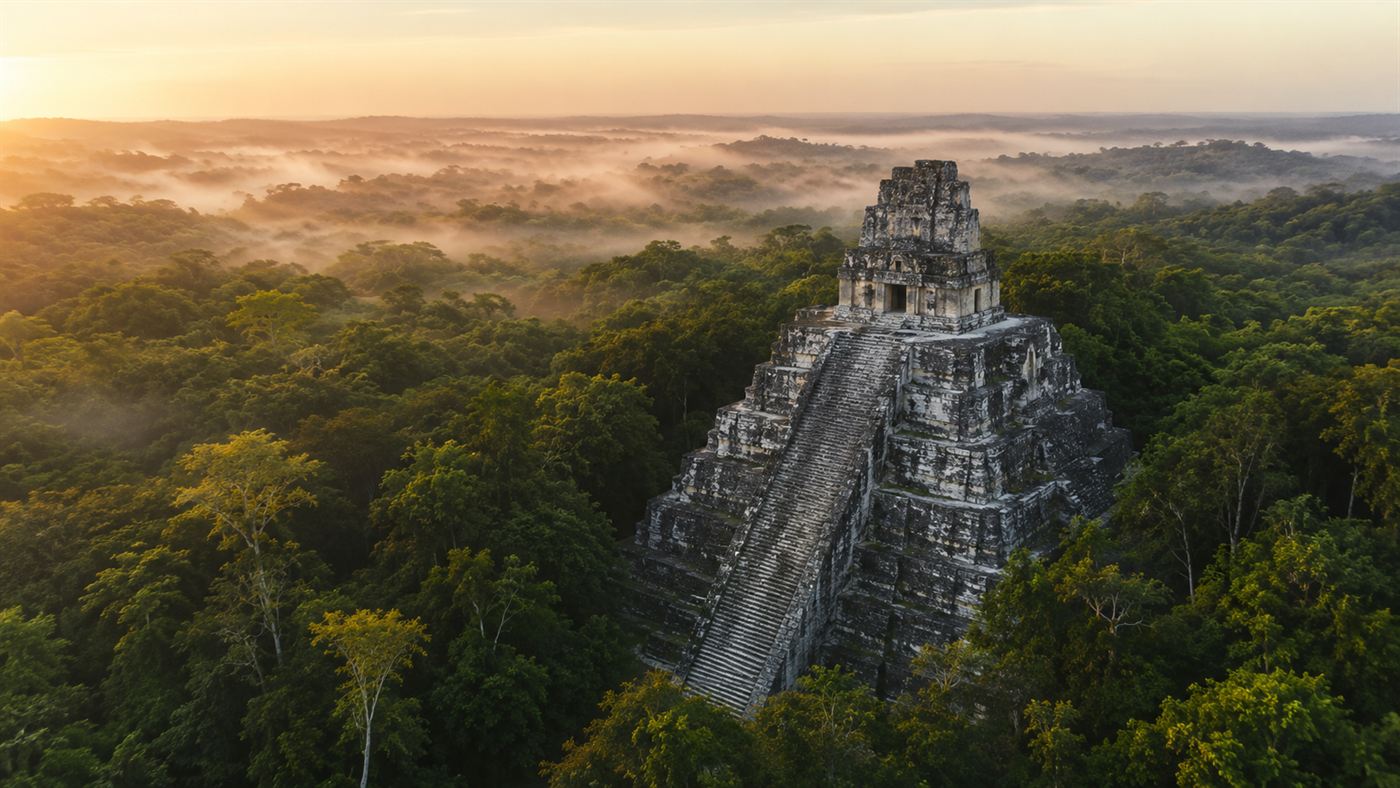
A stone temple breaks through the forest canopy, hidden from the world for over a millennium. Illustration: Watts & Wild.
The short version is this. On June 22, 2026, Mexico's National Institute of Anthropology and History announced the discovery of Minanbé, an intact and unlooted Maya city deep in the Calakmul Biosphere Reserve in Campeche. Its centrepiece is a pyramid temple more than thirteen metres tall, and unlike almost every famous site of its kind, it seems never to have been touched by looters.
The name tells you how hard it was to reach. Minanbé comes from the Yucatec Maya for "there is no road," and the team meant it literally. Led by the archaeologist Iván Šprajc of the Slovenian Academy of Sciences and Arts, the Mexican-Slovenian group cut a path some five kilometres long with machetes, crawled forward on all-terrain vehicles, then walked further still through the heat and tangle of the tropical forest to stand among the ruins.
What they found was not a scatter of stones but a planned settlement, a place with a shape and an intention, left almost exactly as its people abandoned it.
How did a whole Maya city stay hidden?
The paradox of the Maya lowlands is that a great city can vanish completely. The rainforest grows fast and grows over everything, wrapping temples in roots and burying plazas under a metre of leaf litter and soil until, from the ground, there is nothing to see but green. For centuries Minanbé was not so much lost as invisible, hiding in plain sight beneath the jungle canopy.
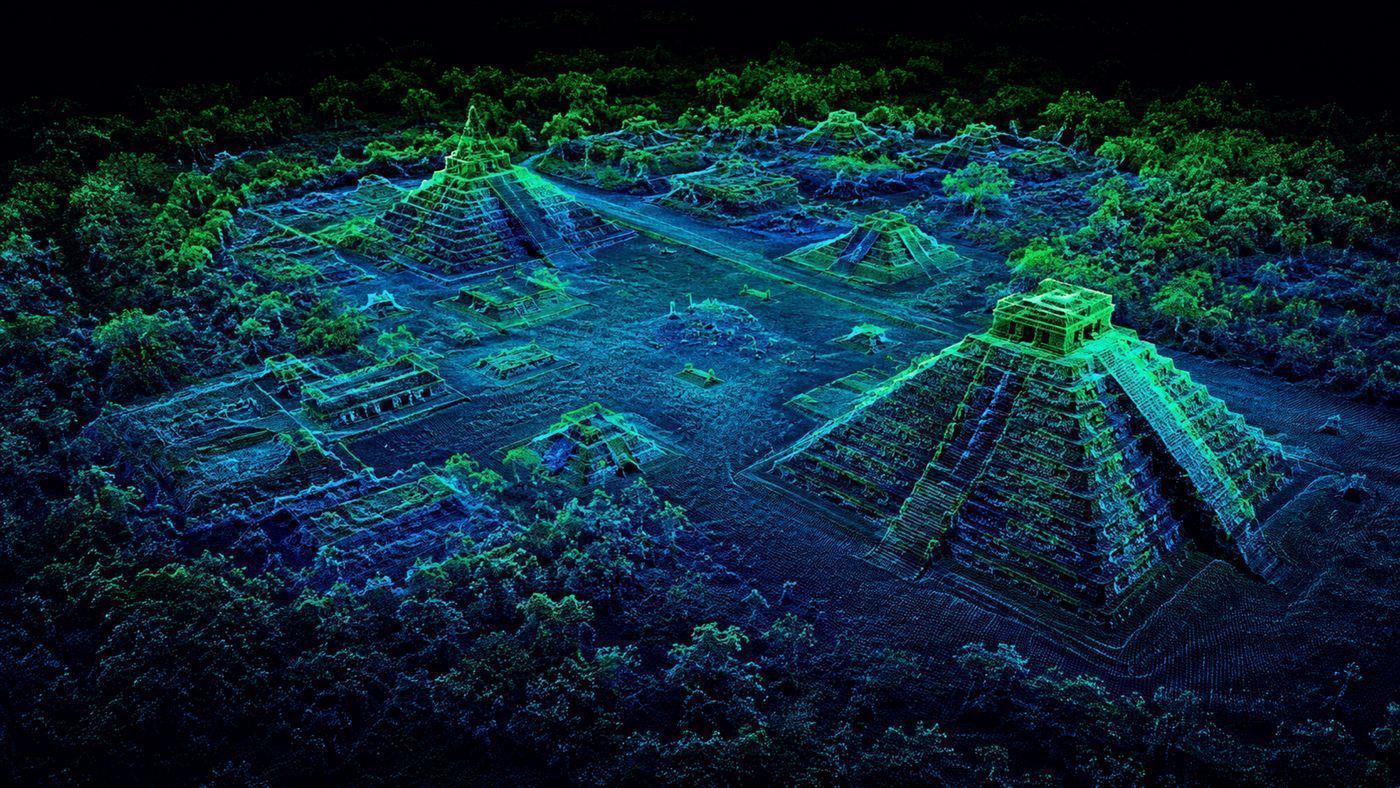
What changed was a technology that can see through trees. The team used airborne LiDAR, a scanner that fires laser pulses down from an aircraft and measures how they bounce back, stripping away the forest in the data to reveal the hard shapes of walls, mounds and terraces underneath. It is a laser that can undress a forest, and it showed a 15-hectare urban core no one on the ground had ever suspected.
What the ruins actually hold
The LiDAR map and the ground survey together sketch a real Maya town. There is a complex core of plazas ringed by palatial and religious buildings, a pyramid temple rising over thirteen metres, terraces cut into the land, and wetlands managed with hydraulic canals that channelled and stored water. This was a community that engineered its surroundings, not one that merely camped in them.
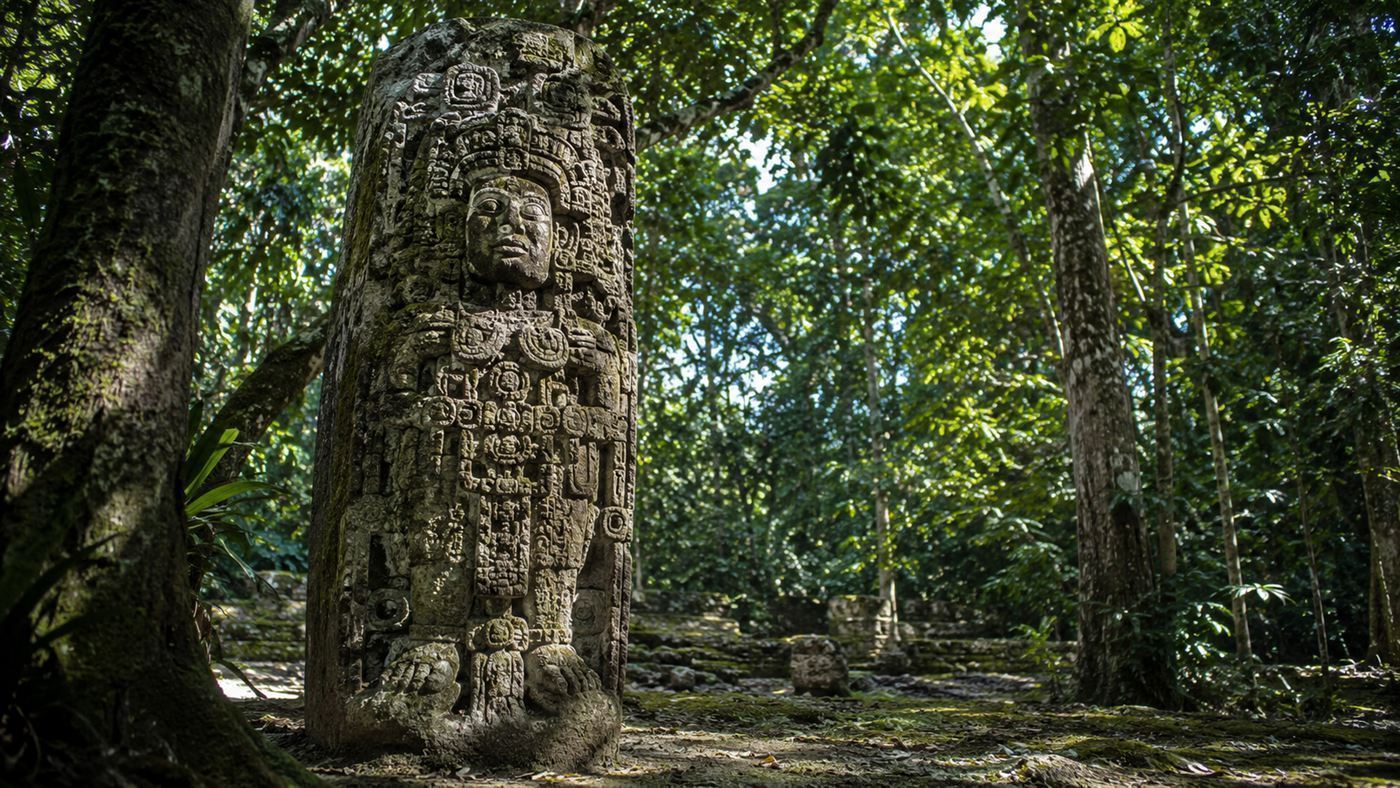
The dating points to the Late Classic period, roughly 600 to 900 AD, the height of Maya civilisation. Among the carvings, one hieroglyphic text preserves part of a Long Count date that probably points to the late seventh century, making it the oldest inscription yet found in this stretch of forest. Every stone that survives in place, rather than in a private collection, is a sentence in a story archaeologists can still read.
Why an unlooted Maya city is such a rare prize
To understand why archaeologists are so excited, you have to know what usually happens. Most accessible Maya sites were stripped long ago, their carved panels sawn off and sold, their tombs emptied. When that happens, the objects may survive in some distant vault but the knowledge is gone, because an artefact torn from its place loses the very context that gives it meaning. Looting does not just steal treasure, it erases history.
Minanbé's isolation, the same brutal remoteness that made it so hard to reach, is exactly what protected it. Because no road ever led there, no looter ever came, and the monuments still stand where the Maya set them. That is the difference between finding a ruin and finding it first, and it is why a modest city with one pyramid can matter more to scholarship than a grander site that was emptied a century ago.
The honest catch
It is worth being clear about what this discovery is and is not. Minanbé is a genuine and thrilling find, but it is not a city that was ever truly lost to everyone. The Maya never vanished; millions of their descendants live across Mexico and Central America today, and local people often know the jungle and its mounds long before outside scientists arrive. "Discovery" is always partly a matter of who is doing the telling.
There is a harder catch too. Announcing a rich, unlooted site also advertises it, and remote places are only safe until someone with a truck and bad intentions decides the prize is worth the trek. Protecting Minanbé now falls to Mexico's heritage authorities and the communities around it, and that job is often harder than the finding. The forest kept this secret for a thousand years. Keeping it safe in the age of satellite maps and easy roads may prove the tougher task.
Sources: The Art Newspaper, HeritageDaily, and ARTnews.
A thousand years of silence, ended by five kilometres of machete work and a laser in the sky. Would you want to be the first person in a millennium to walk into a place like that, or does some part of you think the forest should keep its secrets? Tell us what you think in the comments.
Related reading: Cahokia, the vast city on the Mississippi that rose and vanished before Europeans ever arrived. See also the monumental great houses the Ancestral Puebloans built in the desert of Chaco Canyon, and the amateur who cracked a lost script no scholar could read.